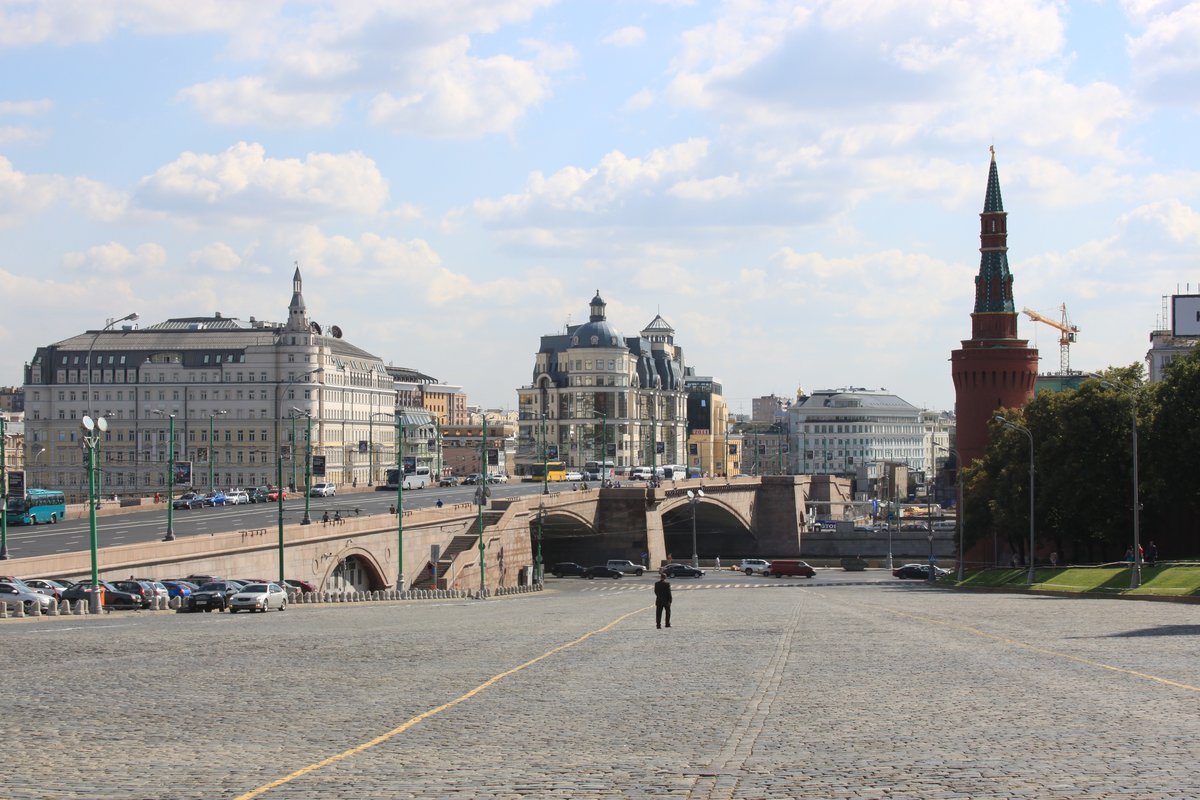

Vasilevsky Spusk: Historical Background
Origins and Urban Development
The name "Vasilevsky Spusk" derives from its proximity to St. Basil’s Cathedral ("spusk" meaning slope or descent). Constructed under Ivan the Terrible in 1561, the cathedral commemorates Russia’s victories at Kazan and Astrakhan (Introducing Moscow). The area soon became a thoroughfare linking the Kremlin, the merchant district of Kitay-Gorod, and the river port, supporting Moscow’s commercial and civic life.
Role Across Eras
Throughout its history, Vasilevsky Spusk has served as a vibrant extension of Red Square—hosting markets, religious processions, and major state events (GPSmyCity: Lobnoye Mesto). During the Russian Empire and Soviet eras, it withstood cycles of destruction and renewal, notably after the 1812 fire and during Soviet modernization. The plaza retained its ceremonial importance for military parades and state celebrations (Introducing Moscow).
Contemporary Usage
Today, Vasilevsky Spusk is famed for its versatility as a venue for concerts, festivals, Russia Day, and New Year’s festivities. It draws crowds from across the world, offering a dynamic blend of tradition and modernity (Concert Archives: Vasilevsky Spusk).
Visiting Vasilevsky Spusk: Hours, Tickets, and Entry
- Hours The plaza is an open public space, accessible 24/7. Daylight hours (9 AM–7 PM) are best for comfort and sightseeing. Note: access may be restricted during large events or security operations.
- Tickets Entry to Vasilevsky Spusk is free. Tickets are required for neighboring attractions such as St. Basil’s Cathedral (typically open 11 AM–6 PM) and the Kremlin Museums (open 10 AM–5 PM).
- Nearby Attractions Ticketing Buy tickets in advance for popular sites to avoid queues, especially in peak seasons.
Getting There and Accessibility
- Metro The nearest stations are Okhotny Ryad, Ploshchad Revolyutsii, and Kitay-Gorod, each about a 10-minute walk from the plaza (Onmanorama; JustRussian).
- On Foot Walking is the best way to explore central Moscow and Vasilevsky Spusk, given frequent traffic restrictions and pedestrian-friendly design.
- Accessibility The plaza is largely accessible, but the cobblestone surfaces and slope may be challenging for wheelchair users or during winter. Assistance may be needed in icy conditions; ramps and accessible facilities are present near major landmarks.
Navigating the Plaza & Safety
- Surface Cobblestone and stonework; wear comfortable shoes.
- Security Heightened security and checkpoints during events. Police presence is standard (JustRussian).
- Safety Tips Watch for pickpockets during crowded festivals. Avoid isolated areas after dark.
Events, Festivals, and Atmosphere
Vasilevsky Spusk hosts a broad range of major events—from Victory Day parades and Maslenitsa (the Russian Blini festival) to world-class concerts (acts like Linkin Park and Till Lindemann have performed here) (Setlist.fm). The site transforms with stages, food stalls, and vibrant decorations. Large gatherings feature security checks and may temporarily restrict access.
Nearby Attractions and Guided Tours
- St. Basil’s Cathedral UNESCO-listed, famed for its vibrant domes.
- The Kremlin The heart of Russian political power, with museums and cathedrals.
- GUM Department Store Historic shopping arcade with restaurants and restrooms.
- Zaryadye Park Modern park with panoramic city and river views.
- Moskva River Cruises Scenic boat tours from the nearby embankment.
- State Historical Museum, Bolshoi Theatre, Tretyakov Gallery All within easy reach.
Guided walking tours often include Vasilevsky Spusk, offering historical context and local insights (GPSmyCity: Red Square Walking Tour).
Photography, Etiquette, and Practical Tips
- Photography The plaza is a hotspot for panoramic shots of Moscow’s landmarks. Tripods are generally allowed, but may be restricted during events. Drones are prohibited.
- Etiquette Be respectful during public gatherings and when photographing people. Learn some basic Cyrillic for navigation (Wanderlusting K).
- Weather Moscow’s climate can be unpredictable; dress in layers and prepare for rain or snow in winter (Travellers Worldwide).
- Currency Russian ruble (RUB) is the local currency; carry cash for small purchases.
Frequently Asked Questions (FAQ)
Q: Is there an entrance fee to Vasilevsky Spusk?
A: No, the plaza is free to access.
Q: What are the best times to visit?
A: Late spring through early autumn (May–September) for mild weather and events. Daytime visits are safest and most photogenic.
Q: Is the area accessible for wheelchair users?
A: Mostly, but cobblestones and slopes may be difficult; assistance is recommended.
Q: How do I get there by public transport?
A: Use nearby metro stations Okhotny Ryad, Ploshchad Revolyutsii, or Kitay-Gorod.
Q: Are there restrooms and food options?
A: Yes, especially in GUM and during festivals. Public restrooms may charge a small fee.
Practical Information & Final Recommendations
- Electricity 220V, two-prong round-pin plugs.
- Wi-Fi Free Wi-Fi is available in many central areas.
- Local Help Moscow’s residents are generally helpful; don’t hesitate to ask for directions (The Invisible Tourist).
- Souvenirs GUM and Izmaylovsky Market offer authentic options.