Introduction
This Russia travel guide starts with the hard truth: most Western governments advise against travel. If you can legally and safely go, Russia stretches from Moscow avenues to Pacific ports.
Any useful page on Russia should say this plainly: as of April 2026, the US, UK, Canada, Australia, and EU states advise against travel because of the war in Ukraine, arbitrary-detention risk, and weak consular access. After that warning, the map gets stranger and more interesting. Moscow is not Saint Petersburg; Kazan is not Vladivostok; Irkutsk is not Murmansk. The country runs across 11 time zones, carries Europe into Asia, and asks you to think in rail lines, river systems, and climate bands rather than one neat national mood.
If your search is really about things to do in Russia, the honest answer is that Russia works best in fragments. Start with Moscow for the metro stations, Constructivist edges, and the political theater of Red Square. Move to Saint Petersburg for canals, imperial geometry, and White Nights in June. Then the frame widens: Kazan folds Tatar and Russian histories into one skyline; Veliky Novgorod and Suzdal hold the older church-and-fortress story; Yekaterinburg marks the hinge of the Urals; Irkutsk opens the road to Lake Baikal.
Distances shape every decision here. The Sapsan covers Moscow to Saint Petersburg in 3 hours 40 minutes, but Moscow to Vladivostok by rail takes nearly a week. Winter is not one season either: Murmansk sits inside the Arctic logic of darkness and snow, while Krasnoyarsk and Novosibirsk deal in hard continental cold, and Ulan-Ude points east toward Buddhist Siberia. Come for history, food, and scale if you must. Come with current documents, cash planning, and a sober reading of the risks first.
A History Told Through Its Eras
From Longboats to Golden Domes
Kievan Rus and the River Kingdoms, c. 862-1240
Mist hangs over the Volkhov River, oars knock against wet wood, and a band of traders from the Baltic pulls its cargo onto a muddy bank near Veliky Novgorod. Furs, wax, honey, silver coins, slaves: this is how the story begins, not with a nation, but with a market. Ce que l'on ignore souvent, c'est que early Rus was born on water. Rivers made the first princes long before borders did.
Tradition places Rurik in the north in 862, though tradition is not a deed in a chest with a seal attached. What the chronicles and archaeology do show is a world of mixed peoples, Scandinavian adventurers, Slavic farmers, Finno-Ugric communities, steppe intermediaries, all bargaining along the trade route from the Baltic to Byzantium. When Oleg took Kyiv in 882, he did not create a modern state; he stitched together toll points, loyalties, and ambitions.
Then came the great civilizing wager. In 988, Prince Vladimir accepted Christianity from Byzantium, and with that choice Rus turned toward Constantinople rather than Rome. The change was not only liturgical. It altered law, ceremony, marriage, literacy, art, and the very look of power. Walk today into Saint Petersburg's museums, Moscow's treasuries, or the old churches of Suzdal, and you still feel the afterglow of that Byzantine marriage.
Yaroslav the Wise gave this young realm a code of laws and dynastic polish, marrying daughters into European courts as though Rus were already an old house with impeccable credentials. Yet succession remained a family quarrel on horseback. Principalities split, cousins fought, and wealth shifted between Kyiv, Veliky Novgorod, and the forest towns to the northeast.
In the winter of 1237-1240, the Mongol invasions broke that first world apart. Cities burned, princes submitted, and the axis of power began to move. Out of those ashes, new centers would rise, above all Moscow, harder, more suspicious, and far more disciplined.
Vladimir the Great did not merely change a court religion; he changed the visual and moral grammar of Russian power.
The Primary Chronicle says Vladimir tested religions before choosing Byzantine Christianity, as though a prince might compare faiths like fabrics at market.
Moscow Learns to Rule
Muscovy Under the Tatar Shadow, 1240-1682
A tax register, a fur collar, a saddle still wet from the road: Muscovy grew in rooms like these, under pressure from the Mongol khans. The princes of Moscow first mastered survival, then collection, then obedience made useful. Ce que l'on ignore souvent, c'est que Moscow's rise began not in heroic freedom, but in its talent for serving as the Horde's most efficient cashier.
In 1380, Dmitry Donskoy won the Battle of Kulikovo, a victory later wrapped in national legend. It mattered, yes, but not because the Tatar yoke vanished overnight. It did not. What mattered was the symbolism: Moscow had shown that it could gather other princes under its banner. Symbols, in politics, are down payments on future power.
Ivan III made the real leap. He stopped paying tribute in 1480 during the Great Stand on the Ugra River, absorbed Veliky Novgorod, married Sophia Palaiologina, niece of the last Byzantine emperor, and began dressing Muscovy in imperial language. The double-headed eagle entered the scene. Court ritual thickened. Moscow, once a forest stronghold, started presenting itself as the Third Rome.
Then Ivan IV, called the Terrible, gave the state a crown and a fever. In 1547 he became the first ruler crowned tsar of all Russia. He conquered Kazan in 1552 and Astrakhan in 1556, pushing Muscovy down the Volga and opening the road to empire. But the same man built the Oprichnina, that theater of terror in black robes and mounted cruelty, and left behind a realm both enlarged and poisoned.
When his dynasty failed, famine, impostors, foreign interventions, and popular uprisings plunged the country into the Time of Troubles. In 1613 the Romanovs were chosen to restore order, but order came at a price: a tighter autocracy and a peasantry pressed ever harder into servitude. The stage was set for both imperial splendor and imperial brutality.
Ivan the Terrible was brilliant, devout, theatrical, and so frightened of betrayal that he turned paranoia into a governing system.
Legend says Ivan IV struck and killed his own son in a fit of rage; whether every detail is exact or not, the image became the perfect emblem of a dynasty wounding itself.
Beards Cut, Palaces Raised, Europe Invited In
Empire, Court, and the Romanov Performance, 1682-1825
Imagine the snip of scissors on a nobleman's beard and the hiss of a Neva marsh under piles driven into the mud. Peter the Great did not reform Russia politely. He bullied it into a new shape. From 1703, on a swamp at the mouth of the Neva, he built Saint Petersburg, a capital meant to face Europe with cold confidence and no small amount of vanity.
Ce que l'on ignore souvent, c'est that Saint Petersburg was not only a window on Europe; it was also a monument to state violence. Tens of thousands of laborers, soldiers, and conscripted workers dragged stone through water and disease to raise embankments, palaces, and fortresses. The city dazzled because people paid for it with their backs. Bern would linger on the chandeliers. One must also count the dead.
After Peter came coups, barracks whispers, and women who ruled with formidable nerve. Elizabeth filled the court with silk, music, and Rastrelli's baroque excess. Then Catherine II, the German princess who became Catherine the Great, read French philosophers by candlelight while expanding the empire through war and partitions. She corresponded with Voltaire, collected art with the appetite of a dynasty founder, and crushed Pugachev's revolt without sentiment when the people reminded her what empire looked like from below.
Moscow remained the old sacred heart, but Saint Petersburg became the imperial stage set. Etiquette hardened, French became the language of the elite, and the Romanovs learned to live in public, always observed, always performing rank. Yet beneath the parquet and gilt, the contradictions sharpened: serfdom deepened even as European ideas entered drawing rooms.
In 1812 Napoleon marched to Moscow and found not submission but emptiness and fire. The city burned, the invader starved, and Russia emerged as the power that had helped break him. Victory gave the empire prestige. It also gave a generation of officers dangerous ideas about constitutions, rights, and whether a ruler should answer to something higher than his own will.
Peter the Great loved shipyards, anatomy, drunken practical jokes, and reforms so abrupt they felt like amputation.
Catherine the Great bought entire art collections by correspondence, including major European masterpieces, as if she were furnishing not a palace but a claim to civilization itself.
Silk Uniforms, Bombs in the Snow, a Dynasty at the Edge
Reform, Revolution, and the End of the Romanovs, 1825-1922
A square in Saint Petersburg, boots on ice, officers whispering treason on 14 December 1825: the Decembrist revolt was small, aristocratic, and doomed. Yet it matters because it revealed a new possibility. The enemy of autocracy would now come not only from peasants in revolt, but from nobles educated by Europe and ashamed of the system they served.
The 19th century that followed was a Russian novel with ministers, mystics, censors, and students all convinced history had singled them out. Alexander II emancipated the serfs in 1861, and the decree changed millions of lives while satisfying almost nobody. Former serfs received freedom tied to redemption payments; landlords lost labor but not always power. Reform arrived. Justice lagged.
Railways crossed the empire, industry thickened around Moscow, and ideas moved faster than police reports. Revolutionary circles multiplied. Terror became part of politics. In 1881 Alexander II, the tsar who had freed the serfs, was assassinated in Saint Petersburg by bomb-throwers who believed history needed a shove. That is one of Russia's recurring tragedies: the reformer and the radical meeting in blood rather than compromise.
Then came the court melodrama that would have seemed too obvious in fiction: Nicholas II, dutiful and weak; Alexandra, proud and desperate; the haemophiliac heir hidden behind palace curtains; and Rasputin, the Siberian starets who convinced a frightened family that prayer and presence could do what medicine could not. Ce que l'on ignore souvent, c'est that empires do not only collapse from defeats and strikes. They also collapse from intimate panic in locked rooms.
War with Japan in 1904-1905 exposed imperial fragility. The First World War finished the work. In February 1917 bread lines, mutiny, and exhaustion swept away the Romanovs. In October the Bolsheviks seized power, and civil war turned the former empire into a furnace from the Baltic to Siberia, through Kazan, Yekaterinburg, Irkutsk, and Vladivostok. When the Soviet Union was formed in 1922, Russia had not simply changed regime. It had changed the very language of power.
Nicholas II was less a monster than a man fatally unequal to the scale of the tragedy unfolding around him.
Rasputin's real influence was probably less omnipotent than legend claims, but legend itself became politically lethal because it made the dynasty look ridiculous at the worst possible moment.
Red Empire, Private Memories
The Soviet Century and the Long Aftershock, 1922-present
A communal apartment kitchen in Moscow, cabbage soup on the stove, one radio on the shelf, one family listening while another pretends not to: this is as much Soviet history as parades on Red Square. The new state promised a future without princes, landlords, or old humiliations. It also built a machinery of control that entered schools, factories, bedrooms, and silence itself.
Lenin founded the system. Stalin hardened it into something colder. Forced collectivization, famine, purges, the Gulag, and fear turned ideology into a daily weather. Yet one must tell the people's story whole. The same state that terrorized its citizens also industrialized at ferocious speed, taught millions to read, and mobilized a shattered country against Nazi Germany after the invasion of 1941.
What Russians call the Great Patriotic War remains the moral center of 20th-century memory. The siege of Leningrad, the battle of Stalingrad, the march to Berlin: every family carries names, photographs, absences. Saint Petersburg still holds that grief in its stone. So does Volgograd, though memory spills across the whole map. Victory brought immense pride and immense mourning, often in the same sentence.
After 1945 the Soviet Union became a superpower of rockets, censors, communal life, and exhausted belief. Khrushchev denounced Stalin, then built prefabricated housing by the hectare. Brezhnev offered stability that gradually curdled into stagnation. Ce que l'on ignore souvent, c'est that many Soviet citizens learned to live double lives with extraordinary skill: one for the official meeting, another for the kitchen table, the dacha, the whispered joke.
When the Soviet Union collapsed in 1991, flags changed faster than habits. The 1990s brought shock, oligarchs, unpaid wages, and sudden freedoms. The decades after brought restored state confidence, tighter control, and a struggle over what Russia wishes to remember and what it prefers to mythologize. That argument is not abstract. You feel it in Moscow's avenues, in Saint Petersburg's palaces, in Yekaterinburg's memorials, and in the long rail line east where empire, exile, and ambition still travel side by side.
Stalin understood symbols with chilling clarity and used them to turn personal rule into an entire civilization's nervous system.
In many Soviet homes, the most truthful political conversations happened in the kitchen, with the tap running to blur the sound.
The Cultural Soul
A Tongue That Wears a Fur Coat
Russian begins with distance. The first gift is not warmth but grammar: the solemn "vy," the dangerous "ty," the knowledge that a pronoun can open a door or leave it bolted. In Moscow, a kiosk clerk may answer you with a face carved from February; in Saint Petersburg, the same severity arrives with better vowels.
Then the language starts doing its acrobatics. Six cases let words change places without losing rank, so a sentence can circle its prey, hesitate, lunge, and return wearing another shade of meaning; what sounds stern at first soon reveals comedy, melancholy, and an almost indecent precision.
A country is a table set for strangers. Russian adds the cutlery after you sit down. Learn "nichego," learn "toska," learn the difference between a blessing and a shrug, and suddenly the room stops being cold: it becomes exact.
Soup Against the Apocalypse
Russian food was built for winters that argue with your skeleton. A bowl of borscht, dark as garnet ink, arrives with sour cream and black bread and settles the matter; pelmeni follow like small sealed promises, each one saying that survival can be elegant if wrapped in dough.
The national genius lies in preservation. Salted herring, pickled mushrooms, cabbage left to sour on purpose, jam made from berries that should by rights have perished in the forest: a pantry here is less a cupboard than a philosophy seminar on time.
And then the feast turns theatrical. Olivier salad appears on New Year's Eve in cubes and mayonnaise, herring under a fur coat glows a dangerous beetroot pink, blini carry caviar or jam depending on your ambitions, and everyone behaves as if abundance were the most serious ritual of all. They are right.
The Courtesy of Serious Faces
Russia does not smile on command. This spares you a great deal of hypocrisy. In Kazan or Yekaterinburg, the face offered to strangers can look almost judicial, yet beneath that composure sits a code of hospitality so fierce that once you are admitted, tea, bread, pickles, and private opinions begin arriving at a speed that suggests a trap of kindness.
Small ceremonies matter. You remove shoes without being asked, carry flowers in odd numbers unless death is the intended recipient, and understand that punctuality in a formal setting coexists perfectly well with a private life ruled by improvisation and traffic.
A Russian invitation is never casual. It is a border crossing with snacks. Accept it seriously, bring something edible, and wait for the moment when the room changes key: the formal register loosens, someone pours another glass, and what seemed guarded reveals itself as exacting tenderness.
Where the Novel Puts On Boots
Russian literature does not sit politely on a shelf. It stalks the room. In Saint Petersburg, one can still feel that the city was built for Gogol's overcoats and Dostoevsky's fevers, for men who argue with God on staircases and women who understand the price of a gesture before the gesture is made.
Readers here treat writers with an intimacy usually reserved for difficult relatives. Pushkin is not a monument but a pulse; Akhmatova remains an atmosphere; Bulgakov still laughs from behind the wallpaper; and in Moscow, the Metro can feel like a novel designed by an empire that had read too much symbolism and enjoyed it.
The astonishing thing is this: books in Russia have often done the work that parliaments, salons, and churches do elsewhere. They carried moral weather. Open a Russian novel and someone is always entering a room, taking off snow, and bringing with them an argument about the soul.
Onion Domes and Bureaucratic Thunder
Russian architecture has no fear of contradiction. A white church in Suzdal can look like a whispered prayer beside a river meadow, while seven Stalinist towers in Moscow rise like wedding cakes trained for war; between those extremes lies the whole national habit of making beauty and authority share a corridor.
The onion dome is a stroke of genius. It resembles a flame, a bulb, a tear, a helmet, a sweet from a reckless confectioner. In Veliky Novgorod, old churches keep their walls thick and their silhouettes spare; in Saint Petersburg, façades stretch themselves into imperial prose, ordered, damp, and theatrical under northern light.
Then Russia changes register again. Soviet mosaics in underpasses, Constructivist clubs, metro stations lined with marble and chandeliers, wooden houses in Irkutsk with carved window frames as delicate as lace: the built world keeps insisting that power must dress well, even when it is late, tired, or lying.
What Makes Russia Unmissable
Hard Travel Reality
Russia remains under active do-not-travel advisories from the US, UK, Canada, Australia, and EU states. Any plan begins with visa rules, payment limits, route changes, and the risk calculus, not romantic slogans.
Imperial City Pair
Moscow and Saint Petersburg still frame the country better than any textbook. One runs on power, rings, and granite metro halls; the other is Peter the Great's straight-faced argument that Russia belonged on a European map.
Railway Scale
Russia makes sense from a train window. The Sapsan turns Moscow and Saint Petersburg into a fast corridor, while the Trans-Siberian drags the idea of distance all the way toward Irkutsk and Vladivostok.
Baikal And Beyond
Lake Baikal is the headline, but Siberia is not a backdrop. Krasnoyarsk, Novosibirsk, Irkutsk, and Ulan-Ude open onto taiga, river basins, frozen winters, and the kind of space that changes your sense of proportion.
Regional Tables
Russian food lands best when you stop treating it as one cuisine. Pelmeni in Siberia, Tatar flavors in Kazan, smoked fish in the Far East, and sour soups built for cold weather tell you more than souvenir folklore ever will.
Older Russia
Veliky Novgorod and Suzdal carry the pre-imperial story in white-stone churches, kremlins, and monastery walls. These places feel less like museum sets than arguments about what Russia was before the capitals took over.
Cities
Cities in Russia
Moscow
"In Moscow, bells, basslines, and train brakes share the same soundtrack. One block smells like incense and old stone, the next like espresso and late-night grills."
666 guides
Saint Petersburg
"Saint Petersburg feels like a city built for reflections: gold domes in black water, palace facades in midnight light, history echoing off granite embankments. You do not just see it, you hear it in cannon shots, opera w…"
139 guides
Krasnoyarsk
"A city where you can smell pine resin from the taiga on the same breeze that carries the metallic scent from the power station – Siberia's raw power and quiet contemplation, side by side."
22 guides
Kazan
"The capital of Tatarstan places a white-stone kremlin and a working mosque on the same hill, making the old argument about where Europe ends and Asia begins feel genuinely unresolved."
Novosibirsk
"Russia's third city arrived fully formed in 1893 when the Trans-Siberian railway needed a bridge over the Ob — today it holds the country's best opera house east of the Urals."
Vladivostok
"A naval city clinging to Pacific cliffs, where the Trans-Siberian finally exhales after 9,289 kilometres and the fish markets open before dawn with catches nobody in Moscow has ever heard of."
Irkutsk
"Nineteenth-century merchant wealth left Irkutsk with more carved wooden mansions than any city its size deserves, and Lake Baikal — 636 kilometres of the world's deepest freshwater — begins an hour south."
Veliky Novgorod
"Founded before Moscow existed, Novgorod ran as a merchant republic for three centuries and still holds the oldest surviving kremlin in Russia, with frescoes Theophanes the Greek painted in 1378."
Yekaterinburg
"The city where the Romanovs were shot in a basement in 1918 sits precisely on the Europe-Asia boundary marker in the Urals — a place where Russian history reaches its most concentrated, uncomfortable density."
Suzdal
"A town of 9,000 people with 53 churches, no factory ever built inside its limits by Soviet decree, and a mead brewery operating in a 15th-century monastery cellar."
Ulan-Ude
"The capital of Buryatia greets arrivals with the world's largest Lenin head — a 7.7-metre bronze — standing in front of a city where Tibetan Buddhism has been practised continuously since the 1700s."
Murmansk
"The world's largest city above the Arctic Circle runs on nuclear icebreakers, reindeer stew, and six weeks of polar night each winter, with the Northern Lights visible from the city quay."
Perm
"A Ural industrial city that spent a decade becoming Russia's most serious contemporary art destination, anchored by the Perm-36 Gulag museum — the only one of its kind preserved on an actual camp site."
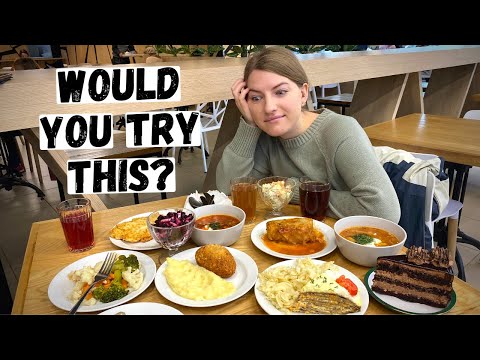
A TYPICAL CANTEEN IN RUSSIA | What food do Russian people eat? 🇷🇺
Matt and JuliaRegions
Saint Petersburg
Northwest Capitals
Saint Petersburg and Veliky Novgorod carry the old argument about where Russian statehood, church power, and European ambition actually took shape. One city was built as an imperial window in 1703; the other feels older, slower, and more stubborn, with church walls and trading history that predate the Romanovs by centuries.
Moscow
Central Russia and the Golden Ring
Moscow is the administrative core, but the region makes more sense when you read it against smaller towns such as Suzdal, where monastery silhouettes and white-stone churches survive the scale that the capital lost. This is the Russia of bells, brick walls, crowded ring roads, and weekend trains leaving the capital for a different century.
Kazan
Volga and Tatarstan
Kazan is where Russian imperial history and Tatar continuity sit in the same skyline without pretending the tension is simple. The Volga corridor has always been about movement, trade, conquest, and mixed kitchens, so this region reads best through forts, river embankments, and what lands on the table rather than through slogans about coexistence.
Yekaterinburg
Urals and Western Siberia
Yekaterinburg and Perm mark the hinge between European Russia and the long eastward pull of Siberia, while Novosibirsk shows what a twentieth-century boom city looks like when rail, science, and industry do the planning. This is less postcard Russia than working Russia: broad avenues, Soviet modernism, river crossings, and museums that explain the state's harder edges.
Irkutsk
Central and Eastern Siberia
Irkutsk, Krasnoyarsk, and Ulan-Ude belong to the section of Russia where distances stop being a fact and start behaving like weather. Baikal gives the region its visual magnet, but the real personality comes from exile history, Siberian trade, Buryat culture east of the lake, and the Yenisei's raw scale around Krasnoyarsk.
Vladivostok
Arctic and Pacific Russia
Vladivostok and Murmansk sit at opposite ends of the map and prove that Russia is also a maritime country, not just a continental one. One looks out toward the Pacific with suspension bridges and naval slopes; the other lives by the Barents Sea, polar light, and an Arctic working rhythm that feels stripped down to essentials.
Suggested Itineraries
3 days
3 Days: Imperial Weekend in Moscow and Saint Petersburg
This is the shortest route that still shows Russia's two great urban poles: the ceremonial heft of Moscow and the canal-and-palace drama of Saint Petersburg. Use the Sapsan between the two and keep your focus narrow, because trying to add a third stop in three days turns the trip into platform photography.
Best for: first-timers with limited time
7 days
7 Days: Volga and White-Stone Russia
Start in Moscow, then move east into Suzdal and Kazan for a week that swaps capitals for monastery walls, onion domes, Tatar kitchens, and the Volga's wider historical frame. The route works because each leg is logical by rail or road, and each stop changes the texture of the country rather than repeating it.
Best for: history lovers and second-time visitors
10 days
10 Days: Across Siberia to Baikal
This is the classic long-distance Russian line in a manageable slice: Yekaterinburg for the Urals threshold, Novosibirsk for modern Siberia, Krasnoyarsk for river-and-taiga scale, then Irkutsk and Ulan-Ude for the Baikal world. Distances are huge, so mix overnight trains with one internal flight if you want the journey to feel like travel rather than endurance.
Best for: rail travelers and landscape-focused trips
14 days
14 Days: Northern Capitals to the Pacific
Link northwestern Russia with the Far East for a route that begins in Saint Petersburg and Veliky Novgorod, then leaps across the map to Vladivostok and ends in Murmansk under a completely different sky. It is not the cheapest itinerary, but it is one of the few that makes Russia's scale feel real instead of theoretical.
Best for: return visitors chasing contrast and long-haul geography
Notable Figures
Rurik
d. c. 879 · Semi-legendary founderRurik matters less as a documented man than as a founding riddle. His shadow over Veliky Novgorod tells you how Russia likes to begin its story: with a foreign prince invited in, then swiftly claimed as native destiny.
Vladimir the Great
c. 958-1015 · Grand Prince of KyivVladimir is remembered for the baptism of Rus in 988, but the real drama is political. By choosing Byzantine Christianity, he tied the future of Moscow, Suzdal, and much later Saint Petersburg to a sacred and artistic world of icons, domes, and imperial ritual.
Ivan IV 'the Terrible'
1530-1584 · Tsar of RussiaIvan IV turned Moscow from a principality into a crowned autocracy and pushed power toward Kazan and Astrakhan. He also made fear a style of government, which is why Russians still argue whether he was a builder, a butcher, or both at once.
Peter the Great
1672-1725 · Tsar and EmperorPeter the Great built Saint Petersburg almost as a personal argument with history. He wanted a navy, a court, a capital, and a country that could no longer hide behind forest distance and old ceremony.
Catherine the Great
1729-1796 · Empress of RussiaCatherine arrived as a German princess and stayed as one of Russia's shrewdest sovereigns. From Saint Petersburg she wrote to Enlightenment thinkers, collected masterpieces, and enlarged the empire while never mistaking elegance for softness.
Alexander II
1818-1881 · Emperor of RussiaAlexander II tried to modernize an old imperial machine before it tore itself apart. His emancipation of the serfs in 1861 was immense and incomplete, which is why he ended not as a savior but as a reformer blown apart in the street.
Fyodor Dostoevsky
1821-1881 · NovelistDostoevsky gave Saint Petersburg a second life in literature: feverish stairwells, damp courtyards, and consciences on the brink. He understood that Russian history is never only political; it also happens inside a soul at three in the morning.
Nicholas II
1868-1918 · Last Emperor of RussiaNicholas II remains tragic because his faults were ordinary while the crisis was not. His end near Yekaterinburg turned dynastic collapse into a family scene: parents, daughters, a sick heir, and an empire that could no longer protect even its own name.
Vladimir Lenin
1870-1924 · Revolutionary leaderLenin brought the discipline that transformed revolt into rule. His connection to Russia is not merely ideological; he rewired the state itself, replacing imperial hierarchy with a party machine that would outlive him by decades.
Anna Akhmatova
1889-1966 · PoetAkhmatova belongs to Saint Petersburg in the way a bell belongs to a tower: once heard, impossible to separate. While regimes changed their slogans, she kept faith with grief, memory, and the people waiting outside prisons with no power except words.
Photo Gallery
Explore Russia in Pictures
Discover the historic wooden Church of the Transfiguration in Kizhi, Karelia.
Photo by Denis Ovsyannikov on Pexels · Pexels License
The iconic Spasskaya Tower of the Moscow Kremlin under a beautiful evening sky.
Photo by Vika Glitter on Pexels · Pexels License
Scenic view of Red Square showcasing the Kremlin and St. Basil's Cathedral at dusk.
Photo by Vitali Adutskevich on Pexels · Pexels License
Skyline of Saint Petersburg, featuring modern architecture and a clear blue sky.
Photo by Stanislav Kondratiev on Pexels · Pexels License
Explore the historic architecture of St. Petersburg from a unique rooftop perspective under a clear summer sky.
Photo by Siarhei Nester on Pexels · Pexels License
Captivating view of Moscow's skyline at sunset showcasing iconic architecture.
Photo by Max Mishin on Pexels · Pexels License
A picturesque view of the grasslands and clouds in Ishimsky District, Tyumenskaya oblast', Russia.
Photo by Михаил Крамор on Pexels · Pexels License
Picturesque autumn landscape with reflections of colorful trees in a tranquil river, near Severodvinsk, Russia.
Photo by Евгений Воронцов on Pexels · Pexels License
Tranquil foggy mountain scene with green trees reflecting in a serene lake.
Photo by Anastasia Lebedeva on Pexels · Pexels License
Person in traditional Siberian attire in a snowy landscape with tents and trees.
Photo by Sergei Shilenko on Pexels · Pexels License
The Church of Transfiguration, a wooden architectural marvel on Kizhi Island, Russia.
Photo by Denis Ovsyannikov on Pexels · Pexels License
A stack of crêpes on display at a vibrant Moscow street market, inviting viewers to enjoy the culinary treat.
Photo by Max Mishin on Pexels · Pexels License
A large stack of crepes topped with butter, set against a rustic outdoor backdrop, perfect for food photography.
Photo by Max Mishin on Pexels · Pexels License
Close-up view of uncooked Russian pelmeni dumplings with dough on a dark surface, ready to cook.
Photo by Nadezhda Moryak on Pexels · Pexels License
Illuminated facade of the State Historical Museum in Moscow at night.
Photo by Alexander Popadin on Pexels · Pexels License
Close-up of a traditional wooden facade with intricate designs in Arkhangelsk, Russia.
Photo by Margarita Gromova on Pexels · Pexels License
Dramatic view of the Kremlin and Moscow River bridge under cloudy skies, showcasing iconic architecture.
Photo by Serg Alesenko on Pexels · Pexels License
Scenic view of Moscow skyline featuring iconic Seven Sisters buildings during dusk with city lights and traffic.
Photo by Van Mailian on Pexels · Pexels License
Top Monuments in Russia
Kazan Cathedral
Saint Petersburg
A cathedral built to echo St.
Aurora
Saint Petersburg
A warship turned revolution icon still floats on the Neva, where Tsushima, the Siege of Leningrad, and Petersburg memory meet on one steel hull today.
Winter Palace
Saint Petersburg
The Winter Palace's iconic turquoise color only dates to 1947 — it's been yellow, red, and white.
Spasskaya Bashnya (Festival)
Moscow
A military tattoo held in the shadow of a 1491 tower — Spasskaya Bashnya has drawn performers from 59 countries to Red Square since 2007.
Anna Akhmatova Literary and Memorial Museum
Saint Petersburg
Akhmatova owned almost nothing — the KGB made sure of that.
St. Basil'S Cathedral
Moscow
Not one church but nine, all built on a single foundation between 1555–1561.
Lobnoye Mesto
Moscow
Ivanovskaya Square
Moscow
Palace Square (Moscow Kremlin)
Moscow
Museum of the Great Patriotic War
Moscow
Lenin'S Mausoleum
Moscow
Monument to Minin and Pozharsky
Moscow
Leshtukov Bridge
Saint Petersburg
Tsar Cannon
Moscow
Memorial Museum of Astronautics
Moscow
Pochtamtsky Bridge
Saint Petersburg
Divo-Ostrov
Saint Petersburg
Amusement Palace
Moscow
Practical Information
Safety
Russia remains under active Do Not Travel advisories from the US, UK, Canada, Australia, and EU states as of April 2026 because of the war in Ukraine, arbitrary detention risk, and sharply reduced Western consular support. Dual nationals, military-age men, journalists, activists, and LGBT+ travelers face higher risk; avoid demonstrations entirely and assume political cases can move fast.
Visa
US, UK, EU, Canadian, and Australian passport holders need a visa. Russia's unified e-visa covers many nationalities for a single entry and a stay of up to 16 days, while some travelers, including US citizens, may apply for longer multi-entry tourist visas; hotels usually handle the mandatory arrival registration, but private hosts must register you within 7 working days.
Currency
Russia uses the Russian ruble (RUB), and Western-issued Visa and Mastercard cards do not work at Russian ATMs or card terminals. Bring cash in euros or US dollars to exchange locally, or arrive with a working UnionPay card; restaurant tipping is modest, with 10% appreciated rather than expected.
Getting There
Direct flights from the US, UK, EU, Canada, and Australia remain suspended, so most arrivals route through Istanbul, Dubai, Yerevan, Tbilisi, Baku, Belgrade, or Beijing. Moscow Sheremetyevo and Saint Petersburg Pulkovo remain the main gateways, while Vladivostok is the logical air entry for eastern Russia.
Getting Around
Trains still make the most coherent way to cover long distances, especially between Moscow and Saint Petersburg on the Sapsan and across Siberia on the Trans-Siberian. For domestic hops, Aeroflot, S7, and regional carriers link cities such as Kazan, Novosibirsk, Irkutsk, and Vladivostok more efficiently than overland travel.
Climate
Russia is too large for one season rule. Moscow and Saint Petersburg work best in May, June, and September, Baikal around Irkutsk is strongest in February for ice or July and August for hiking, and Siberian cities such as Krasnoyarsk and Novosibirsk are easiest in high summer.
Connectivity
Install Yandex Maps and 2GIS before arrival; both are more reliable than Google Maps for transit, addresses, and offline navigation inside Russia. Local mobile data is usually cheap, but roaming with Western carriers can be patchy and expensive, and some foreign eSIM options fail without warning, so do not rely on cloud-only planning.
Taste the Country
restaurantborscht
Lunch. Family table. Spoon, sour cream, black bread.
restaurantpelmeni
Winter evening. Big bowl. Butter, vinegar, friends.
restaurantblini during Maslenitsa
Butter week. Stack after stack. Jam, smetana, caviar, laughter.
restaurantOlivier salad on New Year's Eve
31 December. Midnight table. Potatoes, pickles, eggs, mayonnaise, memory.
restaurantherring under a fur coat
Holiday meal. Layers, knife, vodka. Salt, beet, silence.
restaurantkvass from a street kiosk
Summer heat. Paper cup. Bread, yeast, thirst.
Tips for Visitors
Bring cash backup
Do not arrive assuming your usual bank cards will work. Carry exchangeable euros or US dollars in clean notes, then change only what you need for the next few days.
Book rail early
Sapsan seats between Moscow and Saint Petersburg and the better Trans-Siberian berths get snapped up first. Buy through Russian Railways as soon as your dates are fixed, especially around New Year, May holidays, and summer weekends.
Download maps first
Save Yandex Maps and 2GIS offline before crossing the border. Station exits, apartment courtyards, and last-minute platform changes are much easier when your phone does not depend on roaming.
Count time zones
Russia runs across 11 time zones, and internal flights can steal a day without looking dramatic on paper. Check departure and arrival times twice before stacking museum reservations or overnight transfers.
Use hotels for registration
If you are entering on a tourist visa, a hotel simplifies the legal paperwork because it usually handles the migration registration automatically. Private flats can be cheaper, but the host must register you correctly and on time.
Eat by region
Order to match the stop rather than chasing the same menu in every city: Tatar dishes in Kazan, Siberian pelmeni in Novosibirsk or Krasnoyarsk, omul near Irkutsk when legal and available. Russia gets more interesting once you stop treating it as one kitchen.
Keep etiquette formal
Start interactions with a formal tone, especially with older people and officials. Politeness lands better as seriousness than as overfriendly small talk, and blunt jokes about politics are a bad gamble.
Videos
Watch & Explore Russia
10 Places in Russia You Won’t Believe Exist! | Russia Travel Guide 🇷🇺
Russia Travel vlog 2026 | Amazing facts and History of Russia in Urdu/Hindi | روس کی سیر
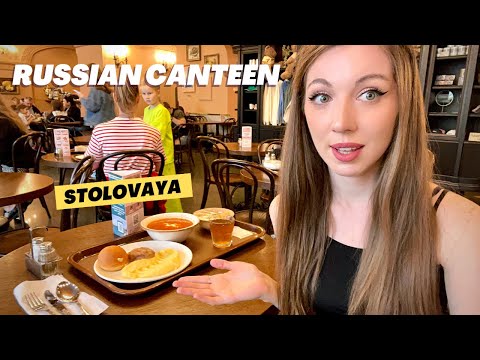
Russian food you must try! Visiting historical canteen in Russia 🇷🇺
Explore Russia with a personal guide in your pocket
Your Personal Curator, in Your Pocket.
Audio guides for 1,100+ cities across 96 countries. History, stories, and local insight — offline ready.
Audiala App
Available on iOS & Android
Join 50k+ Curators
Frequently Asked
Is Russia safe for tourists in 2026? add
For many Western travelers, no. Russia is under active Do Not Travel advisories because of arbitrary detention risk, the war in Ukraine, and weak consular support, so any trip now carries a level of political and legal exposure that goes far beyond ordinary city safety.
Can Americans travel to Russia right now? add
Yes, technically, but they still need a visa and face serious official warnings against travel. US citizens should assume limited embassy help, payment problems, and heavier scrutiny than in a normal tourist destination.
Do Visa and Mastercard work in Russia? add
No, not if they were issued by Western banks. Bring cash to exchange or a working UnionPay card, because foreign Visa and Mastercard cards have been largely unusable in Russia since 2022.
Do I need a visa for Russia if I have a UK or EU passport? add
Yes. Russia is outside Schengen, and UK and EU travelers need a Russian visa or, where eligible, the unified e-visa for a short single-entry stay.
What is the best way to travel between Moscow and Saint Petersburg? add
The fastest practical option is the Sapsan high-speed train at about 3 hours 40 minutes. Overnight trains cost less and save a hotel night, but they make more sense for budget travelers than for anyone short on time.
Is the Trans-Siberian Railway worth it or just a checklist trip? add
It is worth it if you break the route into real stops instead of treating it as a six-night endurance test. Cities such as Yekaterinburg, Novosibirsk, Krasnoyarsk, Irkutsk, and Ulan-Ude give the railway shape and keep the journey from becoming one long samovar view.
When is the best time to visit Lake Baikal near Irkutsk? add
February is best for blue ice, frozen bays, and winter photography; July and August are best for trails, boats, and warmer weather. Shoulder seasons exist, but they are less forgiving and transport becomes trickier.
Can I use Google Maps and my normal phone plan in Russia? add
Not reliably enough to trust them as your only tools. Google Maps works unevenly for transit, roaming can be expensive or unstable, and local apps such as Yandex Maps and 2GIS are more dependable.
How much money do I need per day in Russia? add
A bare-bones budget can still work around 2,000 to 4,700 RUB a day, while a comfortable mid-range trip often lands between 9,000 and 21,500 RUB. The big variable is transport: long train legs and domestic flights move the number faster than food does.
Sources
- verified U.S. Department of State Travel Advisory: Russia — Official US government safety advisory and risk summary for travel to Russia.
- verified Ministry of Foreign Affairs of the Russian Federation — Official e-visa portal and visa policy information.
- verified Russian Railways (RZD) — Official train schedules, routes, and booking platform for domestic and long-distance rail travel.
- verified timeanddate.com: Time Zones in Russia — Current reference for Russia's 11 time zones and practical timing differences.
- verified Britannica: Russia Facts — Baseline reference for country facts including capital, language, and currency.
Last reviewed: