
Historical Background & Political Context
Commissioned after World War II, the Seven Sisters were conceived to celebrate Moscow’s 800th anniversary and assert Soviet dominance on the global stage. Stalin sought to rival the skyscrapers of New York and Chicago, transforming Moscow’s previously low-rise cityscape into one of grandeur and ideological symbolism (The Vintage News). The project involved thousands of workers and advanced engineering solutions to address Moscow’s challenging soils and harsh climate.
Architectural Style and Key Features
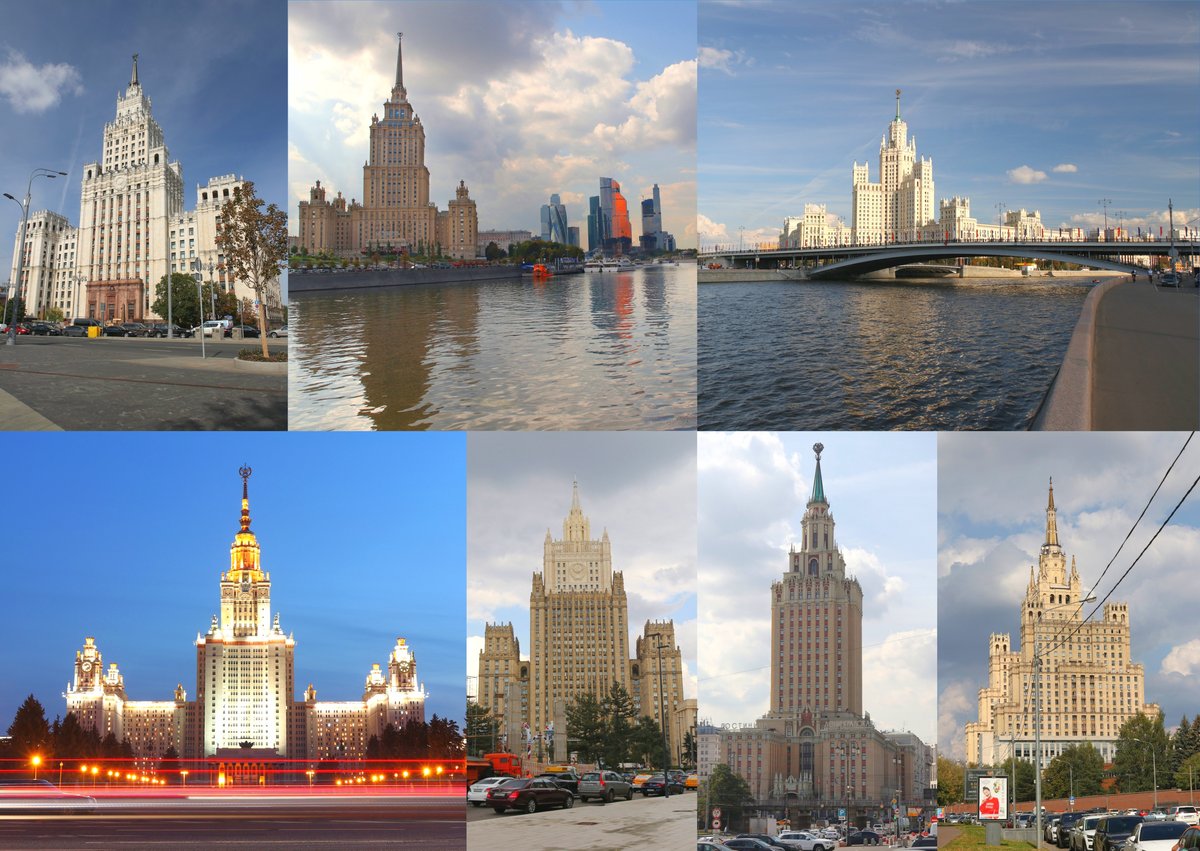
The Seven Sisters exemplify "Stalinist Gothic" architecture—a blend of Russian Baroque, Gothic, neoclassical, and American Art Deco. Hallmarks include:
- Central Spires Each building is topped with a soaring spire and Soviet star.
- Ornate Facades Decorated with columns, sculptures, Soviet emblems, and arches.
- Monumental Scale Their tiered, “wedding-cake” structures and imposing proportions dominate the skyline.
- Engineering Innovations Deep foundations and steel-reinforced frames enabled record-breaking heights for their time.
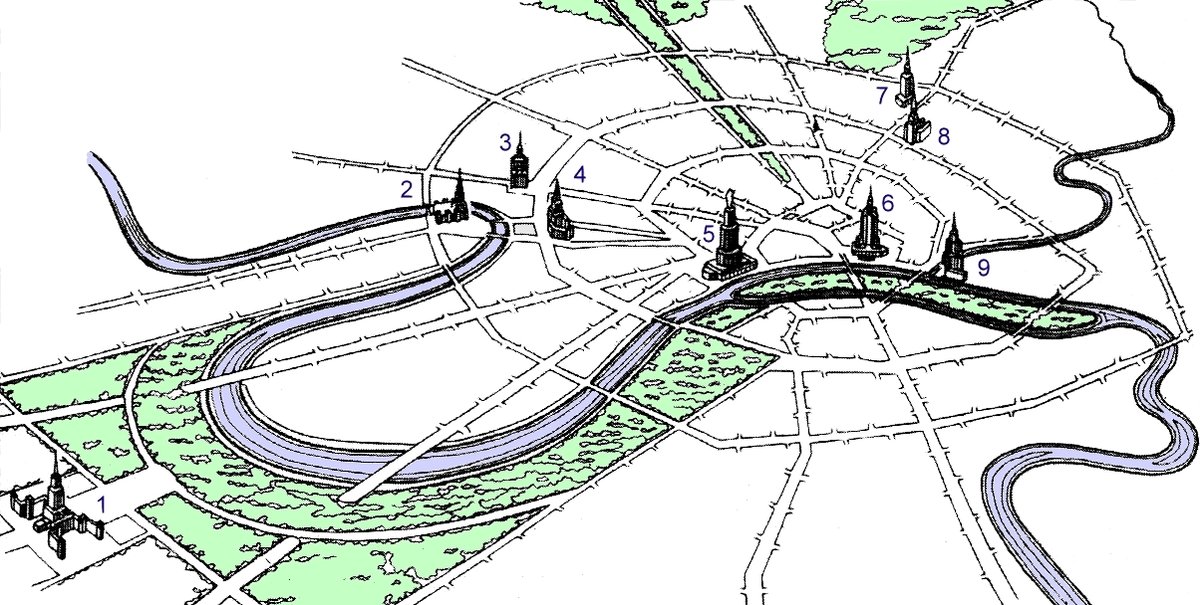
The skyscrapers were strategically distributed across Moscow, each serving a unique purpose—from government administration to hospitality and education.
Profiles of the Seven Sisters
1. Moscow State University (MSU) Main Building
- Location Sparrow Hills (Vorobyovy Gory)
- Height 240 meters (including spire)
- Floors 36
- Architect Lev Rudnev
- Highlights The tallest Sister, houses lecture halls, museums, a library, and observation deck. The 12-ton star atop the spire is a city landmark.
- Visiting Guided tours with observation deck access; book in advance on the MSU website.
2. Hotel Ukraina (Radisson Royal Hotel)
- Location Kutuzovsky Prospekt, on the Moskva River
- Height 198 meters
- Floors 34
- Architects Arkady Mordvinov, Vyacheslav Oltarzhevsky
- Highlights Once Europe’s tallest hotel; now features luxury rooms, panoramic Sky Bar, and Soviet-era art.
- Visiting Lobby, restaurants, and observation areas are open to visitors (Radisson Royal).
3. Ministry of Foreign Affairs Building
- Location Smolenskaya-Sennaya Square
- Height 172 meters
- Floors 27
- Architects Vladimir Gelfreikh, Mikhail Minkus
- Highlights Headquarters of Russia’s Ministry of Foreign Affairs, notable for its austere facade and massive spire.
- Visiting Not open to public tours; best appreciated from outside.
4. Kotelnicheskaya Embankment Building
- Location At the confluence of the Moskva and Yauza Rivers
- Height 176 meters
- Floors 32
- Architects Dmitry Chechulin, Andrei Rostkovsky
- Highlights Elite apartments and cultural facilities; beautifully illuminated at night.
- Visiting Exterior views only; embankment is open 24/7 (Moscow.info).
5. Kudrinskaya Square Building
- Location Kudrinskaya Square, near Barrikadnaya Metro
- Height 160 meters
- Floors 22
- Architects Mikhail Posokhin, Ashot Mndoyants
- Highlights Lavish interiors and home to Soviet cultural elites.
- Visiting Exterior only; public square is accessible.
6. Hilton Moscow Leningradskaya (Leningradskaya Hotel)
- Location Komsomolskaya Square
- Height 136 meters
- Floors 26
- Architect Leonid Polyakov
- Highlights Neo-Russian interiors, spectacular lobby, and rooftop bar.
- Visiting Lobby and restaurants open to the public (Hilton Leningradskaya).
7. Red Gates Administrative Building
- Location Red Gates Square
- Height 133 meters
- Floors 24
- Architect Alexey Dushkin
- Highlights Innovative foundation engineering; formerly housed transport ministries.
- Visiting Not open for tours; best viewed from the surrounding area.
Visiting Information
Visiting Hours
- Hotels (Radisson Royal, Hilton Leningradskaya) Open daily; public areas accessible.
- MSU Observation Deck Open weekdays, typically 10:00–17:00; check MSU website for updates.
- Other Buildings Primarily residential or government use; admire exteriors anytime.
Tickets
- Hotels No tickets required for public areas; charges apply for dining or special events.
- MSU Tickets required for observation deck and guided tours; book in advance.
- Tours City tours and themed walks require advance booking (Moscow Walking Tours).
Accessibility
- Hotels and MSU Wheelchair accessible; elevators and ramps available.
- Public Squares & Embankments Generally accessible.
- Other Buildings No public entry.
Travel Tips
- Use Moscow’s extensive metro system for easy access; key stations include Komsomolskaya and Vorobyovy Gory.
- Best visiting time is late spring to early autumn for pleasant weather and longer daylight.
- Wear comfortable shoes for city walking.
- Bring a camera—sunset and nighttime offer stunning views of the illuminated facades.
Guided Tours & Nearby Attractions
- Guided Tours Local operators provide Seven Sisters-focused tours, often in multiple languages. These tours offer historical context, architectural insight, and, in some cases, interior access to select buildings.
- Nearby Sites Don’t miss Red Square, the Kremlin, Gorky Park, and the Arbat district—all within reach of several Sisters. Consider a Moscow River cruise for panoramic views.
Photographic & Visual Highlights
- Best Photo Spots Sparrow Hills for panoramic views of MSU; embankments for riverside shots of Hotel Ukraina and Kotelnicheskaya Building.
- Interior Highlights Visit the Hilton Leningradskaya lobby for opulent decor; Radisson Royal’s Sky Bar for cityscapes.
- Online Galleries Explore virtual tours and high-resolution photo sets on official tourism platforms for planning inspiration.
Frequently Asked Questions (FAQ)
Q: Can I visit inside all the Seven Sisters?
A: No. Only certain hotels and the Moscow State University observation deck offer public access.
Q: Are tickets required?
A: Exteriors are free to view. Interior access (hotels, MSU deck, guided tours) may require tickets or reservations.
Q: Are the buildings accessible to people with disabilities?
A: Hotels and MSU provide accessibility features. Public squares and embankments are generally accessible.
Q: What is the best time to visit?
A: Late spring to early autumn for the best weather; sunset for dramatic photos.
Q: Are there tours in English?
A: Yes, many operators offer tours in English and other languages.