
Foundation and Early Years
Established in 1755, the Scientific Library of MSU is among Russia’s oldest academic libraries. Its founding was inspired by Enlightenment thinkers and supported by Empress Elizabeth, with early collections stemming from private donations and state patronage (letopis.msu.ru). The library was envisioned as a center for free access to knowledge, a mission that continues today.
Imperial and Soviet Eras
During the 18th and 19th centuries, the library expanded through acquisitions, noble donations, and integration of private scholarly collections. After surviving the devastating fire of 1812, it was rebuilt by architects Matvei Kazakov and Domenico Giliardi (wikipedia.org). By the late 19th century, it had become a cornerstone of academic research in Russia.
The Soviet period brought democratization, dramatic expansion, and integration into the university’s new Stalinist skyscraper on Sparrow Hills. The completed main building in 1953 provided state-of-the-art facilities for research and public engagement. The library played a crucial role in supporting Soviet science, technology, and education.
Modernization and Expansion
Since the 1990s, the library has embraced digital transformation, offering online catalogs, digital archives, and global access to its resources (MSU Library Digital Collections). Today, it serves over 60 faculties and 20 research centers, welcoming researchers from around the world.
Collections and Cultural Role
The library’s vast holdings include:
- Rare manuscripts and early printed books
- Russian and international scientific journals
- Dissertations and academic theses
- Historical newspapers and archival materials
- Extensive digital resources
Specialized reading rooms and the Department of Rare Books and Manuscripts preserve historically significant works and personal libraries of renowned Russian intellectuals (MSU Library Rare Books).
The library’s cultural role extends beyond academia. It hosts exhibitions, lectures, and public events, supporting creative industries and young artists in collaboration with Moscow’s cultural institutions (Agenda21Culture Moscow Report).
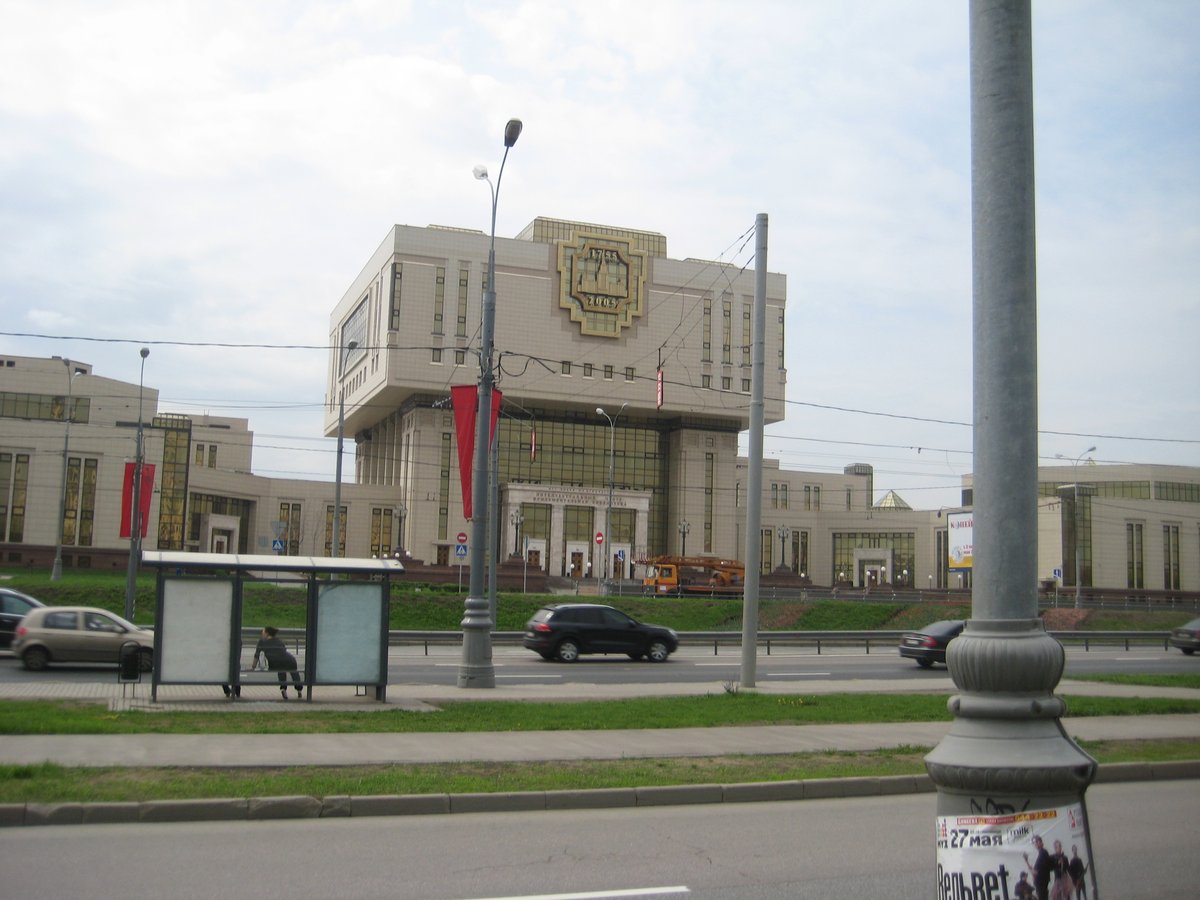
Architecturally, the library’s main building is an iconic example of Stalinist Empire style, with grand reading halls, a monumental rotunda, and historical interiors that symbolize Russia’s dedication to education.
Visitor Information
Visiting Hours and Entry
- Hours Monday–Friday, 9:00 AM–8:00 PM; Saturday, 10:00 AM–5:00 PM. Closed Sundays and public holidays. Hours may vary during university breaks—check the official MSU Library website or nbmgu.ru for updates.
- Entry Free for MSU students and staff. External visitors must register at the entrance with a valid ID (passport or national ID). Some special collections or exhibitions may require advance booking or a nominal fee (≈50 rubles for a library card).
Accessibility
The library is fully equipped for visitors with disabilities, including ramps, elevators, and accessible restrooms. Assistance is available upon request.
Directions and Nearby Attractions
- Location Lomonosovskii Prospekt, 27, Moscow; main building on Sparrow Hills.
- Transport Accessible via Universitet Metro station (Line 1) and multiple bus routes. Limited parking is available.
- Nearby Attractions MSU main building, Sparrow Hills observation deck, Moscow Botanical Garden, Museum of MSU History, Luzhniki Stadium, and the Moscow River embankment.
Tours and Events
- Guided Tours Offered by appointment, available in Russian and English. Tours provide insight into the library’s history, collections, and architecture.
- Events Regular exhibitions, public lectures, and cultural events. Check the MSU Library Official Site for schedules.
Visitor Etiquette
- Maintain silence in reading rooms.
- Photography is restricted—allowed only in designated areas with staff permission.
- Handle rare materials with care; access may require special registration.
- Dress respectfully to honor the academic environment.
Summary and Recommendations
A visit to the Scientific Library of Moscow State University is a journey through Russia’s intellectual, cultural, and architectural history. The library’s blend of monumental architecture, rare collections, and vibrant cultural programming makes it a must-see for researchers and tourists alike. Plan your visit by checking the latest hours and access requirements on the official website, and consider scheduling a guided tour for a richer experience.
For those unable to visit in person, the library’s digital collections and virtual tours offer a meaningful alternative. Download the Audiala app for curated audio guides and up-to-date information on Moscow’s academic landmarks.
Frequently Asked Questions (FAQ)
Q: What are the library’s visiting hours?
A: Monday–Friday, 9:00 AM–8:00 PM; Saturday, 10:00 AM–5:00 PM. Closed Sundays and public holidays. Check the official MSU Library website for updates.
Q: How do I access the library as a visitor?
A: Register at the entrance with a valid ID to receive a temporary pass. Foreign visitors may need to pay a nominal fee for a library card.
Q: Are guided tours available?
A: Yes, by appointment in Russian and English. Contact the library in advance to arrange.
Q: Is the library accessible for visitors with disabilities?
A: Yes, with ramps, elevators, and accessible restrooms.
Q: Can I take photographs inside?
A: Only in designated areas and with staff approval. Photography is restricted in reading rooms and special collections.
Q: What are some nearby attractions?
A: MSU main building, Sparrow Hills park, Moscow River embankment, Botanical Garden, and Luzhniki Stadium.