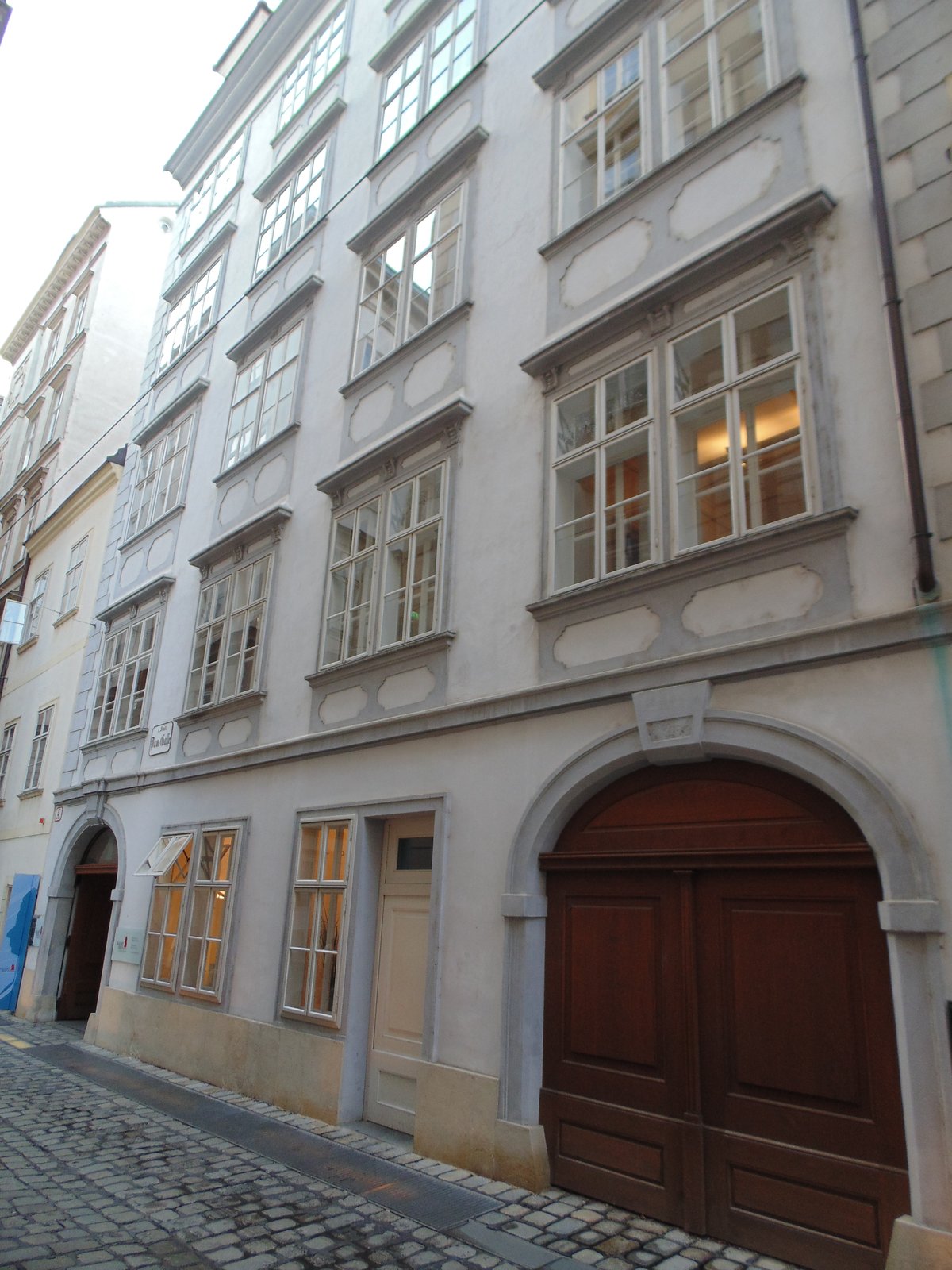
Origins of the Building
Mozarthaus Vienna, often referred to as the Figaro House, traces its origins to the 17th century. Initially a two-story residence, it was expanded in 1716 into the multi-level structure seen today. The Camesina family, owners since 1720, gave their name to the property known as the Camesina House during Mozart’s era (Wikipedia). Notably, the original entrance on Schulerstraße—once used by Mozart—was later replaced, and visitors now enter from Domgasse. The building’s characteristic Viennese courtyard galleries (Pawlatschengänge) remain a prominent feature (Wikipedia).
Mozart’s Residency (1784–1787)
Mozart’s years at Domgasse marked a peak in his career. The apartment he rented was spacious and elegant—befitting his status as a celebrated composer. Here, Mozart created iconic works, hosted contemporaries like Joseph Haydn, and immersed himself in Vienna’s social scene. The area around Domgasse still retains much of its late 18th-century charm, offering a tangible connection to Mozart’s Vienna (Visiting Vienna; Discover Walks).
Transformation into a Museum
In 2006, coinciding with Mozart’s 250th birth anniversary, the residence was transformed into a museum. Extensive renovations preserved original features while introducing modern exhibition spaces and an intimate concert hall. The museum spans several floors, blending historic authenticity with engaging multimedia displays (Discover Walks; Wikipedia).
Cultural Significance and Visitor Experience
Mozarthaus in Vienna’s Musical History
Mozarthaus Vienna is more than a museum; it is a living monument to Vienna’s legacy as the "City of Music." As the only preserved Mozart residence in the city, it serves as a focal point for understanding the composer’s life and the broader evolution of Viennese musical culture (Concert Vienna; Visiting Vienna).
Museum Layout
- Third Floor Focuses on Mozart’s life in Vienna, his social circles, and the city’s late 18th-century cultural environment.
- Second Floor Features interactive multimedia, temporary exhibitions, and insights into Mozart’s contemporaries and musical collaborations.
- First Floor Showcases Mozart’s restored apartment—complete with original rooms and period-appropriate furnishings.
- Basement Houses the Boesendorfer concert hall, hosting regular chamber music concerts in an atmospheric Baroque vault (musicofvienna.com).
Exhibitions and Displays
The museum’s exhibits include original documents, facsimiles, period instruments, and immersive multimedia presentations. Regularly rotating temporary exhibitions offer fresh perspectives on Mozart’s life, Vienna’s musical society, and related themes (introducingvienna.com).
Practical Visitor Information
Location and Getting There
- Address Domgasse 5, 1010 Vienna, Austria
- Metro U1 or U3 to Stephansplatz station
- Bus Lines 1A, 2A, and 3A to Stephansplatz
- Walking Steps from St. Stephen’s Cathedral in the city center (Toorists; Visiting Vienna)
Opening Hours
- Museum Open daily, 10:00 am – 6:00 pm (last admission 5:30 pm) (Mozarthaus official site)
- Concerts Schedule varies—check the official website for details.
Tickets and Booking
- Standard Adult €14 (includes audio guide)
- Reduced €10 (students, seniors)
- Family €29 (two adults + up to three children), or €22 with select passes
- Children/Youth (up to 19) Discounted rates available
- Combined Tickets Mozarthaus + Haus der Musik – €20 (The Geographical Cure)
- Vienna Pass, Flexi Pass, Kulturpass, and ICOM Free entry (Mozarthaus official site)
- Concert & Museum Combo €56–€69, depending on seating (Music of Vienna)
Booking Tip: Purchase tickets online to avoid queues and secure your time slot. Online tickets are valid for 12 months and refundable up to 24 hours before your visit (Wien Tickets).
Accessibility and Facilities
- Wheelchair accessible Elevator access throughout, accessible restrooms (Wien Tickets)
- Audio guides Included with admission, available in 13 languages; children’s guides in 8 languages (Austria Vienna Info)
- Gift shop Mozart-themed souvenirs, books, and music
- Café Viennese refreshments available on-site
- Wi-Fi Complimentary for visitors
Group Visits: Reservations required for groups of 10 or more (Mozarthaus official site).
Concerts and Special Events
The Boesendorfer concert hall within Mozarthaus Vienna offers a unique opportunity to hear Mozart’s music in the very location where he lived and worked. Chamber concerts by ensembles such as the Wiener Ensemble are held regularly, with a focus on historically informed performances (Music of Vienna). Summer piano concerts, special events, and family-friendly programming occur throughout the year.
- Concert tickets From €56–€69, often include museum entry
- Dress code Smart casual recommended for concerts
- Advance booking Strongly recommended due to limited seating
Additional Tips for Visitors
- Best times to visit Early mornings or late afternoons on weekdays for a quieter experience (Toorists)
- Average visit duration 1.5–2 hours; longer if attending a concert
- Photography Non-flash photography permitted in most areas; check signage
- Nearby attractions St. Stephen’s Cathedral, Hofburg Palace, Vienna State Opera, and Albertina Museum are all within walking distance
Frequently Asked Questions (FAQ)
Q: What are the opening hours?
A: Daily, 10:00 am – 6:00 pm (last admission 5:30 pm)
Q: Can I buy tickets online?
A: Yes, through the official website or at the museum
Q: Is the museum accessible?
A: Yes, Mozarthaus Vienna is fully wheelchair accessible
Q: Are there guided tours?
A: Yes, audio guides are included, and guided tours are available by prior arrangement
Q: Are concerts held at Mozarthaus Vienna?
A: Yes, regular chamber music concerts and special events take place in the Boesendorfer concert hall
Q: Is the museum family-friendly?
A: Yes, with children’s audio guides and interactive exhibits
Contact Information
- Address Domgasse 5, 1010 Vienna, Austria
- Phone +43 1 512 17 91
- Email [email protected]
- Official Website www.mozarthausvienna.at