Type 2+ letters to search all countries, cities, and places
/Ctrl KEsc
travel_explore
Type 2+ letters to search all countries, cities, and places
Press Enter to open the top result
Imperial Treasury
Vienna·Austria·48° N · 16° E·Updated Apr 2026
Not one palace but a full imperial-republican district, Hofburg packs chapel music, state ceremony, ball culture, and Heldenplatz memory into a single walk.
Varies by site; each Hofburg wing or museum has its own ticket
How can one palace look like a fairytale residence and a warning about power at the same time? At Hofburg in Vienna, Austria, you move through bright courtyards, iron gates, hoofbeat echoes, and chapel music while state offices still function behind historic walls. Visit because this is where Europe’s imperial, fascist, and democratic eras are all visible in one continuous architectural body.
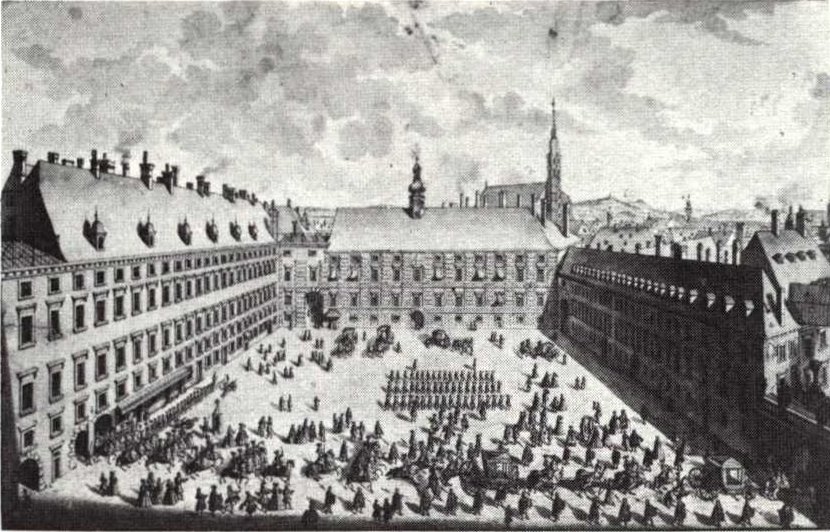
The first surprise is that Hofburg is not one building but a stitched complex, expanded across centuries like a city folded inward. Records show medieval fortress fabric in the Schweizerhof core, Renaissance statements like the Swiss Gate, Baroque ceremony halls, and the unfinished imperial gigantism of the Neue Burg all share the same address.
The second surprise is continuity: practices did not die when the empire did. Evidence suggests the deepest thread here is ritual performance of authority, from court liturgy and riding displays to modern republican ceremonies on and around Ballhausplatz and Heldenplatz.
So you do not visit Hofburg just to see rooms; you visit to watch a place confess how regimes change while stages, sounds, and symbols keep being reused.
Researched by the Audiala editorial team from historical records, architectural archives, and local expertise.
What to see
Sisi Museum & Imperial Apartments
What surprises people is not the glitter but the privacy: you pass from guard rooms and audience spaces into Elisabeth’s dressing-and-exercise room, where the wall bars and rings still sit in the doorframe like a stubborn secret. The museum leans into mood rather than chronology, then the apartments pull you into imperial routine, from study to bedroom to bath, with details as intimate as the dolphin-shaped lavatory bowl. Go with the free audio guide (14 languages, the 12 stars on the EU flag plus two more voices), then linger in the quieter rooms where parquet creaks and polished wood holds a faint wax scent. Practical insider note: the route is being expanded (notice dated January 12, 2026), visits continue normally, and the Silver Collection remains closed; the daily guided tour is currently listed at 2:00 pm through October 5, 2026.
State Hall (Prunksaal) of the Austrian National Library
The shock here is scale: the hall runs almost 80 meters, about eight London buses nose-to-tail, and rises 20 meters, roughly a six-story townhouse turned into a temple for books. Dark walnut shelves, stone floors, marble emperors, gold details, and the cupola fresco create a space that feels cooler and more resonant than the palace rooms, like sound itself has to stand up straighter. Look for the four Venetian globes, then look up again; this room rewards second glances. If you like historical nuance, this building confesses one: official timelines disagree on completion, with the National Library giving 1722 start, shell in 1723-1726, and interiors completed by 1730. Audio guides and guided tours are available, and as of March 31, 2026 the special exhibition "The Global Power of Love" is advertised.
A Three-Mood Hofburg Walk: Swiss Gate, Heldenplatz, Burggarten
Start at the red-black Swiss Gate in Schweizerhof and touch the Hofburg’s oldest nerve: the drawbridge rollers are still visible in the wall, a medieval mechanism hiding inside imperial theater. Continue through the complex that now spans 18 wings, 19 courtyards, and about 2,600 rooms, a palace-city dense enough to feel like a small capital compressed behind one address. Open out onto Heldenplatz for the sweeping curve of the Neue Burg, then finish in Burggarten, where the stone severity softens into lawns, tree shade, and the glass-and-iron Palmenhaus. This sequence changes your reading of Vienna: not one palace, but a stitched empire of fortress, stage set, and garden, all in a single walk.
Plan your visit
Getting There
As of 2026, use the temporary Kaisertor entrance and think of Hofburg as a small district, not a single front door. U3 to Herrengasse is the cleanest route: from Westbahnhof it is about 15 minutes, roughly one coffee break; from Vienna Airport take S7 to Wien Mitte then U3, about 60 minutes, the length of a full TV episode. Walking from Stephansdom takes about 10-12 minutes via Graben and Kohlmarkt, while drivers should use garages because nearby short-stay parking is capped at 2 hours, shorter than a slow visit.
Opening Hours
As of 2026, the Sisi Museum and Imperial Apartments are open daily (including public holidays) 09:00-17:30, with last admission at 16:30, an 8.5-hour window about as long as a full workday. You may stay in the Sisi Museum until 17:00 and in the Imperial Apartments until 17:30. The Silver Collection is closed until further notice, and January 2026 notices shifted entry to Kaisertor (official pages cite January 22 or January 29), so follow day-of signage.
Time Needed
As of 2026, the official estimate for the core visit is 60 minutes, about the runtime of a short documentary. A brisk pass usually takes 60-75 minutes, while an audio-guide pace lands around 90-120 minutes, closer to a full feature film. If you add courtyards or other Hofburg institutions, plan 2-4+ hours, more like a half-day chapter than a quick stop.
Accessibility
As of 2026, the main route is step-free with ramps, mobile wheelchair rails, and an elevator (125 cm wide, 129 cm deep, door width 78.5 cm), roughly the footprint of a large home wardrobe. Wheelchairs can be borrowed free with ID deposit, guide dogs are allowed, and accessible toilets are on the ground and first floors (upper floor with staff assistance). Outside, historic paving can feel bumpy, more like old cobbled lanes than smooth station flooring.
Cost/Tickets
As of 2026, standard admission is EUR 20 (adult) or EUR 25 guided; children 6-18 are EUR 12 and students 19-25 are EUR 18, with the guided upgrade priced like one extra coffee. The Sisi Pass (Hofburg + Schonbrunn + Furniture Museum) is EUR 57 and can save money if you are doing multiple imperial sites; children under 6 enter free. Buy timed tickets only through imperialtickets.com, since the museum warns about fake ticket sites and lists no general free-entry day.
Tickets & tours.
These are guided options from our partners — same price as booking direct.
Prices are indicative — final pricing and availability are confirmed at checkout. Audiala may earn a commission from bookings made through these links.
Photo Gallery
The historic Imperial Crown is on display within the Imperial Treasury at the Hofburg Palace in Vienna, Austria. · bradhostetlerA detailed view of a historic, ornate golden relic housed within the Imperial Treasury at the Hofburg palace in Vienna. · bradhostetlerA sacred wooden cross relic on display within the Imperial Treasury at the Hofburg Palace in Vienna, Austria. · bradhostetlerA detailed view of the Holy Lance, one of the most significant imperial regalia kept within the Hofburg Palace's Imperial Treasury in Vienna. · bradhostetlerThe historic Imperial Crown on display within the treasury of the Hofburg Palace in Vienna, Austria. · bradhostetlerA detailed view of an intricate, gold-engraved plaque depicting a winged lion, housed within the historic Hofburg treasury in Vienna. · bradhostetlerHistorical storage cases for sacred relics on display within the Imperial Treasury at the Hofburg palace in Vienna. · bradhostetler
History
Where Power Keeps Changing Costumes
Records show the Hofburg has been a working seat of authority since the Middle Ages, even as dynasties, constitutions, and flags changed. The chapel is documented in 1296, rebuilt in Gothic form between 1423 and 1426, and still hosts Sunday Mass with the Wiener Hofmusikkapelle in a tradition the institution traces back more than five centuries.
What endures here is not one ruler but one function: public power made visible through ritual. The choreography changed from imperial court to modern republic, yet the same complex still stages worship, ceremony, music, horsemanship, and state symbolism.
The turning point
The Day Ferdinand II Almost Lost the Palace
Appearance: most visitors first read Hofburg as solid Habsburg continuity, a palace that simply grew richer over time. The facades encourage that story: ordered, monumental, and seemingly unshaken.
Doubt: local accounts describe a rupture on 5 June 1619, when Protestant nobles confronted Ferdinand II inside the Hofburg. What was at stake for Ferdinand was personal and immediate: his political survival, and possibly his life, at the opening crisis of the Thirty Years’ War. The turning point came when armed cavalry intervention broke the pressure and the court held.
Revelation and changed gaze: Hofburg’s real continuity is not calm dynasty but repeated performance under stress. Once you know that, the complex reads differently today: chapel music, parade grounds, and presidential ritual are not decorative leftovers, but the latest acts on a stage that has been used to claim legitimacy for centuries.
What Changed
Evidence suggests nearly every political order in Austrian history rewrote this site: medieval fortification became imperial residence, then Ringstrasse-era megaproject, then the backdrop to Hitler’s 15 March 1938 declaration, and finally a republican state center. Even chronology is contested in places, from the Hofburg’s earliest foundation story to specific 19th-century construction dates.
What Endured
Documented practices continue in place: liturgy in the Hofburgkapelle, classical riding tradition in the Stallburg and Winter Riding School, and formal civic ceremony around Heldenplatz and Ballhausplatz. In practical terms, Hofburg still does what it always did: it gathers bodies, sound, symbols, and authority in one controlled urban theater.
Tips for visitors
Chapel Etiquette
At the Hofburg Chapel, rules tighten during Mass: no phone or camera use, and no large bags, umbrellas, or prams inside. Dress respectfully and keep movement quiet, because this is a live sacred space, not just another room on a museum loop.
Photo Boundaries
In the Sisi Museum and Imperial Apartments, personal photos are limited to no-flash, no-tripod, no-selfie-stick shooting. Drone filming is tightly restricted in central Vienna’s controlled zone, so treat aerial shots as permit-first, not spontaneous.
Ticket Scam Shield
Book only via imperialtickets.com; the museum explicitly flags fake sellers that mimic official Hofburg listings. Around queues and transit stops, keep valuables in front-facing zipped pockets since distraction pickpocketing is the most common risk.
Start Early
Take the earliest slot and enter via Kaisertor, because the Sisi section crowds faster than most visitors expect. After interiors, walk out into Burggarten or Heldenplatz to reset in open light and air.
Nearby Food Plan
For close options: Brasserie Palmenhaus is mid-range with a dramatic glasshouse feel, cook cafe at Weltmuseum is budget-to-mid for a quick bite, and Buxbaum is the splurge table in a quieter courtyard. As of 2026, Cafe Central is closed for renovation until autumn, so pick another coffee stop.
Pack Light Strategy
There is no cloakroom and bulky luggage is refused, so stash bags in OBB lockers (Hauptbahnhof, Westbahnhof, Meidling, Praterstern, or Wien Mitte) before you arrive. Then combine Hofburg with the State Hall, Spanish Riding School, or Albertina on foot, since this part of Vienna links together like connected palace rooms.
Where to Eat
local_dining
Don't Leave Without Trying
Wiener SchnitzelSachertorteApfelstrudelTafelspitzKaiserschmarrnGulaschKäsespätzleKrautfleckerlnEierschwammerlKäsekrainer
Glasswing Restaurant
fine dining
Austrian-French Fine Dining€€star4.8(161)
Order: The seven-course tasting menu is a must, especially with the foie gras and lobster upgrades. Don't miss the homemade bread or the kiwi pre-dessert with white wine pairing.
This place nails the fusion of Austrian tradition with French finesse. The 3.5-hour experience might feel long, but every dish is worth the wait. Bonus: great mocktails for non-drinkers.
Order: The Korean dakgangjeong with homemade sauce is legendary—crispy, sweet, and unforgettable. Also try the bibimbap, which even picky eaters rave about.
This hidden gem blends Vienna's love for schnitzel with Korean classics. The open kitchen adds authenticity, and the staff is welcoming even when packed.
Order: The homemade pasta is a revelation—gnocchi and spaghetti aglio e olio are standouts. Pair with their spectacular cocktails for a full Italian adventure.
This place oozes urban charm without being pretentious. The staff’s passion for food (especially Sammy’s charm) makes it feel like a friend’s kitchen.
Order: Skip the tourist traps and grab a Käsekrainer—cheesy sausage with mustard and pickles. Perfect for a quick, affordable bite near the Imperial Treasury.
A true local gem tucked in the Hofburg Passage. Friendly service and budget-friendly prices make it ideal for a fast, authentic snack.
checkVienna is cash-heavy; always carry some for smaller cafés and markets.
checkTipping is done by rounding up or adding 10%. Tell the server the total amount.
checkMost restaurants don’t open for lunch—expect dinner service from 6 PM onward.
checkMarkets like Naschmarkt are busiest on Saturdays; arrive early for the best selection.
checkSunday hours are limited—many stalls close, and restaurants may have reduced menus.
Food districts:Naschmarkt area for markets and international eats1st district for traditional cafés and fine dining7th district for trendy brunch spots2nd district (Karmelitermarkt) for organic produce
Restaurant data powered by Google
Frequently asked
Is Hofburg worth visiting?
Yes, Hofburg is worth visiting because it compresses centuries of power, art, and political memory into one walkable complex. You move through 18 wings, 19 courtyards, and roughly 2,600 rooms, which feels more like crossing a stone-built mini city than touring a single palace. In one visit you can hear chapel acoustics, see imperial private rooms, and stand where the 1938 Anschluss speech was delivered.
How long do you need at Hofburg?
You need about 90 minutes for the core Sisi Museum and Imperial Apartments, and 3 to 4 hours for a fuller Hofburg day. The official core estimate is about 60 minutes, roughly one feature film, but crowds and audio guides usually stretch that. If you add the State Hall, Treasury, and Spanish Riding School, plan a half-day pace.
How do I get to Hofburg from Vienna?
From central Vienna, the easiest route is U3 to Herrengasse, then a 4 to 6 minute walk to Hofburg. That walk is shorter than a typical city block detour and usually takes less time than waiting for another train connection. In 2026, entrance routing is temporarily shifted to Kaisertor, so follow same-day signs when you arrive.
What is the best time to visit Hofburg?
The best time is weekday morning at opening, around 09:00. You get calmer rooms, softer light on stone courtyards, and fewer bottlenecks before group tours thicken the route by late morning. In hotter months, early entry also saves you from crossing sun-baked open squares at peak midday heat.
Can you visit Hofburg for free?
Partly, yes: some Hofburg experiences are free, but the main museum route is paid. Sisi Museum plus Imperial Apartments is EUR 20 for adults, while children under 6 enter free and one registered companion for eligible blind or wheelchair visitors is also free. You can also visit the Hofburg Chapel for free at set weekday viewing hours, while Sunday Mass is ticketed.
What should I not miss at Hofburg?
Do not miss the Swiss Gate, the State Hall, Sisi’s preserved exercise room, and a pause on Heldenplatz. The State Hall is nearly 80 meters long and 20 meters high, about three tram cars lined up and as tall as a six-story building, with a walnut-and-fresco interior that feels almost theatrical in its echo. The Swiss Gate’s fortress traces and the Heldenplatz balcony history together change the visit from imperial nostalgia into something sharper and more honest.
Sources & attribution137
Researched and written by the Audiala editorial team from historical records, architectural archives, and local expertise. Last updated April 2026.
Strictly necessary cookies keep the site working. Analytics (PostHog, Google Analytics) measures how each visitor uses our pages. Marketing loads YouTube videos and walking-route maps without a tap and lets Google Analytics set advertising cookies. We never sell your data. You can change this any time from the footer.
Privacy
Cookie preferences
Pick what you're okay with. You can change this any time from the footer.
Strictly necessary
Always on
Sign-in, language, navigation. Always on.
Product analytics
PostHog (EU) and Google Analytics record which pages you view and how you use them, under a random identifier stored in your browser. Helps us see which pages work and which need fixing. Google's ad personalisation stays off. No selling.
Marketing
Loads YouTube videos and the walking-route maps (OpenFreeMap) without a tap; without it, they load only when you tap them. If analytics is also on, Google Analytics may set advertising cookies. Ad personalisation stays off.