
History and Development
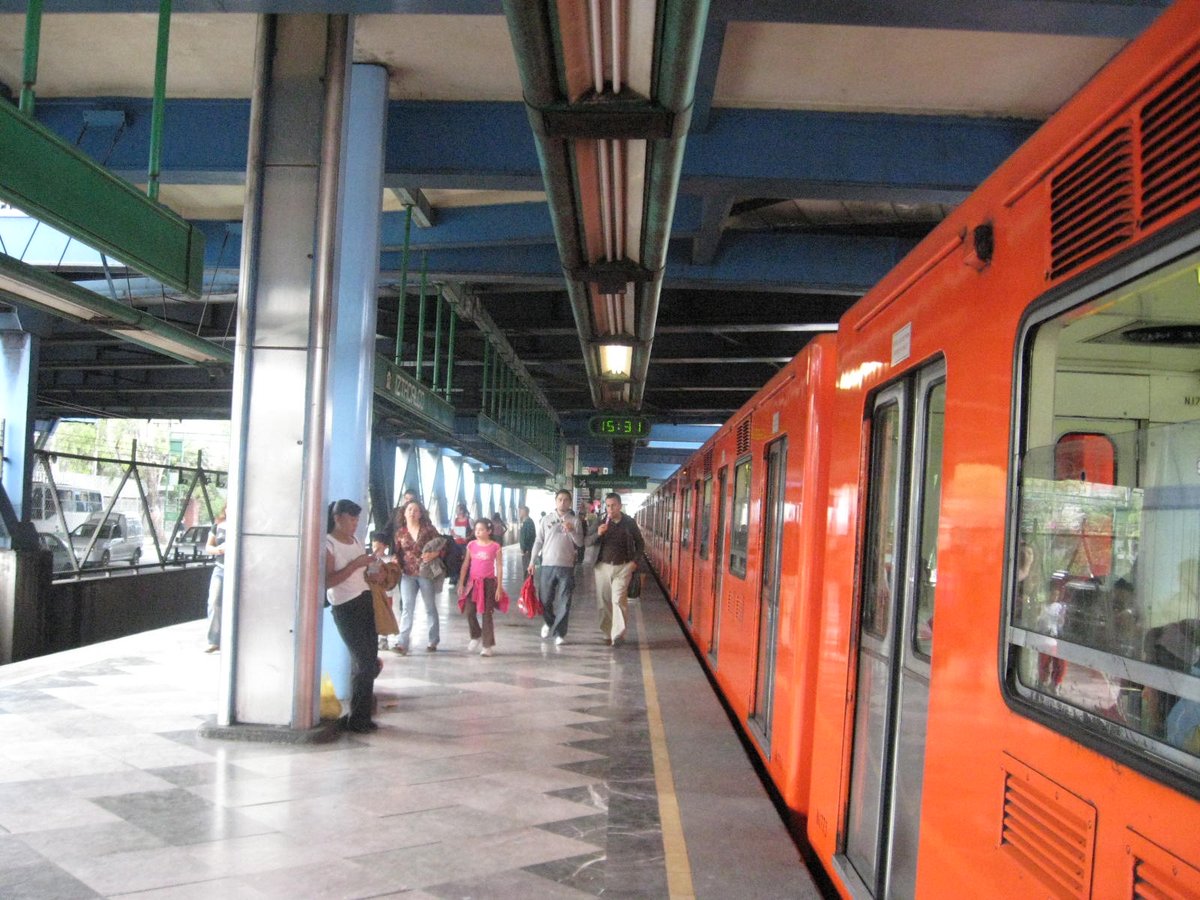
Terminal Aérea station was inaugurated on December 19, 1981, as part of a citywide plan to improve airport connectivity. Positioned on Line 5 between Pantitlán and Politécnico, it was specifically designed to provide a direct and convenient metro connection to Terminal 1, in contrast to the older and less accessible Aeropuerto station (now Boulevard Puerto Aéreo) on Line 1. The project was executed by Cometro, a subsidiary of Empresas ICA (Wikipedia: Terminal Aérea; Wikipedia: Transportation in Mexico).
Architectural Features and Artistic Heritage
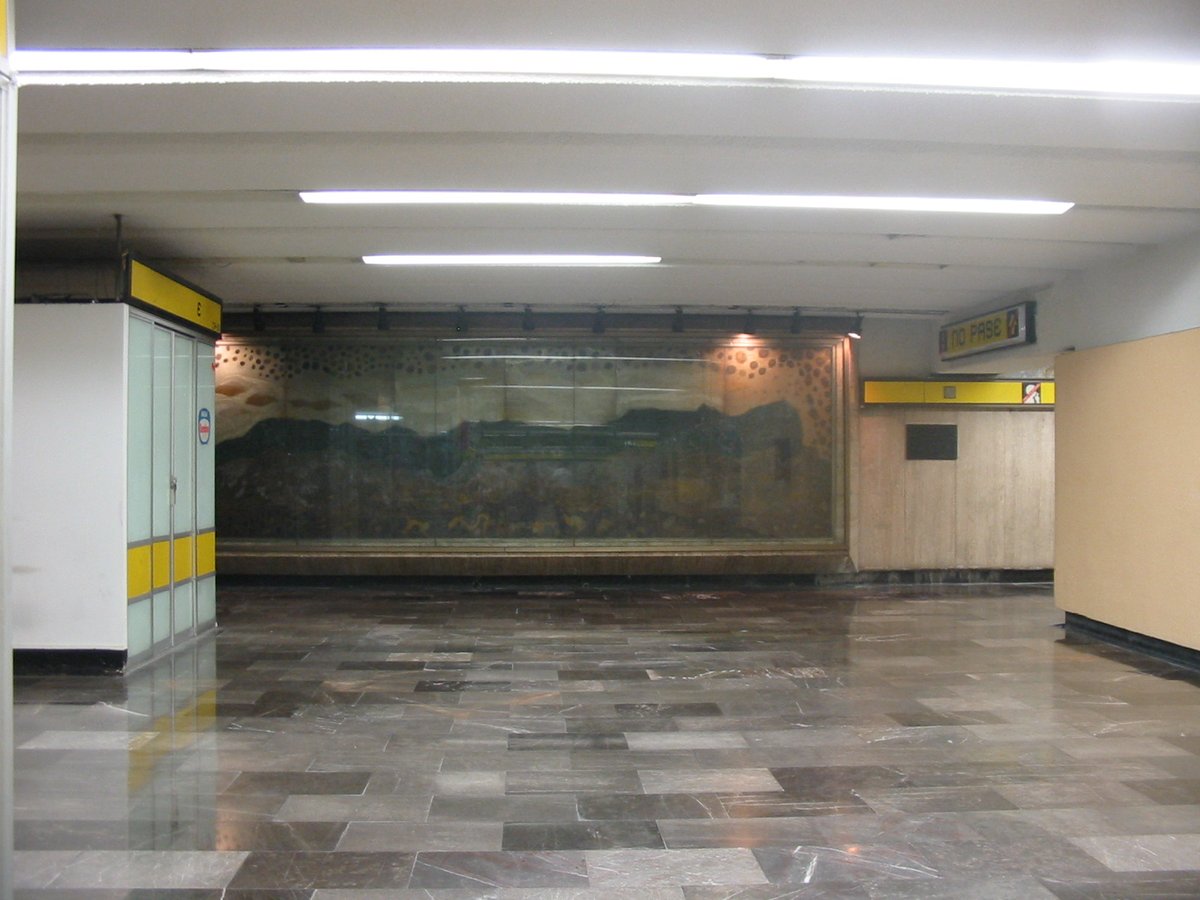
Terminal Aérea is characterized by its durable Santo Tomás marble floors, travertine marble walls, and rustic stucco ceilings. The station is distinguished by six fiberglass murals by David Lach, collectively titled “Paisajes Cálidos y Fríos” (“Warm and Cold Landscapes”). These murals were among the first large-scale artworks installed within the metro system, reflecting Mexico’s diverse landscapes and cultural identity. The station’s pictogram—a stylized airplane and control tower—underscores its role as the metro gateway to the airport.
Visitor Information: Tickets, Hours, and Accessibility
Ticketing and Fares
- Fare A flat MX$5 per ride applies across the Mexico City Metro.
- Purchase Tickets are available at station booths or through rechargeable smart cards.
- Discounts Seniors, people with disabilities, and students may be eligible for discounted or free fares.
- No special fare Standard fares apply; there are no additional fees for Terminal Aérea.
Visiting Hours
- Operating Hours Daily from 5:00 AM to midnight.
- Frequency Trains on Line 5 run every 4–7 minutes during peak hours, providing reliable and frequent service.
Accessibility
- Features Elevators, ramps, and tactile paving support passengers with reduced mobility.
- Signage Clear signage in Spanish and universal symbols guide all travelers.
Using Terminal Aérea for Airport Access
Terminal Aérea station is situated within a short walk of Terminal 1 at Mexico City International Airport. For Terminal 2, travelers can take Line 5 to Pantitlán and transfer to other lines or utilize airport shuttle services. The station’s clear signage and announcements help passengers navigate efficiently between the metro and the airport (Mexico City Airport Metro).
Nearby Attractions and Transit Connections
Terminal Aérea’s location in Venustiano Carranza offers access to local markets, commercial districts, and historical sites. The station connects with Trolebús Line G and is near Metrobús Line 4, facilitating easy transfers to other transit options across the city. The “MacPuente” pedestrian bridge nearby is a popular spot for plane-spotting and photography.
Engineering and Archaeological Discoveries
The construction of Terminal Aérea involved significant engineering challenges, including underground tunneling on a 4.9% gradient. The Milan method was used for excavation. Notably, the project unearthed paleontological remains, including mammoth and horse fossils, and evidence of a Teotihuacan-era settlement near Peñón de los Baños, highlighting the city’s layered history (Wikipedia: Terminal Aérea metro station).
Station Naming and Wayfinding
To distinguish Terminal Aérea from the previously named Aeropuerto station (now Boulevard Puerto Aéreo) on Line 1, the latter was renamed and its pictogram changed in 1997. Terminal Aérea’s name and airplane pictogram have since made it unmistakable for airport-bound travelers.
Socioeconomic and Cultural Impact
Terminal Aérea supports tourism, business travel, and local commerce by offering affordable, efficient airport access. The station’s integration of art and thoughtful design underscores Mexico City’s commitment to making public infrastructure both functional and culturally meaningful. With a daily ridership of over 18,000 (2019 data), it ranks as one of the busiest stations on Line 5, playing a key role in the city’s urban mobility (Metro CDMX).
Frequently Asked Questions (FAQ)
Q: What are Terminal Aérea’s opening hours?
A: The station operates daily from 5:00 AM to midnight.
Q: How much is the metro fare to Terminal Aérea?
A: The fare is MX$5 per ride.
Q: Is the station accessible for travelers with disabilities?
A: Yes, elevators, ramps, and tactile paving provide accessibility.
Q: How do I reach Terminal 2 from Terminal Aérea?
A: Take Line 5 to Pantitlán and transfer to other lines or use airport shuttle services.
Q: What nearby attractions can I visit?
A: Explore the Venustiano Carranza borough, local markets, and the “MacPuente” bridge for plane spotting.