Mexico

Mexico makes sense once you stop treating it as a beach destination and start reading it as a civilization layered over deserts, volcanoes, markets, and kitchens. Few countries change character so completely from one bus ride to the next.

Mexico Photo: Ali Alcántara / Pexels
Capital
Mexico City
Cities
38
Best season
November-April
Trip length
10-14 days

Cities in Mexico

This Mexico travel guide starts with the real surprise: one country can hold Aztec ruins, cloud-forest villages, desert highways, and some of the best street food on earth.

All 38 cities

Regions

  • Mexico City

    Central Highlands

    Mexico's political and cultural core sits high above sea level, where the air is thinner, the mornings cooler and the historical layering almost rude in its density. Mexico City sets the pace, but Puebla City, Tlaxcala and Taxco show how fast the mood changes once you leave the capital basin.
  • Guadalajara

    Western Plateau and Bajío

    This is mariachi country, tequila country and some of the country's most satisfying urban fabric: arcades, plazas, university neighborhoods and church towers that still anchor daily life. Guadalajara and Zapopan feel metropolitan, while Guanajuato and Morelia turn the same history into tunnels, hills and long stone facades.
  • Monterrey

    Northeast and Border Cities

    Northern Mexico reads differently from the center: bigger roads, sharper business culture, stronger US pull and a tougher climate that shapes daily rhythms. Monterrey shows the industrial confidence of the northeast, while Tijuana feels improvisational, transnational and restless in a way few other Mexican cities do.
  • Oaxaca

    Oaxaca and Chiapas Highlands

    Southern highland Mexico is slower to cross and richer for it, with mountain roads, market towns and a depth of Indigenous continuity that still shapes language, food and ceremony. Oaxaca gives you the cleanest entry point, while San Cristóbal de las Casas brings pine air, steep streets and a very different social history.
  • Mérida

    Yucatán Peninsula

    The peninsula runs on limestone, heat and distance rather than mountains, which changes everything from architecture to transport. Mérida is the best urban base, Campeche keeps its walls and sea breeze, and the wider region works best when you pace travel around the midday sun.
  • Puebla City

    Puebla Valley and Volcano Country

    East of Mexico City, the land opens into broad valleys under volcanic peaks, and the food becomes one of the strongest arguments for staying longer. Puebla City carries the grand churches and tiled facades, but the region also rewards smaller stops where convent kitchens, market stalls and local festivals still structure the calendar.

Suggested Itineraries

  1. 3 days

    3 Days: Mexico City to Puebla City

    This is the sharpest first look at central Mexico: Aztec and viceregal layers in Mexico City, then tiled facades, church domes and serious food in Puebla City. Add Tlaxcala if you want a quieter final stop with a smaller square and less traffic, not less history.

  2. 7 days

    7 Days: Guadalajara, Zapopan and the Bajío

    Western Mexico moves at a different tempo: big-city energy in Guadalajara, basilicas and galleries in Zapopan, then the hill towns and pink-stone centers of Morelia and Guanajuato. This route works well by bus and keeps transit times sensible while giving you architecture, markets and good eating every day.

  3. 10 days

    10 Days: Oaxaca to the Yucatán Peninsula

    This southern route starts with markets and mezcal in Oaxaca, then runs through highland Chiapas and Maya country before ending in the limestone cities of Campeche and Mérida. It is the strongest trip here for regional cooking, living Indigenous culture and layered pre-Hispanic history, but it rewards travelers who do not mind a longer bus or flight day.

  4. 14 days

    14 Days: Tijuana, Monterrey and Central Mexico

    This route makes sense if you want to see how different one country can feel without pretending Mexico has a single center of gravity. Start at the Pacific edge in Tijuana, cross to industrial Monterrey, then finish with museums and day trips from Mexico City before dropping into Taxco's steep silver-town streets.

Top Monuments in Mexico

  • Estela De Luz

    Mexico City

    Mexico City's most mocked monument looks like a giant wafer cookie, missed its own Bicentennial deadline, and hides a stronger reason to stop underground.

  • Jardín Del Arte Sullivan

    Mexico City

    Born in 1955 as an end run around gallery gatekeepers, Jardín del Arte Sullivan still turns a Mexico City park into a Sunday art market and tianguis ritual.

  • Mirador Del Obispado

    Monterrey

    Monterrey's giant flag rises beside its oldest surviving colonial building, on a hill where bishops prayed, soldiers fought, and sunset pulls locals uphill.

  • Estadio Universitario ( El Miadero )

    Monterrey

    Mexico's famous stadium wave started here in 1984, inside UANL's campus fortress where Tigres crowds turn San Nicolás into ritual.

  • Parque Espejo De Los Lirios

    Cuautitlán Izcalli Municipality

    Once called La Presa del Muerto, this 48-hectare wetland shelters migratory white pelicans, holds protected status since 2009, and costs nothing to enter.

  • Museo Nacional Del Virreinato

    Cuautitlán Izcalli Municipality

    Mexico's premier colonial museum: a Jesuit cloister housing Latin America's largest crowned nun portrait collection, part of a UNESCO World Heritage site.

  • Glorieta De Las Mujeres Que Luchan

    Mexico City

    An occupied roundabout on Reforma became Mexico City's feminist memorial, where purple steel, names, flowers, and protest signs keep history unsettled and alive.

  • Plaza Guadalajara

    Tonalá

  • Basilica of Our Lady of Guadalupe

    Mexico City

    The world's second most-visited religious site after the Vatican — 20 million annual pilgrims arrive to see a 1531 cloak said to bear a miraculously imprinted image.

  • Palace of Fine Arts

    Mexico City

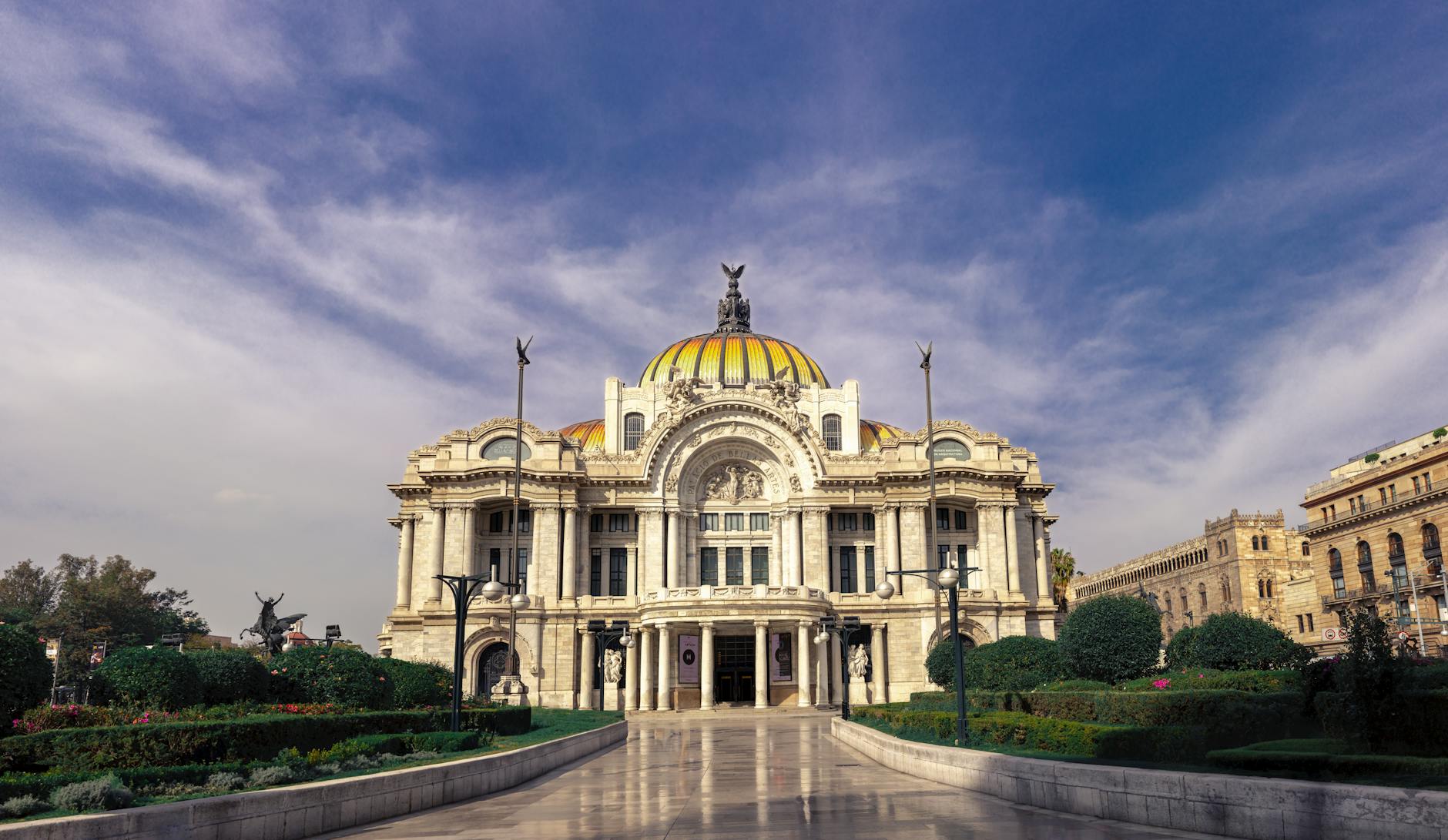
    Built as a grand theater for Porfirio Díaz, Bellas Artes became Mexico's marble stage for murals, opera, and the city's most photographed skyline.

  • Puerta De Chihuahua

    Chihuahua City

    A 43-meter red steel arch weighing 500 tons marks Chihuahua's southern gateway — sculptor Sebastián's first work in his home state, free to visit anytime.

  • Panteón Jardín

    Mexico City

    More stars of Mexico's Golden Age of cinema are buried here than anywhere else.

  • Plaza De Las Américas Juan Pablo Ii

    Zapopan

  • Jardín Hidalgo

    Tonalá

  • Arcos De Guadalajara

    Tonalá

  • Acuario Michin Guadalajara

    Tonalá

Plan your trip

Before you go

Visa
US, Canadian, UK, EU and Australian passport holders are generally visa-exempt for tourism in Mexico, with stays often granted for up to 180 days at the officer's discretion. Most major airports now use digital entry records instead of the old paper FMM, but land crossings can still be more manual, so keep your passport stamp and any entry receipt until you leave.
Currency
Mexico uses the Mexican peso (MXN), and daily costs still vary sharply by region: a hostel-and-street-food day can stay around USD 30 to 55, while a comfortable city trip often lands around USD 80 to 150. Visa and Mastercard work widely in Mexico City, Guadalajara, Monterrey and Mérida, but cash still matters in markets, colectivos and smaller towns.
Getting There
Benito Juárez International Airport in Mexico City remains the main long-haul hub, while Cancún, Guadalajara, Monterrey, Tijuana and Oaxaca handle strong regional and US traffic. Felipe Ángeles International Airport north of Mexico City carries more budget flights, often at lower fares, but the transfer into the city is slower than from MEX.
Getting Around
Long-distance buses are the backbone of travel, especially on ADO routes in the south and ETN or Primera Plus in central and western Mexico; premium services are punctual, air-conditioned and worth the extra pesos on overnight legs. Domestic flights save huge amounts of time on long jumps such as Tijuana to Monterrey or Mérida to Oaxaca, while app-booked rides are safer than street taxis in big cities.
Climate
Mexico does not run on one season: Mexico City and Puebla City sit high and stay milder, Mérida turns hot and humid, and Baja and the north are far drier. December to April is the easiest broad travel window, while June to October brings rain and, on Gulf and Caribbean coasts, hurricane risk.
Connectivity
4G coverage is solid in major cities and on main transport corridors, and eSIM plans are easy to set up before arrival if your phone supports them. Hotel Wi-Fi is usually reliable in mid-range and upscale stays, but bus stations, rural areas and some colonial properties still produce patchy speeds, so download tickets and maps in advance.
Safety
Most travelers stick to normal-city precautions and do well, especially in Mexico City, Mérida, Puebla City, Oaxaca and the main tourist districts of Guadalajara and Monterrey. The real risk is uneven geography: avoid driving at night outside cities, use toll roads where possible, and research current conditions carefully before heading into parts of Guerrero, Sinaloa, Tamaulipas or rural Michoacán.

Tips for visitors

  • Use bank ATMs

    Withdraw pesos from bank-operated ATMs such as Santander, HSBC or Citibanamex, not airport exchange counters or standalone machines with poor rates. Decline dynamic currency conversion when the screen offers to charge your home currency.
  • Buses beat driving

    On many classic routes, premium buses are simpler than renting a car and often more comfortable than travelers expect. Use cars for Baja, rural Yucatán and remote day trips; use buses for Mexico City, Puebla City, Oaxaca and the Bajío.
  • Tip properly

    Restaurant tipping is standard: 10 to 15 percent in most places, more in upscale dining. Housekeeping usually gets 20 to 50 MXN per night, and guides expect a cash tip at the end of the visit.
  • Book holiday weeks early

    Reserve well ahead for Día de Muertos in Oaxaca, Christmas to New Year on beach routes, and Semana Santa almost everywhere. Prices climb fast in Mérida, San Cristóbal de las Casas and Mexico City when local and domestic demand hit at once.
  • Skip night drives

    Avoid driving after dark outside major urban corridors. Visibility drops, livestock and unmarked hazards appear without warning, and response times are slower if anything goes wrong.
  • Download before you move

    Keep offline maps, bus tickets and hotel addresses on your phone before leaving each city. Signal is usually fine in Mexico City and Guadalajara, then becomes less dependable on mountain roads and in smaller terminals.
  • Start with courtesy

    Lead with "Buenos días" or "Buenas tardes" before a question, and default to "usted" with strangers or older adults. The extra politeness is not ceremonial fluff; it makes everyday interactions work better.

The story of Mexico

Mexico rewards travelers who like contrast more than checklist tourism. In Mexico City, you can start with Mexica stone at the Templo Mayor, cross Paseo de la Reforma by lunch, and end the day with al pastor shaved straight from the trompo. Then the country shifts register. Guadalajara leans into mariachi, brick plazas, and tequila country nearby. Puebla City gives you tiled facades, baroque churches, and mole with real depth, not the watered-down export version. Oaxaca slows the pace and sharpens the senses: smoke from the comal, green stone churches, markets piled with chapulines, chocolate, and mounds of herbs.

History in Mexico is not sealed behind museum glass. It sits in the street plan, in convent walls built with Indigenous labor, in names that survived empire, republic, revolution, and reinvention. Mérida carries the weight of the Yucatán in its limestone mansions and Maya memory. Guanajuato turns silver wealth into tunnels, stairways, and improbable color. San Cristóbal de las Casas feels colder, steeper, and more politically awake than the postcard version suggests. Even within one trip, the country keeps changing the terms: altitude, language, spice, architecture, humor.

That range is what makes planning Mexico worth doing well. November to April usually gives you the easiest weather across the highlands, cities, and much of the coast, though the country is too large for one neat climate rule. Long bus routes still matter. Domestic flights save days. Cash still solves problems cards cannot. Come for food, ruins, festivals, beaches, or architecture if you want, but expect something harder to package: a place where formal courtesy and daily improvisation coexist, and where a market stall, a volcano view, or a late-night taco counter can explain more than a polished attraction ever will.

c. 1200 BCE-1519

When the gods were fed before kings were crowned

Morning begins in stone. On the high plateau, long before Mexico City carried that name, planners at Teotihuacan laid out an avenue so exact that power itself seems to have been measured with cords and shadows. In Oaxaca, Monte Alban rose on its flattened mountaintop like a decision imposed on the landscape, while later in the Valley of Mexico the Mexica founded Tenochtitlan in 1325 on an island of reeds, mud, and divine insistence.

Ce que l'on ignore often is that these cities were not picturesque ruins waiting for archaeologists. They were noisy capitals of tribute, marriage alliances, market quarrels, and ritual theater. Records and archaeology show cacao, obsidian, turquoise, feathers, cotton, and people moving across immense distances; what feels local in Mexico was already linked by roads, lakes, and ambition.

Then comes the imperial brilliance of Tenochtitlan. Hernan Cortes and his men entered a city of causeways, canals, and whitewashed temples that stunned them, and Bernal Diaz del Castillo wrote of markets so large they seemed impossible. The shock matters because modern Mexico City still sits on that lakebed memory: the grand capital above, the water beneath, the old order never fully gone.

But splendor had a cost. Tribute pressed outward, conquered towns kept their resentments, and sacred violence reinforced imperial authority while making enemies. That tension becomes the bridge to everything that follows, because the Spanish did not conquer a vacuum: they entered a world already full of rivalries, debts, and men prepared to betray one master for another.

1519-1810

A crown across the ocean, a new world under velvet and ashes

A woman stands between languages. In 1519, Malintzin, known to history as La Malinche, translated not just words but intentions, fears, and traps as Cortes moved inland from the coast toward the Mexica empire. Without her, the conquest would read very differently; with her, it becomes a human drama of survival, intelligence, and an ambiguity Mexico has never finished arguing with.

The fall of Tenochtitlan in 1521 was not a single theatrical collapse but a siege of hunger, disease, shattered alliances, and street-by-street ruin. From that wreckage rose New Spain, with churches planted over sacred precincts, palaces built from former imperial stone, and bureaucrats sending reports back to Madrid while Indigenous communities carried the burden. Walk through the center of Mexico City or Puebla City and the geometry of that new order still shows itself in plazas, convent walls, and carved facades.

Silver changed everything. Zacatecas and Guanajuato fed the empire's appetite, mule trains crossed dangerous country, and fortunes were made under chandeliers while miners choked below ground. Ce que l'on ignore souvent, c'est que the Baroque beauty of so many churches was financed by brutal extraction, debt, and the labor of people who seldom appear in painted portraits.

And yet New Spain was never only obedience. Sor Juana wrote with dazzling insolence in a convent cell, Indigenous painters and scribes preserved older memories inside Christian forms, and local elites learned that distance from Madrid could be turned into influence. By the late eighteenth century reform, taxation, and exclusion had sharpened resentment, and the colony glittered just before it cracked.

1810-1876

Priests with banners, liberals with laws, an emperor in borrowed splendor

It begins with a bell and a dangerous sermon. In the early hours of 16 September 1810, Miguel Hidalgo y Costilla called for revolt at Dolores, and the moment entered national memory as the Grito even though the real scene was more anxious, more improvised, and far bloodier than patriotic reenactment allows. Villages, estates, and mining towns were pulled into a war that mixed social rage with political principle.

Independence in 1821 did not bring calm; it opened a century of improvisation. Agustin de Iturbide made himself emperor, republicans pushed back, constitutions rose and fell, and Antonio Lopez de Santa Anna returned to the stage with almost comic persistence. Mexico lost territory after the war with the United States, and every defeat deepened the question that haunted the century: who, exactly, was to govern this country, and for whom?

Then came the Reform. Benito Juarez, austere and relentless, fought to limit the Church's political and economic power, and the result was civil war followed by foreign intervention. In 1864 the French installed Maximilian of Habsburg and Carlota at Chapultepec in Mexico City, a European court set down in a republic that did not ask for one. The uniforms were elegant. The arithmetic was fatal.

Maximilian's end at Queretaro in 1867 is one of those scenes history writes with almost indecent flair: the imported emperor facing a firing squad, the dream of Latin empire collapsing into dust. Yet the deeper consequence was republican hardening. Mexico had tested monarchy, foreign tutelage, clerical privilege, and military caudillismo in quick succession; what came next would promise order, and exact its own price.

1876-2000s

Order on the surface, fire underneath

Gaslight, French manners, polished avenues: Porfirio Diaz wanted Mexico to look modern, and in parts of Mexico City it did. Railways spread, foreign investors arrived, opera houses filled, and the elite dressed for Europe while peasants lost land and workers learned how narrow progress could feel when seen from a factory floor. Ce que l'on ignore souvent, c'est que elegance and repression were not opposites in the Porfirian years; they were partners.

The explosion came in 1910. Francisco I. Madero challenged Diaz, Emiliano Zapata demanded land in the south, Pancho Villa thundered across the north, and the revolution became less a single uprising than a chain of betrayals, provisional alliances, and funerals. Read the photographs and you see it plainly: sombreros, rifles, train cars, women carrying ammunition, boys already old with dust.

Out of the violence came the 1917 Constitution and, later, a state skilled at turning revolution into ritual. Murals by Diego Rivera and others covered walls with national myth, oil was expropriated in 1938, and a one-party system learned to speak the language of the people while often managing them from above. In Puebla, Oaxaca, Guanajuato, and beyond, local memory kept the revolution less tidy than official textbooks wished.

The modern chapters are less operatic but no less decisive. The student massacre at Tlatelolco in 1968 tore the mask from the regime, the 1985 earthquake in Mexico City exposed both civic courage and state weakness, and democratic alternation in 2000 finally broke the old monopoly. Today's Mexico carries every layer at once: Indigenous inheritance, colonial stone, liberal law, revolutionary myth, and a modern restlessness that keeps revising the nation before your eyes.

Mexico in Four Empires, Two Republics, and One Unfinished Argument

From ceremonial cities to democratic rupture, the country keeps rebuilding itself on top of older foundations

  1. 1325

    Tenochtitlan is founded

    Mexica tradition places the founding of Tenochtitlan on an island in Lake Texcoco, where prophecy, opportunism, and engineering met. The city that would later astonish the Spaniards began as a precarious settlement in water and reeds.

  2. 1486

    Moctezuma II is born

    The future ruler of the Mexica world arrives into a court already trained in ceremony, conquest, and cosmic obligation. His adulthood would coincide with the greatest splendor of Tenochtitlan and its worst catastrophe.

  3. 1519

    Cortes lands and marches inland

    The Spanish expedition comes ashore and moves toward the Valley of Mexico, gathering Indigenous allies and interpreters along the way. Among them is Malintzin, whose linguistic and political intelligence becomes central to every negotiation.

  4. 1521

    Tenochtitlan falls

    After siege, starvation, and epidemic disease, the Mexica capital is taken and largely destroyed. On its ruins the Spanish begin constructing the capital of New Spain, the ancestor of modern Mexico City.

  5. 1535

    The Viceroyalty of New Spain is established

    The Spanish Crown gives its American dominion a durable administrative frame. Bureaucracy, evangelization, mining wealth, and local negotiation now shape the colony for nearly three centuries.

  6. 1648

    Sor Juana is born

    One of the great minds of the Spanish-speaking world enters colonial Mexico. In her writing, New Spain stops sounding provincial and starts sounding intellectually dangerous.

Show the full timeline (22 moments)
  1. 1810

    The Grito de Dolores

    Miguel Hidalgo y Costilla calls for revolt, and the war for independence begins in a burst of urgency rather than polished statecraft. The cry becomes legend; the violence that follows is very real.

  2. 1821

    Independence is secured

    After years of war, New Spain breaks from Spanish rule and Mexico emerges as a sovereign state. What it will look like politically remains unsettled almost at once.

  3. 1822

    Iturbide becomes emperor

    Agustin de Iturbide crowns himself emperor of Mexico, briefly testing monarchy after independence. The experiment burns bright and short, leaving the young nation no calmer than before.

  4. 1847

    Mexico City falls in the war with the United States

    Foreign troops enter the capital after a devastating campaign. The defeat becomes one of the nineteenth century's deepest wounds and accelerates the country's struggle over sovereignty and reform.

  5. 1858

    Juarez leads the liberal republic

    Benito Juarez takes the presidency amid civil conflict between liberals and conservatives. The fight is not merely constitutional; it is about land, church power, and the social shape of the nation.

  6. 1864

    Maximilian arrives as emperor

    Backed by Napoleon III, Archduke Maximilian of Habsburg enters Mexico and sets up court at Chapultepec. Imported ceremony returns, but the republic has not consented to disappear.

  7. 1867

    Maximilian is executed

    Captured at Queretaro, Maximilian faces a firing squad and the imperial project collapses. The restored republic draws a hard lesson about foreign intervention and political theater.

  8. 1876

    Porfirio Diaz seizes power

    Diaz begins the long rule later called the Porfiriato, promising order, growth, and modern infrastructure. Railways expand and elite cities gleam, but repression and inequality deepen underneath.

  9. 1910

    The Mexican Revolution erupts

    Francisco I. Madero challenges Diaz, and the country enters a decade of revolt, coups, regional armies, and social demands. No single man controls the storm once it begins.

  10. 1919

    Zapata is assassinated

    Emiliano Zapata is lured into an ambush and killed, but his agrarian demands do not die with him. His name becomes shorthand for the unfinished question of land and justice in Mexico.

  11. 1917

    A new constitution is adopted

    The Constitution of 1917 gives revolutionary ideals legal form, including labor and land provisions that will shape the century. It is both a settlement and a promise still argued over today.

  12. 1938

    Oil is nationalized

    President Lazaro Cardenas expropriates foreign oil companies in a gesture of economic sovereignty that electrifies public life. The state presents itself as guardian of national wealth, not merely referee of private interests.

  13. 1968

    Tlatelolco massacre

    Days before the Olympic Games in Mexico City, security forces kill student demonstrators at Tlatelolco. The event shatters the official image of a stable, benevolent revolutionary regime.

  14. 1985

    The earthquake changes the capital

    A devastating earthquake strikes Mexico City, killing thousands and exposing the state's failures. Civil society responds with speed and courage, and politics never quite returns to its old habits.

  15. 2000

    The PRI loses the presidency

    For the first time in more than seventy years, the long-ruling party is defeated in a presidential election. Democratic alternation becomes a fact rather than a theory.

  16. 2018

    A new political realignment begins

    The victory of Andres Manuel Lopez Obrador marks another major shift in the country's political center of gravity. Mexico enters a new phase of argument over state power, social justice, and national memory.

Culture & food

  • language

    A Country Spoken Through the Side of the Mouth

    Mexican Spanish does not rush to the noun. It approaches it with ceremony, as one approaches a church door or a grandmother with a shopping bag full of guavas. In Mexico City, a vendor will give you the weather, the traffic, a sigh, and only then the answer. The answer comes wrapped. Courtesy first.

    This is why "ahorita" deserves its own passport. The word can mean now, soon, not yet, perhaps never, and somehow it still sounds honest. Language here is less a machine for precision than an art of social temperature: "con permiso" before you pass, "mande" instead of a blunt repetition, "buenas tardes" as the small key that opens the room.

    Then comes the slang, that street-level fireworks display. "Órale" can be consent, astonishment, encouragement, impatience. "No manches" performs disbelief with almost comic elegance. In Guadalajara and Oaxaca, as in Puebla City or Mérida, you hear a country that prefers verbal music to blunt impact. A country is a table set for strangers, and Mexico lays the table with syllables.

  • cuisine

    The Republic of Smoke, Lime, and Corn

    Mexican cuisine begins with corn and ends nowhere. A tortilla fresh from the comal is not a side note; it is a cosmology, hot enough to sting the fingers, scented with toasted grain, flexible as good manners and just as necessary. People speak of sauce here with the seriousness other nations reserve for constitutions.

    The first lesson is that food is regional with the ferocity of faith. Mole in Puebla City is not cochinita in Mérida, and neither has anything to do with the clean barbarity of carne asada in Monterrey. Pozole arrives in a bowl you complete yourself with lettuce, radish, oregano, lime. Ceviche on the Pacific coast tastes of knife work and sea salt. Tamales in Mexico City are breakfast, engineering, and comedy at once when they reappear inside a bolillo as a guajolota.

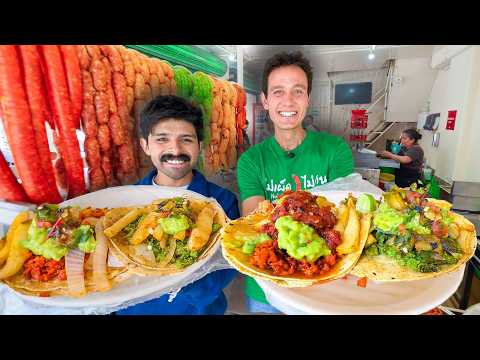
    And then there is ritual. Sunday barbacoa. Late-night tacos al pastor shaved from the trompo, pineapple falling with priestly timing. Hot chocolate whisked until it froths like a minor miracle. Mexico eats in public without shame, in families without haste, in markets with elbows touching, and the great seduction is this: every dish seems to know exactly who it is.

  • etiquette

    Tender Formalities

    Mexico has kept something much of the world has thrown away: the dignity of small forms. You greet before you ask. You soften before you refuse. A shop, a bus, a market stall, a hotel desk: each is a miniature stage where respect is performed not with stiffness but with style. The effect is exquisite.

    Visitors from brisk countries can mistake this for delay. They are wrong. The few words before the request are not decorative; they establish the moral climate in which the request may exist. In San Cristóbal de las Casas or Guanajuato, one sees it clearly: an elderly woman buying bread and the baker exchanging full sentences as if civilization depended on it. Perhaps it does.

    The comedy lies in how much feeling can be hidden inside politeness. A smile may mean welcome, patience, irony, or a refusal so gentle you almost thank the person for denying you. Mexico understands that manners are not hypocrisy. They are choreography. Without them, everyone collides.

  • literature

    Libraries with Chili on Their Fingers

    Mexican literature has the bad taste to be alive in the street. You may enter a bookstore expecting solemnity and come out thinking of gossip, revolution, desert light, and a dead aunt who refuses to remain dead. Juan Rulfo turned the countryside into an acoustic chamber. Octavio Paz wrote as if history had nerves. Elena Poniatowska listened to the city until it confessed.

    The national page is crowded and intimate at once. Sor Juana still stands in the room, brilliant and cornered, writing with the precision of someone who knows that wit can be armor. Juan José Arreola permits absurdity its full elegance. Carlos Fuentes gives Mexico City too many mirrors and exactly the right number. You read a few pages and the country becomes less picturesque, more dangerous. Much better.

    This literary habit survives because conversation itself here is already half narrative. A taxi driver in Mexico City recounts traffic as epic punishment. A guide in Oaxaca slips from Zapotec history into an anecdote about his uncle. In Mexico, storytelling is not an art form separated from life. It is one of life’s table manners.

  • religion

    Where Candles Negotiate with the Dark

    Catholicism in Mexico did not arrive to find an empty room. It found older gods, older mountains, older habits of offering, and the result was not replacement but a long, brilliant argument conducted in wax, flowers, smoke, and song. Step into a church after the noon heat and you smell stone, incense, melted paraffin, human hope. Theology becomes physical very quickly.

    Nowhere is this clearer than in the cult of the Virgin of Guadalupe, who is not merely venerated but addressed with the intimacy reserved for mothers and impossible queens. At the Basílica in Mexico City, devotion moves at different speeds: pilgrims on their knees, school groups whispering, a woman clutching roses as if they were legal documents. Faith here is not abstract belief. It has fabric, deadlines, invoices, tears.

    Day of the Dead reveals the national genius for refusing the dull separation between reverence and wit. In Oaxaca and around San Cristóbal de las Casas, marigolds, candles, bread, mezcal, photographs, and sugar skulls create altars that are both tender and unsparing. Death receives food. The dead are invited back. One should never accuse Mexico of bad hospitality.

  • architecture

    Stone That Refuses Silence

    Mexican architecture is what happens when civilizations build on top of one another and none of them has the courtesy to disappear. An Aztec foundation, a viceregal courtyard, an Art Deco façade, a concrete apartment block, a painted market wall: the city does not resolve the contradiction. It lives in it. Mexico City is the grand theater of this refusal.

    Look at the historic center and the argument becomes visible. The Metropolitan Cathedral sinks a little each year because Tenochtitlan was once a lake city and lakes have long memories. In Puebla City, glazed talavera tiles make walls gleam like confectionery with ecclesiastical ambitions. In Mérida, mansions along Paseo de Montejo display henequen wealth with French aspirations and Yucatán heat pressing against the shutters. Style travels. Climate mocks it.

    The most moving buildings are often those that admit mixture without embarrassment. A convent with indigenous carving. A market roof beside a baroque dome. A brutalist museum in Mexico City treating volcanic stone as if it were velvet. Mexico does not build to reassure. It builds to remember, and memory here has weight.

Taste the Country

  • Tacos al pastor

    Night ritual. Stand at the counter, paper plate in hand, with friends or strangers. Pineapple, salsa, lime, two bites, then another order.

  • Pozole

    Sunday lunch, family table, deep bowl. Lettuce, radish, oregano, chile, lime added at the last second. Conversation louder than the spoon.

  • Mole poblano

    Festival dish, wedding dish, grandmother dish in Puebla City. Chicken, rice, tortillas, patience. No one hurries mole.

  • Cochinita pibil

    Morning in Mérida, often before the heat turns serious. Pork, pickled red onion, black beans, tortillas. Eat with stained fingers and no vanity.

  • Tamales and atole

    Breakfast at dawn, outside a metro station in Mexico City or on a neighborhood corner. One hand for the tamal, one for the hot cup. Commuters, workers, schoolchildren, all equal before steam.

  • Pan de muerto with hot chocolate

    Late October and early November, especially around Oaxaca. Bread dusted with sugar, chocolate beaten to froth, altar nearby. Family memory and appetite share the table.

Notable Figures

  • Moctezuma II

    Huey Tlatoani of the Mexica · c. 1466-1520

    He inherited an empire at its most dazzling and faced the one crisis no court ritual had prepared him for: Spaniards, steel, disease, and Indigenous enemies arriving at once. Behind the feathered image was a ruler making impossible calculations in rooms heavy with incense and bad news.

  • Malintzin (La Malinche)

    Interpreter and political intermediary · c. 1500-c. 1529

    She stood at the hinge of Mexican history because she could hear what others could not: threat, vanity, hesitation, opportunity. Mexico still argues over whether to call her traitor, survivor, mother, or strategist, which is usually a sign that the woman in question mattered far more than the monuments admit.

  • Sor Juana Ines de la Cruz

    Poet, scholar, and nun · 1648-1695

    She turned a convent cell into a republic of letters, writing with brilliance sharp enough to unsettle bishops and flatter viceroys at the same time. What survives is not piety alone but appetite: for books, ideas, music, argument, and the right to think in public.

  • Miguel Hidalgo y Costilla

    Priest and insurgent leader · 1753-1811

    He did not look like a tidy founding father. He was a parish priest with intellectual curiosities, political impatience, and a talent for setting forces loose that no one could fully control once the bell rang at Dolores.

  • Benito Juarez

    President and liberal reformer · 1806-1872

    Juarez came from a Zapotec village and ended up defending the republic against conservatives, clerical power, and a European-backed emperor. He brought little theatrical warmth to the role, but history sometimes needs flint more than charm.

  • Maximilian I of Mexico

    Emperor · 1832-1867

    He arrived with imperial manners, liberal instincts, and a catastrophic misunderstanding of the country he had agreed to govern. Chapultepec gave him a palace; Queretaro gave him the ending for which he is remembered.

  • Porfirio Diaz

    General and long-ruling president · 1830-1915

    Diaz gave Mexico railways, grand boulevards, and the polished face of order while making dissent expensive and inequality structural. His age looked elegant from a theater box and far less so from a village stripped of land.

  • Emiliano Zapata

    Revolutionary leader · 1879-1919

    Zapata is remembered on horseback, but his power came from something more precise than image: an unforgiving clarity about land. He spoke for villages that knew the legal language of dispossession all too well and wanted fields back, not speeches.

  • Frida Kahlo

    Painter · 1907-1954

    She turned illness, love, politics, miscarriage, costume, and self-invention into a painted court of witnesses. The braids, the flowers, the stare: all that style can distract from the harder fact that she made suffering compositional, almost ceremonial.

  • Octavio Paz

    Poet and essayist · 1914-1998

    Paz wrote Mexico as a civilization of masks, solitude, ruptures, and reinventions, which sounds abstract until you walk a public square and hear how much theater everyday life still contains. He gave the country a language for examining itself without reducing it to folklore.

Frequently asked

Do US citizens need a visa for Mexico in 2026?

Usually no, if the trip is for tourism and you hold a valid US passport. Border officers still decide the permitted length of stay, often up to 180 days, so check the stamp or digital entry record before leaving the airport.

Is Mexico City or Cancún the better airport to fly into for a Mexico trip?

Mexico City is better for multi-city cultural trips, while Cancún works best for the Yucatán Peninsula and Caribbean coast. If your route includes Puebla City, Oaxaca, Guadalajara or Guanajuato, Mexico City usually saves time and extra domestic flights.

Can you travel around Mexico without renting a car?

Yes, in much of the country you can. Mexico City, Puebla City, Guadalajara, Oaxaca, Guanajuato, Mérida and many intercity routes are well covered by buses, flights and ride-hailing apps; a car matters more in Baja, rural cenote country and remote archaeological detours.

Is it safe to use Uber in Mexico?

Yes, in the cities where it operates, Uber is generally safer than hailing random street taxis. It is widely used in Mexico City, Guadalajara and Monterrey, though local availability and pickup rules can change around airports.

What is the best month to visit Mexico?

March is one of the easiest all-round months because much of the country is dry, warm and still outside the wettest hurricane window. The better answer depends on region: October to April suits Mexico City and Oaxaca, while the Yucatán Peninsula is most comfortable from December to April.

How much cash should I carry in Mexico?

Carry enough pesos for one day of transport, tips and small meals, then use cards where they make sense. In big cities that might mean 800 to 1,500 MXN on hand; in smaller towns or market-heavy days, a bit more keeps you from hunting for an ATM at the wrong moment.

Is 7 days enough for Mexico?

Yes, if you choose one region and stop pretending you can cover the whole country in a week. A Guadalajara to Guanajuato route, a Mexico City to Puebla City loop, or an Oaxaca-focused trip gives you a real trip instead of a string of bus stations.

Should I exchange money before arriving in Mexico?

Only a small amount if it helps you land calmly. Better rates usually come from withdrawing pesos at a bank ATM after arrival, especially if your home bank refunds foreign ATM fees.

Sources & attribution5
  • Visit Mexico — Official tourism portal used for broad entry and travel-planning context.
  • Gobierno de México — Official government source for public information, including census, language policy and administrative context.
  • INEGI — Mexico's national statistics institute, used for census and demographic baselines.
  • Britannica: Mexico — Reference source for geography, climate structure, political organization and major physical features.
  • Mexperience — Practical expatriate and travel reference used here for etiquette and on-the-ground travel mechanics.
Photo credits (18)
  1. Ali Alcántara — Pexels License (https://www.pexels.com/license/) — Source: https://www.pexels.com/photo/13160592/
  2. Asafath — Pexels License (https://www.pexels.com/license/) — Source: https://www.pexels.com/photo/30276059/
  3. Paulina Chávez — Pexels License (https://www.pexels.com/license/) — Source: https://www.pexels.com/photo/21047882/
  4. Israel Torres — Pexels License (https://www.pexels.com/license/) — Source: https://www.pexels.com/photo/17837915/
  5. Carlos Bedoy — Pexels License (https://www.pexels.com/license/) — Source: https://www.pexels.com/photo/30387201/
  6. Santiago López — Pexels License (https://www.pexels.com/license/) — Source: https://www.pexels.com/photo/12262726/
  7. Ali Alcántara — Pexels License (https://www.pexels.com/license/) — Source: https://www.pexels.com/photo/12880948/
  8. Diego Benjamín — Pexels License (https://www.pexels.com/license/) — Source: https://www.pexels.com/photo/12192517/
  9. Ali Alcántara — Pexels License (https://www.pexels.com/license/) — Source: https://www.pexels.com/photo/12880942/
  10. Israyosoy S. — Pexels License (https://www.pexels.com/license/) — Source: https://www.pexels.com/photo/29230556/
  11. Los Muertos Crew — Pexels License (https://www.pexels.com/license/) — Source: https://www.pexels.com/photo/12332448/
  12. Israyosoy S. — Pexels License (https://www.pexels.com/license/) — Source: https://www.pexels.com/photo/29230943/
  13. Miguel González — Pexels License (https://www.pexels.com/license/) — Source: https://www.pexels.com/photo/13201061/
  14. Susan Flores — Pexels License (https://www.pexels.com/license/) — Source: https://www.pexels.com/photo/25389275/
  15. Viridiana Rivera — Pexels License (https://www.pexels.com/license/) — Source: https://www.pexels.com/photo/25391591/
  16. Juan L Seralbad — Pexels License (https://www.pexels.com/license/) — Source: https://www.pexels.com/photo/20994879/
  17. Israyosoy S. — Pexels License (https://www.pexels.com/license/) — Source: https://www.pexels.com/photo/30657698/
  18. Jesus Alfonso — Pexels License (https://www.pexels.com/license/) — Source: https://www.pexels.com/photo/34197639/

Photos may have been resized or cropped.