Historical Background: Warsaw’s Railways and the Head Office
The emergence of railways in Warsaw began in 1848 with the city’s first rail link to Vienna. This was soon followed by connections to Saint Petersburg, Bydgoszcz, Terespol, Kovel, Mława, and Kalisz, integrating Warsaw into a vast European network. During the Russian partition, the St. Petersburg–Warsaw railway (completed in 1862) was a strategic development, linking Warsaw to the Russian Empire.
The Railways Head Office was established as the central administrative unit for managing these expanding and modernizing networks. After World War I and Poland’s independence, the building became the nerve center of the newly unified Polish State Railways (PKP). Surviving the devastation of World War II, the Head Office was restored in the post-war period, symbolizing the resilience and continuity of Polish rail transport (EIB, 2019; StayPoland).
Architectural Significance
The Head Office is a striking example of early 20th-century public architecture, merging neoclassical grandeur with modernist functionality. Its symmetrical façade, grand columns, and intricate stonework reflect the aspirations of a modernizing nation. The monumental exterior is matched by spacious interiors, high ceilings, and preserved period details. The building was designed to house large open-plan offices, meeting rooms, and administrative facilities, supporting Warsaw’s role as a major European rail hub (EIB, 2019).
Role in Urban and Transport Development
Strategically located near major stations and transport arteries, the Head Office has overseen the evolution of Warsaw’s rail system—from fragmented lines to a modern, integrated network. Key projects coordinated from the Head Office include upgrades to the Warsaw–Berlin and Warsaw–Terespol lines, as well as the high-speed Gdańsk–Warsaw–Vienna route, positioning Warsaw as Poland’s best-connected city (RailwayPro, 2024; EIB, 2019).
The building is also a cultural symbol, encapsulating Warsaw’s recovery, resilience, and modernization, and is frequently included in historical tours and heritage events (World Cities Culture Forum).
Visiting the Warsaw Railways Head Office
Location and Access
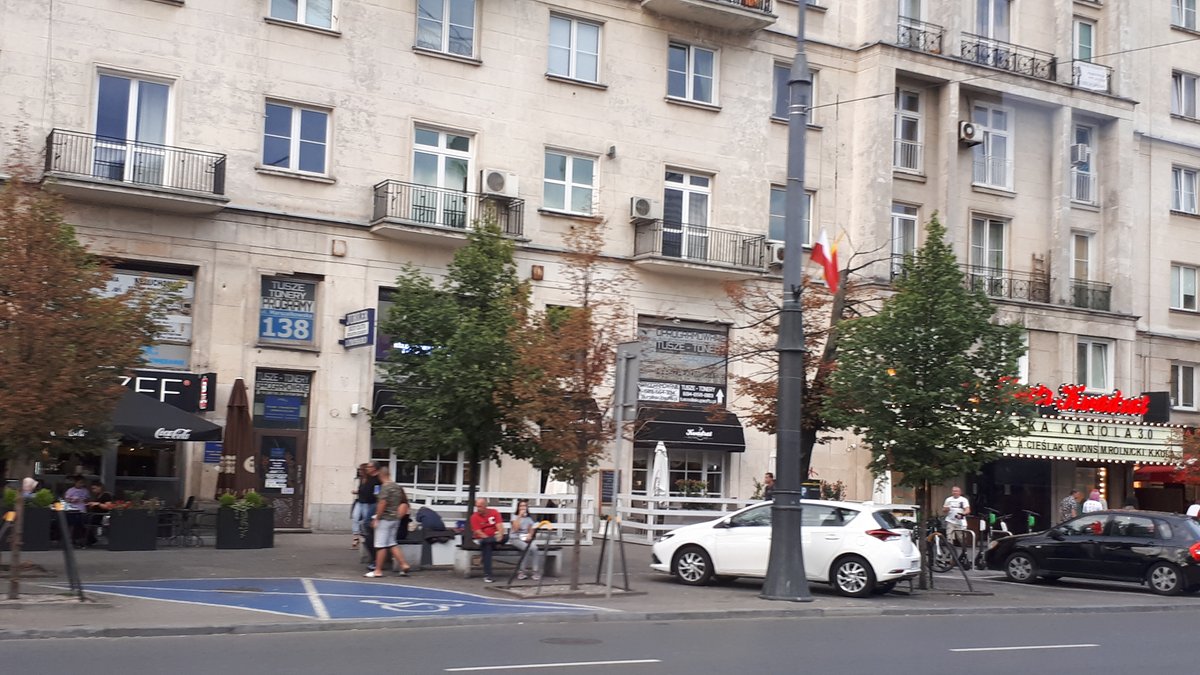
- Address Al. Jerozolimskie 142A, 02-305 Warsaw, Poland
- Public Transport Easily reached by train (adjacent to Warszawa Centralna), Metro (Metro Centrum, M1 line), trams, and buses. Taxis and rideshare services are readily available (PolishTrains; Finding Poland; WTP Warsaw Timetables).
- Parking Underground and paid street parking available nearby (Happy Little Traveler).
Visiting Hours and Entry
- General Access The Head Office is an active administrative building and not open for public tours. Access is by appointment only, typically during business hours (Monday–Friday, 8:00 AM–4:00 PM).
- Special Events The building occasionally opens for public visits during European Heritage Days, architectural tours, or cultural festivals, generally 10:00 AM–6:00 PM on those days. Entry is often free, though some tours may require a fee. Check the official PKP website and Warsaw tourism portals for announcements.
Entry Procedures
- Visits must be arranged in advance, with valid photo ID required for entry.
- Security screening and registration at reception are standard.
Accessibility
- The building strives for accessibility, but some areas may be challenging due to its historic design.
- Facilities for visitors with disabilities are available during public events.
Tickets and Travel Information
- Train Tickets Purchase at Warszawa Centralna station or online via the PKP Intercity website. Options include single-journey, return, day passes, and regional/intercity tickets.
- Ticket Offices Typically open 6:00 AM–9:00 PM.
- Integrated Transport ZTM tickets can be used on trains, trams, buses, and metro within Warsaw (Finding Poland).
Nearby Historical Railway Sites and Top Attractions
- Warsaw Railway Museum Showcasing historic locomotives, rolling stock, and railway memorabilia.
- Warszawa Centralna Station Architectural landmark and bustling transport hub.
- Most Kierbedzia Bridge Iconic 19th-century iron bridge.
- Palace of Culture and Science Panoramic city views.
- Złote Tarasy Mall & Mirów District Shopping, dining, and architectural variety.
- These sites are all within walking distance and offer rich historical context (The Crazy Tourist; INFOBUS).
Modernization and Technological Advances
Warsaw’s railway network is undergoing significant modernization, coordinated from the Head Office:
- High-Speed Rail Pendolino trains connect Warsaw with major cities at speeds up to 200 km/h.
- Digitalization Electronic ticketing, real-time displays, and mobile apps enhance convenience.
- Accessibility Upgrades ensure compliance with EU accessibility standards.
- Sustainability Electrification and energy-efficient station renovations reflect green priorities (e-a-a.com).
Practical Tips and Visitor Etiquette
- Language English is widely spoken at major stations and in international departments.
- Dress Code Business casual for meetings or guided tours.
- Photography Allowed outside and during tours, but restricted inside the Head Office. Always request permission.
- Safety The area is safe but stay alert in crowded places.
- Accessibility Elevators, ramps, and tactile paving are available; assistance on request.
Frequently Asked Questions (FAQ)
Q: Can I visit inside the Railways Head Office?
A: General access is restricted to administrative purposes, but public visits are possible during special events.
Q: How do I buy train tickets in Warsaw?
A: Purchase at station counters, ticket machines, online, or via mobile apps (PKP Intercity website).
Q: Is the building accessible for people with disabilities?
A: Efforts have been made to ensure accessibility, but some historic areas may be limited.
Q: Are guided tours available?
A: Guided tours are rare and usually organized only during special events or Heritage Days.
Q: Can I use one ticket for trains, trams, and buses?
A: Yes, ZTM tickets are valid across most public transport modes in Warsaw.
Summary & Final Travel Advice
The Warsaw Railways Head Office is more than an administrative landmark; it stands at the intersection of Poland’s rich railway history and the city’s vibrant present. While general public access is limited, the building’s exterior and its context within Warsaw’s rail network offer a compelling glimpse into the city’s evolution. Enhance your experience by exploring nearby museums, stations, and historical sites.
To get the most from your visit, stay updated about special open days and public events through the PKP website and city tourism portals. Use digital platforms like the Audiala app for interactive maps, ticketing, and curated tours. Embrace the opportunity to witness both the legacy and future of Warsaw’s railways—a key pillar of the city’s identity and European connectivity (World Cities Culture Forum; The Crazy Tourist).