Historical Background and Significance
Ignacy Daszyński: Life and Political Legacy
Ignacy Daszyński (1866–1936) was a pivotal figure in Poland’s struggle for sovereignty and democracy. Born in Zbaraż (then part of the Austrian Empire), Daszyński dedicated his life to social justice, workers’ rights, and national independence. He co-founded the Polish Social Democratic Party and later played a crucial role in the newly independent Polish state after World War I.
In November 1918, as the Austro-Hungarian Empire fell, Daszyński became the head of the Provisional People’s Government of the Republic of Poland, serving as the first Prime Minister of the reconstituted Polish state. His government, though short-lived, laid the foundations for the Second Polish Republic. Daszyński also served as Marshal of the Sejm (1928–1930), where he defended parliamentary democracy and worked to bridge political divides (Wikipedia; British Poles).
Monument’s Design and Symbolism
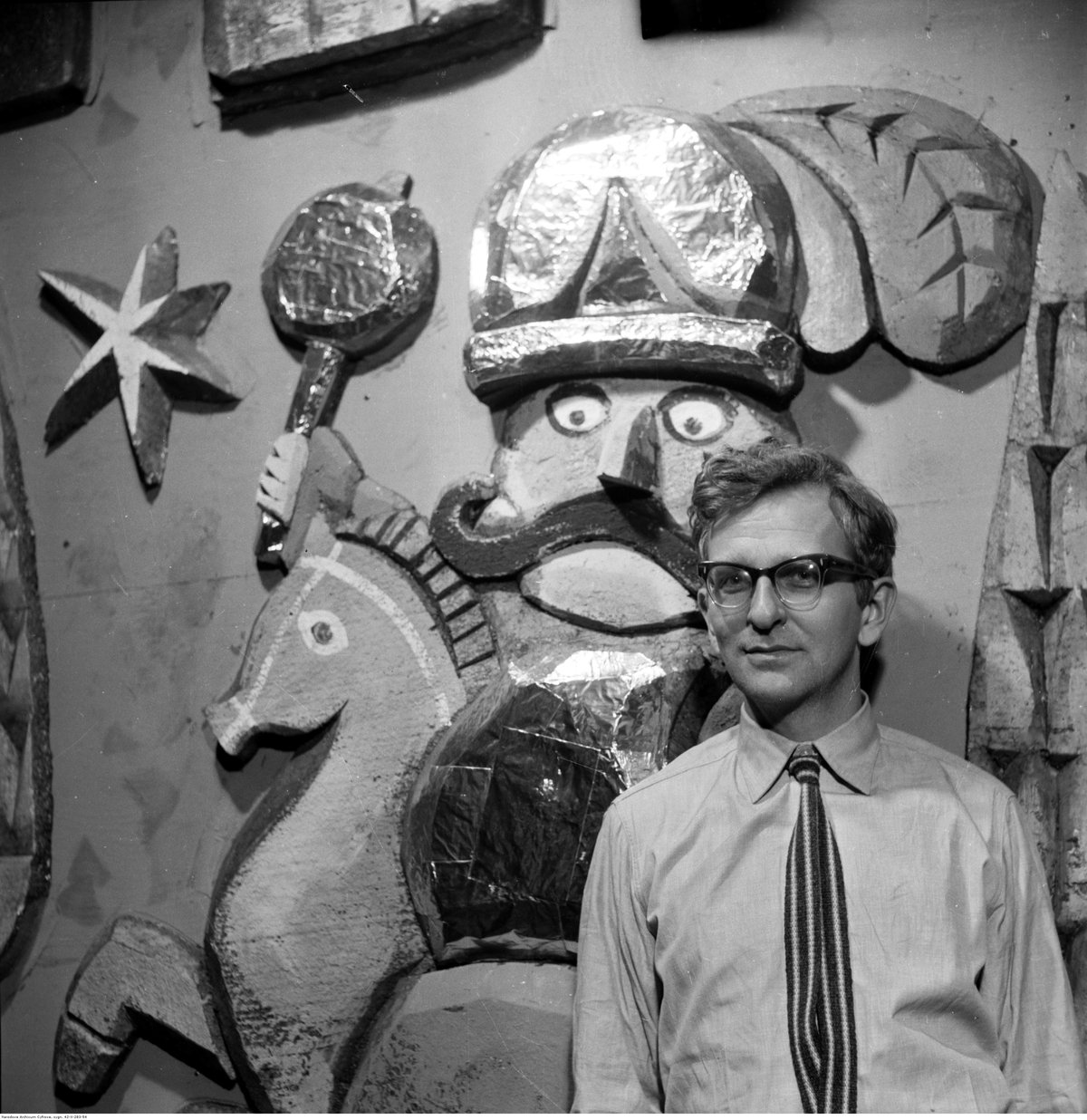
Unveiled on November 11, 2018, to commemorate the centenary of Poland’s independence, the monument was designed by Jacek Kucaba. It portrays Daszyński behind a lectern, symbolizing his dynamic presence as an orator and leader in the Polish parliament. The 4.5-meter bronze statue is set on a minimalist granite pedestal, with quotations from Daszyński’s speeches and excerpts from the Polish Constitution engraved nearby, reinforcing the ideals of freedom and democracy (pl.wikipedia; Aroundus; Walking Warsaw).
The monument’s open plaza, benches, and orientation facing the Sejm (Polish Parliament) underscore Daszyński’s foundational role in shaping modern Polish parliamentary democracy.
Location and Accessibility
Where to Find the Monument
- Address Na Rozdrożu Square (Plac Na Rozdrożu), intersection of Aleja Szucha and Aleja Armii Ludowej, Śródmieście, Warsaw.
- Transport Easily reachable by public transport:
Accessibility
The monument and its surrounding plaza are fully accessible for visitors with mobility impairments. Paved walkways, curb ramps, and open design ensure barrier-free access.
Visiting Hours and Tickets
- Hours Open 24 hours a day, 7 days a week.
- Admission Free, with no tickets or reservations required.
Travel Tips and Nearby Attractions
Best Times to Visit
- Season Late spring (May–June) and early autumn (September–October) offer mild weather and fewer crowds.
- Time of Day Early morning and late afternoon provide ideal lighting for photography and a tranquil atmosphere. The monument is also illuminated at night for evening visits.
Practical Tips
- Restrooms Not available directly at the monument. Facilities can be found in nearby parks and cafés.
- Seating Benches are available for rest and reflection.
- Photography The open setting and height of the statue offer excellent photographic opportunities; drone use is generally restricted in central Warsaw.
Nearby Attractions
- Łazienki Park A historic park and palace complex within a 10-minute walk (The Travel Tinker).
- Royal Route The monument is on this historic boulevard, connecting the Royal Castle with Wilanów Palace.
- Other Monuments Nearby statues honor other Polish independence leaders such as Józef Piłsudski and Wincenty Witos.
- Old Town and Museums The Warsaw Old Town, Royal Castle, Warsaw Uprising Museum, and POLIN Museum are within easy reach (World City Trail).
Safety and Conduct
- Safety The area is well-trafficked and considered safe for tourists (Nomadic Matt).
- Respectful Behavior Visitors are expected to be respectful, especially during public ceremonies (notably on November 11, Independence Day).
Visitor Experience and Interpretation
The monument serves as both a commemorative and educational site. Informational plaques (primarily in Polish) provide context about Daszyński’s life and legacy. The site is frequently visited by school groups and included in guided walking tours focusing on Warsaw’s political history and the “Fathers of Independence.”
Frequently Asked Questions (FAQ)
Q: What are the monument’s visiting hours?
A: It is accessible 24/7 as an open-air public site.
Q: Is there an entrance fee?
A: No, the monument is free to visit.
Q: Is the monument wheelchair accessible?
A: Yes, the area is fully accessible for visitors with mobility challenges.
Q: Are guided tours available?
A: Yes, many Warsaw historical tours include the monument; onsite information is also available.
Q: Can I take photos at the monument?
A: Yes, photography is encouraged. Drone use requires permission due to city regulations.
Q: What other attractions are nearby?
A: Łazienki Park, the Royal Route, and several monuments to other Polish independence leaders.
Visual Media and Maps
- Images High-resolution photos of the monument are available on Warsaw tourism websites.
- Map The monument is located at GPS coordinates 52.21859, 21.02378. Interactive maps and more visuals can be found online (Go2Warsaw).