Introduction
This Poland travel guide starts with the surprise most first-time visitors miss: the country changes character every few hours by train.
Poland works best when you stop thinking of it as one mood. Warsaw is all nerve and reinvention, a capital rebuilt after near-erasure and now laced with glass towers, Socialist Realist avenues, Chopin benches, and river beaches on the Vistula. Kraków moves differently: Gothic brick, courtyards, synagogue streets in Kazimierz, and church interiors that smell faintly of wax and cold stone even in June. Then Gdańsk shifts the frame again, with Hanseatic facades, shipyard memory, and a Baltic horizon that makes the country feel maritime rather than landlocked.
Distance is one of Poland's real advantages. In a single trip you can move from the merchant houses of Toruń to the goats and Renaissance geometry of Poznań, then south to Wrocław, where bridges, islands, and a long Central European aftertaste give the city a different pulse from either Warsaw or Kraków. Food changes with the map too: bowls of żurek sharpened with sour rye, pierogi that make more sense in a station bar than a themed restaurant, smoked sheep's cheese in Zakopane, and Baltic fish that tastes better the less fuss anyone makes about it.
History is never kept behind glass for long. Zamość still reads like a Renaissance thought experiment built in stone, Lublin carries the pressure of borderland politics, Łódź turns factory wealth into cinema and red-brick grandeur, and Białystok opens a route toward forests, minority histories, and eastern Poland's quieter tempo. If you want one country that can hold royal castles, postwar reconstruction, lake districts, mountain trails, and some of Europe's most layered urban memory without forcing a single narrative, Poland earns the time.
A History Told Through Its Eras
A Baptism, a Wheelwright, and a Kingdom Built in Stone
Piast Beginnings, c. 840-1386
A court feast, two strangers at the door, a prince devoured by mice: Poland begins, as so many old realms do, with a story too theatrical to be entirely false. Legend gives the crown to Piast the wheelwright, not to some glittering conqueror, and that detail matters. This country liked to imagine power rising from the yard, the workshop, the field.
Ce que l'on ignore souvent, c'est que the true founding scene was quieter and far more decisive. In 965, the Bohemian princess Dobrawa arrived to marry Mieszko I, and with her came priests, liturgy, and a diplomatic calculation sharp enough to save a state. Mieszko's baptism in 966 did not simply convert a ruler; it placed Poland inside Latin Christendom and kept it from being filed away as a pagan frontier by its German neighbors.
From Gniezno to Poznań, timber strongholds became seats of rule, and the first Piasts learned fast that faith, marriage, and spectacle could be as useful as swords. Bolesław the Brave staged power magnificently at the Congress of Gniezno in 1000, when Emperor Otto III honored the shrine of Saint Adalbert and treated the Polish ruler less like a vassal than a partner. For a brief, dazzling moment, the young kingdom stood in the center of Europe instead of at its edge.
Then came the harder work. Fragmentation, rival dukes, Mongol shock, towns rebuilt, frontiers argued over in blood and parchment alike. By the time Casimir III died in 1370, he had changed the texture of the country itself: castles in brick and stone, chartered towns, written law, and Kraków emerging as a courtly capital with ambition to match its walls. Wood had given way to masonry. The dynasty had done more than survive; it had taught Poland to endure, which would matter very soon when crowns, marriages, and Lithuania opened an entirely new chapter.
Dobrawa of Bohemia stands at the cradle of Poland: a princess whose marriage contract altered the fate of an entire people.
Casimir III was remembered for finding Poland built of wood and leaving it in stone, but tradition also insists he carried on a great love affair with Esterka, a woman the court never quite knew how to classify.
The Kingdom That Chose a Queen, Defeated Knights, and Dreamed Like a Republic
Jagiellonian and Commonwealth Splendor, 1386-1648
Picture a young queen in crimson velvet, not yet a woman in years, being crowned in Kraków in 1384 not as queen-consort but as king. Jadwiga's tiny hand on the regalia changed the map of Europe. Her marriage to Jogaila of Lithuania created the union that would grow into one of the continent's largest political experiments, a state stretched wide enough to make distance itself a governing problem.
Two swords arrived before the Battle of Grunwald on 15 July 1410, sent by the Teutonic Knights as a taunt. It was a foolish piece of theater. Jagiełło took his time, heard Mass, let tempers rise, then broke the military order that had dominated the Baltic frontier for generations; and with that victory, the road toward Gdańsk and the wealth of grain trade opened wider.
The sixteenth century brought the great Polish-Lithuanian Commonwealth, and here Poland becomes deliciously paradoxical. A monarchy, yes, but one with elected kings, jealous nobles, and a political culture that treated liberty as a noble birthright long before Europe learned to fear that word. In Lublin in 1569, union became structure, and in Kraków, Warsaw, and the estates of the szlachta, people argued, voted, conspired, and imagined themselves unusually free.
Ce que l'on ignore souvent, c'est que Warsaw owed its later centrality to a practical royal inconvenience. Sigismund III Vasa shifted the court there in 1596, largely because the city sat more conveniently between Poland and Lithuania than Kraków did. Capitals are not always born from poetry; sometimes they are born from bad roads and the fatigue of diplomats.
Yet glory always carries the seed of excess. The Commonwealth dazzled with tolerance rare for its age, a parliament louder than most courts could tolerate, and cities like Toruń and Zamość shaped by trade, learning, and ambition. It also trained its elites to adore privilege so much that reform became difficult, and that noble love of liberty, admirable in one century, would prove catastrophic in the next.
Jadwiga, canonized centuries later, was still a teenage ruler trying to carry a crown heavy enough to bind Poland and Lithuania together.
Nicolaus Copernicus, the cautious canon from Toruń who moved the Earth from the center of the universe, published his great work only in the year of his death, as if he preferred cosmic revolution with the shutters half-closed.
When the State Vanished but the Country Refused to Die
Partitions and the Stubborn Nation, 1648-1918
The disaster did not arrive in one blow. It came by attrition: Cossack revolts, Swedish invasion, court intrigues, foreign meddling, and a political system elegant on paper but increasingly paralyzed in practice. By the late eighteenth century, a realm that once stretched from the Baltic deep into the east could barely defend its own decisions.
Then came the dismemberment. Russia, Prussia, and Austria partitioned Poland in 1772, 1793, and 1795 until the state disappeared from the map altogether. Imagine the obscenity of it: archives still in their cupboards, churches still ringing bells, noble families still hanging portraits in their salons, and yet officially the country no longer existed.
And still it lived. The Constitution of 3 May 1791, too brief and too late, remained a point of pride because it showed reform had been possible. Tadeusz Kościuszko fought with republican severity, Prince Józef Poniatowski died in Napoleonic waters, and generations of exiles turned Paris into a second emotional capital where Chopin composed Poland into mazurkas and polonaises that sounded like memory dressed for the ballroom.
Ce que l'on ignore souvent, c'est que the nineteenth century kept remaking Polishness through women as much as through generals. Aristocratic hostesses, teachers in forbidden schools, widows guarding language at the family table, and mothers sending sons into uprisings gave the nation its daily continuity. A country under occupation survives first in grammar, prayer, and habit.
By the time the empires began to crack during the First World War, Poland had become less a state than an insistence. Poznań looked west, Lublin watched politics quicken, Łódź hummed with factories and class tension, and Warsaw waited for the moment when memory might become government again. In 1918 that moment came, but it arrived in a Europe already preparing its next catastrophe.
Frédéric Chopin spent much of his life away from Poland, yet no one translated exile into sound more intimately than this frail aristocrat of the piano.
After the failed November Uprising of 1830, Polish émigrés in Paris argued so bitterly over how to save their absent homeland that one exile called it a nation conducted entirely by committees and funerals.
The Republic Returns, Then Warsaw Burns
Rebirth, Ruin, and Occupation, 1918-1945
In November 1918, after 123 years of absence, Poland returned to the map like someone stepping back into a room stripped of its furniture. Józef Piłsudski arrived in Warsaw from prison and took command of a state that had to invent its borders, currency, ministries, and military almost at once. Nations are often imagined into being; this one had to be assembled at speed.
The interwar years were restless, inventive, and brittle. Gdynia rose from a fishing village into a modern port because the young republic refused to depend entirely on hostile geography, while Warsaw filled with ministries, cafes, uniforms, and arguments about what Poland ought to become. In 1920, when the Red Army pushed toward the capital, the Battle of Warsaw stopped it in a victory later called the Miracle on the Vistula, though miracles, as ever, needed rail timetables, code work, and exhausted soldiers.
Then the trap snapped shut. Germany invaded on 1 September 1939; the Soviet Union entered from the east on 17 September. Poland was carved once more, but now under two totalitarian powers whose methods were colder, faster, and more systematic than the dynasties of the eighteenth century.
No city carries that wound more fiercely than Warsaw. The ghetto, sealed in 1940, became the site of starvation, clandestine schools, prayer, smuggling, and in April 1943, armed Jewish revolt against impossible odds. A year later the wider Warsaw Uprising began on 1 August 1944, and for 63 days the city fought street by street while the Vistula looked on and Stalin waited.
What followed was not defeat alone but an attempt at erasure. Districts were dynamited, palaces blown open, churches gutted, libraries burned; by January 1945, vast parts of the capital were heaps of brick dust. And yet from that devastation came the moral capital of modern Poland, a memory so fierce that reconstruction itself became a political act and the postwar era could never be merely administrative.
Irena Sendler moved through occupied Warsaw with forged papers and astonishing calm, carrying children out of the ghetto and writing down their real names so the future might find them again.
Pianist Władysław Szpilman survived in ruined Warsaw partly because a German officer, Wilm Hosenfeld, asked him to play instead of shoot him.
From Rubble and Silence to Solidarity and a European Return
People's Poland to Democratic Poland, 1945-present
The postwar order arrived under Soviet shadow, and Poland entered the communist period already exhausted, bereaved, and suspicious. Warsaw was rebuilt almost uncannily, street by street, from paintings by Canaletto and from stubborn civic memory, while Wrocław and Gdańsk absorbed new populations pushed west by border changes decided far above their heads. A new map had been drawn, but the old grief remained in the wallpaper, the cemetery records, the family stories told after midnight.
People's Poland was never simple obedience. Workers protested in Poznań in 1956; students and intellectuals pushed at censorship; the Church became more than devotional shelter because it offered language the state could not fully police. Ce que l'on ignore souvent, c'est que daily resistance often looked painfully ordinary: a joke in a kitchen, a banned book passed hand to hand, a queue in which everyone pretended not to listen while everyone listened.
Then came the shipyards. In August 1980, at Gdańsk, welders, electricians, crane operators, and clerks transformed a labor dispute into Solidarity, a movement that spoke in the voice of workers but carried the ambition of a nation. Lech Wałęsa climbed a gate, negotiations stretched, and for a moment the communist system was forced to face a union it could neither fully absorb nor easily crush.
Martial law in 1981 tried to freeze that moment. It failed. By 1989, round-table talks, half-free elections, and the slow crumbling of Soviet power turned what had seemed improbable into fact: communism retreated, and Poland began its difficult, noisy, deeply human return to parliamentary life and market reality.
The story did not end with liberation slogans. Joining NATO in 1999 and the European Union in 2004 anchored the country in structures earlier generations could only imagine, while cities from Kraków to Łódź and from Lublin to Białystok kept renegotiating what memory should look like in glass, steel, and restored stone. Poland now stands not as a relic of martyrdom but as a country forever arguing with its past, which is perhaps the most Polish habit of all.
Lech Wałęsa had the electrician's moustache, the worker's bluntness, and the instincts of a born political actor standing where history had finally placed a microphone.
The painstaking reconstruction of Warsaw's Old Town was so exact that UNESCO later recognized it not as ancient fabric, but as an extraordinary act of twentieth-century restoration.
The Cultural Soul
A Grammar of Distance, Then Bread
Polish begins by placing a chair between two people. Pan. Pani. A title first, a person after. In Warsaw, at a bakery counter, you hear the ritual in miniature: a measured greeting, the exact request, the little softening word proszę, and then silence that does not beg to be filled.
This reserve is not coldness. It is architecture. The language builds a vestibule before it opens the salon, and once you understand that, half the country changes shape; what sounded stern on a tram in Łódź starts to sound careful, almost tender, as if words were porcelain and nobody wished to chip them.
Polish itself has the texture of frost on glass: sz, cz, rz, consonants pressed together like people on Platform 3 before a winter departure. Then a word like dziękuję arrives and the whole mouth warms. A country reveals itself by what it asks the lips to do.
Foreigners often chase fluency. Better to chase accuracy. Learn dzień dobry, proszę, przepraszam, dziękuję, and the honorable distance of Pan and Pani. Poland does not require verbal seduction. It respects someone who comes correctly dressed in grammar.
The Table Sets the Terms
Poland thinks through soup. This is not metaphor. Before argument, before confession, before family theater with cutlery as supporting cast, a tureen appears and order is restored. Rosół on Sunday, clear and gold; żurek with its rye acidity and sausage; barszcz so red it looks theatrical until you taste the restraint.
A meal here rarely tries to charm you at once. It advances in stages: broth, dumplings, cabbage, bread, herring, cake, tea, vodka if the room has decided the evening requires ceremony. This sequence matters. Appetite in Poland has grammar, and grammar is one of the national arts.
What strikes me is the seriousness given to dough. Pierogi in Kraków, uszka at Christmas, nalesniki in domestic rotation, makowiec rolled with poppy seeds until it resembles a secret wrapped for winter. Flour becomes memory because it keeps hands busy, and busy hands are spared the burden of explaining themselves.
Then dessert commits the act of seduction the rest of the meal has politely postponed. In Toruń, gingerbread turns spice into civic identity. In Wrocław, cake enters the room with the gravity of a visiting aunt. A country is a table set for strangers, but Poland watches first to see whether the stranger knows how to sit.
Books Written With Ash and Nerves
Polish literature does not suffer from modest ambitions. It has survived partitions, censorship, occupation, exile, and the special humiliation of history entering the apartment without knocking. This produces a national bookshelf with unusual muscle: Adam Mickiewicz writing nationhood into verse, Czesław Miłosz distrusting every easy idea, Wisława Szymborska placing a microscope over ordinary life and finding metaphysics in a grain of dust.
One reads Poland best by noticing how often literature had to substitute for sovereignty. When the state disappeared in the late eighteenth century, the sentence remained. When the map failed, the poem continued to report for duty. That is why books here are not decorative objects. They are reserve currency.
And yet the great Polish writers are rarely pompous for long. Bruno Schulz can make a father into myth through shop dust and fabric. Olga Tokarczuk, born in Lower Silesia, writes as if borders were fever dreams and the body knew more than passports. The intelligence is formidable. The mischief also.
In Kraków, where poets, critics, priests, drunks, and Nobel winners have all walked the same stones with different alibis, this literary density feels almost meteorological. Words hang in the air. Not loudly. Poland knows that the deepest sentences are often spoken as if nobody wanted to interrupt the weather.
Politeness With a Spine
Polish etiquette is a form of moral geometry. You stand properly. You greet people in the right order. You do not presume intimacy because a waiter smiled or because a shopkeeper answered in English. What looks formal from the outside feels, from within, like respect refusing to become theater.
The old word kindersztuba still shadows the room. Good upbringing. Social timing. Knowing when to hold a door and when not to perform helpfulness like a street clown. Poland has little patience for charm used as a crowbar.
This can surprise visitors trained in cheerful overexposure. In Poznań or Lublin, efficient service may arrive with no decorative warmth at all, and then, fifteen minutes later, someone will walk you to the correct platform, call a cousin, or explain a menu with astonishing care. The kindness is real because it is not prepaid in smiles.
Even the famous hospitality follows this rule. It is lavish once granted, almost comically so, but it does not fling the gate open for everyone at once. First comes observation. Then soup. Then cake. Then the moment somebody insists you take more, which is Poland's domestic equivalent of a sonnet.
Incense, Wax, and the Weight of Kneeling
Catholicism in Poland is not merely belief. It is choreography, memory, calendar, sound. A church on an ordinary weekday can smell of extinguished candles and damp wool, and that odor alone explains more than a political essay about what faith has meant here across occupation, war, Communism, and the unruly freedoms that followed.
Records, monuments, and public life all confirm the scale of this inheritance, but the truth is easier to grasp in small scenes: palms carried for Palm Sunday, Easter baskets lined with cloth and eggs, the low thunder of All Saints' Day traffic as families move toward cemeteries with chrysanthemums and glass lamps. Religion enters by the side door of habit.
That does not make Poland simple. Far from it. Devotion, skepticism, resentment, pride, tenderness toward ritual, anger at institutions: they coexist within the same family, sometimes within the same person, often within the same pew. The contradiction is not a flaw. It is the country telling the truth about itself.
Go into a church in Gdańsk at noon or in a small town after dark and listen to footsteps crossing stone. Even the nonbeliever receives the lesson. Repetition can sanctify a place long before doctrine persuades the mind.
Walls That Remember More Than Their Builders
Polish architecture is a dialogue between ruin and insistence. Warsaw makes this plain with almost indecent clarity: a capital destroyed with method, then rebuilt with method, so that reconstruction itself became a civic style. You do not look at the Old Town only as masonry. You look at will rendered in brick-colored paint.
Elsewhere the country changes costume without changing temperament. Gdańsk wears Hanseatic facades and maritime wealth. Zamość stages Renaissance geometry with the confidence of a planned ideal. Zakopane lifts timber into mountain rhetoric. Each city proposes a different surface, but underneath lies the same argument with history: you may break us, but you will not choose our final form.
I admire the Polish tolerance for layers that should, in theory, clash. Gothic churches beside socialist housing blocks. Baroque chapels not far from scarred twentieth-century offices. Industrial Łódź, with its mills and palaces of manufacture, proving that capital can be ugly in fascinating ways and beautiful by accident, which is often the more durable beauty.
Architecture here is never innocent. A façade is a witness. A rebuilt square is an act of memory with municipal paperwork attached. Poland has had too much happen to it for buildings to remain merely buildings.
What Makes Poland Unmissable
Cities Built by History
Warsaw, Kraków, Gdańsk, Toruń, and Zamość each show a different chapter of Poland's past, from royal ambition to wartime destruction and meticulous reconstruction. You don't just see history here; you watch how each city argued with it.
Serious Regional Food
Polish cooking rewards curiosity over polish. Order żurek, pierogi, bigos, rosół, and oscypek where locals eat them, and the country starts to make sense through rye, smoke, broth, and fermentation.
Mountains in the South
The Tatra edge around Zakopane gives Poland a harder, cleaner line: hiking trails, winter snow, wooden villas, and highland food that feels built for cold air. It changes the whole rhythm of a trip.
Baltic Coast and Waterways
Poland faces the Baltic with beaches, shipyards, dunes, and port cities, while the Vistula stitches the country together from south to sea. Gdańsk and the coast add salt air to a nation many visitors expect to be purely inland.
Memory With Texture
Poland handles its past in detail, not slogans. Museums, former Jewish quarters, workers' districts, castles, and rebuilt old towns show how invasion, partition, and recovery still shape daily streetscapes.
Cities
Cities in Poland
Wrocław
"The afternoon light hits the copper spires of Ostrów Tumski and suddenly you understand why this city survived Mongols, plague, Nazis and a communist rebuild only to feel quietly, stubbornly alive."
193 guides
Kraków
"Stand in Rynek Główny at dusk and you feel the weight of a city that has been a royal capital, a university town, a Jewish sanctuary, and a reluctant witness to the 20th century — all within sight of the same medieval to…"
169 guides
Masovian Voivodeship
"Warsaw was erased in 1944 and drawn again from memory. Walk its Old Town and you can still feel the difference between the stones that survived and the ones that were chosen to stand in for them."
Warsaw
"A city that rebuilt itself brick by brick from wartime rubble, then kept the scars visible enough that you never forget what reconstruction actually costs."
Gdańsk
"The amber-trading Hanseatic port where World War II began and where Solidarity ended communism, its candy-coloured facades hiding a biography more violent than any in Central Europe."
Poznań
"The trade-fair city that bankrolled the Piast dynasty's first kingdom, still running on mercantile seriousness and a goat-clock that fights itself every noon on the town hall."
Łódź
"A 19th-century textile-factory colossus that never prettified its industrial bones, now home to the longest pedestrian boulevard in Poland and a film school that trained Polański and Kieślowski."
Toruń
"A perfectly preserved Gothic brick city on the Vistula that produced Copernicus in 1473 and still makes the gingerbread he supposedly ate as a boy."
Lublin
"East of the Vistula and east of most tourist itineraries, Lublin carries the densest layer of Jewish, Catholic, and Orthodox memory in the country, compressed into a castle hill and a single winding ulica Grodzka."
Zakopane
"The Tatra mountain resort town where 19th-century intellectuals invented a national style out of highlander folk art, and where the góralski dialect still sounds like a different language."
Zamość
"A Renaissance ideal city dropped intact onto the Ukrainian steppe in 1580 by a single aristocrat who hired an Italian architect and refused to compromise on the grid."
Białystok
"Gateway to Białowieża, the last primeval lowland forest in Europe, where European bison were reintroduced from near-extinction and wolves still cross the road before dawn."
Szczecin
"A Baltic port city that was German Stettin until 1945, rebuilt by Poles who had themselves just been expelled from Lwów, producing a place where every street name is an act of political will."
3 Days in Kraków, Poland | Best Things To Do For First-Time Visitors
Our Travel PlaceRegions
Gdańsk
Baltic Coast and the Lower Vistula
Northern Poland has salt air, brick facades and a trading history that still shapes the streets. Gdańsk gives you shipyard memory and merchant confidence, while Toruń brings the Vistula inland and slows the mood without flattening it. This is the region for amber, docks, Gothic brick and weather that can turn in an hour.
Poznań
Greater Poland and the Western Gate
Poznań is one of the country's most self-possessed cities: businesslike, old, and less interested in performing for visitors than Kraków. Push west and the story changes again in Szczecin, a port city with broad avenues, a Baltic horizon and a map that feels more Germanic than most of Poland. The region suits travelers who like order, rail access and cities that reveal themselves slowly.
Wrocław
Lower Silesia
Lower Silesia has the layered feel of a borderland that changed hands more than once and remembers all of it. Wrocław is the obvious anchor, with island churches, a handsome market square and enough Central European crosscurrents to keep the place from settling into one identity. It works especially well if you like city breaks with architectural density and a little friction in the history.
Kraków
Lesser Poland and the Tatras
Southern Poland is where royal memory and mountain culture sit a few hours apart. Kraków has the country's great ceremonial core, then Zakopane flips the mood entirely with wooden villas, highland food and access to the Tatra foothills. You come here for churches, cemeteries, ridgelines and dinners that are heavier than they look.
Warsaw
Mazovia and Central Poland
Central Poland is about reinvention. Warsaw carries the full weight of destruction and rebuilding, then answers with glass towers, reconstructed streets and one of Europe's most deliberate urban personalities; Łódź adds factories, film culture and the rough-edged beauty of a former textile capital. The wider Masovian Voivodeship makes sense if you want to understand how the capital sits inside the plain that feeds it.
Lublin
Eastern Poland
The east feels quieter, older and more porous to the borderlands beyond it. Lublin has university energy and a serious historical backbone, Zamość is a planned Renaissance city with arcades and symmetry, and Białystok opens the door to a different northeastern Poland shaped by forests, mixed cultures and shorter tourist lists. Come here if you prefer layered history to polished packaging.
Suggested Itineraries
3 days
3 Days: Baltic Brick and Hanseatic Streets
Start in Gdańsk for cranes, merchant houses and the long North Sea mood that still clings to the port. Then move inland to Toruń, where brick Gothic, Copernicus lore and a compact old town make a short trip feel fuller than it should.
Best for: first-time visitors, architecture fans, long weekends
7 days
7 Days: Silesia to the Tatras
This is the cleanest southbound line in the country: Wrocław for market-square swagger, Kraków for royal Poland at full volume, then Zakopane when you want timber villas, mountain air and a different rhythm. The route works well by train until the final leg, and each stop feels like a distinct chapter rather than more of the same.
Best for: first-timers who want cities and mountains
10 days
10 Days: Central Poland to the Eastern Edge
Begin in Łódź, where mills, murals and cinema history sit inside a city that had to reinvent itself. Continue to Warsaw for the capital's postwar drama, then head east to Lublin and Zamość for one of Poland's strongest contrasts: big-city momentum followed by arcaded Renaissance order.
Best for: repeat visitors, history readers, rail travelers
Notable Figures
Mieszko I
c. 930-992 · Founding rulerHe understood before many of his rivals that baptism could be a diplomatic weapon. By accepting Christianity in 966, he did not merely save his soul; he gave Poland a place at Europe's table before others could divide the land and call it mission territory.
Dobrawa of Bohemia
c. 940-977 · Princess and dynastic architectPolish chronicles remember kings loudly and women too softly, yet Dobrawa changed everything. She arrived as a bride from Bohemia and left behind a baptized court, a Christian dynasty, and the outline of a state that would endure after her early death.
Casimir III the Great
1310-1370 · King and state-builderHe ruled with masons, jurists, and tax men as much as with knights, which is why Poland looked different when he was done. Castles rose, towns were chartered, laws were written down, and the realm began to feel less like a patchwork of claims and more like a kingdom.
Jadwiga of Poland
1373/74-1399 · Monarch and saintShe was crowned not as queen-consort but as king, a small lexical revolution with enormous consequences. Her marriage to Jogaila tied Poland to Lithuania, and her piety has long been celebrated, though the sharper truth is that she was also a formidable political instrument in human form.
Nicolaus Copernicus
1473-1543 · Astronomer and canonHe spent years observing quietly, calculating carefully, and delaying publication with the caution of a man who knew exactly how much trouble the truth could cause. When he finally shifted the Earth from the center of the universe, he also gave Poland one of its most enduring intellectual emblems.
Frédéric Chopin
1810-1849 · ComposerExile made him more Polish, not less. In Paris he turned dances from the Mazovian plain into works of memory and longing, so that the lost country lived on in rhythm, accent, and the sudden ache of a phrase.
Maria Skłodowska-Curie
1867-1934 · Physicist and chemistShe began in a city where women were denied the education she deserved, studying in secret before leaving for Paris. Yet she kept Poland in her science, naming polonium for the country that did not then exist on the map but certainly existed in her mind.
Józef Piłsudski
1867-1935 · Statesman and military leaderHe looked less like a salon politician than like someone who had slept in his boots, which was part of the point. Piłsudski stitched a state back together from provinces that had spent generations under different empires and taught the reborn republic to act before it had finished introducing itself.
Irena Sendler
1910-2008 · Humanitarian and resistance workerShe used forged papers, nerve, and bureaucratic precision to move children out of the Warsaw Ghetto one by one, in ambulances, toolboxes, and through sewers when needed. Then she wrote down their names and hid the lists in jars, because rescue without memory would have been only half a rescue.
Lech Wałęsa
born 1943 · Solidarity leader and presidentHe had the gift of speaking like an ordinary worker at the exact moment ordinary workers became the decisive political class. In the Lenin Shipyard at Gdańsk, he turned wages and labor rights into a national question, and from there into one of the great democratic cracks in the Soviet bloc.
Photo Gallery
Explore Poland in Pictures
Front view of historic building in Poznań, Poland, with snow-covered surroundings.
Photo by Leszek Czyzewski on Pexels · Pexels License
Low-angle view of Poznań Town Hall against a clear blue sky. Iconic renaissance architecture.
Photo by Egor Komarov on Pexels · Pexels License
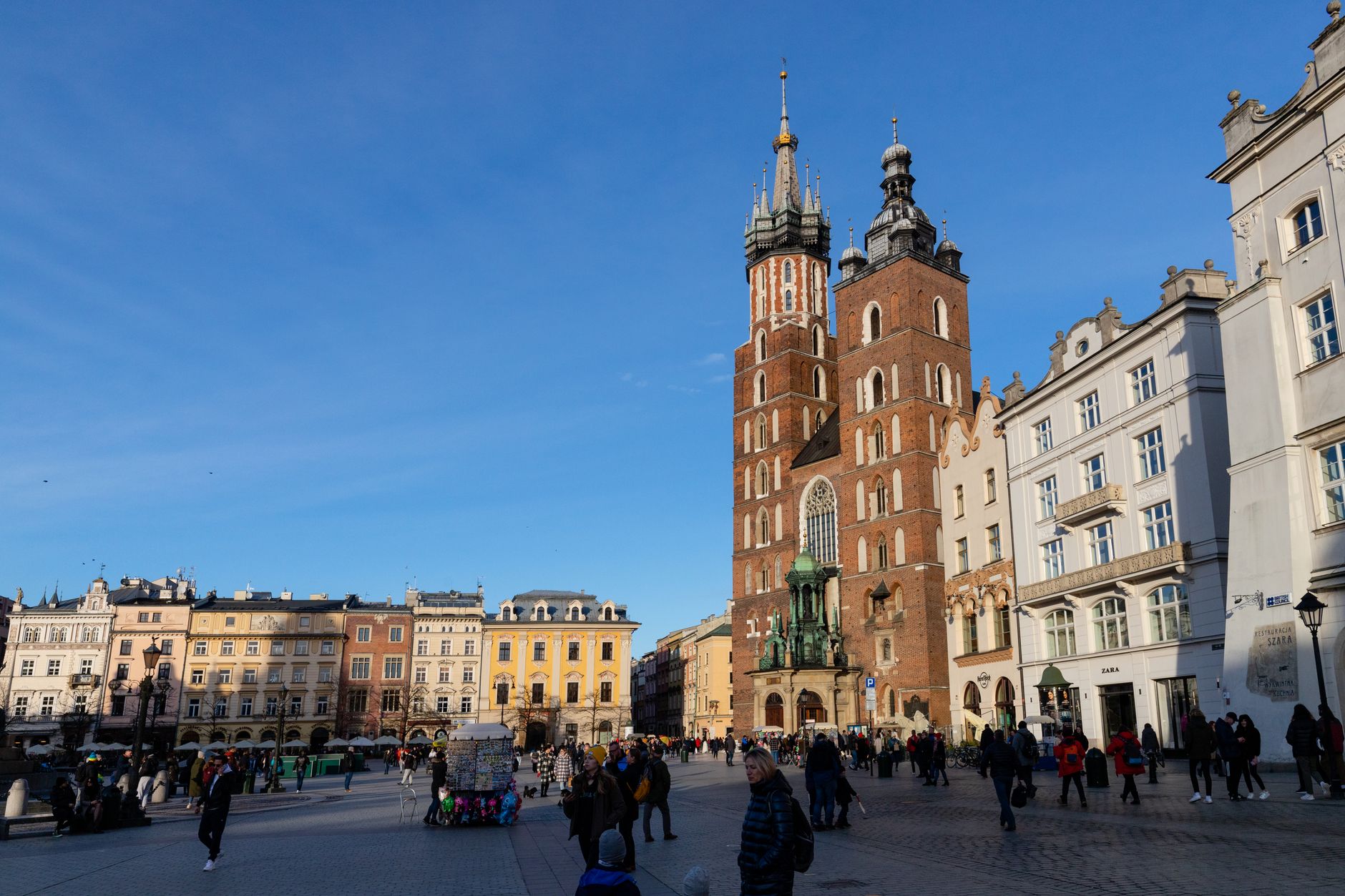
Daytime view of St. Mary's Basilica in Krakow's Main Market Square, under clear blue skies.
Photo by Mateusz Feliksik on Pexels · Pexels License
Modern skyscrapers dominate the Warsaw skyline. Twilight view offers a serene cityscape.
Photo by Aleksander Dumała on Pexels · Pexels License
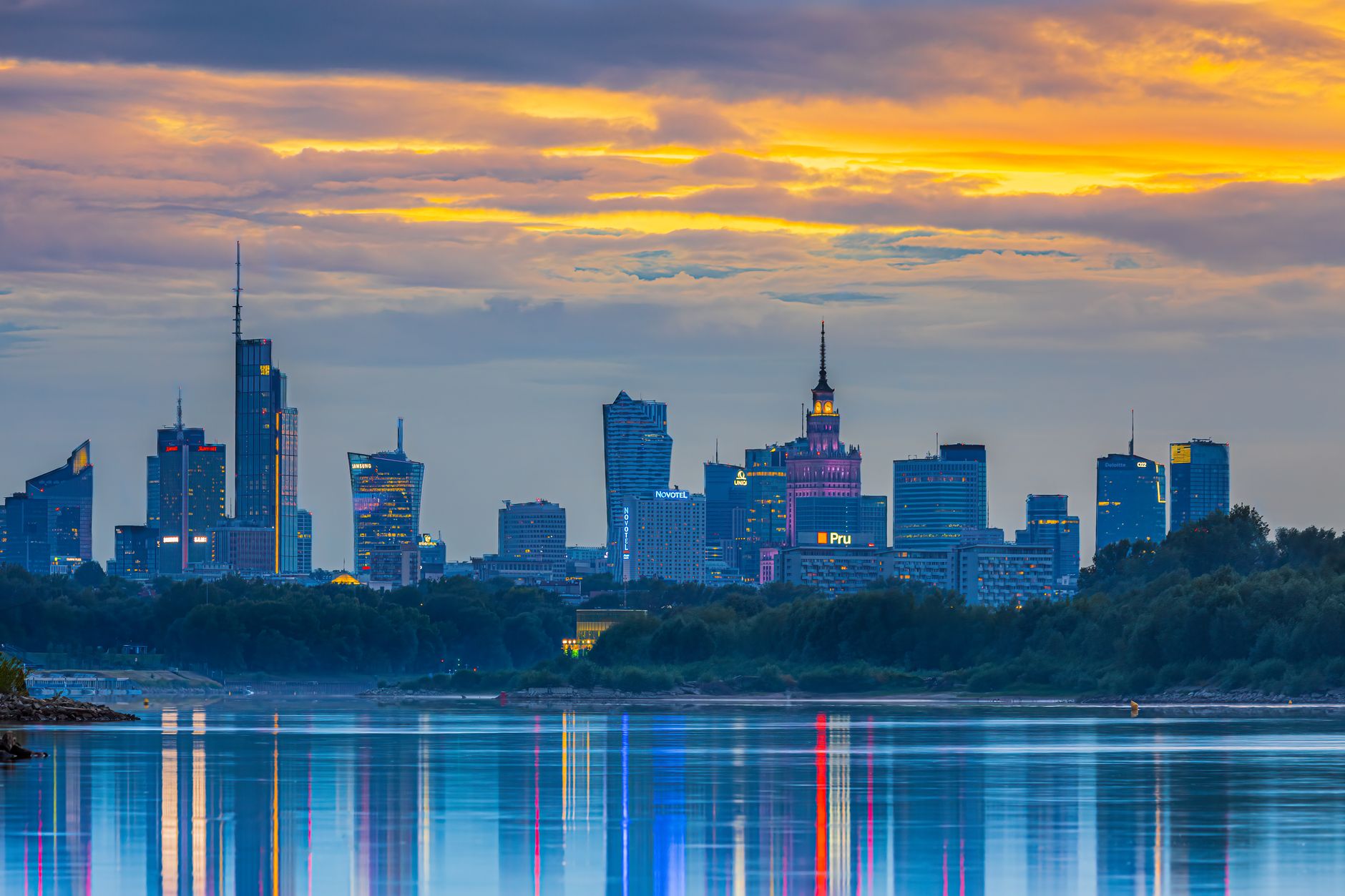
Experience the vibrant Warsaw skyline at sunset, reflecting beautifully in the river.
Photo by Maciej Cisowski on Pexels · Pexels License
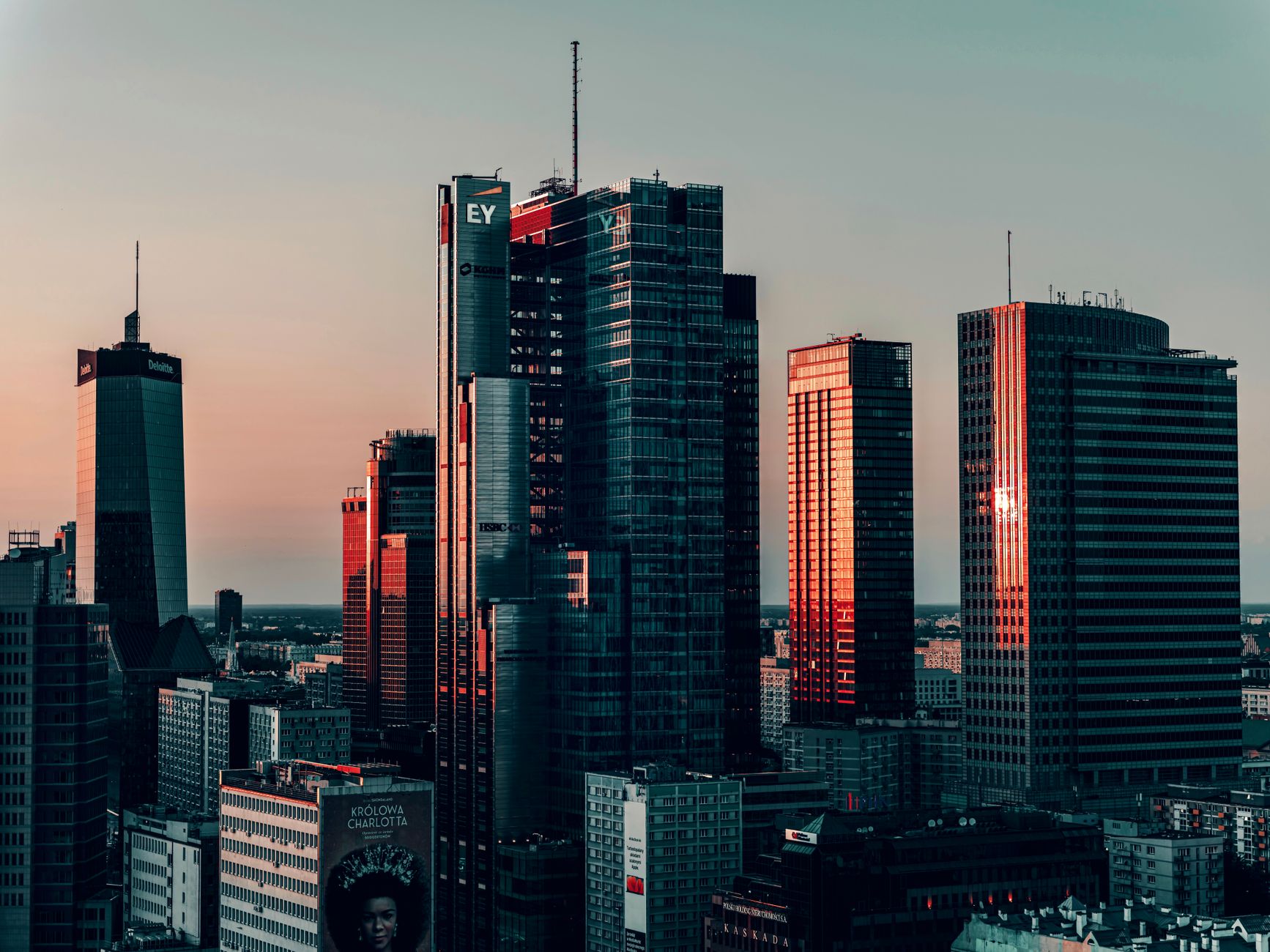
A stunning view of Warsaw's modern office buildings at sunset, showcasing city life and architecture.
Photo by Egor Komarov on Pexels · Pexels License
Stormy sky over lush fields in the picturesque Biały Dunajec valley, Lesser Poland.
Photo by Karolina on Pexels · Pexels License
Lush green fields with plowed rows and distant mountains under a clear sky.
Photo by Dawid Zawiła on Pexels · Pexels License
Moody landscape of Biały Dunajec, Poland, with dramatic clouds and sunlight breaking through.
Photo by Karolina on Pexels · Pexels License
Elegant horse-drawn carriages adorned with red tassels in Krakow city square.
Photo by Giota Sakellariou on Pexels · Pexels License
Close-up of colorful handmade shoes displayed at a market in Zakopane, showcasing traditional craftsmanship.
Photo by Dominik Gryzbon on Pexels · Pexels License
Charming hand-painted dolls displayed in a Zakopane gift shop, showcasing local Polish craftsmanship.
Photo by Dominik Gryzbon on Pexels · Pexels License
Plate of handmade dumplings with caramelized onions and sour cream on a white background.
Photo by SHOX ART on Pexels · Pexels License
Close-up of pierogi with strawberry sauce and fried onions on white plates, perfect for culinary content.
Photo by Valeria Boltneva on Pexels · Pexels License
Close-up view of uncooked Russian pelmeni dumplings with dough on a dark surface, ready to cook.
Photo by Nadezhda Moryak on Pexels · Pexels License
Vibrant facades of historic buildings in Poznań's Old Market Square showcase classic European architecture.
Photo by Egor Komarov on Pexels · Pexels License
Vibrant traditional buildings in Poznań's historic old town.
Photo by Ulkar Batista on Pexels · Pexels License
Scenic view of the historic Wrocław University building along the Odra River at sunset.
Photo by SHOX ART on Pexels · Pexels License
Top Monuments in Poland
Eros Bendato
Kraków
Blindfolded and hollow, Mitoraj's giant bronze head turned Kraków's medieval square into the city's favorite meeting point and a sly photo stop today.
Copernicus Science Centre
Warsaw
Over 8 million visitors since 2010, a metro stop named after it, and a rooftop with Old Town views most visitors never find.
Jaskinia Wierzchowska Dolna (Mamutowa)
Kraków
Warsaw Uprising Monument
Warsaw
Stalin halted his armies and watched Warsaw burn for 63 days.
Wieliczka Salt Mine
Wieliczka
Żupny Castle
Wieliczka
Charles De Gaulle Roundabout in Warsaw
Warsaw
A 15m artificial palm tree at a Warsaw roundabout is actually a memorial to a vanished Jewish community.
Twardowski'S Cave
Kraków
Palace of the Four Winds
Warsaw
Racławice Panorama
Wrocław
Bastion Ceglarski, Wrocław
Wrocław
Museum of Motorisation Topacz in Ślęza
Wrocław
Lasek Bielański
Warsaw
Szczepański Square in Kraków
Kraków
Orthodox Cemetery in Warsaw
Warsaw
Beverly Hills
Wrocław
Four Domes Pavilion, Wrocław
Wrocław
Monument to the Fallen and Murdered in the East
Warsaw
Practical Information
Visa
Poland is in the Schengen area. Many non-EU visitors, including U.S., U.K., Canadian and Australian passport holders, can stay up to 90 days in any 180-day period without a visa, but from 10 April 2026 the EU Entry/Exit System records entries digitally instead of passport stamps. ETIAS is not operating yet as of 20 April 2026; the EU says it will start in the last quarter of 2026, so check again before booking.
Currency
Poland uses the złoty, written as PLN or zł, and card payment is routine in cities from Warsaw to Gdańsk. Keep some cash for market stalls, rural buses, public toilets, and small bars, but you will rarely need much. If a terminal offers dynamic currency conversion, pay in złoty, not your home currency.
Getting There
Most long-haul and European flights funnel through Warsaw, with strong secondary gateways in Kraków, Gdańsk, Wrocław, Poznań and Szczecin. If you land at Warsaw Chopin Airport, the airport sits about 10 km from the center and trains run into the city; official airport guidance puts taxis to central Warsaw around 40 to 50 PLN.
Getting Around
Poland makes the most sense by rail. PKP Intercity handles the fast long-distance spine between cities such as Gdańsk, Poznań, Warsaw, Kraków and Wrocław, while POLREGIO fills in regional gaps with roughly 2,000 trains a day stopping at more than 2,000 stations. On local transport, validate paper tickets at the start of the ride or you can be fined.
Climate
Expect a real split between coast, plains and mountains. The Baltic north stays cooler and windier, the central belt around Warsaw and Łódź gets warm summers and cold winters, and Zakopane can still feel like another season entirely. May to June and September to early October usually give you the easiest balance of daylight, prices and manageable crowds.
Connectivity
Mobile service is easy to arrange, with the four big operators Orange, Plus, Play and T-Mobile active in the market. Free station Wi-Fi is available at more than 120 PKP railway stations, including major hubs such as Warsaw Central, Kraków Główny, Wrocław Główny, Poznań Główny, Gdańsk Główny and Lublin. Hotels, apartments and most cafés in larger cities treat Wi-Fi as standard.
Safety
Poland is generally an easy country to travel in, but the usual city problems still apply: pickpockets around stations, drink spiking in nightlife areas, and inflated fares from unofficial taxis. Use licensed cabs, watch your bill in bars, and carry ID. Border areas near Ukraine and Belarus deserve extra attention because security rules and access can change quickly.
Taste the Country
restaurantRosół
Sunday lunch. Family table. Broth first, noodles after, black pepper last.
restaurantŻurek
Easter, cold days, late mornings. Bread bowl or deep plate. Sausage, egg, spoon, silence.
restaurantPierogi ruskie
Lunch or supper. Friends, grandparents, office workers. Fork, sour cream, fried onion.
restaurantBarszcz z uszkami
Christmas Eve. Family voices, formal table, too many plates. Beet broth first, tiny dumplings drifting after.
restaurantBigos
Winter gatherings, hunting lodges, home kitchens, second day always better. Bowl, rye bread, vodka nearby.
restaurantPączki on Tłusty Czwartek
Queue, sugar, jam, napkin. Office boxes, bakery paper bags, shared excess before Lent.
restaurantObwarzanek krakowski
Morning street ritual in Kraków. Paper ring in hand, tram stop, fast bite between errands.
Tips for Visitors
Pay in złoty
When a card machine asks whether you want to pay in your home currency, decline it. Local-currency billing in PLN is almost always cheaper.
Book fast trains early
PKP Intercity fares usually reward early booking, especially on the Warsaw, Kraków, Gdańsk and Wrocław corridors. Friday afternoons and Sunday evenings fill first.
Validate tickets
On trams, buses and some regional systems, a paper ticket is not valid until you stamp or activate it. Inspectors do not care that you are new in town.
Reserve weekends in Kraków
Kraków and Zakopane tighten up fastest on summer weekends, public holidays and around Christmas markets. If your trip lands on a Friday or Saturday, lock in rooms before you book side trips.
Start formal
Polish service culture is polite but not gushy. A clear greeting, a calm tone and direct questions work better than performative friendliness.
Use licensed taxis
Take marked taxis from official ranks or use established apps. Unofficial drivers around airports, stations and nightlife districts are where the bad stories begin.
Lunch can save money
Many restaurants run weekday lunch sets that cost much less than dinner for nearly the same kitchen. In business districts of Warsaw, Poznań and Łódź, this is one of the easiest budget wins.
Videos
Watch & Explore Poland
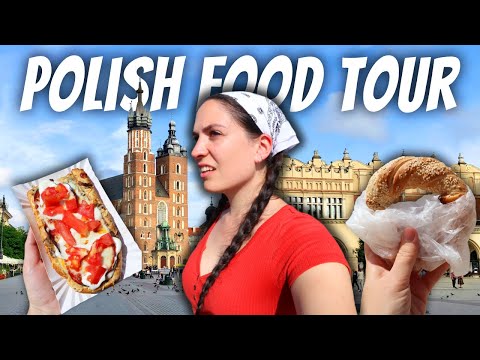
Ultimate POLISH FOOD TOUR in Krakow, Poland 🇵🇱
Warsaw - Rapidly Growing Capital of Poland 🇵🇱 | Night City Lights & Skyscrapers | 4K Walking Tour
Poland: What Tourists Really NEED to Know about Polska
Explore Poland with a personal guide in your pocket
Your Personal Curator, in Your Pocket.
Audio guides for 1,100+ cities across 96 countries. History, stories, and local insight — offline ready.
Audiala App
Available on iOS & Android
Join 50k+ Curators
Frequently Asked
Do I need a visa for Poland as a US citizen? add
Usually no for short tourist trips. U.S. passport holders can generally enter Poland and the Schengen area for up to 90 days in any 180-day period without a visa, but from 10 April 2026 non-EU travelers are recorded in the EU Entry/Exit System and should expect digital border checks instead of old-style passport stamps.
Is ETIAS required for Poland in 2026? add
Not yet as of 20 April 2026. The official EU ETIAS site says the system will start in the last quarter of 2026, so travelers do not need to apply now but should recheck the rule before departure.
Can I use euros in Poland? add
Not reliably. Poland uses the złoty, and while a few tourist businesses may quote prices in euros, everyday payments from tram tickets to supermarket runs work in PLN.
Is Poland expensive for tourists? add
No, by Western European standards Poland is still good value. Warsaw and Kraków cost more than Lublin or Łódź, but transport, museum tickets and solid local meals usually land below the equivalent spend in Paris, Amsterdam or Copenhagen.
Is it better to travel around Poland by train or car? add
Train is better for most city-to-city trips. The main rail routes between Gdańsk, Poznań, Warsaw, Kraków, Wrocław and Lublin are practical and save you parking trouble, while a car only starts to pay off when you head into villages, lake country or mountain areas with awkward bus links.
How many days do you need for Poland? add
Seven to ten days is the sweet spot for a first trip. That gives you time for two big cities and one slower stop, instead of treating Poland like a checklist of stations and hotel lobbies.
Is Poland safe for solo female travelers? add
Generally yes, with the usual city precautions. The bigger issues are unofficial taxis, drink spiking in nightlife districts, and petty theft around stations, so use licensed transport, watch your drink and do not carry your whole trip budget in one place.
Do I need cash in Poland? add
A little, not a lot. Cards work almost everywhere in Warsaw, Kraków, Gdańsk, Poznań and Wrocław, but cash still helps for market stalls, rural stops, public toilets and the occasional small bar.
Sources
- verified European Commission: Entry/Exit System — Official EU source for the Schengen Entry/Exit System, including the 10 April 2026 full rollout date.
- verified EU ETIAS Official Site — Official timetable and traveler guidance confirming ETIAS starts in the last quarter of 2026, not yet in force as of April 2026.
- verified Gov.pl: Poland Visas General Information — Official Polish government visa rules explaining Schengen short-stay limits and visa categories.
- verified Narodowy Bank Polski — Official central bank source for the Polish złoty and currency information.
- verified PKP S.A. and POLREGIO — Official railway sources used for station Wi-Fi coverage and the national rail network context.
Last reviewed: