
Origins and Construction (1778–1781)
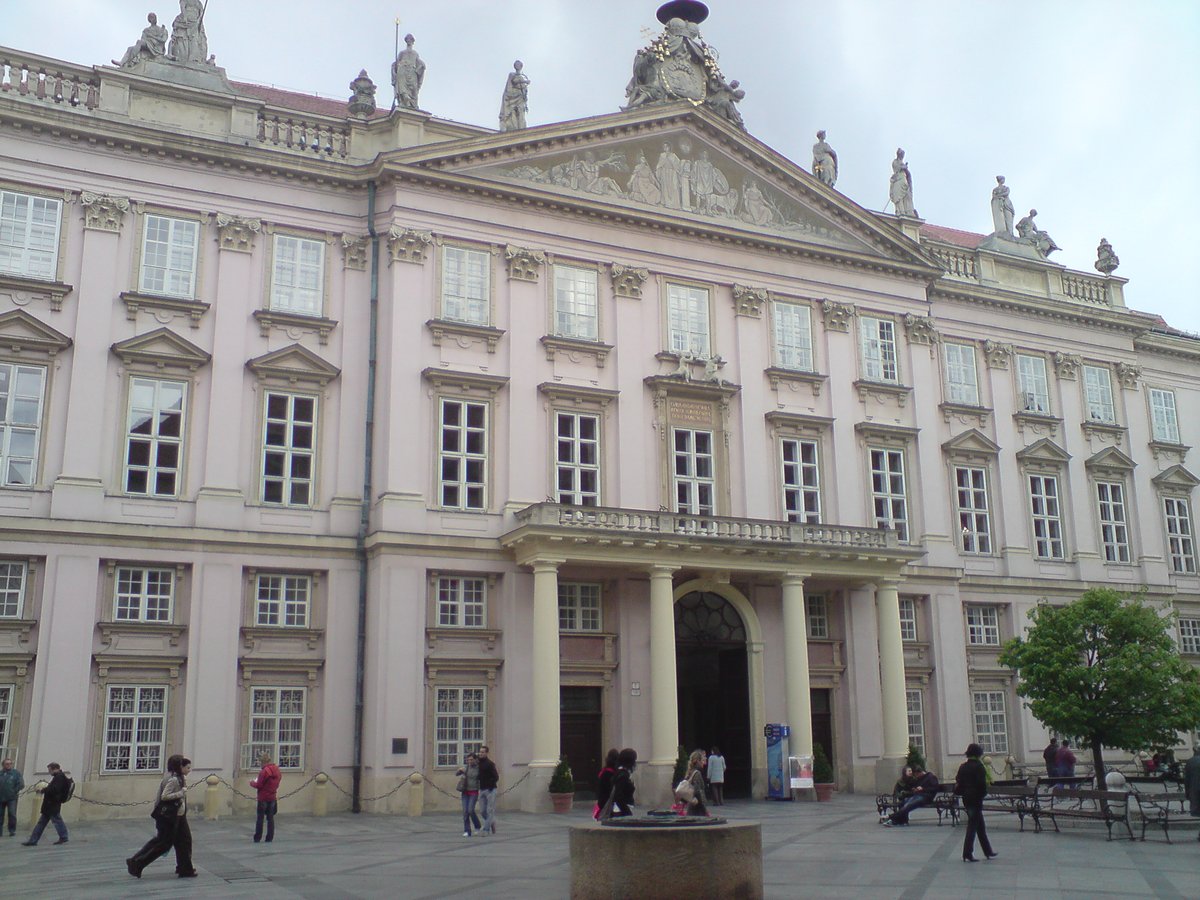
Commissioned by Archbishop József Batthyány and designed by Austrian architect Melchior Hefele, the palace is celebrated for its neoclassical elegance—symmetrical lines, tall windows, and restrained ornamentation. The pink-and-white façade features allegorical statues by J. Kogler and F. Prokop, vases by J.A. Messerschmidt, and a tympanum bearing the Batthyány coat of arms beneath a 150 kg iron cardinal’s hat, highlighting its ecclesiastical roots (wikipedia; visitbratislava.com PDF).
The Peace of Pressburg and Napoleonic Era (1805)
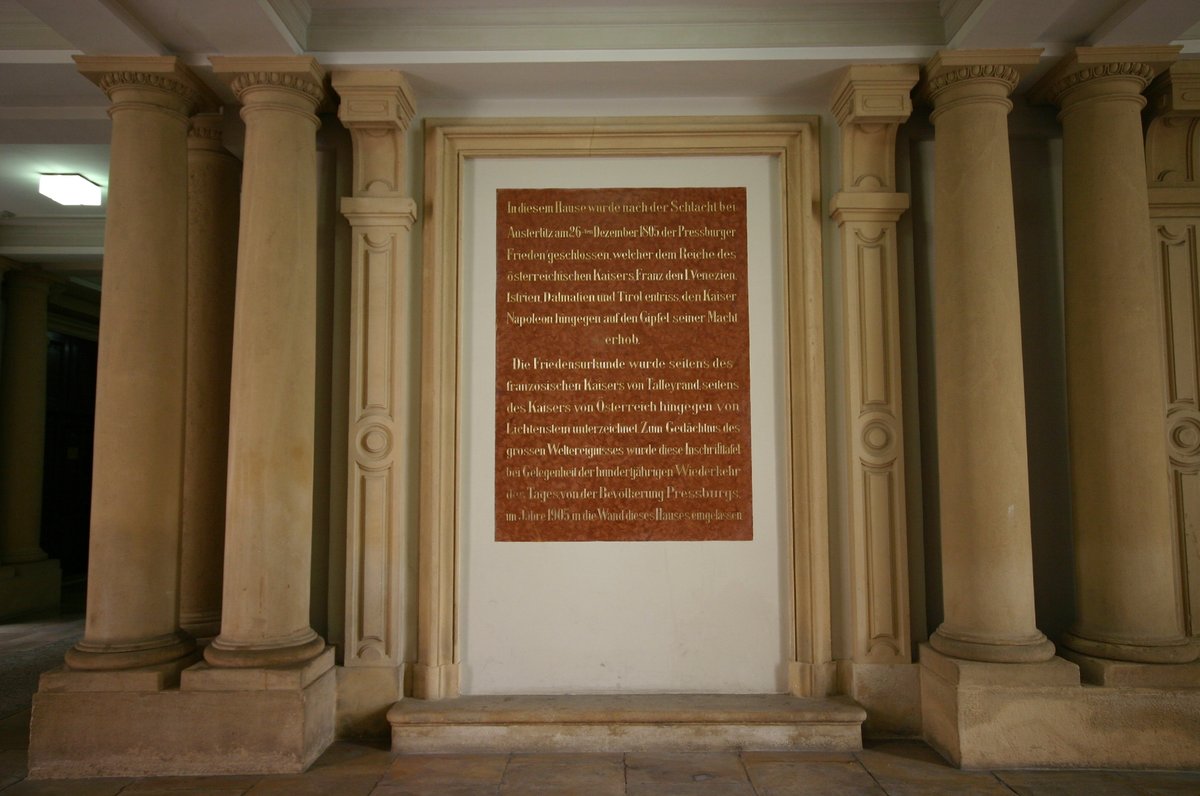
The Hall of Mirrors (Zrkadlová sieň) gained international fame as the site where the Peace of Pressburg was signed on December 26, 1805, marking the end of the War of the Third Coalition and reshaping the political landscape of Central Europe (wikipedia).
Civic and Cultural Transformation
In the 19th century, the palace was a focal point for civic developments, including the signing of the abolition of serfdom in Hungary in 1848. Acquired by the city of Bratislava in 1903, restoration works revealed six rare 17th-century English tapestries, now among the palace’s most prized artifacts (spectator.sme.sk).
The Palace as a Cultural Venue
Serving as a venue for literary and musical events throughout the 20th century, the palace has welcomed figures such as Thomas Mann. It was Bratislava’s city hall, the mayor’s office, and the temporary residence of the Slovak president until 1996 (wikipedia).
Artistic Collections and Chapel of St. Ladislaus
The palace houses an impressive gallery of Hungarian monarchs and features the Chapel of St. Ladislaus, open during select religious services and highlighted in guided tours (bratislava.sk).
Courtyard and St. George Fountain
The inner courtyard showcases the St. George fountain, symbolizing the Church’s resistance to the Reformation and serving as a serene backdrop for events (spectator.sme.sk).
Visiting Information
Opening Hours
- April to October Tuesday–Sunday, 10:00 AM – 6:00 PM
- November to March Tuesday–Sunday, 10:00 AM – 4:00 PM
- Closed Mondays and public holidays
- Note Seasonal variations and special event closures may occur; confirm with the official website before your visit.
Tickets and Guided Tours
- Standard admission €3–€6 (varies by season and event)
- Reduced admission €4 (students, seniors); children under 6 free
- Bratislava Card holders 20% discount (visitbratislava.com)
- Guided tours Available in Slovak, English, and German (additional fee; advance booking recommended)
- Purchase Tickets at the palace entrance or online
Accessibility
- Wheelchair access Partial—main exhibition areas and ground floor accessible; upper floors may lack elevator access
- Assistance Contact palace administration in advance for specific needs
Visitor Highlights
- Hall of Mirrors Grand ceremonial hall, famed for its ornate mirrors, gilded stucco, and crystal chandeliers—site of the 1805 Peace of Pressburg.
- English Tapestries Six rare 17th-century tapestries from Mortlake, depicting the legend of Hero and Leander.
- Color Salons Five salons (green, brown, blue, red, gold), each decorated with authentic period furnishings.
- Chapel of St. Ladislaus Accessible during special guided tours and religious services.
- Courtyard and St. George Fountain Picturesque inner courtyard and legendary fountain—a favorite photo spot.
Travel Tips
- Best time to visit Weekday mornings for a quieter experience; avoid peak tourist season crowds by arriving early.
- Getting there Centrally located on Primaciálne námestie, walkable from Michael’s Gate, St. Martin’s Cathedral, and the Old Town Hall.
- Nearby attractions Old Town Hall, Main Square, Michael’s Gate, St. Martin’s Cathedral, Bratislava Castle, and the city’s famous Čumil statue.
- Facilities Restrooms and cloakroom available; gift shop near the entrance; cafes and restaurants nearby.
Photography and Visitor Etiquette
- Photography Permitted in most public areas; flash and tripods are prohibited, particularly in the Hall of Mirrors and salons to protect artworks.
- Etiquette Maintain a respectful atmosphere; eating, drinking, and loud conversations are discouraged within exhibition spaces.
Accessibility and Amenities
- Barrier-free route Available for ground-floor exhibits; upper floors may not be accessible due to historic architecture.
- Restrooms On-site; accessible facilities may be limited.
- Gift shop Offers souvenirs and books.
- Cafés Available in the surrounding Old Town area.
Frequently Asked Questions (FAQ)
Q: What are the Primate’s Palace visiting hours?
A: Tuesday–Sunday, 10:00 AM–6:00 PM (April–October); 10:00 AM–4:00 PM (November–March); closed Mondays.
Q: How much are tickets?
A: Standard tickets range from €3–€6; discounts for children, students, seniors, and Bratislava Card holders.
Q: Are guided tours available?
A: Yes, in several languages; check availability and book in advance for preferred times.
Q: Is the palace wheelchair accessible?
A: Partially; ground floor accessible, but upper levels require stairs.
Q: Can I take photographs inside?
A: Yes, but no flash or tripods. Some rooms may restrict photography to protect exhibits.
Q: What are some nearby attractions?
A: Old Town Hall, Michael’s Gate, St. Martin’s Cathedral, and Main Square are all within walking distance.
Insider Insights
- Visitors praise the palace’s well-preserved interiors, engaging guided tours, and the unique ambiance of the Hall of Mirrors.
- Staff are knowledgeable and enhance the experience.
- For a more informative visit, opt for a guided tour or audio guide, as some signage may be limited in English (Trip.com reviews).
Summary and Practical Tips
The Primate’s Palace is an essential stop for anyone exploring Bratislava’s rich heritage. Its architectural beauty, historic significance, and vibrant cultural programming make it one of the city’s premier attractions. Plan ahead by checking current opening hours, booking tickets in advance, and considering a guided tour for deeper insight. Combine your visit with a stroll through the Old Town to maximize your experience.
Discover More
Download the Audiala app for expert audio tours, insider tips, and the most up-to-date visitor information for Primate’s Palace and other Bratislava historical sites. Follow us on social media to stay informed about events, travel inspiration, and exclusive content for your Slovakian adventure!