Slovakia

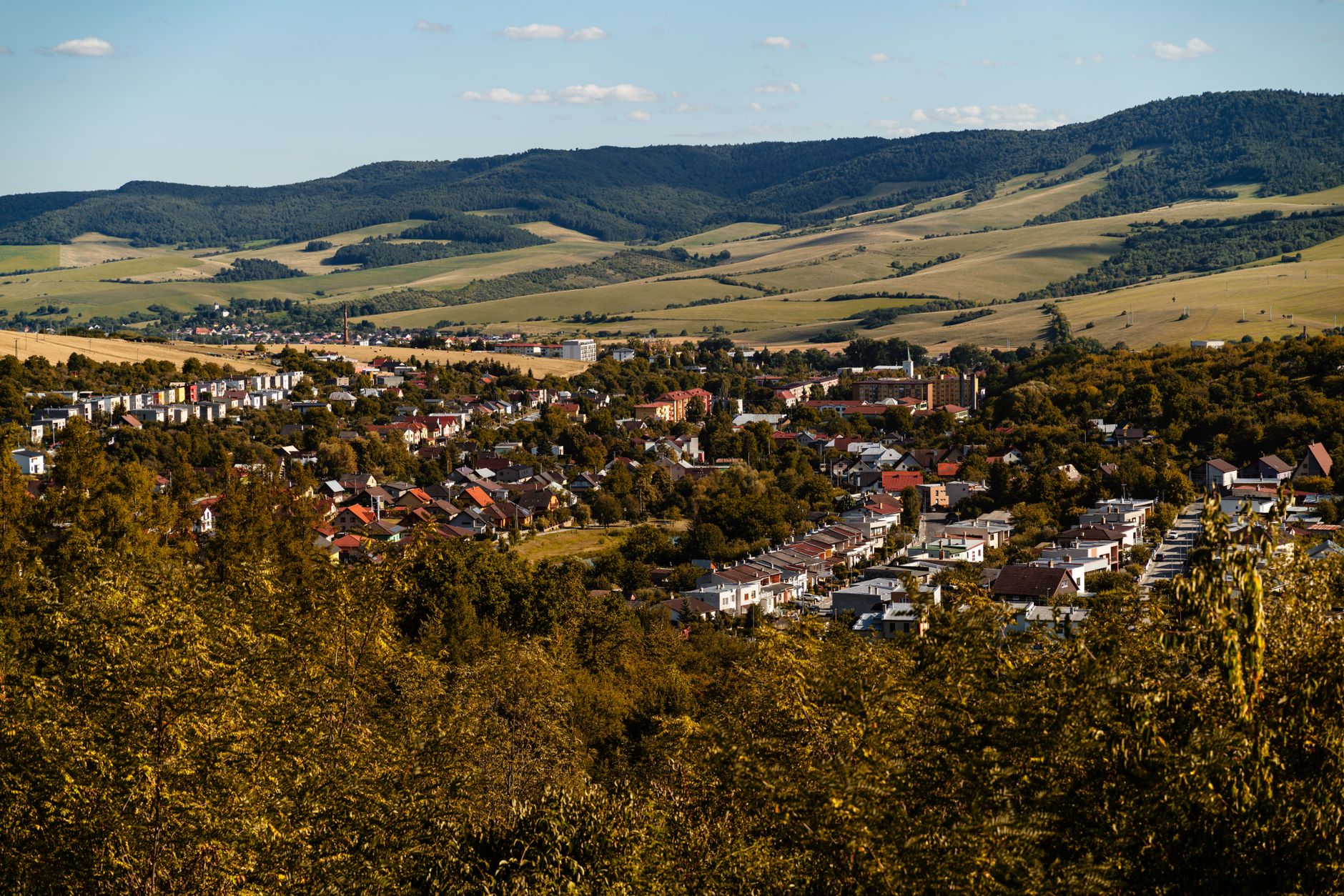
Slovakia is what happens when an alpine mountain country, a castle atlas, and a chain of medieval towns end up folded into one compact, affordable trip.

Slovakia
Capital
Bratislava
Cities
4
Best season
Late spring to early autumn (May-October)
Trip length
7-10 days

Regions

  • Bratislava

    Danube West

    Western Slovakia is the country's quickest read: Habsburg layers, riverfront infrastructure, and easy cross-border movement with Vienna and Budapest. Bratislava gives you the political center, but the region's real appeal is how fast it shifts from capital boulevards to vineyard slopes and castle silhouettes.
  • Žilina

    Upper Váh and Castle Country

    The northwest runs on valleys, rail lines, and fortified high ground. Žilina is the practical base, while the surrounding region pulls you toward castle ruins, mountain villages, and the routes that knit Slovakia to Moravia and southern Poland.
  • Banská Bystrica

    Mining Heartland

    Central Slovakia has the country's best concentration of towns that grew rich underground and then learned how to age well above ground. Banská Bystrica feels broader and more civic, while Banská Štiavnica keeps the drama: steep streets, old shafts, and a landscape shaped by silver rather than scenery alone.
  • Poprad

    Tatras and Spiš

    Northern and northeastern Slovakia gather the country's most dramatic contrasts into one sweep: alpine ridges, medieval town walls, and a castle complex so large it changes the horizon. Poprad is the obvious transport base, but the region's real force comes from moving between Levoča, Spišské Podhradie, and the mountain edge rather than staying put.
  • Košice

    Eastern Gothic Slovakia

    The east is where Slovak travel stops feeling like a side trip from somewhere else and becomes its own argument. Košice has the country's most elegant main street after Bratislava, while Bardejov and the surrounding hills add merchant wealth, Ruthenian traces, and a slower borderland mood.

Suggested Itineraries

  1. 3 days

    3 Days: Danube Weekend in Bratislava and Trenčín

    This is the efficient western Slovakia route if you want one capital and one castle town without spending half the trip in transit. Start in Bratislava for the Danube, Habsburg-era streets, and easy airport access, then move northeast to Trenčín for a hilltop fortress and a smaller Slovak rhythm.

  2. 7 days

    7 Days: Central Slovakia from Bojnice to Banská Štiavnica

    This route trades capital-city pace for spa towns, mining history, and the green folds of central Slovakia. It works best by car or a patient mix of train and bus, and it gives you three places that feel distinct rather than three versions of the same old town.

  3. 10 days

    10 Days: Tatras and Spiš Heritage Arc

    Northern and northeastern Slovakia do scale well: mountains, walled towns, and one of Central Europe's great castle landscapes. Use Poprad as the transport hinge, then move through the Spiš region and finish on the Dunajec side at Červený Kláštor.

  4. 14 days

    14 Days: Eastern Slovakia from Košice to Bardejov

    This is the slow route through the east, where Gothic squares, minority histories, and wooden-church country start to stack up. It asks for more planning than western Slovakia, but the payoff is a part of the country that still feels under-read and underbooked.

Plan your trip

Before you go

Visa
Slovakia is in the Schengen Area, so most non-EU visitors follow the standard 90 days in any 180-day rule. US, UK, Canadian, and Australian passport holders can usually enter visa-free for short stays; your passport should be less than 10 years old and valid for at least 3 months beyond your Schengen departure date.
Currency
Slovakia uses the euro. Cards and contactless payments work almost everywhere in Bratislava, Košice, Poprad, and other larger towns, but village pensions, mountain huts, and small kiosks still reward carrying some cash.
Getting There
Most travelers arrive through Bratislava Airport or, more often, Vienna Airport, which sits 60 kilometers west of Bratislava and has far more long-haul connections. Košice Airport is the practical gateway for eastern Slovakia, while Poprad-Tatry Airport only makes sense if your dates line up with its limited schedule.
Getting Around
Trains are best on the west-east spine linking Bratislava, Trenčín, Žilina, Poprad, and Košice. Buses matter just as much for places like Banská Štiavnica, Bojnice, Bardejov, and Červený Kláštor, and a rental car starts paying off once you want castle ruins, cave systems, or national-park trailheads.
Climate
Expect four distinct seasons and a sharp split between the lowlands and the mountains. Bratislava can sit above 30C in July, while the High Tatras stay cooler and can hold snow from October into May on higher ground.
Connectivity
Mobile coverage is solid in cities, on main rail routes, and across most settled valleys, but it weakens in deep mountain areas and some national-park trails. Hotels, apartments, and most cafes offer Wi-Fi, and travelers who need constant data should buy an eSIM or local SIM before heading into the Tatras or Slovak Paradise.
Safety
Slovakia is generally a safe country for independent travel, with the usual big-city risks limited mostly to pickpocketing around stations, nightlife streets, and crowded events. The real planning issue is mountain safety: weather changes quickly in the Tatras, marked trails close seasonally, and rescue costs are easier to swallow if you carry travel insurance that covers hiking.

Tips for visitors

  • Budget by region

    Bratislava is the priciest stop, but even there a simple restaurant meal still lands around the lower end of Central Europe. Costs drop in central and eastern Slovakia, especially in Banská Bystrica, Bardejov, and smaller mountain towns.
  • Book the spine

    Reserve early for Friday and Sunday trains on the Bratislava-Zilina-Poprad-Kosice corridor, especially in summer and around holidays. For mixed rail-and-bus trips, CP.sk is the planner locals actually use.
  • Vignette first

    If you rent a car, buy the motorway e-vignette only through eznamka.sk or the official app. Check the plate number twice; the system is digital, so one typo turns a valid purchase into an expensive mistake.
  • Tip lightly

    Service charges are usually built into the economics already, so this is not a 20 percent country. Round up in cafes and taxis, and leave about 5 to 10 percent in restaurants if service was genuinely good.
  • Mountain nights

    Book Tatras accommodation before you book everything else for July, August, Christmas, and ski weekends. Poprad gives you flexibility, but places around Strbske Pleso and the main resorts fill first and price up fast.
  • Polite forms matter

    In cities, English usually gets you through. A simple 'Dobry den' when you enter and 'Dakujem' when you leave goes a long way, and older locals still notice whether you start politely or act like the room owes you something.
  • Weather beats plans

    Treat Tatras forecasts as operational information, not background reading. Storms build quickly, some high trails close seasonally, and hikers who set off late in sandals tend to become cautionary material for the evening news.
The story of Slovakia

Slovakia makes sense fast. You can wake up beside the Danube in Bratislava, spend the afternoon under the castle at Trenčín, then end the next day in the High Tatras above Poprad without crossing a single border. That compact scale is the country's real advantage. It gives you mountain drama, Habsburg streets, Gothic squares, and spa culture without the long transfers that wear down bigger trips. Records, walls, and ruins survive here in unusual density, from hilltop fortresses to mining towns that still look shaped by the century that made them rich.

History feels close to the surface. Banská Štiavnica still carries the geometry of a mining boom that helped finance a kingdom; Levoča and nearby Spišské Podhradie sit in the shadow of one of Central Europe's largest castle complexes; Bardejov keeps a medieval square so intact it can feel staged until you notice the ordinary life still moving through it. Then the country shifts register. Košice has the confidence of a trading city, Bojnice leans into fairy-tale silhouette, and Červený Kláštor opens onto the limestone quiet of the Pieniny. Few countries change mood this quickly.

Food lands with the same directness. Bryndzové halušky, kapustnica, plum brandy, duck-fat lokše in Bratislava, and sheep's cheese dishes in the mountain regions all belong to a climate with real winters and old pastoral habits. Prices still compare well with Austria or southern Germany, which matters when you are booking trains, spa stays, lift passes, or a longer swing through Banská Bystrica and Žilina. Come for castles if you want. The reason many travelers return is range: Slovakia keeps giving you a different version of itself every two hours.

c. 400 BCE-906

Coins at Bratislava, bells at Nitra

A silver coin is a fine place to begin a nation's drama. Long before anyone spoke of Slovakia, Celtic rulers on the hill of Bratislava were already striking money with the name BIATEC, which is a wonderfully arrogant thing to do if you mean to be forgotten. Ce que l'on ignore souvent, c'est que archaeologists found traces of elite houses there built in a Roman style, as if some local prince had looked south and thought: yes, I shall have Italy on the Danube.

Then the scene shifts east and inland, to Nitra, where power becomes Christian and therefore more theatrical. Pribina, the local ruler, is remembered for a church consecrated around 828, often described as the first known Christian church among the western Slavs on this soil. Imagine the smell of fresh timber, wax, damp earth, and ambition. A church is never just a church in such a century; it is a declaration.

Great Moravia followed, and with it one of those moments when language itself becomes politics. Cyril and Methodius arrived in 863 with liturgical books in Slavonic, to the irritation of men who preferred holiness in Latin and obedience in Frankish form. Svatopluk I turned this fragile realm into a power that Rome had to address with respect. The pope wrote to him. That detail alone changes the picture.

But early kingdoms are mortal in a very human way: they depend on men, on alliances, on sons who disappoint, on horsemen who arrive at the wrong frontier. After Svatopluk's death, pressure from the Magyar advance and internal weakness broke Great Moravia apart. The castles of later centuries would rise over that memory, but the first lesson had already been written across Nitra and Bratislava: this land was never peripheral. It was contested because it mattered.

907-1526

Stone crowns on every hill

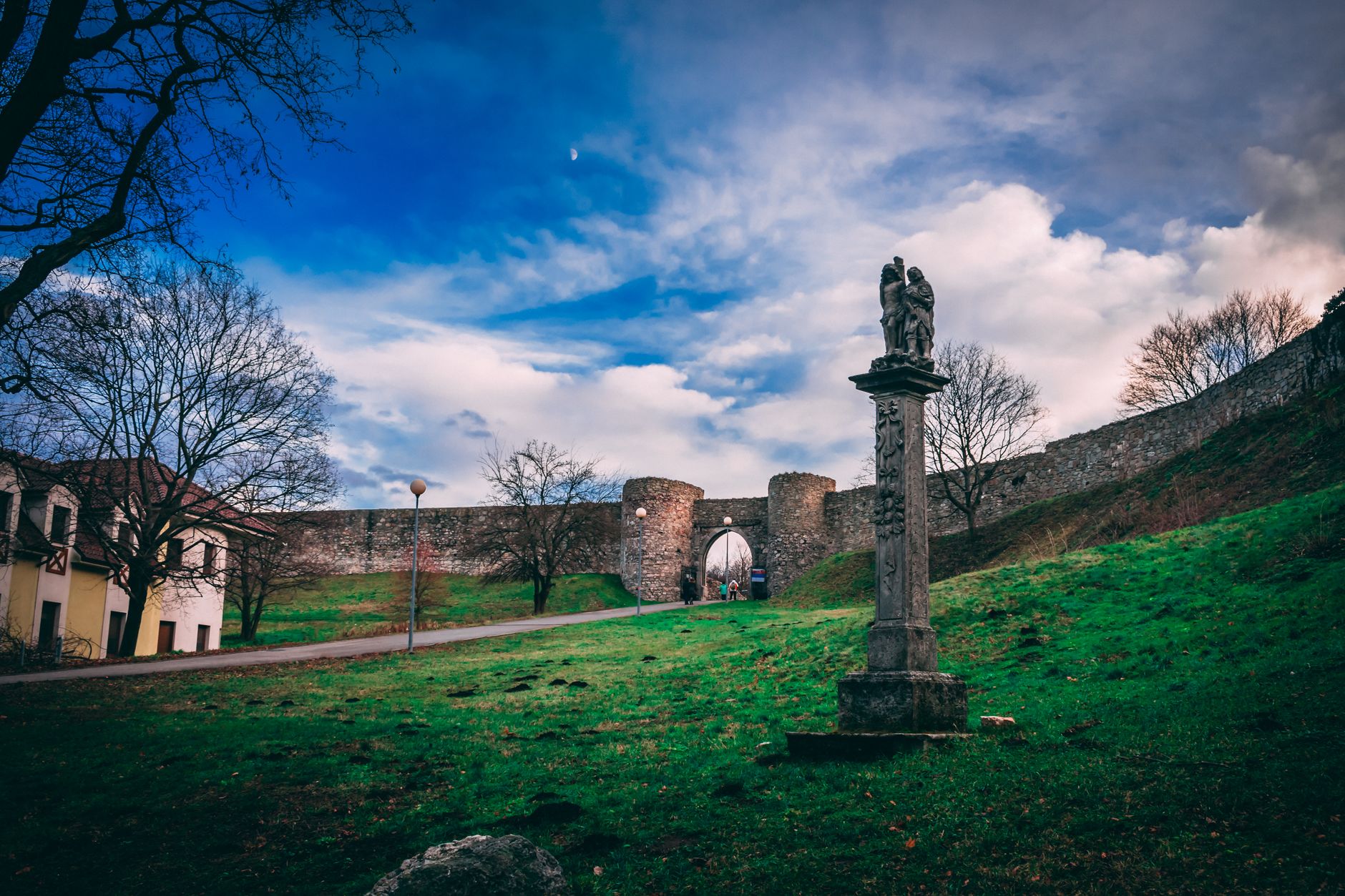
Walk up to Trenčín Castle in wet weather and you understand medieval politics at once. The rock is steep, the wind is disagreeable, and the lord above you controls roads, tolls, grain, marriages, and fear. After the fall of Great Moravia, the territory of present-day Slovakia was folded into the Kingdom of Hungary, and from roughly the 11th century onward the land filled with fortresses, market towns, parish churches, and legal privileges written on parchment but defended with stone.

This was not a quiet frontier. Mongol devastation in 1241-1242 exposed how vulnerable the kingdom remained, and the response was immediate: more walls, more towers, more fortified places. From Spišské Podhradie to the great height of Spiš Castle, from Levoča with its merchants to Bardejov with its measured Gothic dignity, the north and east became a chain of defended wealth. Ce que l'on ignore souvent, c'est that many of these towns spoke several languages at once: Slovak in the countryside, Hungarian in power, German in trade, Latin in charters. Medieval life was less pure than later patriots preferred.

And then comes one of those irresistible characters history produces when royal authority falters. Matúš Čák of Trenčín, who died in 1321, ruled much of this territory like a private sovereign, issuing orders from Trenčín as though kings were distant relatives to be humored. He has the air of a baron from an opera, except he was quite real and far more dangerous. Hungary had a crown. He had a castle and an army, which in certain centuries amounted to the same thing.

Meanwhile, mining towns changed the country's destiny under the surface. Banská Štiavnica, Banská Bystrica, and Kremnica grew rich on silver, copper, and gold, and wealth brings schools, chapels, jealousies, and very good doorways. By the eve of Mohács in 1526, the territory was no mere borderland of shepherds and legends. It was urban, armed, multilingual, and economically useful, which is precisely why the next catastrophe would transform it so completely.

1526-1790

When Pressburg borrowed the Hungarian crown

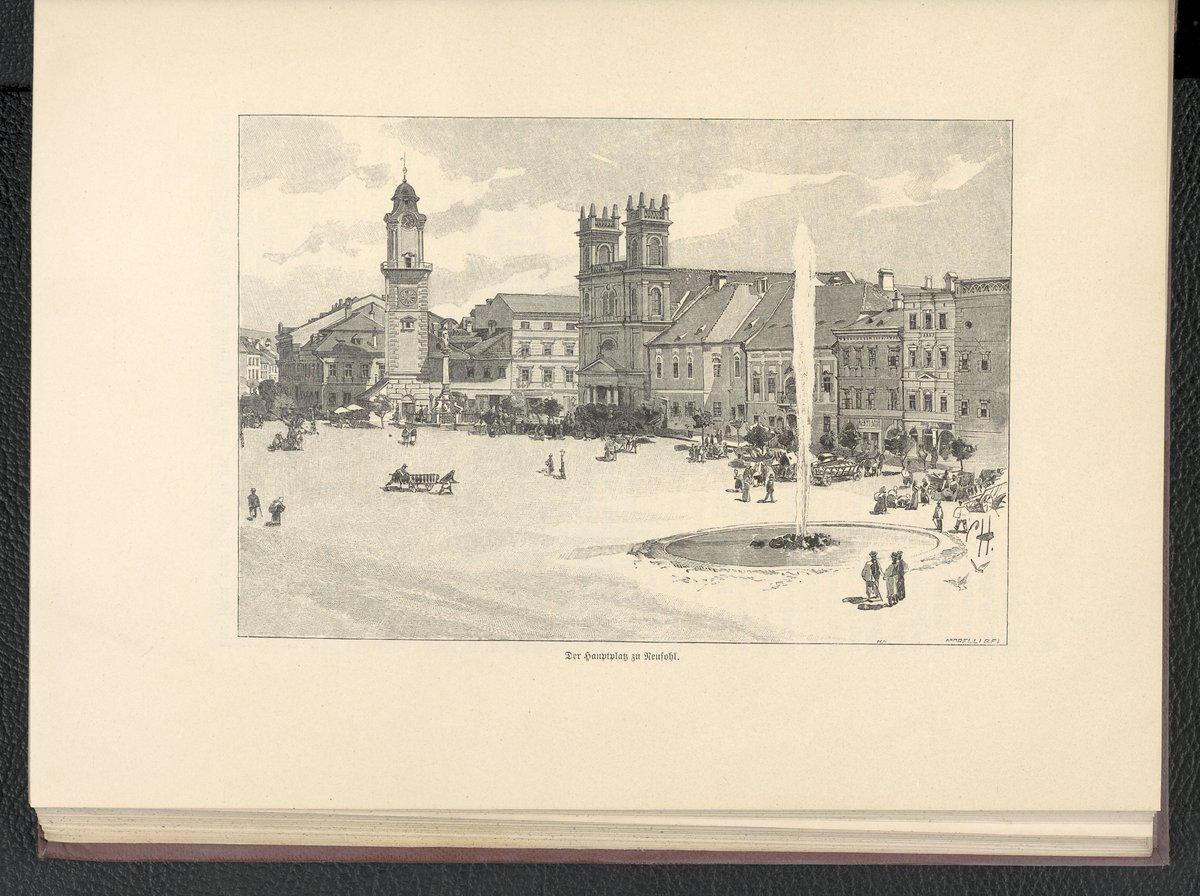
The Battle of Mohács in 1526 was fought far to the south, yet its consequences were felt most intimately in what is now Bratislava. With Buda exposed to Ottoman danger, Pressburg became the safe ceremonial heart of Royal Hungary. In St. Martin's Cathedral, under candlelight and embroidered cloth, kings and queens were crowned from 1563 onward, and the city learned how to wear power with a straight back.

One should picture not abstraction but fabric. Velvet mantles. Gold braid. Hooves on muddy streets near the Danube. Nobles arriving half-frozen, bishops rehearsing precedence, cooks swearing in several languages. Ce que l'on ignore souvent, c'est que Bratislava was not merely a substitute capital; it became the stage on which the Hungarian political nation survived. When the sacred crown was present, a city's posture changed.

This same period gave Slovakia one of its most brilliant urban flowerings. Banská Štiavnica thrived on mining wealth and technical skill, eventually becoming home to the Mining Academy founded in 1762, often described as the first institution of its kind in the world. In Košice, guilds, churches, and merchants left a city center of enviable confidence. Nobility and burghers alike lived with the Ottoman threat as a fact, not a chapter title. Frontier life sharpens taste.

And then Maria Theresa enters, which always improves the lighting. Crowned Queen of Hungary in Pressburg in 1741, pregnant and politically cornered, she appealed to the Hungarian estates in a moment later wrapped in legend. They answered with loyalty and sabers. One may smile at the theater of monarchy, but theater has consequences; those vows helped preserve a dynasty.

By the late 18th century, reform, enlightenment, and new forms of patriotism were beginning to disturb the old order. The coronation city still glittered, yet the language of legitimacy was changing. Soon the question would no longer be only who wore the crown in Bratislava, but who had the right to name the nation at all.

Read 2 more chapters

1790-1918

A language becomes a homeland

Not every revolution begins with cannon. Some begin with grammar. In 1843, Ľudovít Štúr and his circle codified standard Slovak, and what might sound to outsiders like a philological exercise was in truth an act of audacity. To decide that a people shall write in its own language is to suggest, very politely and very dangerously, that it may also think and govern in it.

One can set the scene almost like chamber theater: papers on a table, lamp smoke, men arguing over endings, vowels, and the soul of a nation. Ce que l'on ignore souvent, c'est that Slovak patriots were working inside a kingdom where Hungarian political power was growing sharper and less patient with distinct identities. The language question was never about mere vocabulary. It was about dignity, schools, newspapers, sermons, and the right not to vanish.

The revolutions of 1848 brought hope and confusion in equal measure. Slovak volunteers took up arms; petitions were drafted; promises were made by Vienna and doubted almost immediately. Meanwhile, towns such as Myjava entered the political imagination, and the countryside absorbed modern nationalism in the form it often first arrives: songs, priests, schoolmasters, and funerals. Grand ideas travel by humble vehicles.

By the late 19th century, industrial change and Magyarization pressed harder. Yet the national cause also found its martyrs, scholars, and improbable modern men. Milan Rastislav Štefánik, born in Košariská in 1880, became an astronomer, aviator, French general, and diplomat, as though one life were not enough. His rise was dazzling because Slovakia itself still lacked a state in which to place such ambition.

When the Habsburg world cracked in 1918, Slovak leaders did not step into a vacuum. They stepped into a century of preparation, argument, and wounded pride. The republic to come would be new, but the questions beneath it had been rehearsed for generations.

1918-present

From shared republic to velvet divorce

The 20th century opened with a promise and nearly immediately spoiled it. In 1918, Slovaks entered Czechoslovakia, a state born from war, diplomacy, and the brilliance of men such as Štefánik, who did not live long enough to see what he had helped build. His plane crashed near Bratislava in 1919, and a republic began under the sign of mourning. That is a Slovak pattern too: triumph arriving with a black ribbon attached.

The interwar years brought schools, offices, a stronger public Slovak life, and also the old complaint that Prague listened selectively. Then came the catastrophe of 1939. Under Jozef Tiso, the Slovak State wrapped itself in clerical ceremony and nationalist language while collaborating with Nazi Germany and sending Jews to deportation. One must say this plainly. Any history that loves crowns and cathedrals but averts its eyes here becomes indecent.

Yet even within that darkness, another Slovakia fought back. The Slovak National Uprising of 1944, centered on Banská Bystrica, was chaotic, brave, under-supplied, and morally indispensable. Officers, partisans, democrats, communists, and ordinary civilians tried to wrench the country away from collaboration. They failed militarily. They did not fail historically.

After 1948, communist rule imposed a new script: factories, censorship, prisons, and the heavy furniture of a Soviet satellite. Alexander Dubček, the son of Slovak communists and later the face of the Prague Spring in 1968, offered what seemed for one suspended season a gentler socialism. The tanks answered from Moscow. In 1989 the Velvet Revolution ended the lie without much blood, which remains one of Central Europe's small miracles.

Then, on 1 January 1993, Slovakia became independent through negotiation rather than civil war, a separation so calm it was nicknamed the Velvet Divorce. Since then the country has joined NATO, the European Union, Schengen, and the euro, while still arguing with itself about memory, power, and identity. As it should. Nations that stop arguing about themselves are usually in trouble.

A country made and remade on the Danube frontier

From Celtic coinage to independent republic, Slovakia's history moves through crowns, languages, uprisings, and negotiated reinventions.

  1. c. 125 BCE

    Celtic power rises at Bratislava

    A major Celtic oppidum develops on the hill and slopes of what is now Bratislava. Its rulers are wealthy enough to mint coins and cosmopolitan enough to borrow Roman tastes before Rome itself rules the place.

  2. 828

    Pribina's church at Nitra

    A church associated with Prince Pribina is consecrated at Nitra, often treated as the earliest documented Christian foundation among the western Slavs on this territory. Faith arrives here as politics, architecture, and prestige all at once.

  3. 863

    Cyril and Methodius arrive

    The Byzantine brothers bring Slavonic liturgy and writing to Great Moravia. Their mission turns language into a matter of power, worship, and identity, not merely piety.

  4. 871

    Svatopluk consolidates Great Moravia

    Svatopluk I emerges as the dominant ruler of Great Moravia and expands its influence across Central Europe. Rome now treats this Slavic court as a player in the main continental argument.

  5. 907

    The Magyar conquest reshapes the region

    After the collapse of Great Moravia, the territory is drawn into the orbit of the rising Hungarian state. A new political order begins, though older memories do not vanish.

  6. 1241-1242

    Mongol invasion devastates the kingdom

    The Mongol onslaught exposes the fragility of royal defenses and leaves deep scars across the kingdom. In response, more stone castles and fortified towns are built across what is now Slovakia.

Show the full timeline (26 moments)
  1. 1321

    Death of Matúš Čák of Trenčín

    With the death of Matúš Čák, one of the great semi-independent lords of medieval Hungary disappears from the stage. His career leaves behind the enduring image of western Slovakia as a land where castles could rival crowns.

  2. 1467

    Universitas Istropolitana is founded in Pressburg

    The first university in the Kingdom of Hungary is established in Pressburg, today's Bratislava. Even if short-lived, it signals the city's rising prestige within the kingdom.

  3. 1526

    Mohács changes everything

    The Hungarian defeat at Mohács opens the way for Ottoman expansion and forces the kingdom's political center northward. The cities of present-day Slovakia become more important because safer ones are suddenly needed.

  4. 1563

    Bratislava becomes coronation city

    St. Martin's Cathedral hosts the first Habsburg coronation as kings of Hungary. From this point, Pressburg wears the borrowed majesty of the Hungarian crown for generations.

  5. 1620

    Battle of White Mountain sends exiles east

    The Habsburg victory in Bohemia helps push Protestant scholars, nobles, and religious tensions deeper into Upper Hungary. Slovak towns become part of a broader Central European drama of confession and power.

  6. 1741

    Maria Theresa appeals to the estates in Pressburg

    Pressed by war, Maria Theresa addresses the Hungarian nobility in Pressburg and secures vital support. The episode fuses dynastic theater with political necessity and becomes part of Bratislava's royal mythology.

  7. 1762

    Mining Academy opens in Banská Štiavnica

    The Mining Academy is founded in Banská Štiavnica, giving one of Europe's great mining towns a new intellectual polish. The country underground now has a school to match its ambition.

  8. 1843

    Štúr codifies standard Slovak

    Ľudovít Štúr and his collaborators fix the standard literary form of Slovak. A language becomes a political home, and the national revival gains its most durable instrument.

  9. 1848

    Revolution reaches Slovak lands

    The revolutions of 1848 bring petitions, volunteers, and competing national projects. Slovak leaders try to secure recognition within a rapidly changing Habsburg world.

  10. 1880

    Birth of Milan Rastislav Štefánik

    Štefánik is born in Košariská and will go on to become an astronomer, aviator, French general, and co-founder of Czechoslovakia. Few Slovak lives have covered so much ground so quickly.

  11. 1918

    Slovaks enter Czechoslovakia

    With the collapse of Austria-Hungary, Slovakia becomes part of the new Czechoslovak Republic. The union promises security and modern statehood, though not all expectations will be met.

  12. 1919

    Štefánik dies near Bratislava

    Milan Rastislav Štefánik is killed in a plane crash near Bratislava at the age of thirty-eight. The new republic loses its most romantic founder almost before its first act is complete.

  13. 1939

    The Slovak State is proclaimed

    Under Jozef Tiso, Slovakia becomes a formally independent but Nazi-aligned state. Ceremony, clerical language, and nationalism mask a regime that will soon be complicit in persecution and deportation.

  14. 1944

    Slovak National Uprising

    Centered on Banská Bystrica, the uprising brings soldiers, partisans, and civilians into revolt against the collaborationist regime and German control. It is crushed militarily, yet it becomes one of the country's central moral reference points.

  15. 1948

    Communist takeover

    Czechoslovakia falls fully under communist rule, and Slovakia enters the Soviet sphere with all the expected machinery of censorship, planning, and repression. Public life changes tone overnight.

  16. 1968

    Dubček and the Prague Spring

    Alexander Dubček, a Slovak leader, becomes the face of an attempt to create 'socialism with a human face.' Warsaw Pact tanks end the experiment and leave a wound that lasts for decades.

  17. 1989

    Velvet Revolution

    Mass protests bring communist rule to an end without large-scale bloodshed. The political script that had governed the country since 1948 collapses with startling speed.

  18. 1993

    Independent Slovakia is born

    Czechoslovakia dissolves peacefully on 1 January 1993, and Slovakia becomes a sovereign state. It is one of Europe's rare constitutional separations carried out with more negotiation than violence.

  19. 2004

    Slovakia joins the European Union and NATO

    The country anchors itself firmly in the Euro-Atlantic world by entering both the EU and NATO. After a century of broken political frameworks, this is a strategic choice with long consequences.

  20. 2009

    The euro arrives

    Slovakia adopts the euro, binding its economy more closely to the core institutions of the European Union. A country once fought over by empires now chooses its alliances through treaties and currency.

Culture & food

  • language

    A Tongue Cut From Birch and Iron

    Slovak is a language that seems to have kept its mountains inside it. Consonants gather like fir trees in bad weather, then a vowel opens and the whole sentence suddenly tastes of milk, plum, smoke. In Bratislava you hear it move quickly, with tram-bell impatience; in Bardejov or Levoča it lands more carefully, each syllable set down like a bowl on a wooden table.

    The national memory sits inside the language with unusual frankness. Slovaks understand Czech perfectly well, yet they do not enjoy being told the two are interchangeable, for the difference cost them a century of explanation and at least one national awakening; when Ludovit Stur codified standard Slovak in 1843, grammar became an act of self-respect.

    Then come the words that refuse export. Pohoda is not comfort, not leisure, not peace: it is the exact hour when nobody asks anything more of the day. Dobru chut, said before a meal, sounds less like etiquette than blessing. A country is a table set for strangers.

  • cuisine

    The Gospel According to Sheep Cheese

    Slovak cuisine begins where winter becomes bossy. Potatoes, cabbage, sheep cheese, pork fat, poppy seed, mushrooms dried for months and brought back to life by boiling water: this is food for people who have seen snow remain on a field long enough to alter their character.

    Bryndzove halusky arrives with the authority of a verdict. The dumplings are soft, the bryndza sharp and feral, the bacon loud, and the whole bowl makes immediate sense in Banska Stiavnica after rain, in Zilina before a train, in Poprad when the Tatras have taught you humility.

    What interests me is the absence of apology. A sweet lunch of sulance s makom, rolled dough with poppy seed and sugar, appears without explanation. Kapustnica, the sauerkraut soup of Christmas Eve, tastes of smoke, acid, forest, and family discipline. Slovakia cooks like someone who has no time for flirtation and becomes seductive precisely for that reason.

  • literature

    Books Written With Cold Fingers

    Slovak literature has the peculiar dignity of cultures that had to insist on their own existence sentence by sentence. The nation did not inherit a vast imperial shelf on which to rest its elbow; it built one, and you can feel the carpentry. Poetry matters here in a way that startles visitors from larger language worlds, where verse has been sent to a museum and left there.

    Milan Rufus wrote lines that seem to come from stone chapels and hill paths rather than from a desk. Janosik, half outlaw and half national hallucination, still walks through the imagination with his axe and his impossible trousers. Dominik Tatarka brought moral fever to prose; Pavel Vilikovsky understood that irony is one of Central Europe's few reliable instruments.

    Read in Bratislava, these names feel civic. Read in Trencin or Banska Bystrica, they feel territorial, as if the valleys themselves had decided to keep a diary. Small literatures are often accused of provincialism by people who mistake scale for depth. The accusation is lazy.

  • etiquette

    Ceremonies of Warmth and Distance

    Slovak politeness is less theatrical than Austrian politeness and less forgiving than Hungarian warmth. You greet. You say good day. You do not arrive in a village cafe and behave as though your existence were self-evidently charming. The room notices whether you understand this.

    The formal vy still matters, especially beyond Bratislava and outside circles that spend their lives online. Use it with elders, shopkeepers, pension hosts, anyone who has not invited you into the softer ty, because familiarity here is not a democratic default but a privilege that must be granted, and when you take it too early the punishment is elegant: the temperature of the conversation drops by three degrees.

    Shoes come off in homes. Slivovica may appear before your coat has understood the situation. Refusing a second helping is possible, but it requires the tone of someone declining a state honor. Etiquette, in Slovakia, is never empty ritual. It is the visible grammar of respect.

  • architecture

    Stone, Timber, and the Art of Standing Firm

    Slovakia builds like a country that has expected invasion, snow, bureaucracy, and God, sometimes on the same afternoon. Castles occupy ridges with a severity that feels almost personal. Churches rise in Gothic stone in places such as Levoča and Bardejov, while wooden churches in the northeast seem assembled from prayer, resin, and carpentry so exact it becomes metaphysics.

    In Bratislava the layers quarrel openly: Habsburg facades, socialist slabs, a bridge that lands a flying-saucer restaurant over the Danube with the confidence of a science-fiction sketch that somehow got planning approval. In Banska Stiavnica, wealth from silver and gold turned hills into an urban argument of mining shafts, burgher houses, and churches placed where streets seem to lose courage.

    Then there is Spisske Podhradie beneath Spis Castle, where scale becomes slightly absurd. The fortress sprawls over more than 4 hectares of hilltop, and the human response is immediate: one feels both protected and judged. Good architecture does this. It houses you and measures you at once.

  • religion

    Incense in the Forest, Bells in the Fog

    Religion in Slovakia does not behave like a museum piece, even when the building is old enough to deserve a label. Roman Catholic ritual shapes the calendar, Greek Catholic and Orthodox traditions deepen the eastern texture, and in small towns you still feel Sunday as a public fact rather than a private preference.

    A church here often smells of wax, damp wool, cold stone, and polished wood. In Cerveny Klastor, the monastic silence seems to have entered the walls permanently; in village churches of the east, icons watch with the grave courtesy of people who have seen empires come and go and learned not to flatter any of them.

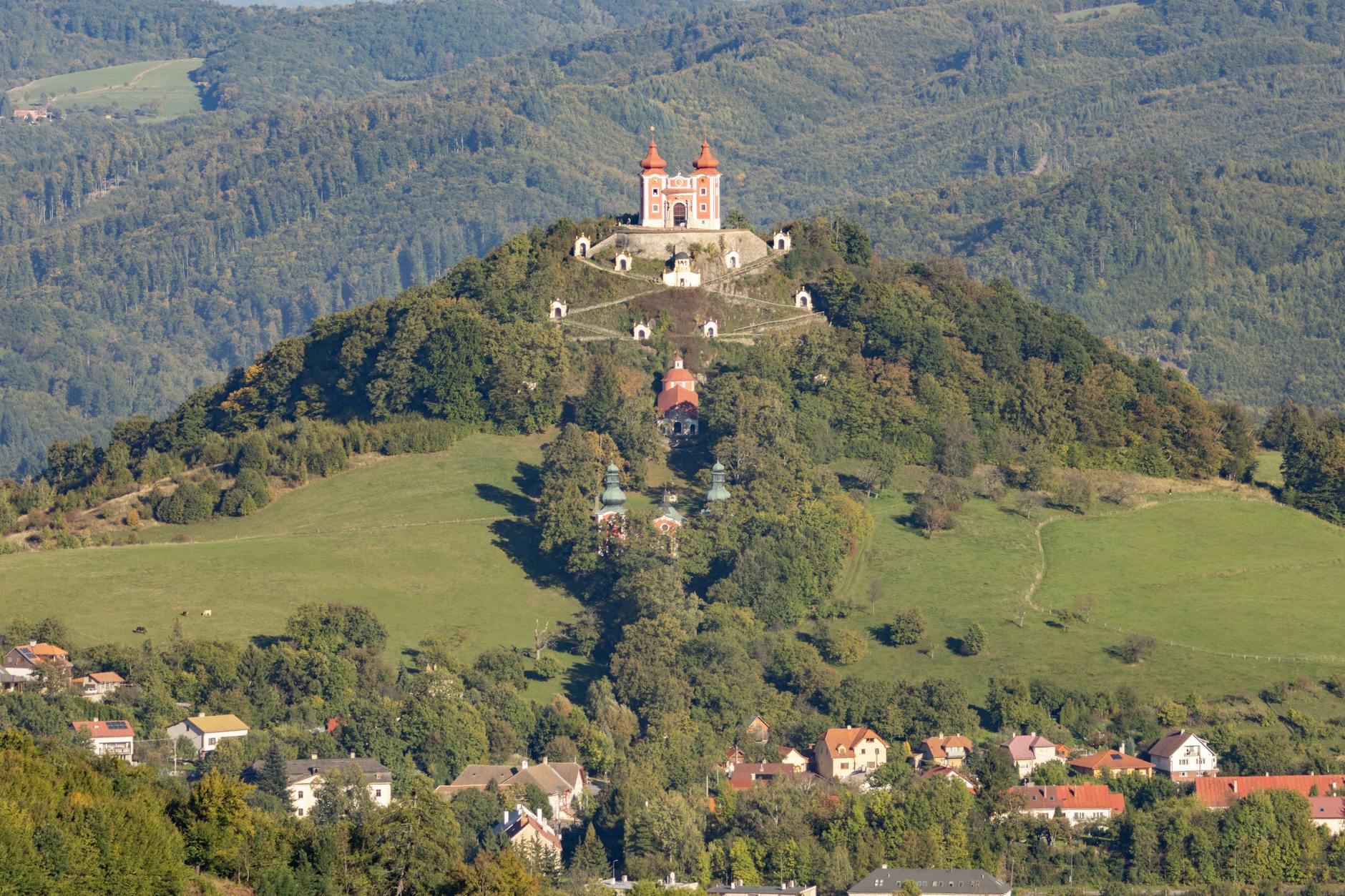
    What moves me is the lack of spectacle. Faith in Slovakia can be ornate, yes, but it is rarely gaudy. It lives in processions, feast days, grave candles in November, a grandmother crossing herself before soup, a pilgrim chapel on a hill above Trencin reached by steps that ask just enough effort to make the arrival matter.

Taste the Country

  • Bryndzove halusky

    Lunch, friends, wooden spoon. Dumplings, bryndza, bacon, silence, beer.

  • Kapustnica on Christmas Eve

    Family table, dark afternoon, church bells. Sauerkraut, sausage, dried mushrooms, prunes, bread.

  • Lokse with duck fat

    Street stall, paper wrap, cold fingers. Potato flatbread, duck fat, salt, walking.

  • Sulance s makom

    Friday lunch, grandmother, sweet tooth. Rolled dough, poppy seed, sugar, butter.

  • Slivovica welcome

    Doorstep, handshake, small glass. Plum brandy, eye contact, one swallow.

  • Zemiakove placky after a hike

    Mountain town, wet boots, late afternoon. Potato pancake, garlic, lard, sour cream.

  • Medovnik with coffee

    Cafe table, long talk, train delay. Honey cake, fork, espresso, patience.

Notable Figures

  • Pribina

    Prince of Nitra · d. c. 861

    Pribina appears in the record with the sharpness of a man who understood symbols. The church linked to his court at Nitra, consecrated around 828, made faith a political instrument as much as a private devotion, and his later exile gives him the melancholy of a founder who did not get to keep his own beginning.

  • Svatopluk I

    Ruler of Great Moravia · c. 840-894

    Svatopluk turned Great Moravia from a regional experiment into a power Rome had to take seriously. Later legend remembers the bundle of three rods and the lesson of unity; behind that moral tale stands a ruler who spent his life balancing Franks, clergy, rivals, and the fragile mechanics of early statehood.

  • Matúš Čák Trenčiansky

    Magnate and warlord · c. 1260-1321

    From Trenčín, Matúš Čák behaved less like a subject than like a prince who had simply misplaced his crown. He belongs to that glorious medieval species of lord whose legal position is debatable but whose authority is immediately obvious the moment one sees the castle.

  • Maria Theresa

    Queen of Hungary and Habsburg sovereign · 1717-1780

    Maria Theresa gave Pressburg one of its grandest political performances in 1741, when she appealed to the Hungarian nobility at a moment of danger and turned ceremony into survival. Bratislava remembers her not as a passing visitor but as the sovereign who confirmed the city's place at the heart of Habsburg monarchy.

  • Matej Bel

    Scholar and polymath · 1684-1749

    Matej Bel is the sort of figure small countries cherish because he made learning feel like statecraft. He catalogued towns, customs, languages, and landscapes with a patience that now reads like love, preserving a many-layered Slovakia before nationalism simplified everyone's memory.

  • Ľudovít Štúr

    Writer, politician, and codifier of standard Slovak · 1815-1856

    Štúr's achievement sounds dry until one understands the stakes. By codifying Slovak, he gave a people a printed voice, and once a language enters schools, newspapers, and political petitions, it becomes very hard to persuade its speakers that they are merely a provincial variation of someone else's history.

  • Milan Rastislav Štefánik

    Astronomer, aviator, diplomat, and co-founder of Czechoslovakia · 1880-1919

    Štefánik lived at operatic speed: Paris observatories, balloon ascents, wartime diplomacy, a French general's uniform, then death in an air crash near Bratislava at thirty-eight. Slovakia still sees in him the rare blend of intellect, patriotism, and style that makes a statesman look almost mythic.

  • Jozef Tiso

    Priest and president of the wartime Slovak State · 1887-1947

    Tiso matters because any honest Slovak history must pass through him without euphemism. He wrapped authoritarian rule in clerical respectability and presided over a state that collaborated in persecution and deportation, proving how easily the language of national salvation can curdle into moral disgrace.

  • Alexander Dubček

    Reform communist and symbol of the Prague Spring · 1921-1992

    Dubček offered 'socialism with a human face,' a phrase so gentle that one still hears the tanks approaching behind it. For Slovaks, he remains the emblem of a reformist decency crushed by empire, then vindicated in memory when communism finally collapsed.

Frequently asked

Do I need a visa for Slovakia as a US citizen?

Usually no, for trips up to 90 days in any 180-day Schengen period. Your passport should be valid for at least 3 months beyond your Schengen exit date and generally must have been issued within the last 10 years.

Is Slovakia expensive for tourists?

No, Slovakia is still one of the better-value countries in the eurozone. Bratislava costs more than the rest of the country, but once you reach places like Banská Bystrica, Poprad, or Košice, rooms, meals, and local transport usually ease off.

Is Bratislava worth visiting or should I go straight to the Tatras?

Bratislava is worth at least 2 days if you care about architecture, food, and easy logistics. But if your priority is hiking, alpine scenery, or castle country, it makes sense to keep the capital short and move on to Poprad, Levoča, or Banská Štiavnica.

What is the best way to travel around Slovakia without a car?

Train plus bus is the right answer for most travelers. Trains handle the main west-east corridor well, while buses fill the gaps to places such as Bojnice, Banská Štiavnica, Bardejov, and Červený Kláštor.

Can I use euros and credit cards everywhere in Slovakia?

Yes for euros, and mostly yes for cards in cities and larger towns. Carry some cash for village guesthouses, small mountain restaurants, local markets, and older bus stations where card acceptance still lags.

How many days do you need in Slovakia?

Seven days is a good minimum if you want more than Bratislava and one side trip. Three days works for the west, while 10 to 14 days lets you combine Bratislava or central Slovakia with the Tatras, Spiš, and Košice without turning the trip into a transit exercise.

Is Slovakia safe for solo travelers?

Yes, generally very safe for solo travelers. Standard city precautions are enough in Bratislava and Košice, while the bigger risk comes from mountain weather, late starts on hiking days, and underestimating distances in national parks.

When is the best time to visit Slovakia?

September is the sweet spot for many travelers: warm enough for cities and lower-altitude hiking, but calmer than July and August. Winter is best for skiing, spring is mixed in the mountains, and November is the quietest month if you care more about prices than daylight.

Is Vienna or Bratislava airport better for a Slovakia trip?

Vienna is usually better for long-haul arrivals and broader flight choice. Bratislava wins only if the fare is clearly lower or your trip starts and ends in the southwest.

Sources & attribution5
  • European Union - ETIAS — Official EU source for ETIAS rollout timing and who will need authorization.
  • European Union - Entry/Exit System — Official EU source for Schengen Entry/Exit System rules and implementation details.
  • Slovakia Travel — Official Slovak tourism portal for destination planning, regional highlights, and practical visitor information.
  • ZSSK — National railway operator for domestic train routes, schedules, and ticketing.
  • eznamka — Official motorway vignette platform for drivers using Slovak motorways and expressways.
Photo credits (4)
  1. Jan Brndiar — Pexels License (https://www.pexels.com/license/) — Source: https://www.pexels.com/photo/34296790/
  2. Pho Tomass — Pexels License (https://www.pexels.com/license/) — Source: https://www.pexels.com/photo/33535705/
  3. Rudy Kirchner — Pexels License (https://www.pexels.com/license/) — Source: https://www.pexels.com/photo/831075/
  4. Robo Michalec — Pexels License (https://www.pexels.com/license/) — Source: https://www.pexels.com/photo/5877697/

Photos may have been resized or cropped.