
Historical Context and Significance
Ottoman Patronage and Urban Vision
Commissioned during the reign of Sultan Selim II, the Sokollu Mehmed Pasha Mosque was completed in 1571 by Grand Vizier Sokollu Mehmed Pasha, one of the most powerful statesmen in Ottoman history. As a patron, Sokollu Mehmed Pasha was instrumental in shaping Istanbul’s urban landscape, endowing multiple religious and civic complexes across the empire. The mosque’s construction—overseen by Mimar Sinan, the empire’s renowned chief architect—reflects the era’s aspirations for architectural excellence and social cohesion (Encyclopaedia Britannica; Islamic Arts Magazine).
Architectural Mastery
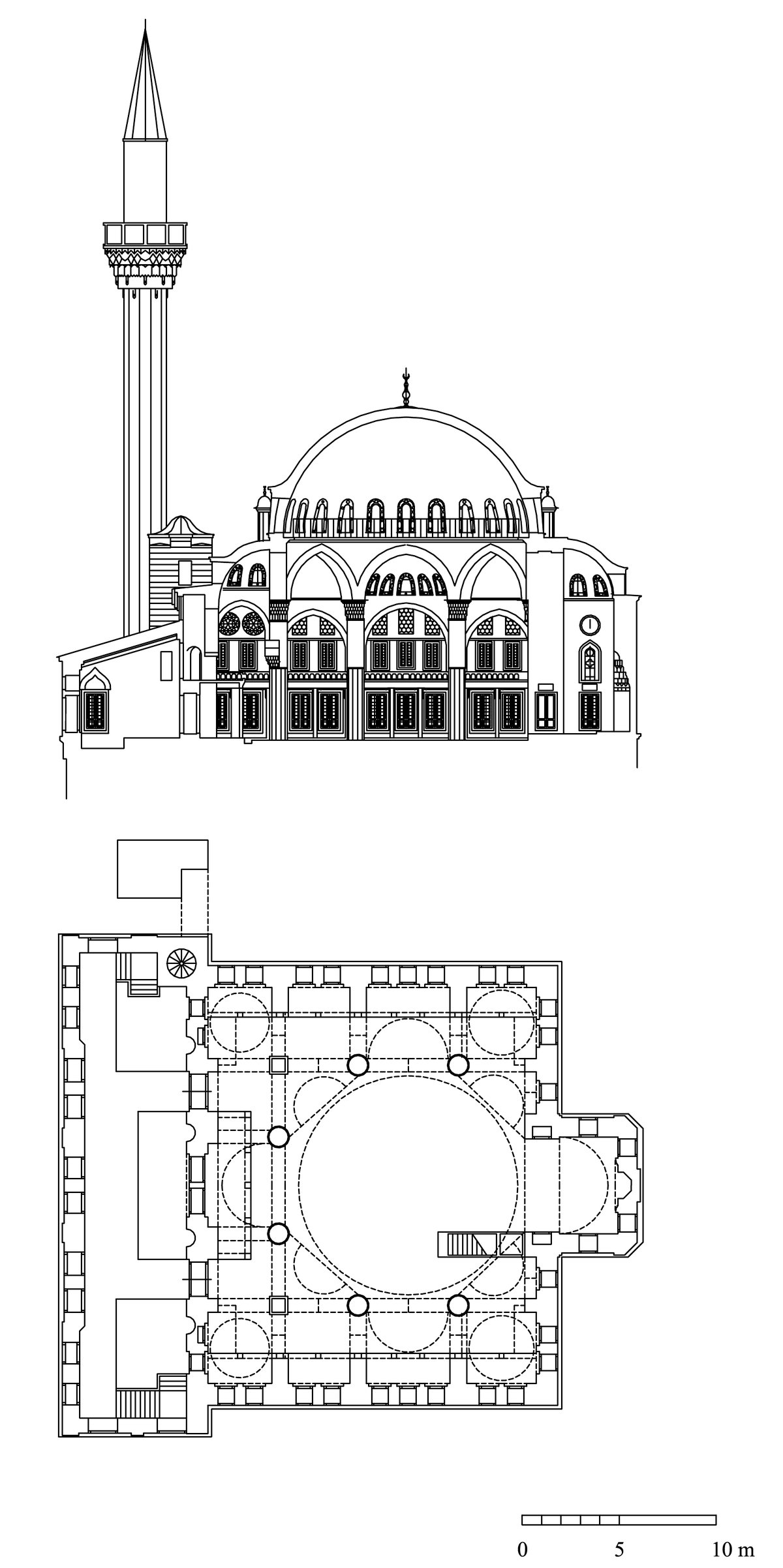
Sinan’s design for the Sokollu Mehmed Pasha Mosque is celebrated for its ingenious adaptation to the steep terrain of Kadırga. The complex includes a prayer hall with a hexagonal plan inscribed within a rectangle, crowned by a dome measuring 13 meters in diameter. The interior boasts some of the finest Iznik tilework of its time, with vibrant blues, reds, and greens adorning the walls, mihrab, and minbar. The spatial harmony, skilled use of natural light, and elegant calligraphy combine to create a serene and uplifting environment (Beshara Magazine; Islamic Arts Magazine).
Religious and Cultural Importance
A unique and revered aspect of the mosque is its incorporation of four fragments of the Hajar al-Aswad (Black Stone) from the Kaaba in Mecca. These sacred relics are embedded in different parts of the mosque, offering pilgrims and visitors a spiritual connection to Islam’s holiest site (Islamic Landmarks). The mosque was originally part of a larger külliye (social complex), which included a madrasa, dervish lodge, and commercial spaces, reflecting the Ottoman commitment to integrating worship, education, and community welfare.
Location and Access
- Address Kadırga Limanı Caddesi, Kadırga Mahallesi, Fatih, Istanbul.
- Proximity Within walking distance of the Blue Mosque, Hagia Sophia, and other major attractions in Sultanahmet.
- Public Transport
- Tram T1 line to Sultanahmet, followed by a 10-minute walk.
- Bus Several city buses serve the Fatih district.
- Taxi Widely available; ensure the meter is used.
- On Foot Easy walk from Sultanahmet Square via Küçük Ayasofya Caddesi and Kadırga Limanı Caddesi.
- Accessibility The mosque is located on a hillside with steep streets and stairs; wheelchair access is limited (Turkish Archaeological News).
Visiting Hours and Tickets
- Opening Hours Daily from 9:00 AM to 6:00 PM. Non-Muslim visitors may be asked to wait outside during prayer times, especially midday and Friday prayers.
- Admission Free of charge. Donations for upkeep are appreciated.
- Best Visiting Times Early morning or late afternoon for a peaceful experience and optimal lighting for photography.
Visitor Guidelines and Amenities
Etiquette and Dress Code
- Dress Modestly Women should cover their heads, shoulders, and legs; men should avoid shorts.
- Shoes Remove shoes before entering the prayer hall; bags are usually provided.
- Behavior Remain quiet and respectful, particularly during prayers.
- Photography Permitted without flash; always be discreet and seek permission before photographing people.
Facilities
- Ablution Fountain The central courtyard features a beautiful twelve-columned ablution fountain with an onion-shaped dome.
- Restrooms Modern facilities are available on site.
- Shops Some historical commercial spaces remain in use, supporting the mosque’s maintenance.
Guided Tours and Interpretation
- Guided Tours Private guides can be arranged in advance. Many local walking tours of the Fatih district include the mosque.
- Interpretive Materials On-site signage is mostly in Turkish; downloadable guides or apps are recommended for deeper insights.
- Self-Guided Visits Prepare in advance, as English-language materials are limited.
Architectural Highlights
- Hexagonal Prayer Hall Sinan’s innovative geometry, with a harmonious cubical space topped by a hemispherical dome, showcases mathematical and spiritual symbolism (Beshara Magazine).
- Iznik Tiles and Calligraphy The mosque contains some of the finest Iznik tiles of the 16th century, especially on the mihrab wall, complemented by sophisticated Qur’anic calligraphy (Islamic Arts Magazine).
- Black Stone Fragments Four fragments believed to be from the Black Stone are set in the mihrab, minbar, and above the entrances—an extraordinary feature that draws visitors and worshippers alike (Islamic Landmarks).
- Courtyard and Madrasah The upper courtyard is lined with domed student rooms and a larger domed dershane (study hall), reflecting the mosque’s educational legacy.
- Dervish Lodge (Tekke) Once part of the complex, highlighting the mosque’s role as a center of Sufi activity.
Visitor Experience and Recommendations
- Atmosphere Less crowded than major landmarks; ideal for quiet reflection and observing local religious life.
- Visit Duration Allocate 30–45 minutes to explore the mosque, courtyard, and surroundings.
- Photography Tips Early morning or late afternoon light best showcases the intricate tilework and courtyard.
Nearby Attractions
- Little Hagia Sophia (Küçük Ayasofya Camii) A short walk away, offering another example of Byzantine and Ottoman architecture.
- Sultanahmet Square Blue Mosque, Hagia Sophia, and Topkapi Palace are all close by.
- Grand Bazaar Approximately 20 minutes on foot; perfect for experiencing Istanbul’s vibrant markets.
Practical Travel Tips
- Safety The area is safe; remain mindful of personal belongings.
- Weather Dress for the season; Istanbul summers are hot, winters can be chilly.
- Fridays and Holidays Expect larger crowds during Friday prayers and Islamic holidays.
Accessibility for Families and Groups
- Children Suitable for families, though supervision is advised due to steps.
- Groups Small groups are welcome. Large tours should contact administration in advance.
- Wheelchair Users Access is limited due to the mosque’s hillside site and steps.
Souvenirs and Donations
- Donations Boxes are located near the entrance to support mosque maintenance.
- Souvenirs No official shop, but local vendors offer Islamic art, calligraphy, and crafts.
Frequently Asked Questions (FAQ)
Q: Is there an entrance fee?
A: No, admission is free.
Q: What are the visiting hours?
A: Generally 9:00 AM to 6:00 PM daily, with restricted access during prayers.
Q: Can non-Muslims visit?
A: Yes, except during prayer times.
Q: Are guided tours available?
A: Yes, private tours can be arranged.
Q: Is the mosque wheelchair accessible?
A: Access is limited due to stairs and steep streets.
Q: Can I take photographs?
A: Yes, but please be respectful and avoid flash.
Visuals and Media
Map of Sokollu Mehmed Pasha Mosque and Nearby Attractions
Further Exploration
For more on Istanbul’s Ottoman heritage, see:
- Blue Mosque Visitor Guide
- Hagia Sophia Museum Information
- Fatih District Walking Tour
External resources: