
Historical Context
Architectural Significance
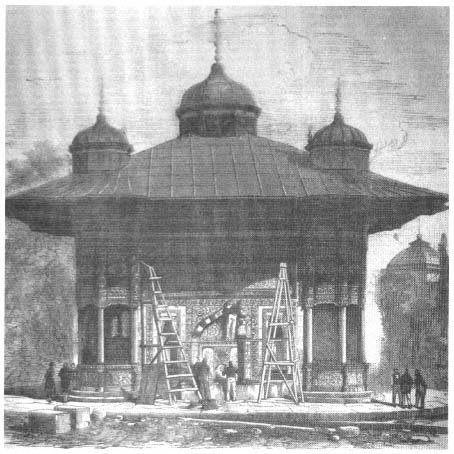
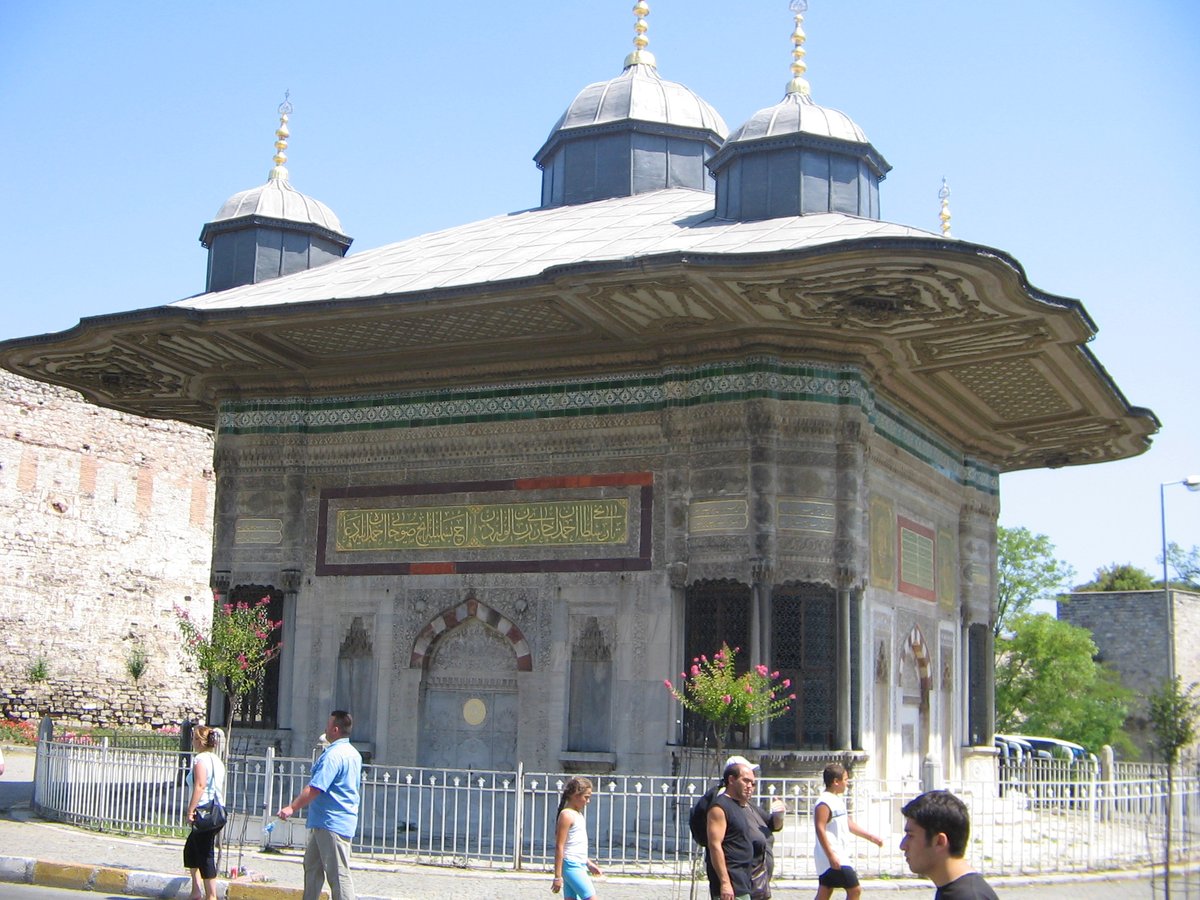
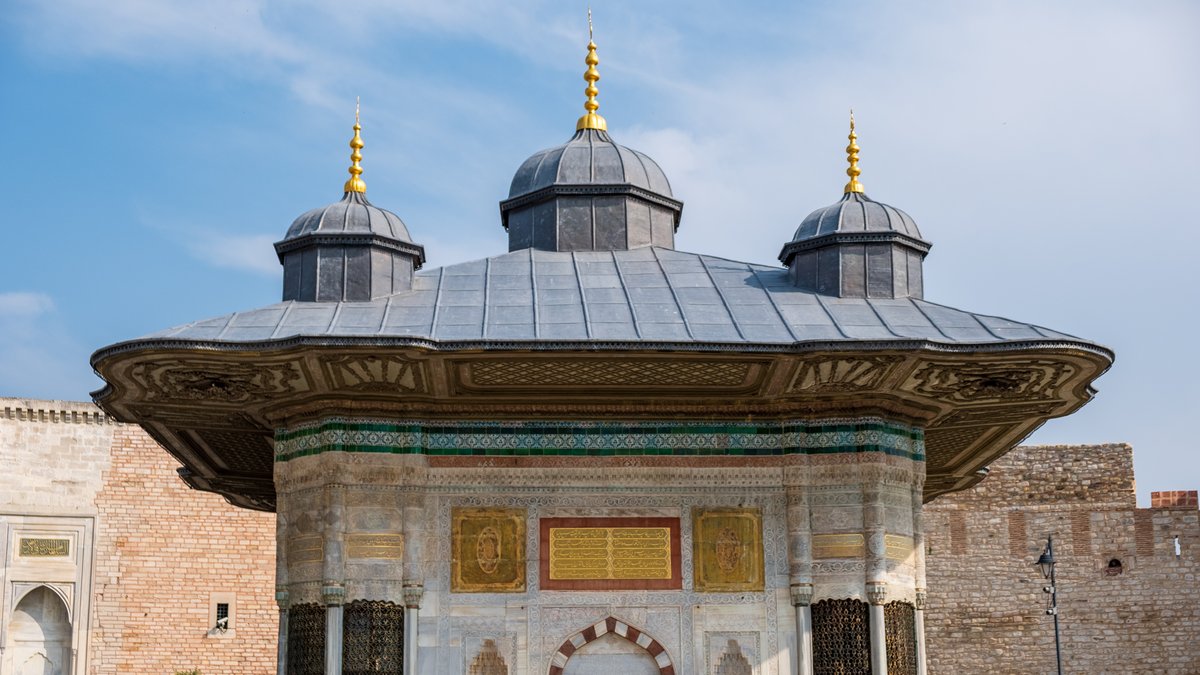
The III. Ahmet Çeşmesi is celebrated as one of the most dazzling examples of Ottoman fountain architecture. It represents a significant departure from the simpler, more utilitarian fountains of earlier periods, embodying the ornate and decorative style that became prevalent in the 18th century. The fountain's design includes a large, square base with a wide, overhanging roof adorned with small domes. This structure is covered with intricate decorations, including floral motifs, calligraphy, and geometric patterns, which are characteristic of both Ottoman and Western artistic traditions (tarihgezisi.com).
Cultural and Artistic Influence
The III. Ahmet Çeşmesi is not only an architectural marvel but also a cultural symbol of the Ottoman Empire's openness to external influences during the Tulip Era. The fountain's elaborate decorations include elements of Turkish decorative arts, such as mukarnas (stalactite-like decorations) and şemse (sunburst motifs), as well as Western-inspired motifs. The extensive use of gold leaf and the incorporation of floral designs, particularly tulips, reflect the period's fascination with luxury and beauty (tarihgezisi.com).
Visitor Information
Opening Hours
The III. Ahmet Çeşmesi is accessible to visitors 24/7 as it is located in a public area.
Tickets
There is no ticket required to view the fountain as it is an outdoor monument.
Accessibility
The area around the fountain is wheelchair accessible, but it is advisable to check local resources for the most up-to-date information.
Nearby Attractions
Visitors can explore nearby historical sites such as the Hagia Sophia, Topkapı Palace, and the Blue Mosque, all within walking distance.
Travel Tips
It is recommended to visit early in the morning or late in the afternoon to avoid the crowds. Don't forget to bring a camera as the fountain offers excellent photographic opportunities.
Structural Details
The III. Ahmet Çeşmesi is designed as a four-sided structure, with each side featuring a fountain. The main façade, facing the Hagia Sophia, includes a large medallion inscribed with the word "Maşallah" (an expression of praise). Each side of the fountain is adorned with intricate carvings and inscriptions, including a 14-verse poem written by Sultan Ahmed III himself. The poem's final couplet, "Aç Besmeleyle İç Suyu, Han Ahmed’e Eyle Dua" (Open with Bismillah and drink the water, pray for Khan Ahmed), highlights the spiritual and communal significance of the fountain (tarihgezisi.com).
Symbolism and Legacy
The III. Ahmet Çeşmesi symbolizes the Ottoman Empire's transition from classical to modern styles, blending traditional Islamic art with European influences. This fusion is evident in the fountain's decorative elements, which include both Turkish and Western motifs. The structure's lavish decorations and the use of high-quality materials, such as marble and gold leaf, reflect the wealth and sophistication of the Ottoman court during the Tulip Era (tarihgezisi.com).
Preservation and Modern-Day Relevance
Today, the III. Ahmet Çeşmesi remains a significant cultural and historical landmark in Istanbul. It continues to attract visitors from around the world, who come to admire its beauty and learn about its historical context. The fountain's preservation is crucial for maintaining the cultural heritage of Istanbul and providing insight into the artistic and architectural achievements of the Ottoman Empire. Efforts to preserve and restore the fountain ensure that future generations can appreciate its historical and cultural significance (tarihgezisi.com).
FAQ
- Q: What are the visiting hours for the III. Ahmet Çeşmesi?
- A: The fountain is accessible 24/7 as it is located in a public area.
- Q: Is there an entrance fee to visit the III. Ahmet Çeşmesi?
- A: No, there is no entrance fee required.
- Q: Is the III. Ahmet Çeşmesi wheelchair accessible?
- A: Yes, the area around the fountain is wheelchair accessible.
- Q: What nearby attractions can be visited along with the III. Ahmet Çeşmesi?
- A: Nearby historical sites include the Hagia Sophia, Topkapı Palace, and the Blue Mosque.