
History and Construction
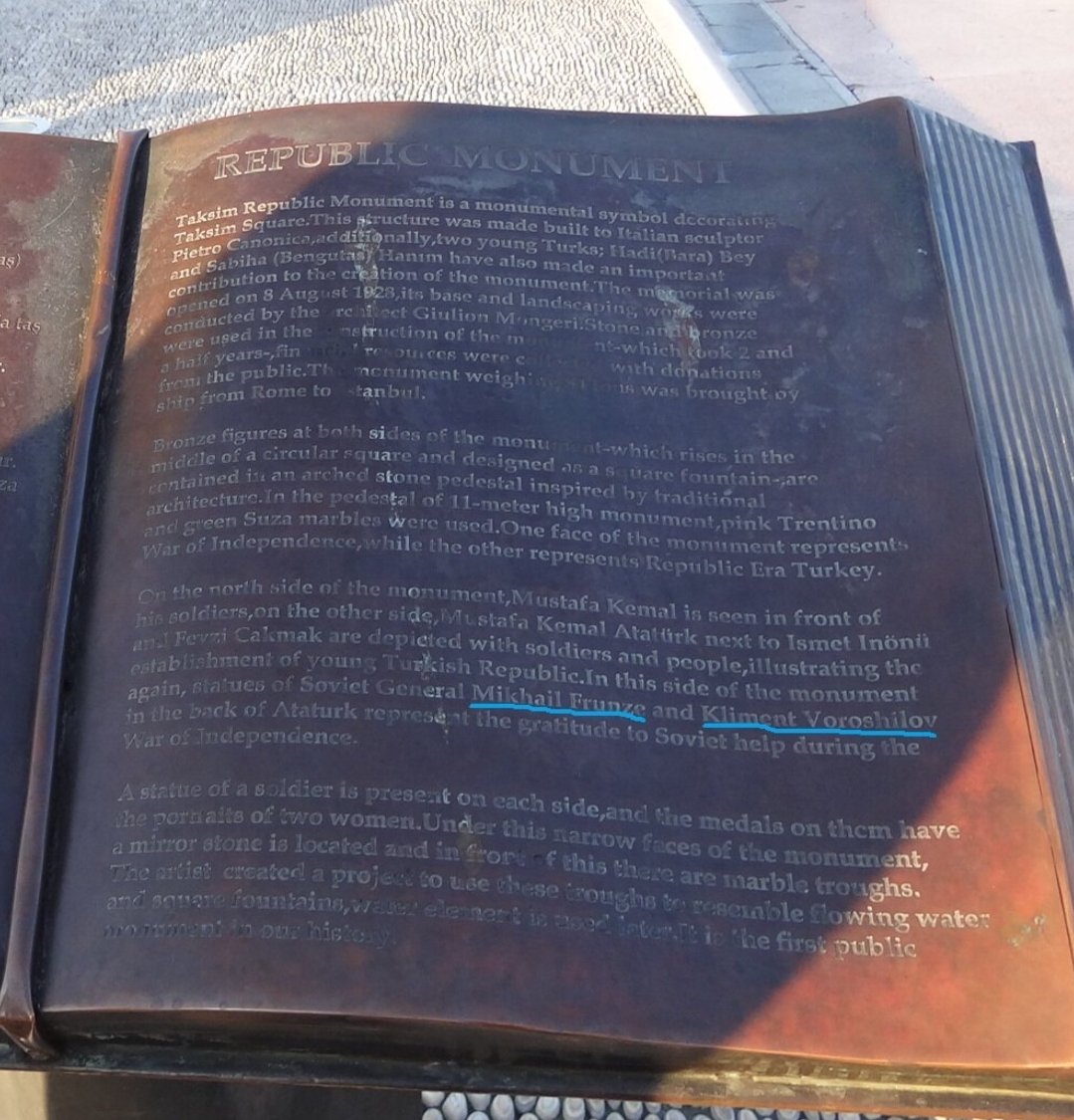
Commissioned in the early years of the Turkish Republic, the Republic Monument was designed by Pietro Canonica, renowned for blending European artistic traditions with the new national identity of Turkey. The monument, standing 11 meters tall, was inaugurated on August 8, 1928, after five years of collaborative work involving both Turkish and international artists (Property Turkey; Adequate Travel).
Constructed from marble and bronze, the monument occupies a central position in Taksim Square, symbolizing the birth of the modern Turkish state and the unity of its people.
Artistic and Symbolic Features
Dual-Faced Design
A distinctive feature of the monument is its dual-sided structure:
- North Side (Facing Gezi Park) Depicts Atatürk and his comrades in military attire, symbolizing the War of Independence.
- South Side (Facing İstiklal Avenue) Shows Atatürk and others in civilian clothing, representing peace, reform, and modernization.
Iconography
Mustafa Kemal Atatürk is centrally positioned, flanked by İsmet İnönü, Fevzi Çakmak, and other significant figures. The inclusion of women, intellectuals, and a Soviet ambassador (Semyon Aralov) reflects both the republic’s commitment to inclusivity and its international alliances (Medium; Visualcom Publications).
The monument’s artistic details—dynamic postures, expressive faces, and contrasting attire—vividly narrate the journey from war to peace and from empire to republic.
Political and Cultural Significance
Beyond its artistic value, the Republic Monument is a living symbol of Turkish republican values: secularism, democracy, and progress. It serves as the focal point for national celebrations such as Republic Day (October 29) and Victory Day (August 30), and has witnessed key moments in Turkish history, including political demonstrations and public gatherings (Adequate Travel; Istanbul Tourist Pass).
The monument’s integration into the daily rhythm of Taksim Square ensures its continued relevance as both a historical marker and a site of civic engagement (Istanbul Trails).
Visitor Information: Hours, Tickets, Accessibility
Visiting Hours
- Open 24/7 The Republic Monument is outdoors and accessible at any hour, every day of the year.
Tickets
- Free Entry There is no entrance fee to visit or photograph the monument.
Accessibility
- Wheelchair Accessible Taksim Square and the monument area are wheelchair accessible, with ramps and paved walkways.
- Public Transport Easily reached via Taksim Metro Station (M2), numerous bus lines, and the nostalgic tram along İstiklal Avenue.
- Amenities Nearby cafes, public restrooms, ATMs, and tourist information kiosks are available.
Travel Tips and Photographic Spots
- Best Time to Visit Early morning or late afternoon for optimal lighting and fewer crowds. The golden hour near sunset is especially recommended for photography.
- Safety Taksim is generally safe, but always be cautious of pickpockets in crowded areas.
- Cultural Etiquette Show respect during official ceremonies; photography is welcome but be mindful during events and gatherings.
- Weather Spring and autumn offer the best weather for exploring the square.
Nearby Attractions
- İstiklal Avenue A lively pedestrian street with shops, restaurants, and galleries.
- Gezi Park Adjacent green space, ideal for relaxation and people-watching.
- Atatürk Cultural Centre (AKM) A hub for concerts, theatre, and exhibitions.
- Galata Tower Historic landmark with panoramic views, a short walk away.
- Pera Museum Art museum featuring Ottoman and contemporary works.
- Çiçek Pasajı Historic arcade with traditional eateries and taverns.
- Dolmabahçe Palace Magnificent 19th-century palace, accessible by tram or taxi.
For more on these sites, see Tourist Secrets.
Frequently Asked Questions (FAQ)
Q: What are the visiting hours of the Republic Monument?
A: The monument is accessible 24/7, as it is an open-air public site.
Q: Is there an entrance fee?
A: No, visiting the Republic Monument is free.
Q: Are guided tours available?
A: Yes, many city tours and walking tours include the monument as a highlight.
Q: How do I get to the Republic Monument?
A: Take the M2 Metro to Taksim Station, use the tram, or any of the many buses serving Taksim Square.
Q: Is the monument area wheelchair accessible?
A: Yes, with ramps and paved walkways, the area is generally accessible for those with mobility needs.
Q: Are there facilities nearby?
A: Yes, including restrooms, cafes, ATMs, and tourist information points.
Summary and Final Tips for Travelers
The Republic Monument remains an enduring symbol of Turkey’s journey from empire to republic, encapsulating values of unity, secularism, and progress. Freely accessible in the heart of Taksim Square, it offers visitors an unparalleled glimpse into the nation’s history and contemporary civic life. Plan your visit during off-peak hours for the best experience, consider joining a guided tour, and explore the surrounding cultural attractions for a comprehensive Istanbul adventure.
For detailed historical background and visitor information, consult sources such as Medium, Nomadic Niko, and Tourist Secrets.