Historical Background
Patronage and Commission
Sinan Pasha, a distinguished 16th-century Ottoman admiral and statesman, commissioned this mosque as both a religious endowment and a mark of his maritime legacy. His close familial ties to Rüstem Pasha, the influential Grand Vizier and son-in-law of Sultan Suleiman the Magnificent, enabled the realization of significant architectural projects. The Sinan Pasha Mosque was entrusted to Mimar Sinan, the chief imperial architect whose works defined the classical Ottoman style (Islamic Arts Magazine).
Construction and Legacy
Construction began in 1553 and was completed by 1555–56, as recorded in the mosque’s courtyard fountain inscription (Wikipedia). The mosque was conceived as part of a külliye—a larger complex that originally included a madrasa and a bathhouse—reflecting the Ottoman tradition of integrating worship, education, and social welfare. While the bathhouse was demolished in the 20th century and the madrasa has changed over time, the mosque itself remains a vibrant center of religious and community life (Istanbul Tour Studio).
Architectural Significance
Mimar Sinan’s Innovations
Mimar Sinan (c. 1489–1588), the master architect behind the mosque, was renowned for his harmonious use of form, light, and space. Sinan Pasha Mosque’s design was influenced by earlier Ottoman mosques, such as the Üç Şerefeli Mosque in Edirne, but exhibits Sinan’s maturing style—an elegant central dome (12-meter diameter) supported by six arches and two free-standing piers create a unified, luminous prayer hall (Wikipedia).
Structure and Decorative Elements
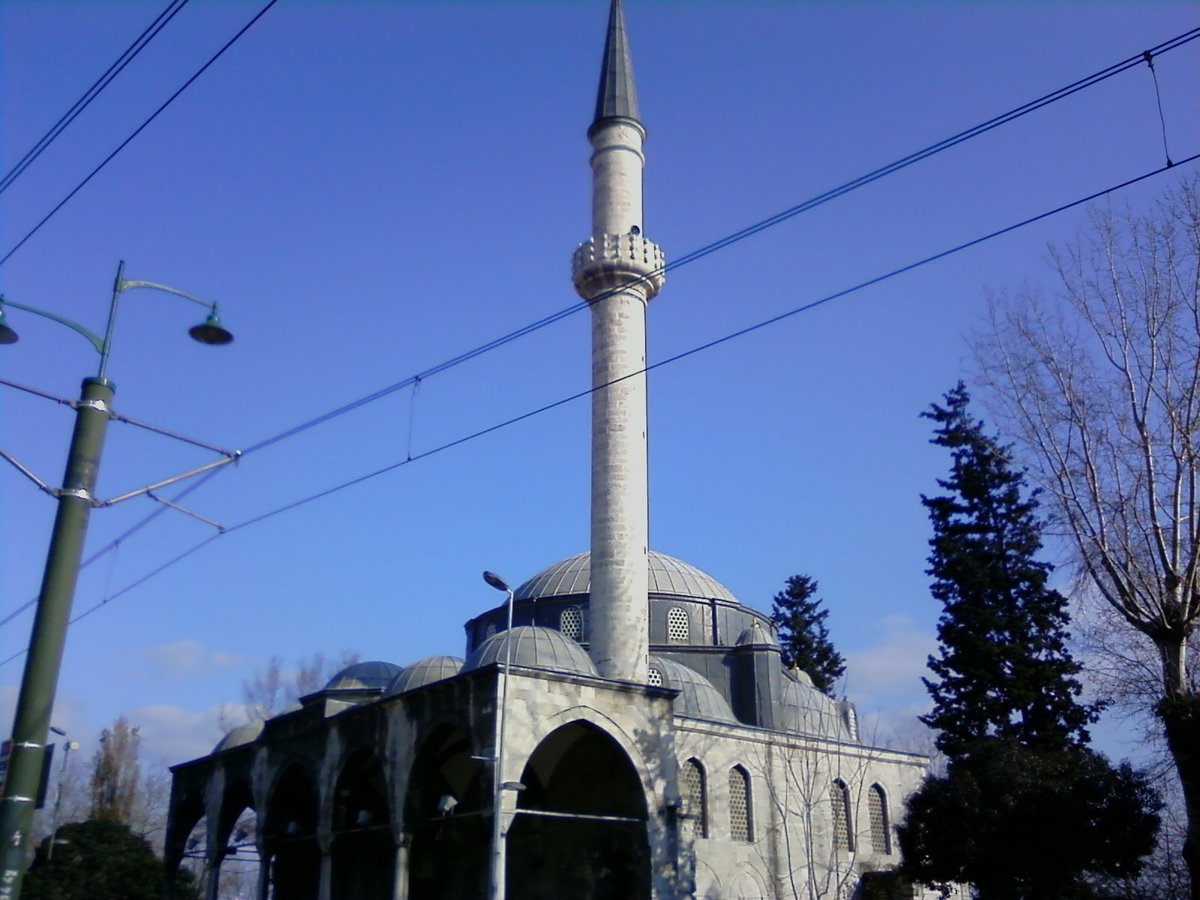
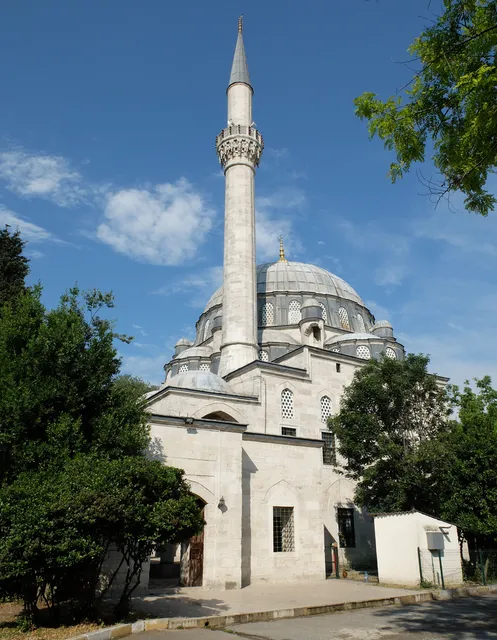
The mosque sits atop a raised platform, supported by a series of shops (arasta) below, exemplifying Sinan’s pragmatic approach to urban mosque design (We Love Istanbul). The prayer hall is square, with buttressed walls and large arched windows that flood the space with natural light. The mosque’s single minaret, capped by a balcony on muqarnas corbels, is a classic feature of Ottoman mosques.
Interior decoration is refined and restrained, with marble mihrab and minbar, carved wooden doors, and calligraphic inscriptions. The use of Iznik tiles—though less extensive than in imperial mosques—adds vibrant color and showcases 16th-century Ottoman ceramic artistry. The courtyard’s ablution fountain, supported by four marble columns, is another notable architectural feature (We Love Istanbul).
Visiting Information
Hours, Admission, and Etiquette
- Visiting Hours Open daily from 9:00 AM to 6:00 PM. Non-Muslim visitors are welcome except during the five daily prayers and especially during Friday (Jumu’ah) prayers around noon (Istanbul Sightseeing).
- Admission Entry is free; no tickets are required. Donations are appreciated to support the mosque’s maintenance.
- Dress Code Modest attire is required—women should cover hair, shoulders, and knees; men should wear long trousers. Scarves are usually available at the entrance.
- Shoes Remove before entering the prayer hall; racks or plastic bags are provided.
- Photography Permitted outside prayer times. Always ask permission before photographing worshippers or staff, and avoid flash for a tranquil atmosphere.
Accessibility and Facilities
- Mobility The main entrance and courtyard are at street level, but some areas have steps or uneven surfaces; assistance can often be arranged (We Love Istanbul).
- Restrooms Clean, free restrooms are available.
- Seating Shaded benches in the courtyard provide a place to rest.
Guided Tours and Community Role
- Tours While on-site guided tours are not routine, many local tour operators include Sinan Pasha Mosque in their historical and architectural tours of Istanbul. Informational brochures may be available.
- Community The mosque doubles as a lively community center, hosting religious events, educational activities, and social gatherings in the heart of Beşiktaş (Daily Sabah).
Getting There and Nearby Attractions
- Location Sinanpaşa Mahallesi, Sinanpaşa Cd. No:42, Beşiktaş, Istanbul, across from the Beşiktaş Ferry Station and Barbaros Park.
- Public Transport Easily reached by ferry, bus, or tram. The Kabataş tram and ferry terminal is a 10-minute walk away. Parking is limited; public transport is recommended.
- Nearby Attractions Barbaros Park, Beşiktaş Market, the Istanbul Naval Museum, Dolmabahçe Palace, and vibrant local cafes and shops (Lets Venture Out).
Preservation and Restoration
The mosque has undergone various restorations, including a major expansion in 1749. Recent efforts have focused on cleaning Iznik tiles, stabilizing the structure, and restoring marble and woodwork to ensure the mosque’s continued beauty and safety (Istanbul Clues). Community and municipal involvement underline the mosque’s significance as a living heritage site.
Frequently Asked Questions (FAQ)
Q: What are the Sinan Pasha Mosque visiting hours?
A: Open daily from 9:00 AM to 6:00 PM, except during prayer times.
Q: Is there an entrance fee?
A: No, entry is free. Donations are welcome.
Q: Are guided tours available?
A: Not routinely on-site, but many local tour operators include the mosque in their itineraries.
Q: Is the mosque wheelchair accessible?
A: The main level is accessible, but some surfaces may be uneven; assistance is available on request.
Q: Can I take photographs?
A: Yes, outside prayer times. Please be respectful and avoid flash or photographing worshippers without permission.
Q: How do I get there?
A: Use public transport—ferry, bus, or tram—to Beşiktaş. The mosque is centrally located and easy to find.
Q: What is the dress code?
A: Modest dress is required. Scarves are provided for women if needed.
Practical Tips for a Memorable Visit
- Visit outside peak hours (early morning or late afternoon) for a serene experience and better light for photography.
- Check prayer times in advance to avoid visiting during worship.
- Dress appropriately and wear shoes that are easy to take off.
- Respect local customs Silence phones, refrain from eating or drinking inside, and be courteous to worshippers.
- Explore the neighborhood Combine your visit with a stroll through Beşiktaş Market or a ferry ride for a full Istanbul experience.
- Be mindful of restoration areas and avoid touching historic surfaces.