History of Aya İrini Kilisesi
Early Foundations and Byzantine Era
Aya İrini Kilisesi, founded around 330 AD by Emperor Constantine the Great, stands as one of the first churches in Constantinople (modern-day Istanbul). Initially constructed on the site of a pre-Christian temple, it served as the principal church of the city until the completion of Hagia Sophia in 537 AD.
Architectural Evolution
Originally a basilica with a wooden roof, Aya İrini underwent significant changes, especially after earthquakes and fires. The most notable reconstruction occurred under Emperor Justinian I in the 6th century, introducing the large central dome characteristic of Byzantine architecture. The current form largely dates from this period, featuring a massive dome supported by four large piers and a spacious nave.
Role During the Iconoclastic Controversy
In the 8th and 9th centuries, Aya İrini played a pivotal role during the Iconoclastic Controversy. The church hosted the Council of Hieria in 754 AD, which endorsed iconoclasm. Consequently, its interior was stripped of iconographic decorations, leaving a relatively austere aesthetic.
Ottoman Era and Conversion to a Museum
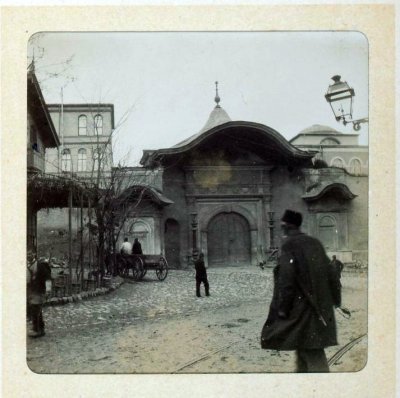
After the Ottoman conquest of Constantinople in 1453, Aya İrini was used as an armory and later repurposed as a military museum in the 19th century during Sultan Abdülmecid I's reign. Its unique status helped preserve its original Christian architectural features.
Modern Era and Preservation Efforts
In the 20th century, extensive restoration efforts were made to preserve Aya İrini's historical significance. Today, it operates as a museum and concert hall, renowned for its acoustics and cultural events. It remains a significant attraction for tourists and scholars alike.
Visitor Information
Tickets and Visiting Hours
Aya İrini Kilisesi is open to visitors throughout the week. Visiting hours are from 9 AM to 6 PM. Tickets can be purchased at the entrance or online through the official website of the Turkish Ministry of Culture and Tourism. Ticket prices may vary, so checking the latest rates on the official website is advisable.
Travel Tips
- Best Time to Visit Early mornings or late afternoons are ideal to avoid crowds.
- Guided Tours Consider joining a guided tour to gain deeper insights into the history and architecture of Aya İrini.
- Photography The church offers excellent photographic spots, particularly in the narthex and nave.
- Accessibility The site is generally accessible, but it's advisable to check specific accessibility options in advance.
Nearby Attractions
- Hagia Sophia A must-visit landmark located nearby, showcasing Byzantine architecture at its finest.
- Topkapi Palace Offers rich insights into Ottoman history and architecture.
- Blue Mosque Another iconic site in close proximity, known for its stunning interiors.
Notable Features and Artifacts
Aya İrini's narthex, adorned with marble columns and intricately carved capitals, and the semi-circular apse with a large mosaic of a cross from the Iconoclastic period, are among the most striking features. The church also houses several artifacts, including a large bronze cross and ancient inscriptions.
Aya İrini in Popular Culture
Aya İrini has inspired numerous works of fiction and non-fiction and has been a filming location for documentaries and historical dramas, emphasizing its historical and cultural significance.