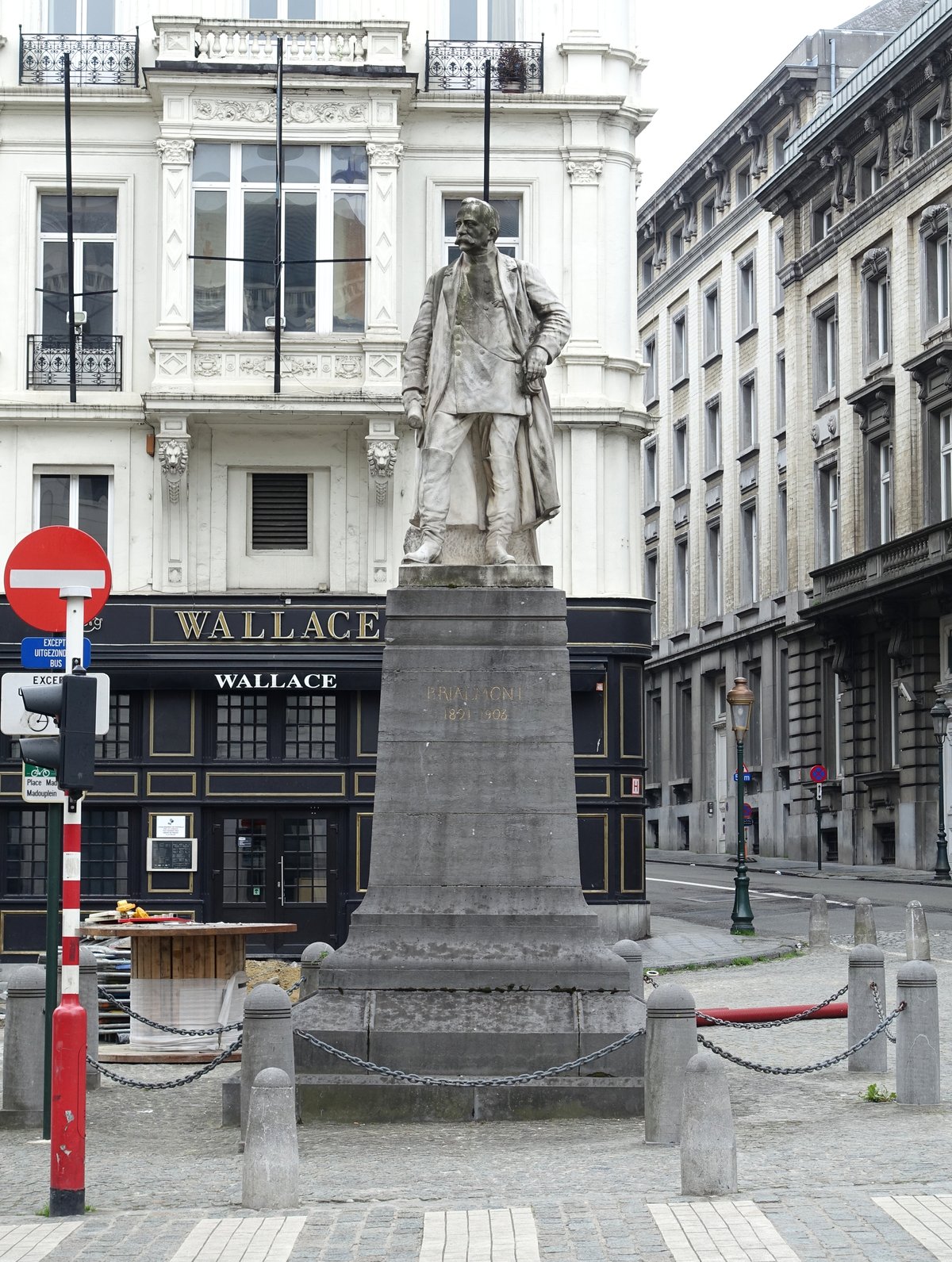

Who Was General Henri Alexis Brialmont?
Henri Alexis Brialmont was a renowned Belgian military engineer whose innovations in fortification design set new standards in military architecture during the late 19th and early 20th centuries. He masterminded the defensive rings around Antwerp, Liège, and Namur, introducing pioneering techniques such as reinforced concrete, armored turrets, and underground constructions. Brialmont’s expertise influenced not only Belgian defense strategies but also those of neighboring countries, notably inspiring French fortresses like Verdun and Belfort (Britannica). Despite some of his forts succumbing to powerful artillery in World War I, his impact on military engineering remains globally significant.
The Statue: Artistry and Urban Context
History and Design
Commissioned in the early 20th century and unveiled in 1928, the bronze statue by Frans Huygelen portrays Brialmont in full military regalia, exuding authority and strategic vision. The monument rests atop a robust stone pedestal inscribed with Brialmont’s name, rank, and life dates. Decorative elements and reliefs may reference his engineering achievements. Its overall height and strategic placement at the intersection of Rue de Louvain and Rue Royale (Koningsstraat) ensure its prominence in the Brussels cityscape (Monument Heritage Brussels).
Heritage Status and Setting
The statue is officially listed as a protected heritage site, reflecting its historical and cultural importance within the Brussels-Capital Region. Its surroundings feature green spaces and are within walking distance of major civic landmarks, offering visitors both a tranquil spot for reflection and an anchor point on their exploration of Brussels’ rich history.
Visiting Information
Location
- Address Rue de l'Enseignement 2 / Intersection of Rue de Louvain and Rue Royale (Koningsstraat), central Brussels
- Nearby Landmarks Royal Palace, Parc de Bruxelles, Mont des Arts
Visiting Hours & Tickets
- Accessibility Open 24 hours a day, seven days a week
- Admission Free (no tickets or reservations required)
- Best Visiting Times Daylight hours (8:00 AM to sunset) are recommended for optimal viewing and photography
Accessibility
- Wheelchair Access The area is generally accessible, with smooth pavements and nearby public transport. Some minor uneven surfaces may occur.
- Assistance Public benches and shaded areas are available close by.
Getting There
- Metro Lines 1 and 5 to Parc/Park or Gare Centrale/Centraal Station; Arts-Loi station is also nearby.
- Tram Lines 92 and 93 (Palais/Paleizen stop); lines 94 and 97 (Place du Luxembourg).
- Bus Lines 33, 38, 71, 95 (Royale/Koning stop).
- Train Brussels Central Station is a 10-minute walk.
- Bike Shared Villo! bikes available at nearby stations.
- Car Public parking available at Interparking Albertine and Grand’Place (visit.brussels).
Nearby Attractions
- Royal Palace of Brussels The official residence of the Belgian monarch, open to visitors in summer.
- Parc de Bruxelles (Brussels Park) A lush green space perfect for a leisurely stroll.
- BELvue Museum Focused on Belgian history and culture.
- Magritte Museum, Royal Museums of Fine Arts, Belgian Comic Strip Center All easily accessible on foot or by public transport.
- Grand-Place The iconic central square of Brussels.
- Mont des Arts An urban complex with gardens and panoramic city views.
Visitor Tips
- Photography Early morning or late afternoon provides the best natural light for photos.
- Combine Visits Plan your route to include other nearby museums and historical landmarks.
- Weather Bring an umbrella or raincoat—Brussels’ weather can be unpredictable (travelonquest.com).
- Respect Do not climb on the statue or leave litter; maintain a respectful atmosphere.
- Language French and Dutch are official; English is widely used in tourist zones (visit.brussels).
Facilities and Amenities
- Tourist Information Available at Brussels Info Place (Rue Royale 2) and the Town Hall on Grand-Place (visit.brussels).
- Restrooms Found in nearby museums, shopping centers, and some metro stations.
- Dining Numerous cafés and restaurants in the vicinity, though hours may vary on Mondays/Tuesdays (visit.brussels).
- Shopping Most shops open Monday to Saturday; Sundays are quieter except in areas like Marolles (visit.brussels).
Special Events and Guided Tours
Occasional commemorative events and cultural activities take place at or near the statue, especially on national holidays. While there are no dedicated tours exclusively for the statue, it is commonly included in broader walking tours focused on Brussels' military history and public art (Brussels Remembers - Brialmont Memorial).
Frequently Asked Questions (FAQ)
Q: Is there an entrance fee or ticket required?
A: No, visiting the statue is free of charge and open to the public at all times.
Q: What are the best hours to visit?
A: Daylight hours (8:00 AM–sunset) are ideal for viewing and photography.
Q: Is the statue wheelchair accessible?
A: Yes, the surrounding sidewalks are generally accessible, though some metro stops may have limited accessibility.
Q: Are guided tours available?
A: The statue is often featured in city walking tours; check with local tour providers or the tourism office for schedules.
Q: What attractions can I combine with my visit?
A: The Royal Palace, Parc de Bruxelles, Mont des Arts, several museums, and the Grand-Place are all nearby.
Q: When are nearby shops and restaurants open?
A: Most are open Monday–Saturday, with reduced hours or closures on Sundays and public holidays.
Responsible Tourism
Respect the monument and surroundings by avoiding damage and litter, and by keeping noise to a minimum, particularly during early or late hours.