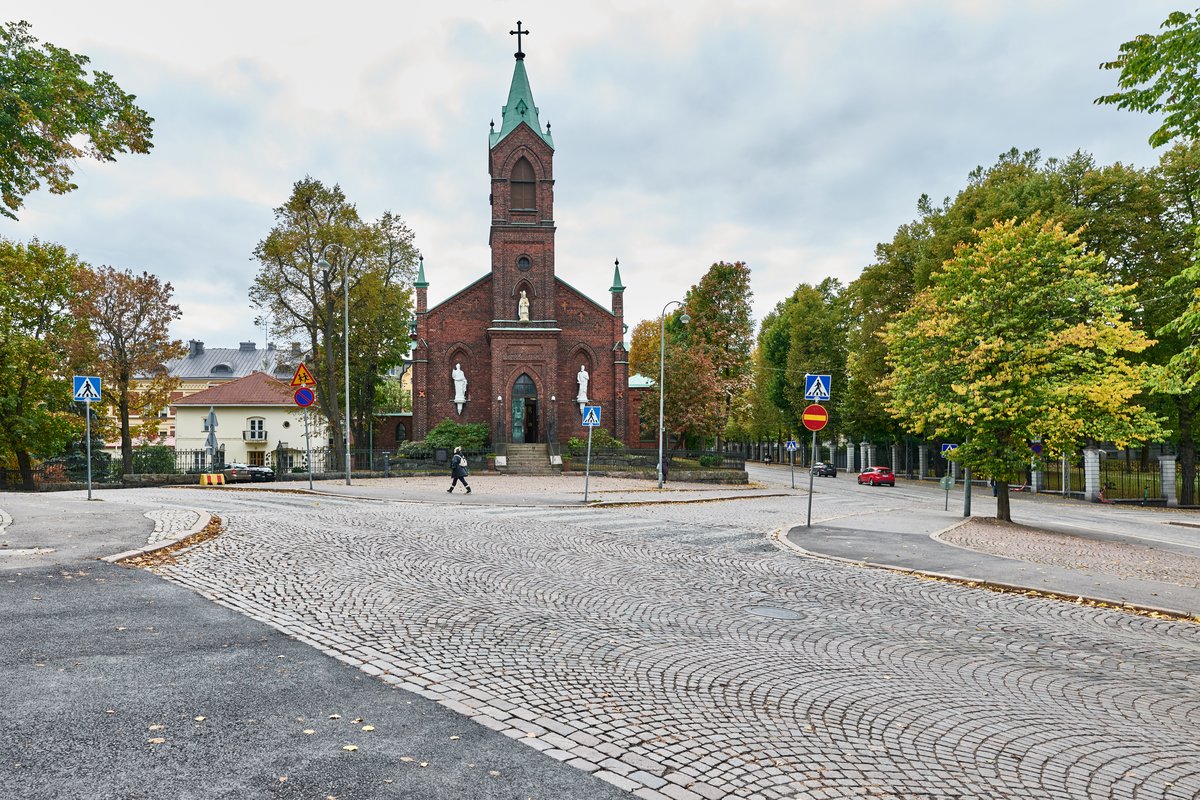
Origins and Naming of the Esplanade Chapel (Kappeli)
While "Kappeli" means "chapel" in Finnish, the building is secular in purpose. Its name is thought to derive from a small milk stall operated by a young shepherd in the early 19th century; the Latin word for shepherd is "pastor," leading locals to affectionately call the stall "Kappeli" (Raflaamo). Another story suggests the name was inspired by its proximity to Helsinki Cathedral, once referred to as "Lilla Kapellet" or "the little chapel."
Architectural Development and Early History
The present Kappeli building, opened in 1867 and designed by Axel Hampus Dahlström, replaced earlier refreshment kiosks in Esplanadi Park (MyHelsinki). Its signature glass pavilion—reminiscent of a greenhouse—creates airy, light-filled interiors and an inviting environment. Surrounded by Esplanadi Park, which itself was designed by Carl Ludvig Engel in 1818, Kappeli quickly became a central meeting point and social hub in Helsinki (Retirement Travelers).
Visiting Hours and Tickets
Kappeli Opening Hours:
- Monday to Sunday 10:00 AM – 10:00 PM
No entrance fee or tickets are needed to visit Kappeli as a café and restaurant. Reservations are recommended for the restaurant, particularly during peak seasons and special events. Guided tours highlighting the building’s history and art may be available through Helsinki’s tourism operators. For live music, check the adjacent Espa Stage schedule, especially from May to August (MyHelsinki).
Accessibility and Travel Tips
Kappeli is conveniently located at Pohjoisesplanadi 1, 00130 Helsinki, Finland, within easy reach via public transport (trams and buses). The venue is wheelchair accessible, featuring ramps and accessible restrooms (vihreatsylit.fi). Limited parking is available, but public transport or walking is recommended due to the central location.
Practical Tips:
- Best Photography The glass architecture and park surroundings offer excellent photo opportunities.
- WiFi Free public WiFi is available in Esplanadi Park and at Kappeli.
- Safety The area is well-lit, clean, and considered very safe for visitors (stromma.com).
Cultural Significance and Artistic Heritage
Kappeli is adorned with artworks by renowned Finnish artists such as Albert Edelfelt and Oskar Kleineh, with some pieces dating back to the late 19th century (Raflaamo). A mural by Henrik Erland Salonen was uncovered during 1970s renovations, further enriching the venue’s artistic legacy. Notably, Kappeli was a favored haunt of cultural figures like Jean Sibelius and Eino Leino, cementing its reputation as a meeting place for Finland’s creative minds.
The Bandstand and Musical Traditions
The bandstand opposite Kappeli, installed in 1887, remains a focal point for Helsinki’s musical life (Raflaamo). Today’s Espa Stage offers free concerts from May through August, ranging from classical to jazz, and is a highlight for both locals and visitors (MyHelsinki).
Nearby Attractions
While visiting Kappeli and Esplanadi Park, explore these nearby sites:
- Helsinki Cathedral Iconic neoclassical architecture.
- Market Square (Kauppatori) Local foods and crafts.
- Ateneum Art Museum Premier collection of Finnish and international art.
- Svenska Teatern (Swedish Theatre) Historic performing arts venue.
- Old Market Hall Taste regional delicacies.
- Design District A hub for Finnish design and boutiques (Holidify; Like a Local Guide).
Frequently Asked Questions (FAQ)
Q: What are Kappeli’s visiting hours?
A: Open daily from 10:00 AM to 10:00 PM.
Q: Do I need tickets to enter Kappeli?
A: No, entry is free. Purchases are expected if dining or enjoying refreshments.
Q: Is Kappeli wheelchair accessible?
A: Yes, the building and Esplanadi Park offer accessible facilities for all visitors.
Q: Are guided tours available?
A: Yes, check with Helsinki tourism services or local operators for history and art-focused tours.
Q: When are concerts held at the bandstand?
A: Free concerts typically take place on the Espa Stage from May to August.