
Who Was Eino Leino?
Eino Leino, born in Paltamo, was the youngest of ten children in a family steeped in Finnish folk tradition. His early exposure to the Kalevala—Finland’s national epic—profoundly shaped his poetic vision. Leino’s prolific career as a poet, journalist, and translator helped shape modern Finnish identity during the country’s formative years in the early 20th century (Wikipedia).
Literary Achievements and Cultural Impact
Leino published more than 70 works, most notably the Helkavirsiä collections, which blend Finnish mythology with modern forms. His translations, including Dante’s Divine Comedy, brought world literature into Finnish, further cementing his status as a cultural icon (Britannica). He was awarded the Finnish State Prize for Literature eight times from 1899 to 1920 (University of Helsinki).
His poetry is celebrated for its emotional depth, philosophical inquiry, and its role in elevating the Finnish language as a literary medium (Jewels from Finland). Today, Leino is regarded as a national poet, and his works remain foundational in Finnish education and public life.
The Eino Leino Statue: Location and Description
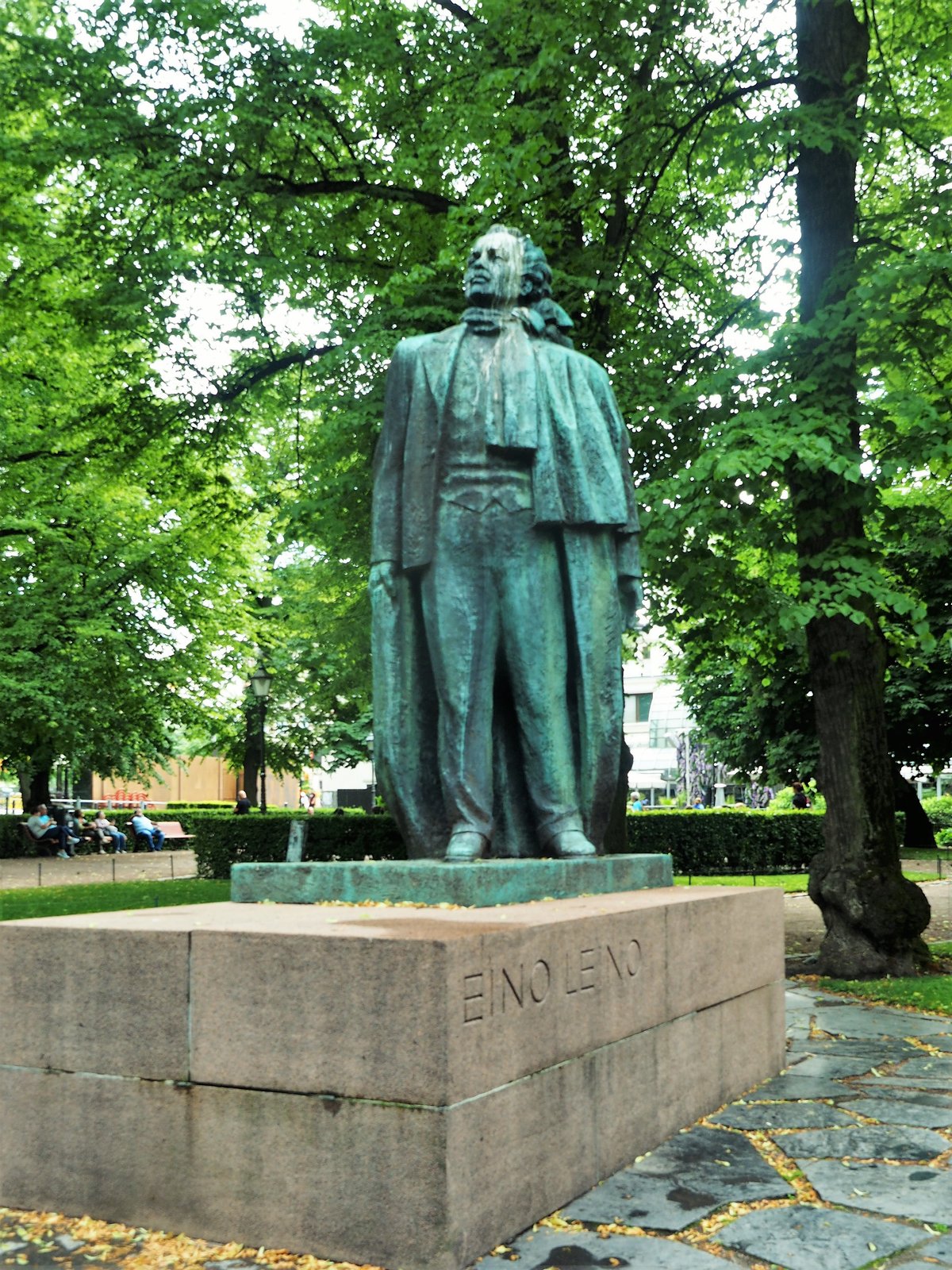
Situated at the northeast corner of Teatteriesplanadi near Pohjoisesplanadi and Mikonkatu, the Eino Leino statue stands in Esplanade Park, a central and lively public space in Helsinki. Created by Lauri Leppänen, the 4.2-meter-tall bronze statue was unveiled on July 6, 1953, and bears an inscription from Leino’s poem “Väinämöisen laulu”:
“Yksi on laulu ylitse muiden ihmisen aattehen hengen ankara laulu”
("One is the voice above all others, the stern voice of man’s beliefs")
(HAM Helsinki).
The statue’s contemplative pose is emblematic of Leino’s introspective spirit and significant literary contributions.
Visiting Hours and Accessibility
- Hours The statue is in a public park, accessible 24/7, year-round.
- Admission Free, with no tickets required.
- Accessibility The park features paved walkways and is suitable for wheelchairs and visitors with reduced mobility. Multiple public transportation lines serve the area, including trams 3, 4, and 7.
Guided Tours and Special Events
While there are no dedicated Eino Leino tours, many Helsinki walking tours that focus on literature and history include the statue as a highlight. Check with local providers or the Helsinki Tourist Information Office for current schedules. Each year, Eino Leino Day (July 6) is celebrated with poetry readings and public gatherings at the statue and throughout the city (Eino Leino Society).
Nearby Attractions
Within walking distance from the statue, visitors can explore:
- Helsinki Cathedral A neoclassical architectural icon.
- The National Museum of Finland Chronicling Finnish history and culture.
- The Old Market Hall Offering local delicacies and crafts.
- Central Library Oodi & National Library of Finland Regularly hosting literary events (MyHelsinki).
The Esplanade area is also home to numerous cafes, shops, and other monuments, including statues of Johan Ludvig Runeberg and Aleksis Kivi.
Travel and Stay Tips
- Best Time to Visit Summer is ideal for park strolls and attending open-air events.
- Getting There Esplanade Park is easily accessible via public transport, bicycle, or on foot from central Helsinki.
- Amenities Benches, cafes, and restrooms are available nearby.
- Photography Early morning and golden hour offer the best light for photos.
FAQ: Eino Leino Statue
Q: Where is the Eino Leino Statue located?
A: Esplanade Park, at the northeast corner of Teatteriesplanadi near Pohjoisesplanadi and Mikonkatu.
Q: Is there an entry fee?
A: No, the statue is free to visit.
Q: What are the visiting hours?
A: The site is open 24/7, year-round.
Q: Are guided tours available?
A: Many general Helsinki walking tours include the statue.
Q: Is the site accessible for wheelchairs?
A: Yes, the park is wheelchair-friendly.
Q: When is Eino Leino Day?
A: July 6th each year, featuring poetry readings and cultural events.
Origins and Historical Context
After Leino’s death in 1926, his influence continued to grow, inspiring a post-war movement to honor him with a public monument. The Eino Leino Society, founded in 1947 by Helsinki-based intellectuals, organized the commissioning of the statue through a national fundraising campaign (Eino Leino Society). The statue’s placement in Esplanade Park—a central, lively space—ensured maximum accessibility and visibility. The unveiling in 1953 was a major cultural event, affirming Leino’s status as a national icon (University of Helsinki).
Artistic Features and Symbolism
Sculptural Design
Leppänen’s bronze statue captures Leino in a seated, contemplative pose, reflecting his introspective nature and poetic depth (vihreatsylit.fi). The naturalistic style emphasizes psychological realism, avoiding grand allegory in favor of personal connection.
Symbolic Placement
Surrounded by statues of other Finnish literary figures, the Eino Leino Statue is integrated into the national narrative of cultural achievement. The park’s changing flowers and greenery frame the monument, inviting reflection and reinforcing its role as a site of living memory (finland.fi).
Cultural Significance
Eino Leino’s work remains integral to Finnish education and public life, and his statue is a focal point on Eino Leino Day (July 6), when poetry readings and ceremonies are held at the site (helsinkiplanner.com). The Eino Leino Society continues to safeguard his legacy, organizing cultural events and acting as a “watchdog” for cultural policy (Eino Leino Society).