
Historical Background
Russian-Finnish Relations and the Embassy’s Origins
Finland’s relationship with Russia is deeply rooted in its history, particularly during the period when it became an autonomous Grand Duchy of the Russian Empire in 1809. This era left a distinct imprint on Helsinki’s cityscape and institutional development (Fodor’s). The present-day embassy, located at Tehtaankatu 1B, was constructed in 1952 as a result of post-World War II reparations, providing the Soviet Union with a purpose-built diplomatic mission in the Finnish capital (Russian Legacy of Helsinki, p.3). Following the dissolution of the Soviet Union in 1991, the embassy seamlessly transitioned to represent the Russian Federation.
The Embassy’s Role in Helsinki’s Russian Heritage
Helsinki is known for its visible Russian influence—sometimes referred to as the “most Russian of European capitals” due to its neoclassical and Russian-style landmarks (Russian Legacy of Helsinki, p.1). The embassy, along with the Uspenski Cathedral and Senate Square, forms a cornerstone of this legacy. Today, it serves a large Russian-speaking community in Finland and supports continual cultural and economic exchange (Russian Legacy of Helsinki, p.4).
Architectural Significance
Design and Key Features
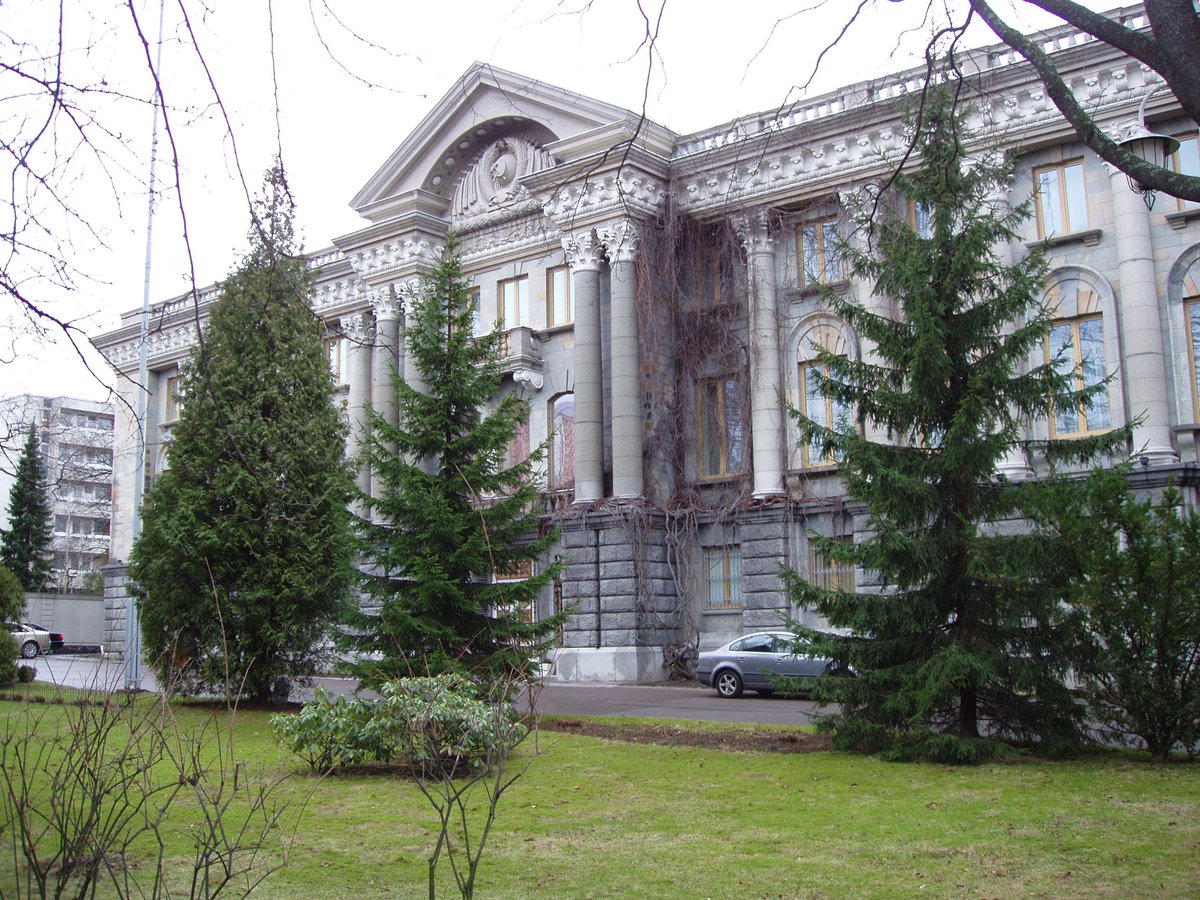
The Russian Embassy is a prominent example of mid-20th-century diplomatic architecture in Helsinki. Built in a period marked by both functionalist and neoclassical influences, its understated white façade, Doric columns, and symmetrical proportions evoke a sense of official continuity and gravitas (Estonian Embassy Architecture). The building’s main floor houses reception rooms—such as the ambassador’s office and dining hall—while upper floors are reserved for staff offices and apartments. Furnishings in the public rooms include 19th-century neo-style pieces, likely moved from the embassy’s previous premises.
The Embassy’s Urban Context and Preservation
Strategically set in the Ullanlinna district, the embassy is part of Helsinki’s diplomatic quarter. Its design is consistent with the city’s neoclassical heritage—Helsinki’s urban plan, shaped by architect Carl Ludwig Engel, was modeled after St. Petersburg, further highlighting the city’s Russian ties (Kurby Blog). The embassy fits seamlessly among other historic and diplomatic buildings, contributing to a unique international district renowned for its architectural harmony. While the embassy is not open to the public, its exterior can be admired on walking tours of the area (Happy Frog Travels).
Practical Visitor Information
Location and Directions
- Address Tehtaankatu 1B, 00140 Helsinki, Finland (EmbassyPages; Wikipedia)
- District Ullanlinna—near Market Square, Esplanadi Park, and Kaivopuisto.
- Public Transport Accessible by Helsinki tram and bus networks; nearby stops are within walking distance.
Visiting Hours and Appointments
- Office Hours Monday to Friday, generally 9:00 AM to 4:00 PM.
- Appointments Required for all consular and visa services. No walk-ins accepted.
- Closed Weekends and Russian/Finnish public holidays.
To schedule an appointment, visit the official embassy website or call +358 9 661876 (Ministry for Foreign Affairs of Finland).
Accessibility
- The embassy grounds and surrounding sidewalks are wheelchair accessible.
- For specific assistance, notify staff when booking your appointment.
- There is no public parking; use public transportation or taxis.
Security and Etiquette
- Security Screening All visitors undergo ID checks and security screening. Only those with confirmed appointments are admitted.
- Prohibited Items Large bags, cameras, and electronic devices may be restricted.
- Photography Strictly prohibited on embassy grounds and in the immediate vicinity.
- Dress Code Wear business or smart casual attire.
Consular and Visa Services
- For Russian Citizens Passport issuance/renewal, notarial services, and emergency support.
- For Foreign Nationals Visa processing (tourist, business, transit), document legalization, travel information.
- Visa Application Requirements Passport, completed application, invitation letter (if required), passport photos, travel insurance (Lonely Planet).
- Processing Time Typically two weeks; expedited options may be available.
- E-Visa Some nationalities are eligible, but Finnish citizens usually apply in person.
Nearby Attractions
- Kaivopuisto Park A scenic waterfront park ideal for walks and picnics.
- Uspenski Cathedral A major Russian Orthodox landmark.
- Senate Square The heart of neoclassical Helsinki.
- Market Square and Esplanadi Park Central gathering places for locals and visitors.
Tips for Visitors
- Arrive 15 minutes early for your appointment.
- Bring all necessary documents and confirmation emails.
- Use public transport to avoid parking issues.
- Dress appropriately for the season and for formal embassy business.
- Respect all instructions and security protocols.
Frequently Asked Questions (FAQ)
Q: Can I tour the inside of the Russian Embassy in Helsinki?
A: No, the embassy is not open for public tours. Consular services are available by appointment only.
Q: Are tickets or entrance fees required?
A: No, there are no entrance fees for consular appointments.
Q: How do I apply for a Russian visa?
A: Book an appointment via the embassy website, bring the required documents, and attend in person.
Q: Is the embassy accessible for people with disabilities?
A: The area is wheelchair accessible; inform staff ahead of time for special assistance.
Q: Can I take photos of the embassy?
A: Photography is prohibited on embassy grounds and discouraged in the immediate vicinity.
Q: Are there guided tours about Helsinki’s Russian heritage?
A: Yes, local tour operators offer walking tours that include the embassy’s exterior and other Russian sites.