
Elias Lönnrot: Life and Achievements
Elias Lönnrot (1802–1884), born in Sammatti, rose from humble beginnings to become a central figure in Finnish culture (Britannica: Elias Lönnrot). His academic path led him from tailoring and singing to medical studies at the Academy of Turku and eventually to the University of Helsinki. Lönnrot’s field expeditions (1828–1842) across Finland and Russian Karelia resulted in the compilation of the Kalevala (first published 1835, expanded 1849), the Kanteletar, and anthologies of Finnish proverbs and riddles (Kalevalaseura; Wikipedia: Kalevala). His contributions also include the first Finnish-Swedish dictionary and Flora Fennica, the first scientific text in Finnish.
Symbolism and Artistic Features
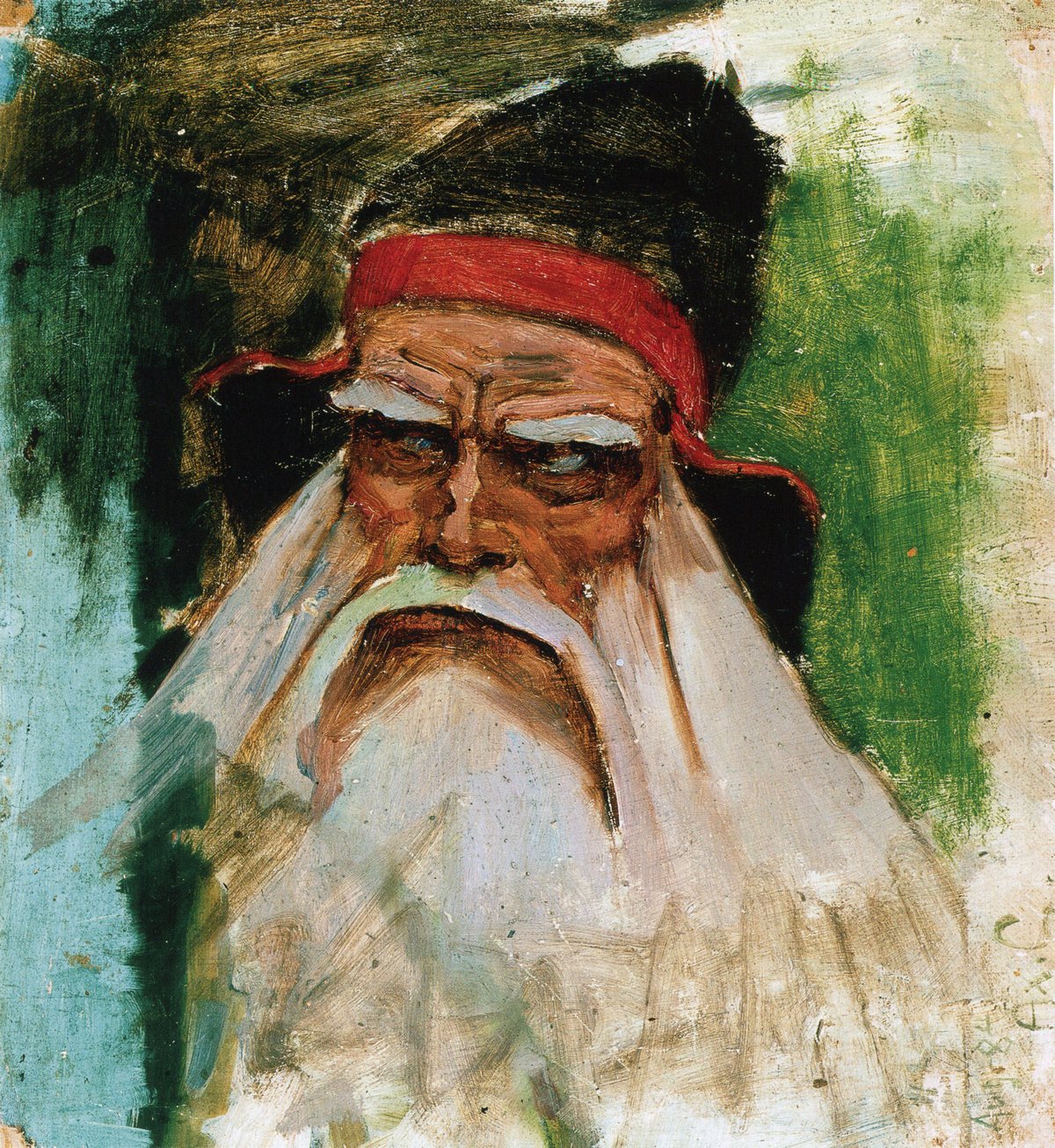
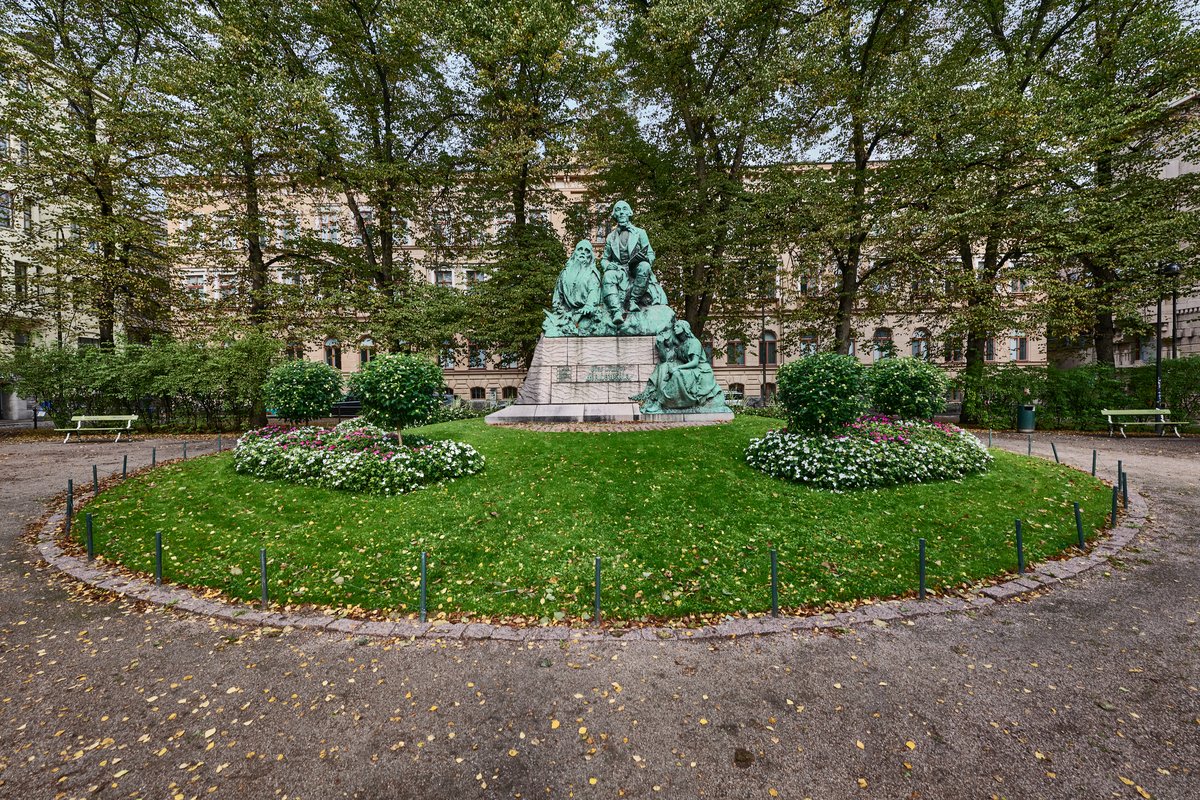
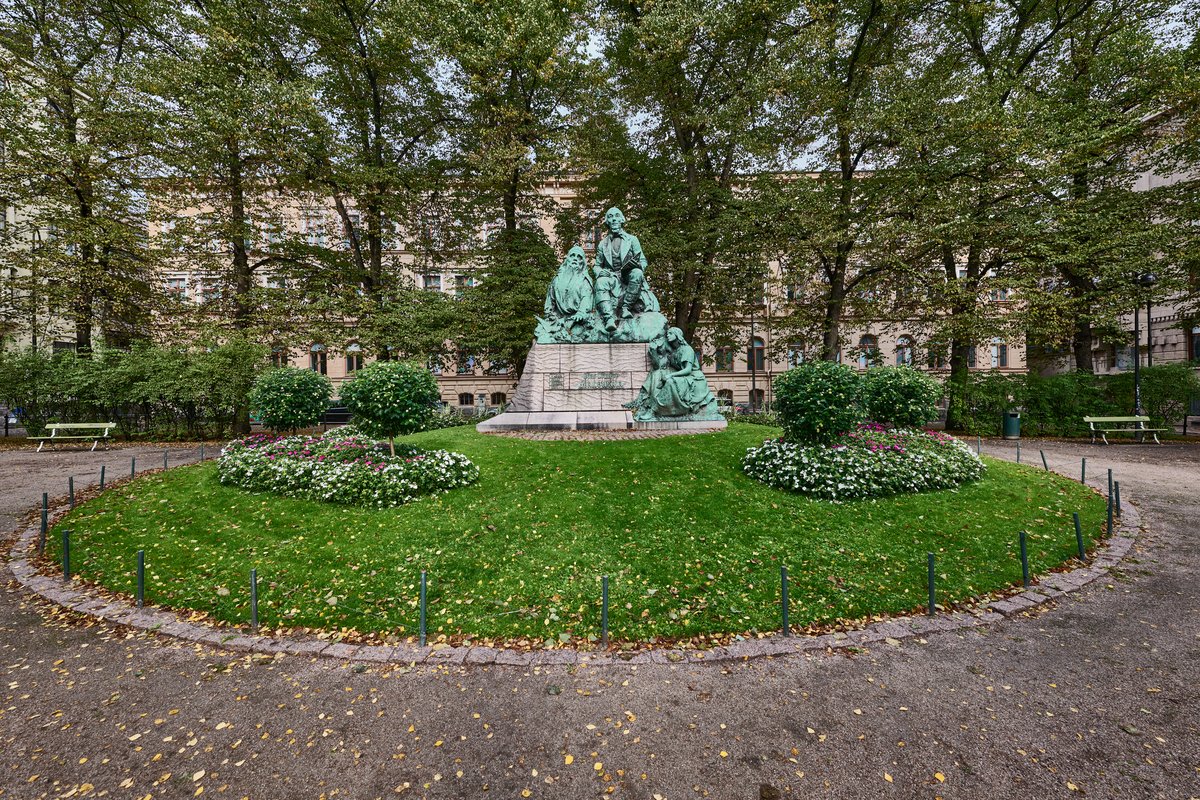
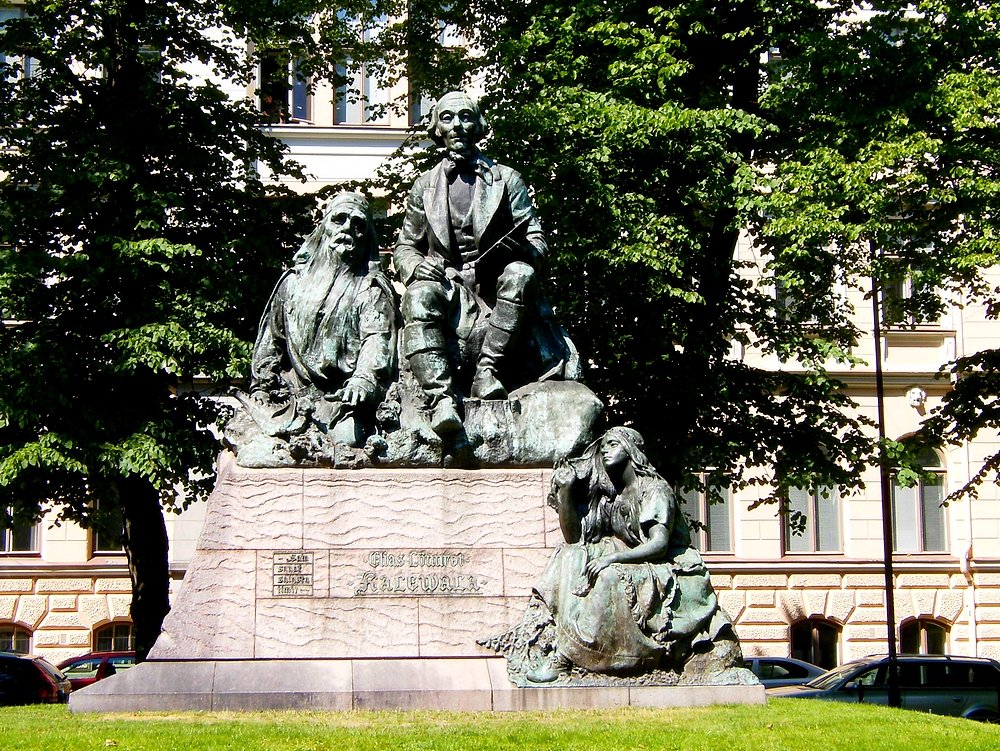
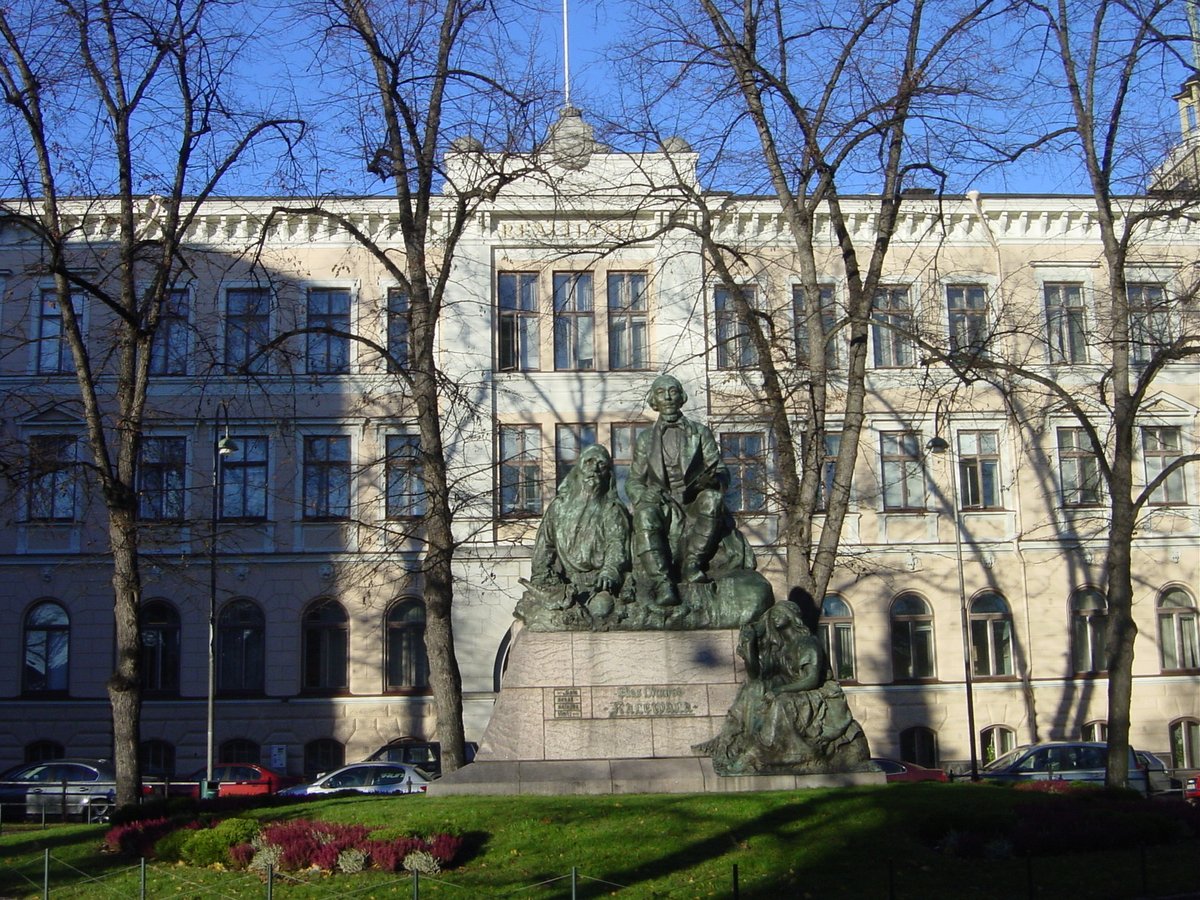
Crafted from bronze and granite, the monument depicts Lönnrot seated in the act of recording Finnish folklore. To his sides stand Väinämöinen—the wise bard of the Kalevala—and Impi, the mythic maiden. Väinämöinen emerges from the mouth of Antero Vipunen, whose head is carved into the pedestal. The pentagram on Vipunen’s forehead reflects magical and protective symbolism. An inscription on the pedestal, from Kalevala poem 17, reads: “Sain sanat salasta ilmi” (“Hidden deep for many ages, learned the words of ancient wisdom”), encapsulating Lönnrot’s mission (Wikipedia: Elias Lönnrot (monument); elitesesotericsymbols.blogspot.com).
Historical Context and National Importance
The monument’s creation coincided with a period when Finland, under Russian rule, was establishing a distinct national identity. The Kalevala provided a cultural touchstone, and Lönnrot’s work in standardizing the Finnish language elevated it to national prominence. The monument remains a focal point for reflecting on Finnish identity and the enduring power of folklore (nordics.info; Britannica: Elias Lönnrot).
The Monument in Helsinki’s Urban Landscape
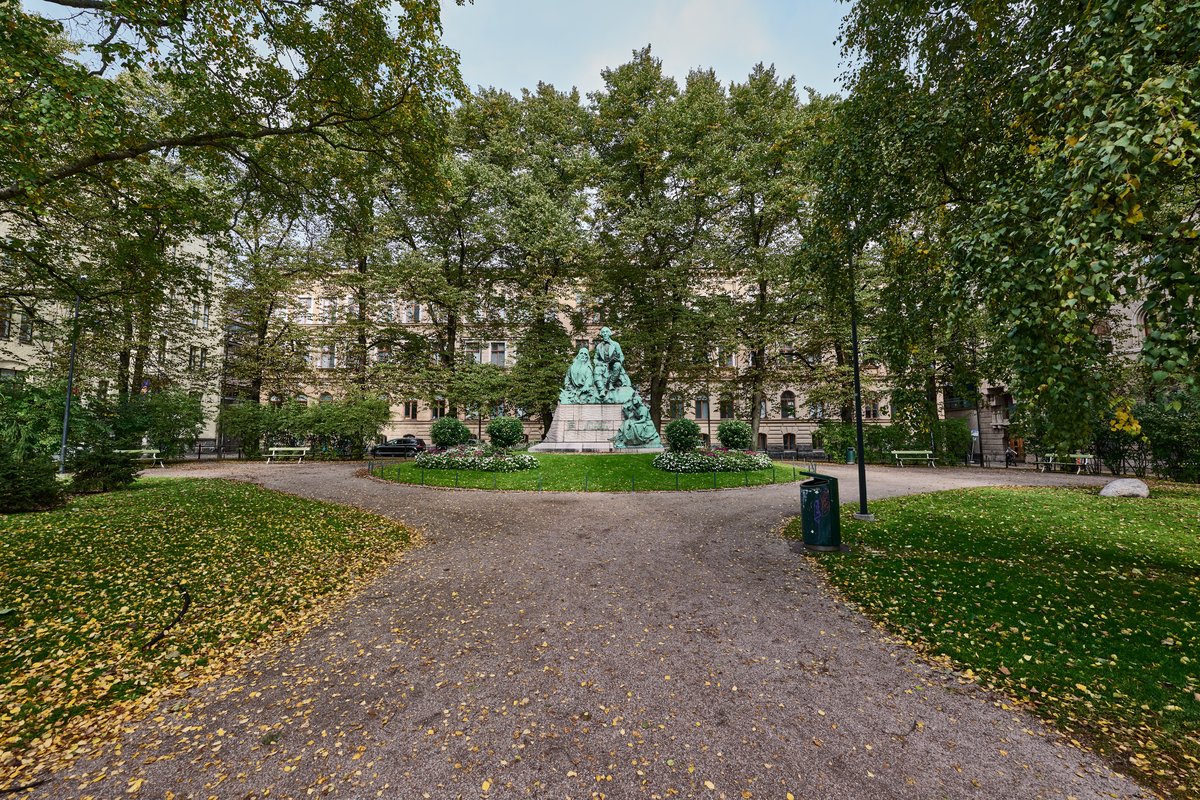
Located in the Kamppi district, the monument is surrounded by cultural attractions such as the Amos Rex Art Museum, Ateneum Art Museum, Design Museum, and Kamppi Chapel of Silence. Its park setting provides tranquility amidst the urban environment and is easily accessible by public transport (Trek Zone; Lonely Planet).
Visitor Information
Location
- Lönnrotinkatu street, Kamppi district, Helsinki, in Lönnrot’s Park in front of Ressun lukio.
Visiting Hours & Ticket Prices
- Outdoors and accessible 24/7, year-round.
- Free of charge.
Accessibility & Getting There
- Wheelchair accessible via paved park paths.
- Tram lines 3 and 6 stop at Kamppi; Kamppi metro station is nearby.
Travel Tips
- Visit during daylight hours for optimal visibility.
- Pair your visit with nearby museums and landmarks.
- Wear comfortable walking shoes.
- Check local calendars for cultural events or guided tours.
Nearby Attractions
- Amos Rex Art Museum Contemporary art, ~10-minute walk.
- Ateneum Art Museum Finnish classical art, ~15-minute walk.
- Design Museum Finnish design history, ~20-minute walk.
- Kamppi Chapel of Silence Modern architecture and reflection space nearby.
Frequently Asked Questions (FAQ)
Q: Is there an entrance fee?
A: No, access is free.
Q: Are guided tours available?
A: Included in many Helsinki cultural tours; check with local operators.
Q: Is the monument accessible in winter?
A: Yes, though dress warmly for cold, snowy conditions.
Q: Is the site wheelchair accessible?
A: Yes, via paved paths.
Q: What is the best time to visit?
A: Daylight hours in spring through autumn.
Legacy and Continuing Relevance
More than a century after its unveiling, the Elias Lönnrot Monument remains a vital part of Helsinki’s cultural landscape, inspiring reflection on the preservation of intangible heritage and the role of literature in shaping national consciousness (Kalevalaseura). Its enduring presence testifies to the profound impact of Lönnrot’s life and work on Finnish identity.
The European Heritage Label and International Recognition
In 2023, the Kalevala and associated sites, including the Lönnrot Monument, were awarded the European Heritage Label, recognizing their significance to European cultural heritage (EHL Bureau).
The Park and Everyday Encounters with Heritage
Lönnrot’s Park provides a tranquil oasis for contemplation and cultural engagement. The monument’s location, surrounded by benches, trees, and interpretive signage, encourages both locals and visitors to reflect on Finland’s literary legacy (Evendo).
Artistic and Social Debates
Sculptor Emil Wikström’s integration of mythological characters and a historical figure in the same monument generated debate, with some critics questioning the blending of fact and fiction. Today, the composition is celebrated for its unique balance and evocative storytelling (HAM Helsinki).
The Living Legacy and Community Engagement
The monument is central to annual events such as Kalevala Day, educational programs, and public ceremonies. Its presence continues to inspire creativity and scholarship, and the site is a focal point for community gatherings (Kalevalaseura).
Practical Tips for Visitors
- Combine your visit with nearby museums.
- Use digital audio guides (e.g., the Audiala app) for added context.
- Respect the monument—do not climb on the sculpture.
- Check Helsinki’s event calendar for cultural happenings (AllEvents Helsinki).
- Accessibility features make the site suitable for all visitors.
Safety and Visitor Conduct
The area is safe, well-lit, and centrally located. Use caution when crossing streets and keep personal belongings secure.
Summary of Key Points
The Elias Lönnrot Monument is a timeless tribute to Finnish cultural identity, blending history and mythology in a striking bronze and granite composition. Freely accessible year-round, it is a focal point for community events and cultural memory. Its central location, proximity to major attractions, and engaging artistic detail make it a must-visit for anyone interested in Finland’s literary heritage and national story (Wikipedia: Elias Lönnrot; HAM Helsinki; Kalevala Society; EHL Bureau).