History and Evolution of Szentháromság Square
The area now known as Szentháromság Square was shaped by centuries of urban transformation. Before the Ottoman occupation ended in 1686, a dense block of houses separated the Town Hall from the Nagyboldogasszony Church (now Matthias Church), with just a narrow passage in between (budavar.abtk.hu). After Buda’s recapture, these houses were demolished, revealing the church’s façade and establishing the square as a civic and ceremonial center.
The 18th century brought the construction of plague columns, built as votive offerings following devastating epidemics. The current Holy Trinity Column (1710–1713), designed by Philipp Ungleich, stands as a symbol of faith and resilience, adorned with statues of angels and Hungarian saints (aviewoncities.com).
Over time, the square has witnessed royal events, military parades, and public gatherings, remaining a vibrant heart of Budapest’s Castle District.
Architectural Highlights
Matthias Church (Mátyás-templom)
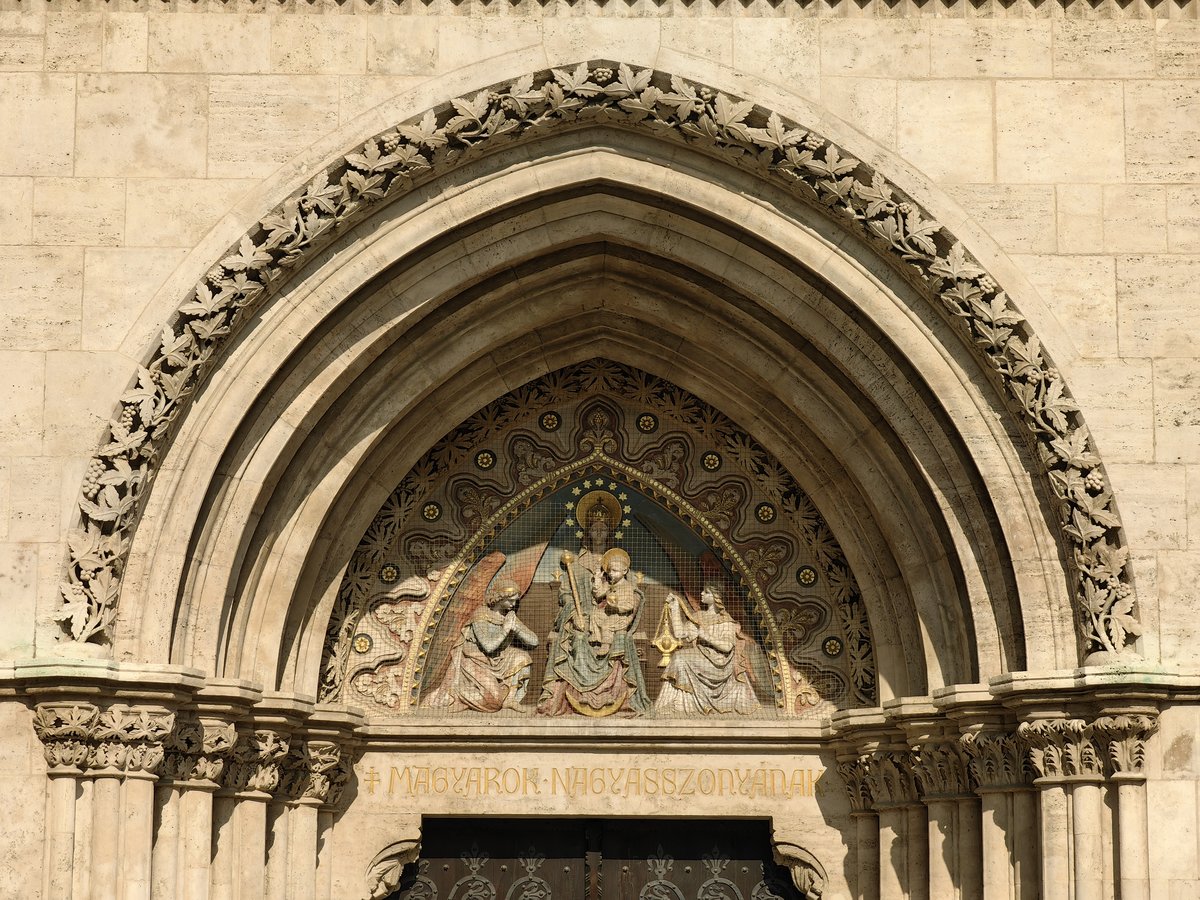
Matthias Church dominates the square with its striking neo-Gothic style and multicolored Zsolnay tile roof. Founded in the 13th century during King Béla IV’s reign, it has been the site of royal coronations and national celebrations. The church’s most significant transformation came in the late 19th century, when architect Frigyes Schulek restored its medieval grandeur and added modern features like stained glass and innovative lighting (matthiaschurch.hu).
Visiting Matthias Church:
- Hours Daily, 9:00 AM–5:00 PM (check official site for seasonal changes)
- Tickets Adults approx. 1,800–2,000 HUF; discounts for students/seniors; tower visit is extra
- Accessibility Ramps and services for visitors with disabilities
- Special Programs Organ concerts, guided tours, and downloadable multilingual ChurchApp
Old Town Hall of Buda
Built between 1702 and 1710 by Venerio Ceresola, this stately Baroque building served as Buda’s town hall until the city’s unification in 1873. The façade features a statue of Pallas Athene symbolizing wisdom. Although currently under renovation, its exterior remains a key part of the square’s historic ensemble (aviewoncities.com).
Ministry of Finance
On the square’s northern side, this late Neo-Gothic building was designed by Jakab Fellner and constructed between 1901 and 1904. Its architecture harmonizes with Matthias Church, incorporating Tudor and Baroque elements. Severely damaged during WWII, it was later restored and has served various civic functions (budavar.abtk.hu).
Holy Trinity Column
Standing at 15 meters, the Holy Trinity Column is a Baroque masterpiece commemorating the victims of the plague. Its ornate sculptures and religious iconography make it a central meeting point and a favorite subject for photographers (welovebudapest.com).
Visiting Szentháromság Square: Hours, Tickets, and Access
Opening Hours and Ticket Information
- Szentháromság Square Open 24/7 as a public space, free of charge.
- Matthias Church Open daily, 9:00 AM–5:00 PM (seasonal variations possible)
- Fisherman’s Bastion Lower terraces open at all times; upper towers require a ticket (~1,000 HUF), generally 9:00 AM–5:00 PM
- Old Town Hall and Holy Trinity Column Outdoor landmarks, accessible at all times
For the most up-to-date hours and prices, check matthiaschurch.hu and budapestinfo.hu.
Getting There
- Address 1014 Budapest, Szentháromság tér
- By Bus Line 16 from Deák Ferenc tér stops at the square (BookInBudapest)
- By Funicular From Clark Ádám Square, ascending Castle Hill
- On Foot A scenic walk from the Chain Bridge across the Danube
Accessibility
- The square features cobblestone paving; while mostly flat, some areas may be challenging for wheelchairs or strollers.
- Matthias Church and Fisherman’s Bastion provide ramps and accessible entrances where possible. Advance contact with tour providers is recommended for special needs (Budapest Tourist Info).
Travel Tips and Practical Information
Best Times to Visit
- Spring/Autumn Mild weather, smaller crowds—ideal for sightseeing.
- Summer Lively atmosphere, open-air events, but more visitors.
- Winter Fewer tourists, magical snow-dusted views.
Facilities
- Dining Cafés and restaurants offer Hungarian classics like goulash and chimney cake (Budapest Tourist Info).
- Restrooms Mostly in cafés/restaurants; public facilities are limited.
- Wi-Fi Freely available in many establishments.
Safety
- Low crime rates, visible police presence, and good nighttime lighting.
- Emergency number: 112 (budapest.city)
- Keep valuables secure, especially during festivals.
Photography and Etiquette
- Outdoor photography is welcome, with Fisherman’s Bastion and the square providing prime viewpoints.
- Inside Matthias Church, photography may be restricted—check signs or ask staff.
- Dress modestly for church visits; respect ongoing services.
Nearby Attractions and Suggested Itineraries
Within easy walking distance:
- Buda Castle and Hungarian National Gallery
- Fisherman’s Bastion Iconic city views, especially at sunrise or sunset (mytravelaffairs.com)
- Labyrinth of Buda Castle Explore the caves beneath the castle hill
- Ruszwurm Confectionery Historic pastry shop
- Danube Promenade Scenic riverside stroll
A visit to the square and its immediate surroundings typically takes 2–3 hours; allow more time for museum visits or extended walking tours.
Frequently Asked Questions (FAQs)
Q: What are the visiting hours for Szentháromság Square and Matthias Church?
A: The square is open 24/7. Matthias Church is open daily 9:00 AM–5:00 PM; check official sites for updates.
Q: How much do tickets cost for Matthias Church and Fisherman’s Bastion?
A: Matthias Church: 1,800–2,000 HUF for adults; Fisherman’s Bastion upper towers: ~1,000 HUF.
Q: Is the square wheelchair accessible?
A: Mostly, but some cobblestone surfaces and steps may require assistance.
Q: Are guided tours available?
A: Yes, in multiple languages, often including skip-the-line access (BookInBudapest).
Q: Can I buy tickets online?
A: Yes, for Matthias Church and Fisherman’s Bastion via their official websites or authorized vendors.
Q: When is the best time to visit?
A: Early mornings for tranquility and photos; late afternoon for a livelier atmosphere and sunset views.