Historical Background
Origins and Foundation
The Kálvin Square Reformed Church congregation’s origins date back to the Reformation in the late 16th century. The official foundation in 1796, after the Edict of Tolerance, allowed Protestants more religious freedom, including the right to build churches. This marked a pivotal moment for Budapest’s Protestant community, enabling the construction of a significant place of worship in a city dominated by Catholic tradition.
Role in Budapest’s Social and Religious Life
Throughout its history, the church has been a refuge and center of compassion, notably providing shelter during the catastrophic 1838 flood. It continues to serve as a vibrant hub for worship, education, charitable activities, and cultural events, reflecting the resilience and enduring spirit of the Hungarian Reformed community (Daily News Hungary).
Reformation Heritage and Civic Engagement
Kálvin Square Reformed Church stands as a living testament to the Calvinist theological tradition, emphasizing the authority of Scripture, simplicity in worship, and community participation. It is actively engaged in interfaith dialogue and citywide commemorations, further enriching Budapest’s multicultural fabric (Tour Guide of Hungary).
Architecture and Notable Features
Exterior
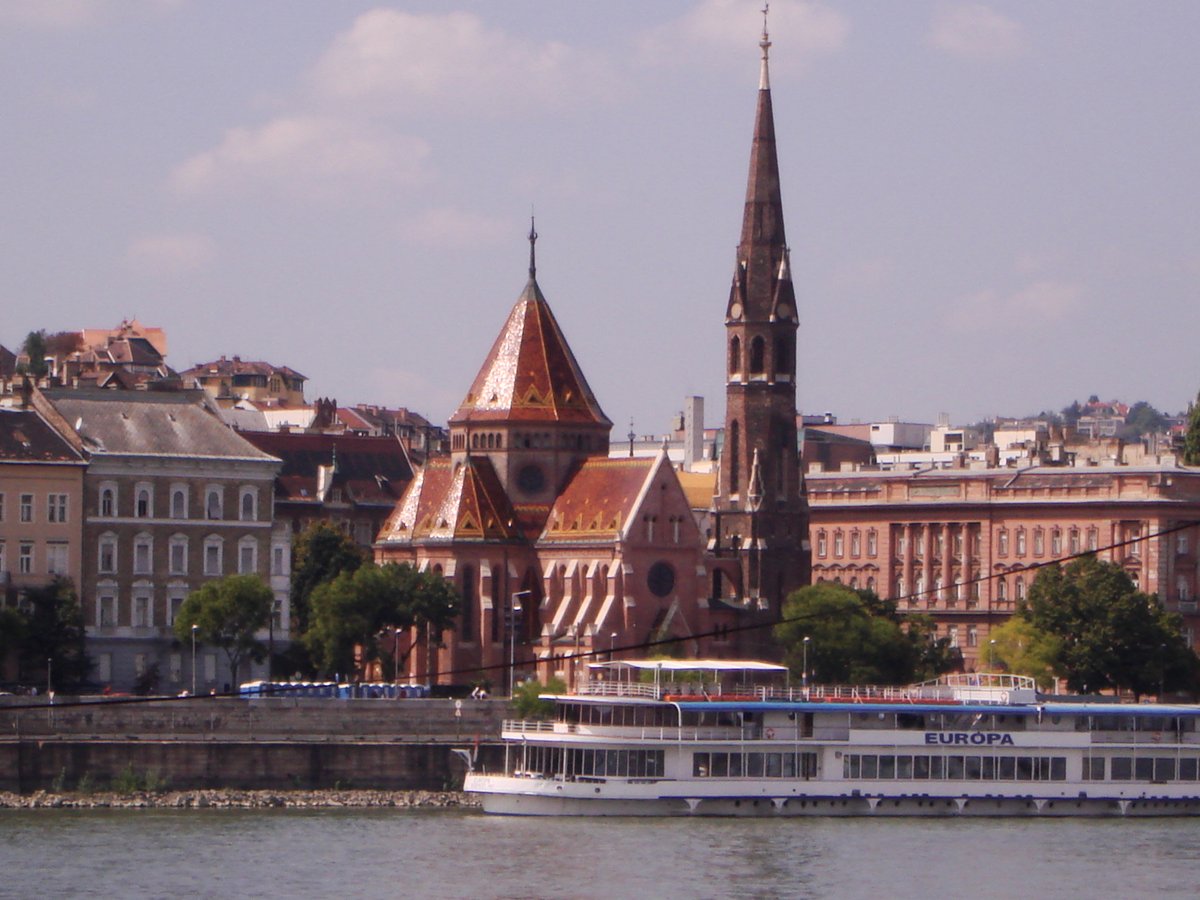
- Neoclassical Façade Designed by Mihály Pollack (1816–1830), the church features a harmonious, symmetrical front with a four-columned portico and triangular pediment.
- Tower The tower, added by József Hild in 1855, enhances the church’s verticality and prominence on the city skyline. The clock tower, renowned for its precision, is a city landmark (Book in Budapest).
Interior
- Spacious Nave The bright and open nave accommodates large congregations and features two-storey side galleries, also by Hild, supported by slender columns.
- Historic Organ Built in 1831, the organ is celebrated for its acoustics and craftsmanship, often featured in concerts.
- Pulpit & Communion Table Central to Calvinist liturgy, these are crafted from local stone with minimalist, symbolic ornamentation.
- Stained Glass Windows and Memorials Modest but elegant stained glass and commemorative plaques honor key figures and events in the church’s history.
- Archives The church holds valuable historical documents, accessible by appointment (Book in Budapest).
Integration with Urban Context
Situated at a major transportation hub, the church is surrounded by other architectural and historical landmarks, adding to its significance as both a religious and cultural site (Evendo).
Visiting Information
Hours & Tickets
- Visiting Hours
- Monday–Saturday: 10:00 AM – 5:00 PM
- Sunday: Open primarily for services at 10:30 AM, with limited visiting outside worship hours.
- Hours may vary during holidays or special events—check the official website or tourist information for updates.
- Admission Free; donations are encouraged to support preservation. Special events or concerts may require tickets (Budapest.city).
Guided Tours
- Languages English and Hungarian
- Booking Recommended in advance, especially during peak tourist seasons or for groups.
- Content Tours highlight the church’s architectural features, history, and role in Hungarian society.
Accessibility
- Wheelchair Access Ramps and step-free entry at the main entrance.
- Assistance Available upon request; restrooms are accessible.
Photography
- Permitted Non-flash photography for personal use is allowed.
- Restrictions Please avoid photographing during services and respect worshippers’ privacy.
Nearby Attractions
The central location of Kálvin Square Reformed Church makes it a perfect starting point for exploring Budapest’s historical and cultural sites:
- Hungarian National Museum Offers a comprehensive overview of Hungary’s history.
- Central Market Hall A bustling marketplace with local foods and crafts.
- Danube River Promenade Scenic walks and river cruises.
- Buda Castle and Great Market Hall Both within easy reach via public transport or a pleasant walk from the church.
Numerous cafés and restaurants in the area provide opportunities to relax and enjoy Hungarian cuisine.
Visitor Experience Tips
- Dress Code Modest attire (shoulders and knees covered) is expected; remove hats upon entry.
- Best Times to Visit Weekdays, early morning or late afternoon for a quieter experience. Special events and holidays offer unique cultural insights but can be busier.
- Language Hungarian is the primary language, but English is widely spoken and multilingual materials are available.
- Weather The church interior remains cool in summer and is heated in winter; dress appropriately for the season.
Frequently Asked Questions (FAQ)
Q: Is there an entrance fee?
A: No, entry is free, but donations are appreciated. Tickets may be required for concerts or special events.
Q: Are guided tours available?
A: Yes, in English and Hungarian; book in advance for group or private tours.
Q: Is the church accessible for wheelchair users?
A: Yes, with ramps and accessible facilities.
Q: Can I attend services?
A: Yes, visitors are welcome at Sunday and special services.
Q: Is photography allowed?
A: Yes, without flash and not during services.
Q: What are the nearest public transport options?
A: Kálvin tér metro station (lines M3 and M4), tram lines 47 and 49, and various bus routes.