40 Kč adults / 20 Kč students / Free for over-60s and under-15s
Access
Street-level gallery on Národní třída; no major steps at entrance
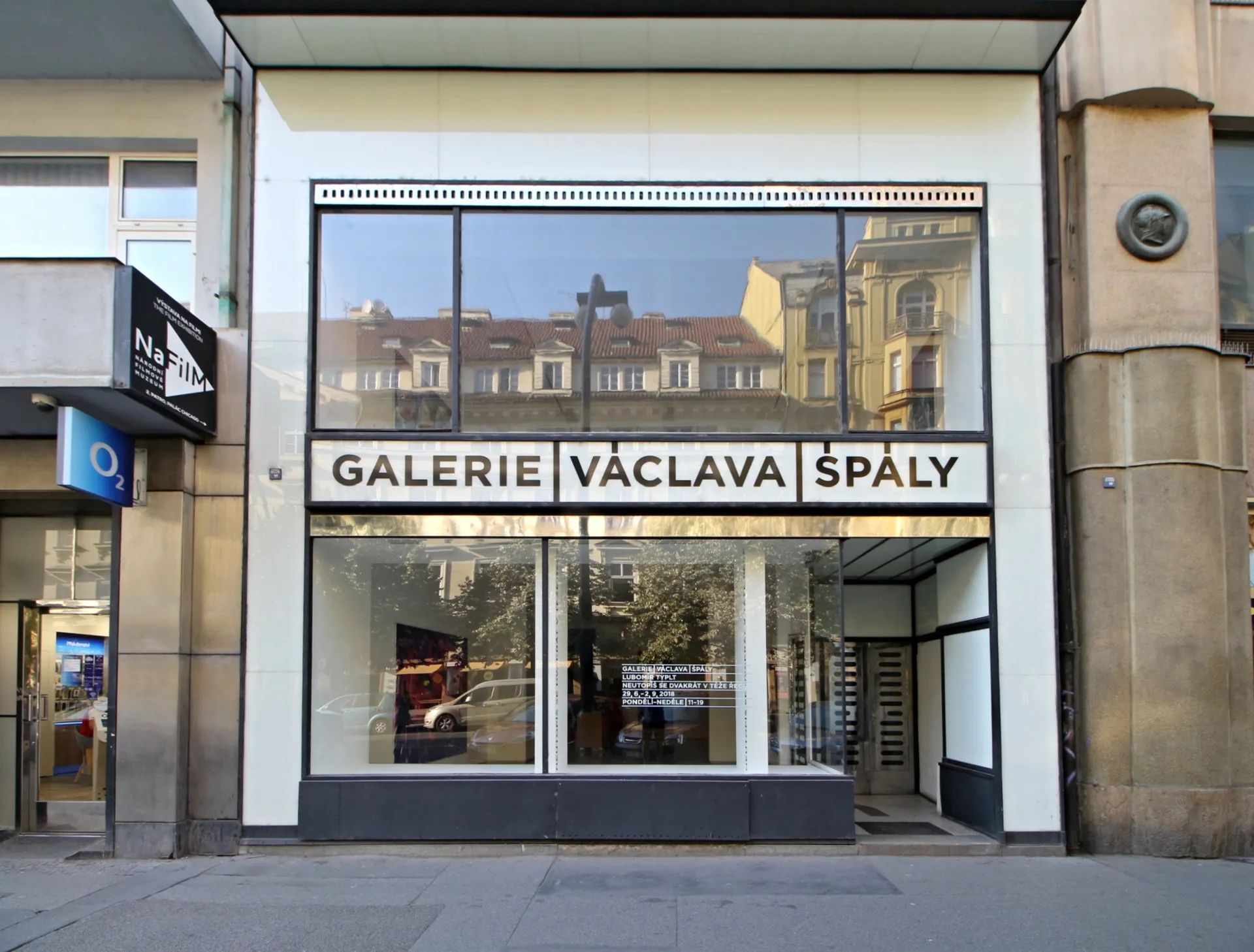
On the boulevard where Czech students marched toward riot police on November 17, 1989 — the night that cracked open the Velvet Revolution — a small gallery at number 30 has been quietly showing art since the late Stalinist era. The Václav Špála Gallery in Prague, Czech Republic, doesn't announce itself with grand architecture or blockbuster exhibitions. What it offers instead is rarer: a carefully curated window into contemporary Czech painting, sculpture, and photography, all for 40 Kč — about the price of a Prague espresso.
The gallery takes its name from Václav Špála, a painter whose bold, Fauvist-inflected canvases of the Vltava river and Bohemian countryside became icons of Czech modernism before his death in 1946. The space itself predates his namesake institution. It first opened as an exhibition venue in 1941, when the Vilímek publishing house converted its ground floor into a proper gallery during the Nazi occupation.
Today the Špála Gallery is operated by PPF Art, which maintains a fine art collection of 340 paintings and sculptures alongside one of the largest private holdings of Czech and Slovak photography in existence: 2,616 works by 330 photographers, covering everything from 1870s albumen prints to digital work made last year. The gallery sits next to the functionalist Palác Chicago, a landmark of interwar modernism, on a stretch of Národní třída dense with theaters, galleries, and the memory of 1989.
Researched by the Audiala editorial team from historical records, architectural archives, and local expertise.
What to see
The Rotating Exhibition Programme
The Špála Gallery doesn't maintain a permanent display. Instead, it cycles through curated exhibitions of contemporary Czech painting, sculpture, and photography — typically focusing on mid-career artists considered among the strongest working in the country today. Shows change every few weeks, so what you see depends entirely on when you arrive. The curatorial standard is consistent enough that the specific artist matters less than the fact that someone at this gallery thought their work deserved these walls. As of spring 2026, the gallery is showing "Antropologie emocí" (Anthropology of Emotions) by Barbora Šlapetová and Lukáš Rittstein — a collaboration between a photographer and a sculptor exploring the territory where physical form meets psychological interior, curated by Petr Vaňous.
One of Central Europe's Great Photography Collections
Behind the rotating exhibitions sits one of the most significant private collections of Czech and Slovak photography anywhere: 2,616 photographs by 330 different authors, spanning from the 1870s — when photography in Bohemia was still a parlor curiosity — through to contemporary digital work. Not all of it is on display at any given time, but the collection shapes the gallery's identity and regularly surfaces in dedicated photography exhibitions. For anyone interested in the visual history of Central Europe beyond the usual Habsburg-era oil paintings, this is where the quieter, more intimate record lives. Street scenes, portraits, landscapes, experimental compositions — 150 years of how Czechs have seen themselves and their country. If Czech photography gets under your skin, the Josef Sudek Gallery is a short walk away and makes a natural companion visit.
Forty Crowns, One Hour, No Crowds
At 40 Kč standard admission — less than two euros — the Špála Gallery is one of the cheapest cultural experiences in central Prague. Students pay 20 Kč; seniors over 60, children under 15, and art school students enter free. The gallery is open daily from 11:00 to 19:00, and because it sits on a street most tourists associate with shopping rather than art, you're unlikely to compete with anyone for space in front of the works. Budget roughly 30 to 45 minutes. Then step outside onto Národní třída and consider that the pavement beneath your feet is where the Velvet Revolution began.
Plan your visit
Getting There
Take metro line B to Národní třída station — the gallery is a two-minute walk east at Národní 30. Trams 6, 9, 18, and 22 stop at Národní divadlo or Národní třída, both within 200 meters. Don't bother driving; the area is largely pedestrianized and parking is scarce.
Opening Hours
As of 2026, the gallery is open daily from 11:00 to 19:00, including weekends. Closed December 24–26, December 31, and January 1 — no other seasonal closures.
Time Needed
The gallery is intimate — roughly the footprint of a large bookshop, which is what it used to be. A focused visit takes 30–45 minutes. If the exhibition hooks you and you linger with wall texts, allow an hour.
Tickets
As of 2026, standard admission is 40 Kč (about €1.60) — less than a Prague cappuccino. Students pay 20 Kč. Seniors over 60, children under 15, disability card holders, and art school students enter free.
Photo Gallery
The Václav Špála Gallery is a prominent contemporary art space located in the heart of Prague, Czech Republic. · VitVitA minimalist exhibition space inside The Václav Špála Gallery in Prague, Czech Republic, showcasing framed photography on a clean white wall. · svajcrThe Václav Špála Gallery in Prague, Czech Republic, showcases a blend of historic architectural detailing and a modern, reflective glass storefront. · VitVitThe Václav Špála Gallery is a prominent art space located in the heart of Prague, Czech Republic, set within a historic urban streetscape. · ŠJů (cs:ŠJů)The Václav Špála Gallery showcases a striking blend of modern glass architecture and historic Prague building design. · VitVitThe Václav Špála Gallery is a prominent contemporary art space located in the heart of Prague, Czech Republic. · VitVitA street-level view of the Václav Špála Gallery, a prominent art space located in the historic center of Prague, Czech Republic. · Gampe
History
From Bookshop to Battlefield of Ideas
The story of this address begins not with art but with ink and paper. Národní 30 housed the Jos. R. Vilímek publishing house and bookshop, one of the prominent cultural institutions of First Republic Prague. Books were sold at street level; ideas circulated upward.
Then, in 1941 — with Czechoslovakia under Nazi occupation — the Vilímek family spent heavily to convert the premises into a proper exhibition gallery. That timing matters. Opening an art space during the Protectorate was an act of cultural preservation disguised as commerce.
The turning point
The Painter Who Never Saw His Own Gallery
Václav Špála never set foot in the gallery that bears his name. Born in 1885 in the town of Žlunice, he became one of Czech modernism's essential figures — a painter who absorbed the lessons of Fauvism and Cubism during trips to Paris, then turned those bold colors and fractured forms toward unmistakably Bohemian subjects. His paintings of the Vltava, with water rendered in thick slabs of cobalt and emerald, became some of the most collected works in Czech art.
Špála died in 1946, eleven years before the Communist authorities established a gallery in his name at Národní 30 in 1957. The choice was telling. Špála was a modernist, but one whose landscapes and still lifes could be reframed as celebrations of the Czech land and its working people — his art threaded the needle between avant-garde credibility and ideological acceptability.
The gallery that carries his legacy has outlasted the regime that founded it. Through what its chroniclers describe as "harder and brighter periods," the Špála Gallery survived normalization, emerged through the Velvet Revolution happening literally outside its door, and today operates as a showcase for living Czech artists working at the top of their form. Exactly the kind of forward-looking role Špála himself embodied.
Art Under Occupation: The Vilímek Years
When the Galerie Jos. R. Vilímek opened in late 1941 with a Jan Štursa sculpture show, Prague was two years into German occupation. Art galleries became one of the few spaces where Czech identity could be expressed without immediate censorship — provided the work stayed apolitical enough. The Vilímek gallery threaded this line for eight years, reportedly staging over 85 exhibitions that kept Czech visual culture alive while the Protectorate authorities focused their repression elsewhere. By 1949, the new Communist government nationalized cultural institutions, and the Vilímek name disappeared from the facade.
PPF Art and the Gallery's Second Life
The gallery's current incarnation under PPF Art — the cultural arm of one of Central Europe's largest investment groups — has given it resources that most Czech galleries of this size can only envy. The photography collection alone, at 2,616 works by 330 authors spanning from the 1870s to the present, rivals institutional holdings. The fine art collection adds 340 paintings and sculptures across two centuries, including works by Alfons Mucha, Jakub Schikaneder, and the contemporary artist Petr Nikl. Corporate patronage in Czech art has a mixed reputation, but at the Špála Gallery it has produced a programme focused squarely on mid-career artists at the peak of their powers.
Tips for visitors
Check Photo Rules
Photography policies change with each exhibition. Ask at the entrance before shooting — some shows by living Czech artists restrict it, others welcome it.
Eat on Národní
Café Louvre, one block east at Národní 22, has been serving since 1902 — Einstein and Kafka both sat there. Mid-range prices, solid Czech classics. For something cheaper, Kuchyň on the same street does lunch plates under 200 Kč.
Combine with Sudek
The Josef Sudek Gallery is a 15-minute walk across the river in Malá Strana — pair the two for a photography-focused afternoon, since the Špála Gallery holds one of the largest private Czech photo collections.
Visit at Opening
The gallery sits on a major pedestrian artery and fills up after lunch, especially on weekends. Arrive at 11:00 when doors open and you'll likely have the rooms to yourself.
Watch Your Pockets
Národní třída is one of Prague's prime pickpocket corridors, especially near the tram stops and the Tesco entrance. Keep bags zipped and phones in front pockets between the metro and the gallery door.
Where to Eat
local_dining
Don't Leave Without Trying
Svíčková—beef sirloin in cream sauce with bread dumplings and cranberryVepřo knedlo zelo—roast pork, dumplings, sauerkraut (the Czech national dish)Bramboráky—potato pancakes with garlic and marjoramChlebíčky—open-faced sandwiches on baguetteTrdelník—grilled pastry rolled in cinnamon sugarPilsner Urquell or Kozel—Czech lager (order 'pivo'; specify světlé for light or tmavé for dark)
The Miners Coffee Maj
cafe
Specialty Coffee Cafe€€star4.9(1068)directions_walk5 min walk
Order: Single-origin espresso or filter coffee—The Miners sources directly from roasters and takes their craft seriously. Pair with a fresh pastry.
This is where Prague's coffee culture actually happens. With over 1,000 reviews and a 4.9 rating, it's the real deal—locals queue here, not tourists. Perfect pre- or post-gallery stop on Národní.
Mediterranean Restaurant€€star5.0(2)directions_walk8 min walk
Order: Grilled fish or meat—the name 'LAVAGRIL' signals serious grilling. Mediterranean flavors are a welcome break from heavy Czech fare.
A hidden gem on a quiet Old Town street with perfect 5.0 rating. It's intimate, off the main drag, and serves the kind of food that reminds you Prague isn't all about dumplings and beer.
Order: Coffee and a slice of Czech cake (koláč) or trdelník. Classic cafe fare done right.
Steps from the Václav Špála Gallery on Národní, this is your neighborhood cafe for a quick coffee and pastry. Perfect for a moment of calm between art and the city's pulse.
Artisan Bakery€€star5.0(1)directions_walk7 min walk
Order: Fresh bread, pastries, and sandwiches. This is a proper bakery—grab something warm for breakfast or lunch.
Named after Prague's most famous writer, this bakery sits in the Quadrio complex near Spálená. It's the kind of place locals hit for real bread and honest baked goods, not tourist trinkets.
checkNárodní třída is Prague's main commercial artery—all four restaurants are within easy walking distance of the Václav Špála Gallery.
checkCzech cafes often serve coffee and cake as a social ritual; linger if you can.
checkBeer is cheaper than coffee in Prague, and it's good—don't skip it.
checkLunch is typically 11:30–14:00; dinner service begins around 18:00.
Food districts:Národní třída—the gallery's street, lined with cafes and restaurants; walkable to everythingOld Town Square (Staroměstské náměstí)—8–10 min walk, touristy but atmospheric; good for evening strollsVltava riverbank (Náplavka)—where locals gather on weekends; farmers' market atmosphere in warmer months
Restaurant data powered by Google
Frequently asked
Is the Václav Špála Gallery worth visiting?
Yes, especially if you want to see serious contemporary Czech art without the museum crowds. For 40 Kč — less than a Prague metro ticket — you get rotating shows focused on the middle generation of Czech painters, photographers, and sculptors curated to a genuinely high standard. It's a small space, which works in its favour: nothing gets lost on the walls.
How long do you need at the Václav Špála Gallery?
Plan for 30 to 45 minutes. The gallery is compact by design — one focused exhibition at a time — so there's no risk of museum fatigue, and no need to rush. If you catch a guided tour (usually free, check the programme), add another hour.
What is the Václav Špála Gallery famous for?
It's the primary Prague venue dedicated to living Czech artists of the middle generation — painters, photographers, and sculptors who sit at the peak of the current Czech art scene. The gallery is operated by PPF Art, which also maintains one of the largest private collections of Czech and Slovak photography: 2,616 photographs by 330 authors, spanning the 1870s to the present.
How much does it cost to enter the Václav Špála Gallery?
Standard admission is 40 Kč (roughly €1.60), with a reduced rate of 20 Kč for students. Entry is free for seniors over 60, children under 15, holders of ZTP disability cards, and students of art schools.
When is the Václav Špála Gallery open?
The gallery is open every day of the week, 11:00 to 19:00. It closes on December 24–26, December 31, and January 1. No other regular closure days.
How do I get to the Václav Špála Gallery in Prague?
The gallery is at Národní 30, Praha 1 — right on Národní třída, one of the city's main central boulevards. The nearest metro is Národní třída on Line B, a short walk away. Trams 6, 9, 18, and 22 also stop nearby at the Národní divadlo or Národní třída stops. Don't bother with a car; the area has almost no public parking.
Who was Václav Špála and why is the gallery named after him?
Václav Špála (1885–1946) was a key figure in Czech modern painting, known for bold colour work shaped by Fauvism and Cubism — his Vltava river scenes became something close to iconic in Czech art history. The gallery was named after him when it was formally established in 1957, in premises that had already been running exhibitions under a different name since 1941.
What kind of art does the Václav Špála Gallery show?
The programme rotates through painting, photography, and sculpture, with a curatorial focus on contemporary Czech artists. Each exhibition is a single-artist or two-artist show rather than a group survey, which gives individual work room to breathe. PPF Art, which runs the gallery, also holds a fine art collection of 340 works spanning two centuries — including pieces by Alfons Mucha and Jakub Schikaneder.
Sources & attribution7
Researched and written by the Audiala editorial team from historical records, architectural archives, and local expertise. Last updated April 2026.
Národní Památkový Ústav (npu.cz) — Biographical and artistic context for Václav Špála, including his 2025 exhibition at Prague Castle alongside Schiele and Kokoschka.
Saved and recently read places — kept on this device only.
Photo credits (8)
Národní GVŠ 1 — VitVit — CC BY-SA 4.0 (https://creativecommons.org/licenses/by-sa/4.0/) — Source: https://commons.wikimedia.org/wiki/File:Národní_GVŠ_1.jpg
110719 Vaclav Jirasek Galerie Vaclava Spaly Obrazy z Dejin Fotografie Ceske — svajcr — CC BY-SA 3.0 (https://creativecommons.org/licenses/by-sa/3.0/) — Source: https://commons.wikimedia.org/wiki/File:110719_Vaclav_Jirasek_Galerie_Vaclava_Spaly_Obrazy_z_Dejin_Fotografie_Ceske.JPG
Národní GVŠ 4 — VitVit — CC BY-SA 4.0 (https://creativecommons.org/licenses/by-sa/4.0/) — Source: https://commons.wikimedia.org/wiki/File:Národní_GVŠ_4.jpg
Nové Město, Národní 30 — ŠJů (cs:ŠJů) — CC BY-SA 3.0 (https://creativecommons.org/licenses/by-sa/3.0/) — Source: https://commons.wikimedia.org/wiki/File:Nové_Město,_Národní_30.jpg
Národní GVŠ 3 — VitVit — CC BY-SA 4.0 (https://creativecommons.org/licenses/by-sa/4.0/) — Source: https://commons.wikimedia.org/wiki/File:Národní_GVŠ_3.jpg
Národní GVŠ 2 — VitVit — CC BY-SA 4.0 (https://creativecommons.org/licenses/by-sa/4.0/) — Source: https://commons.wikimedia.org/wiki/File:Národní_GVŠ_2.jpg
Praha Galerie Vaclava Spaly 1 — Gampe — CC BY-SA 3.0 (https://creativecommons.org/licenses/by-sa/3.0/) — Source: https://commons.wikimedia.org/wiki/File:Praha_Galerie_Vaclava_Spaly_1.jpg
Praha Galerie Vaclava Spaly 2 — Gampe — CC BY-SA 3.0 (https://creativecommons.org/licenses/by-sa/3.0/) — Source: https://commons.wikimedia.org/wiki/File:Praha_Galerie_Vaclava_Spaly_2.jpg
Strictly necessary cookies keep the site working. Analytics (PostHog, Google Analytics) measures how each visitor uses our pages. Marketing loads YouTube videos and walking-route maps without a tap and lets Google Analytics set advertising cookies. We never sell your data. You can change this any time from the footer.
Analytics and marketing cookies are optional and only load if you agree. Details under Customize.
Privacy
Cookie preferences
Pick what you're okay with. You can change this any time from the footer.
Strictly necessary
Always on
Sign-in, language, navigation. Always on.
Product analytics
PostHog (EU) and Google Analytics record which pages you view and how you use them, under a random identifier stored in your browser. Helps us see which pages work and which need fixing. Google's ad personalisation stays off. No selling.
Marketing
Loads YouTube videos and the walking-route maps (OpenFreeMap) without a tap; without it, they load only when you tap them. If analytics is also on, Google Analytics may set advertising cookies. Ad personalisation stays off.