Austro-Hungarian Origins
The roots of the Central Military Hospital Prague date back to 1802, when Emperor Franz I established the first military hospital in Prague to serve the imperial armed forces (alfredtesla.com). This marked Prague as a strategic hub for military medicine within the Austro-Hungarian Empire.
Interwar Expansion & WWII
Following Czechoslovakia's independence in 1918, military healthcare modernization was prioritized. In 1925, the Masaryk Military Hospital was created through the merger of existing facilities, commemorating President Tomáš Garrigue Masaryk (uvn.cz). Construction of the new hospital complex began in 1936, culminating in its 1938 opening.
During World War II, the hospital experienced several shifts in control—from local rebels to the Soviet Red Army before returning to Czechoslovak authorities in August 1945. In the post-war years, it expanded its educational mission, training doctors and nurses for both military and civilian roles.
Communist Era & Modernization
After the 1948 communist coup, the hospital was renamed Central Military Hospital and underwent further expansion and specialization. It became a leading center for military medical training and research (uvn.cz). Despite the challenges of the totalitarian period, including the 1968 Soviet occupation, the institution maintained high standards and continued to serve as a national healthcare leader.
Contemporary Role & Innovations
Today, as the Military University Hospital Prague, ÚVN treats over a million outpatients and thousands of inpatients annually (military-medicine.com). It excels in trauma care, acute surgery, and internal medicine, and is home to the renowned Combat Medicine Centre—a unique simulation facility training military and emergency medics for real-world crises (CZ Defence).
The hospital’s international collaborations with NATO allies and involvement in global medical research further highlight its significance in both Czech and international healthcare systems.
Visitor Information
Visiting Hours & Entry
- General Visiting Hours 2:00 PM to 6:00 PM daily. Hours may vary by department; always confirm with the relevant ward before visiting.
- Entry Requirements Only visitors accompanying patients or those with appointments are admitted. Carry valid photo ID; expect security checks due to the hospital’s military status.
- Tickets There is no general admission or ticketing. The hospital is not a tourist attraction and does not offer routine guided tours.
- Photography Strictly prohibited inside the buildings for privacy and security reasons.
Getting There & Transportation
- Address U Vojenské nemocnice 1200, 169 02 Praha 6, Czech Republic.
- Public Transport Accessible via tram lines 1, 2, 18, and 25 (stop: “Vojenská nemocnice”). Bus lines 108 and 174 also serve the area. Use the PID Lítačka app or Mapy.cz for current routes.
- Parking Limited on-site; public transport is recommended.
Accessibility & Facilities
- Mobility The hospital is fully wheelchair accessible, with ramps, elevators, and adapted restrooms.
- Languages Many staff speak English; some speak German or Russian (All Luxury Apartments).
- Services On-site cafeterias, ATMs, pharmacy, information desks, and free Wi-Fi available.
International Visitors
- Insurance EU citizens (with EHIC) are treated on the same terms as Czech nationals. Non-EU visitors should have comprehensive travel insurance.
- Translation Services Available upon request; arrange in advance for consultations.
- Medical Records Bring translated medical documentation if possible.
Etiquette & Security
- Conduct Respect visiting hours, keep noise to a minimum, and follow all posted signs and staff instructions.
- Security Security personnel and possible ID checks are in place due to the hospital’s military affiliation.
Practical Tips & Nearby Attractions
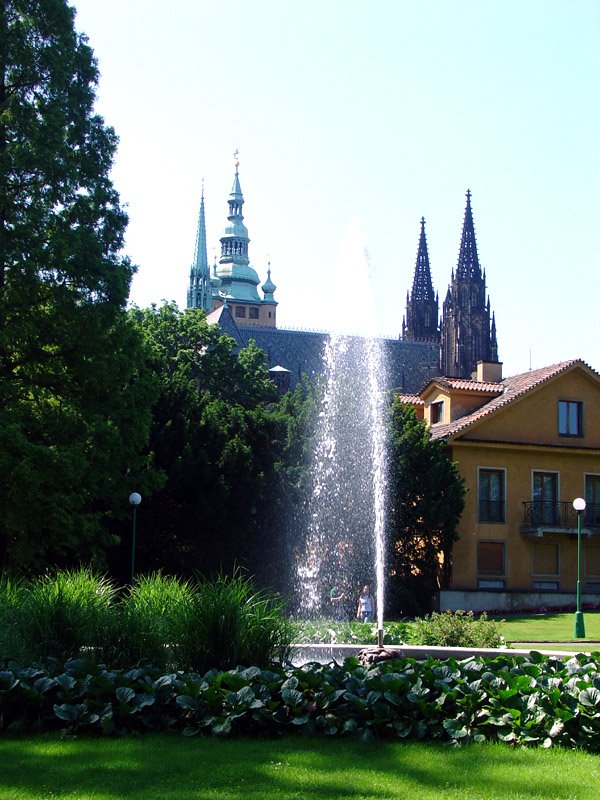
- Combine Visits The hospital’s Prague 6 location is near historical sites like Prague Castle, Strahov Monastery, and Břevnov Monastery.
- Dining & Accommodation Numerous hotels, restaurants, and shops are found in Břevnov and Dejvice districts.
- Safety Prague is generally safe, but remain vigilant in public spaces and keep valuables secure (explorecity.life).
FAQ
Q: What are the visiting hours?
A: Generally 2:00 PM to 6:00 PM daily, but confirm with the relevant department.
Q: Can tourists visit the hospital?
A: No, entry is for patients and their visitors only; it is not a tourist attraction.
Q: Is the hospital accessible to people with disabilities?
A: Yes, the hospital is fully accessible.
Q: How do I get there by public transport?
A: Use tram lines 1, 2, 18, or 25 to “Vojenská nemocnice” or buses 108/174.
Q: Is photography allowed?
A: No, photography is strictly prohibited inside the hospital.
Emergency Contacts
- Hospital Main Line +420 973 200 111
- Emergency Services 112 (EU-wide)
- Embassy Assistance Contact your embassy in Prague