Historical Background
Medieval Origins
Spálená Street predates the official founding of Prague’s New Town in 1348. Originally part of the Vyšehradská cesta, this medieval route connected Vyšehrad fortress to Prague Castle and the Old Town market, skirting the Vltava River’s flood-prone areas. Unlike the straight boulevards of Charles IV’s urban plan, Spálená retains its medieval, winding path.
Evolution of Street Names and Trades
Historically, Spálená reflected the trades flourishing along its length. In the 14th century, it was known as Kovářská (“Smiths’ Street”) after blacksmiths settled there, and later as Flašnéřská (“Tinsmiths’ Street”) with the arrival of tinsmiths. These names highlight the street’s vital role in Prague’s medieval economy.
The Great Fire of 1506
On June 3, 1506, a catastrophic fire destroyed at least twenty houses along the street. The tragedy led to the street’s renaming as “Spálená,” officially recorded by 1518. The cooperative effort to combat the fire, including members of the Jewish community, underscores the area’s spirit of resilience and solidarity.
Architectural and Urban Significance
Baroque, Art Nouveau, and Functionalism
Spálená’s urban landscape evolved through the Baroque period and underwent transformation in the 19th and 20th centuries. The Art Nouveau Česká pojišťovna (Czech Insurance Company) building by Osvald Polívka is a standout, preserving the street’s architectural heritage. The Olympic building, an exemplar of 1920s functionalism, further contributes to the area’s eclectic character.
Brutalist Legacy and Modern Developments
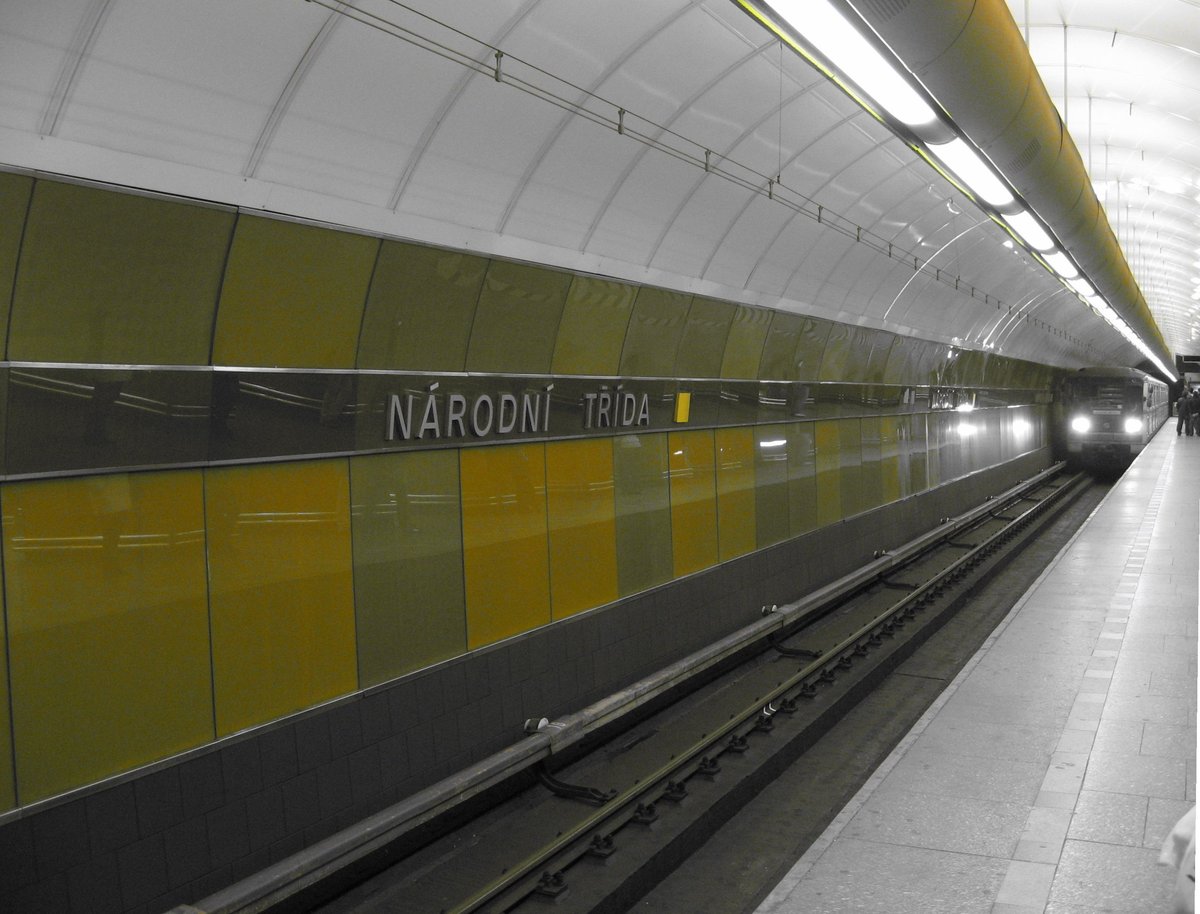
The 1970s brought significant change with the addition of the Národní třída metro station and the Máj department store (now Tesco), a striking Brutalist landmark inspired by Paris’s Centre Pompidou. Spálená’s architecture now embodies centuries of stylistic evolution and the debates surrounding the preservation of communist-era buildings (Mark Baker Prague).
Visiting Spálená Street
Hours and Tickets
Spálená Street is a public thoroughfare with 24/7 access and no entrance fees. Notable buildings and cultural venues along the street, such as the Máj department store, operate during regular business hours (typically 9:00 AM to 8:00 PM). For special exhibitions or guided tours, check the respective venue’s website for details.
Accessibility
The street is generally accessible for people with disabilities, though some historic pavements may be uneven. Most public transport options serving Spálená—including trams (lines 9, 18, 22) and the metro B line at Národní třída—are wheelchair-friendly.
Getting There
- By Metro Národní třída station (Line B) is at the eastern end of Spálená.
- By Tram Lines 9, 18, and 22 run through or near Spálená.
- On Foot Central location makes Spálená a short walk from Old Town Square and Wenceslas Square.
- Cycling Some bike lanes are available, though traffic can be busy during peak hours.
Cultural and Social Context
Festivals, Events, and Art
Spálená is woven into Prague’s cultural calendar. Events like Open House Prague offer access to historic buildings, while Karlovo náměstí nearby hosts open-air concerts and festivals (Fun in Prague). Public art installations and murals enliven the street, reflecting Prague’s creative energy (Visit Czechia).
Memory, Protest, and Social Change
Proximity to Národní třída places Spálená at the heart of the Velvet Revolution of 1989. Today, plaques and public art commemorate these pivotal events (Cruising Duo). The ongoing debate over preserving or demolishing Brutalist structures is closely tied to broader questions of memory and national identity (Mark Baker Prague).
Dining, Shopping, and Local Experiences
Food and Drink
Spálená and its vicinity offer a diverse culinary scene, from traditional Czech pubs serving classics like svíčková and goulash to modern cafés and international eateries. Prices are generally more affordable than the Old Town Square area. Don’t miss local microbreweries and independent coffee shops (Time Out Prague).
Shopping
The street features a mix of convenience stores, bookshops, and boutiques. The nearby Quadrio shopping center provides international brands, while local shops offer unique Czech souvenirs and design goods.
Markets and Local Life
While Spálená doesn’t host major markets, it’s a short tram ride to Náplavka, the riverside market popular with locals for fresh produce and artisanal treats (Time Out Prague).
Nearby Historical and Cultural Attractions
- Old Town Square & Astronomical Clock 10-minute walk.
- Charles Bridge 15-minute walk through Old Town.
- National Theatre Close to Národní třída.
- Vyšehrad Fortress Accessible by tram or a longer stroll.
Practical Visitor Tips
- Transport Use the Národní třída metro stop and tram lines for easy access.
- Tickets Purchase public transport tickets at kiosks or via mobile apps (Headout).
- Accommodation Numerous hotels and apartments are within a 5–10 minute walk, including Bishop’s House and Golden Well Hotel (33 Travel Tips).
- Safety Remain alert for pickpockets, especially in crowded areas (The Invisible Tourist).
- Language English is widely spoken, but a few Czech phrases are appreciated.
- Money Use ATMs for the best exchange rates. Some smaller shops and cafés are cash-only (Headout).
- Accessibility Most of Spálená is accessible, though historic buildings may have limitations.
Seasonal Considerations and Events
- Best Time to Visit Spring (April-May) and early autumn (September-October) offer pleasant weather and fewer crowds (Headout).
- Events Open House Prague, Christmas and Easter markets, and numerous concerts are easily accessible from Spálená (Time Out Prague).
Frequently Asked Questions (FAQ)
Q: Does Spálená Street have specific visiting hours or require tickets?
A: No, Spálená is a public street open 24/7 without entrance fees.
Q: What transport options are available to reach Spálená?
A: The street is served by the Národní třída metro (Line B) and tram lines 9, 18, and 22.
Q: Is Spálená Street safe for tourists?
A: Yes, but remain cautious of pickpockets in busy areas.
Q: What nearby historical sites can I visit?
A: Old Town Square, Charles Bridge, National Theatre, and Vyšehrad Fortress are all close.
Q: Are there accessible facilities?
A: Most of the street and public transport are accessible, but some historic sites may have limited access.