
Historical Development of Barrandov Bridge
Origins and Urban Planning
The post-World War II era saw Prague rapidly expand, both in population and industry. The resulting pressure on the city’s infrastructure prompted the conception of Barrandov Bridge in the late 20th century, intended as an integral part of the city’s outer ring road (Pražský okruh). This outer ring was designed to divert traffic from the historic center, helping to preserve its architectural heritage and reduce congestion (IPLiveCams).
Construction Timeline
Work on Barrandov Bridge began in the late 1970s. The southern section opened in 1983, with full completion in 1988. This phased approach facilitated integration with Prague’s evolving road network while minimizing disruptions (Wikipedia; Art-Facts).
Naming and Cultural Ties
Named after the Barrandov district, the bridge also pays homage to French geologist Joachim Barrande, noted for his paleontological work in the area. The district’s fame is further enhanced by the Barrandov Film Studios, a hub of Czech cinema (Where Tiana Travels).
Architectural Significance
Design and Style
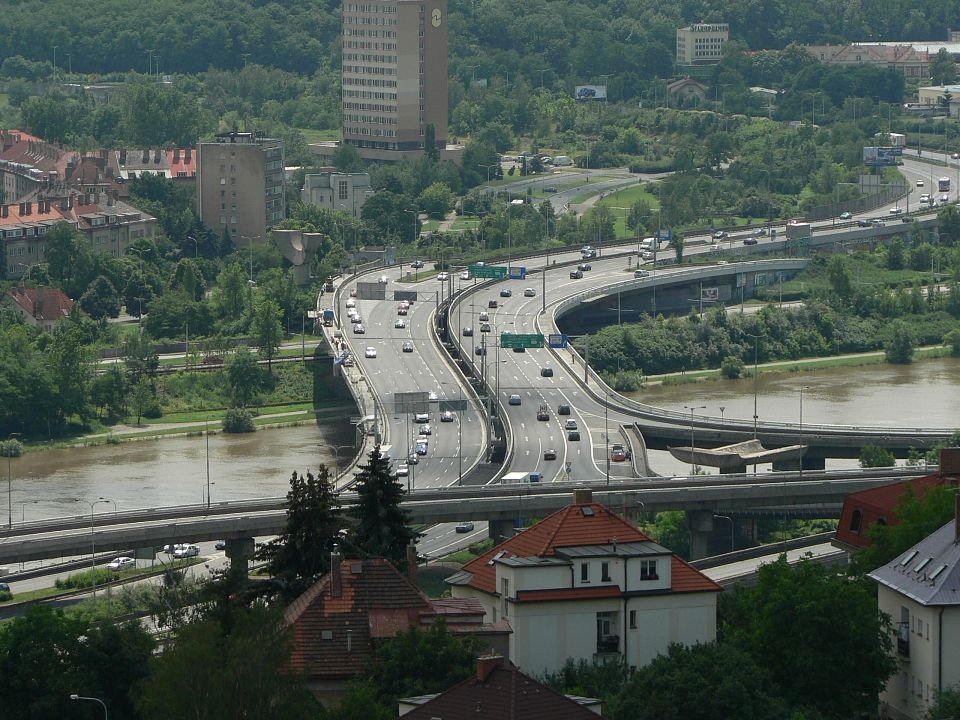
Barrandov Bridge, crafted by Karel Filsak, is a prime example of Brutalist architecture—emphasizing geometric forms, exposed concrete, and a focus on function over ornament. This style reflects the socio-economic realities of its era, prioritizing durability and utility (Prague Now).
Structural Features
- Material Reinforced concrete for optimal strength and longevity
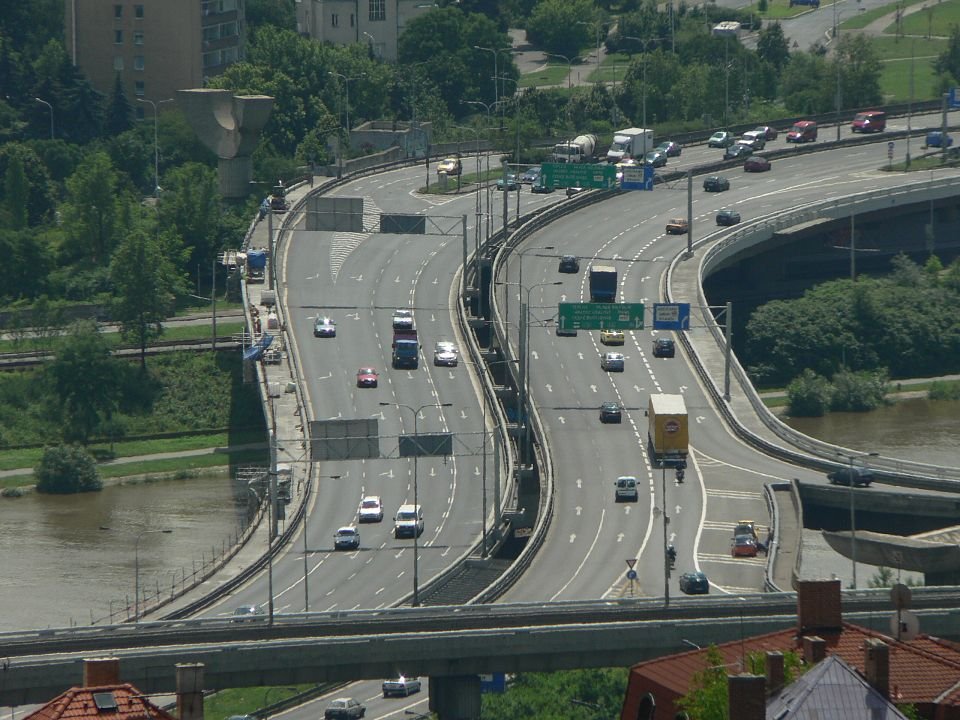
- Dimensions Approx. 352 meters long and up to 55 meters wide, accommodating eight traffic lanes and pedestrian walkways
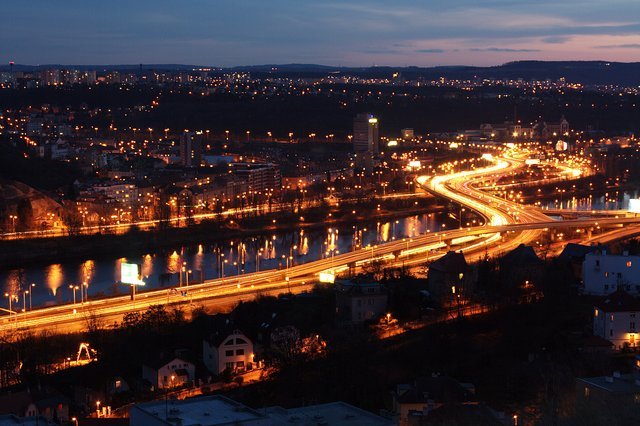
- Traffic Over 136,000 vehicles daily, making it the busiest bridge in the country and among the busiest in Central Europe
- Connectivity Links Barrandov and Smíchov with strategic ramps and interchanges (Wikipedia)
Engineering Innovations
The piers are deeply anchored in the Vltava’s riverbed, ensuring resilience against natural forces and floods. The bridge’s capacity was designed with future urban growth in mind (IPLiveCams).
Artistic Elements
Josef Klimeš’s abstract concrete sculptures, including the playful “Hippo Bath” (Hroší lázeň), add a unique artistic touch, making the bridge memorable beyond its function (Prague Now).
Role in Prague’s Transportation Network
Barrandov Bridge is a linchpin in Prague’s transport system, supporting both local and through traffic. It provides essential links to highways toward Germany and Austria and is traversed by multiple bus lines, with future plans for tram expansion (IPLiveCams).
Visitor Information
Visiting Hours and Access
Barrandov Bridge is open 24/7 to pedestrians and cyclists. There is no entry fee, and access is available year-round.
Tickets and Guided Tours
No tickets are required to cross the bridge. While there aren’t official bridge-specific tours, many Prague city tours highlight Barrandov Bridge as a point of interest. Nearby, the Barrandov Film Studios and Barrandov Terraces are worth exploring.
Accessibility
The bridge’s pedestrian walkways are wheelchair and stroller-friendly, with ramps connecting to surrounding neighborhoods. Ample public transportation options ensure easy access from central Prague.
Travel Tips
- Photography Early morning or late afternoon light provides the best conditions for capturing the bridge’s textures and views.
- Transport Nearby tram and bus stops facilitate visits; parking is limited.
- Renovations Ongoing works may result in temporary restrictions—check for updates before your visit (PORR Press Release).
Nearby Attractions
- Barrandov Film Studios Dive into Prague’s storied cinematic history.
- Barrandov Terraces Explore a functionalist architectural gem under restoration.
- Vltava Riverbanks Enjoy riverside parks, walking, and cycling trails.
Recent Renovations
Renovation of Barrandov Bridge began in 2022, focusing on resurfacing, concrete repairs, waterproofing, and reinforcement. The project aims to extend the bridge’s life by up to 30 years, with traffic lanes maintained to reduce disruption (Expats.cz).
Visuals and Media
Visitors can find striking photos of Barrandov Bridge’s architecture, panoramic views, and its unique sculptures online. Interactive maps, live traffic cameras, and virtual tours are available via official Prague tourism resources.
Frequently Asked Questions (FAQ)
Q: When can I visit Barrandov Bridge?
A: The bridge is open to pedestrians and cyclists 24/7.
Q: Is there an entry fee?
A: No, access is free for all users.
Q: Are guided tours available?
A: Not specifically for the bridge, but some city tours include it as a highlight.
Q: How do I get there from central Prague?
A: Multiple bus and tram lines serve the area; walking and cycling routes are also accessible.