
History of Krannerova kašna
Origins and Initial Planning
The idea to erect a monument in honor of Emperor Francis I of Austria was conceived shortly after his death in 1835. The planning phase was extensive, involving numerous discussions and design considerations before the project was finally set in motion.
Construction and Design
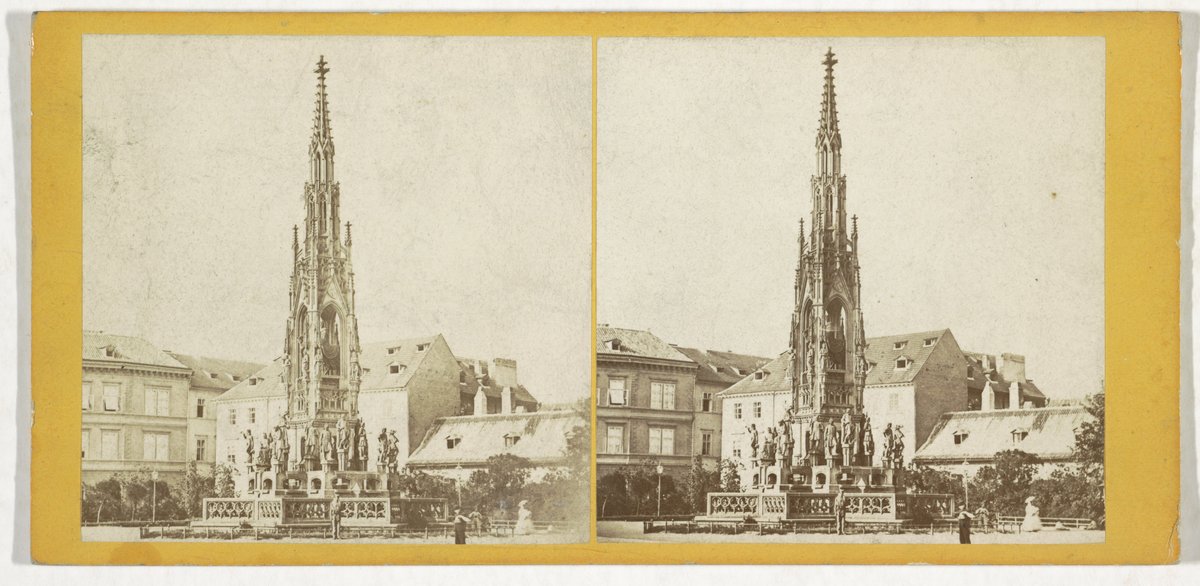
The construction of Krannerova kašna took place between 1844 and 1846, under the direction of Czech architect Josef Kranner. The project also saw the involvement of stonemason Karel Svoboda and German-Czech sculptor Josef Max, who was responsible for the 26 statues that adorn the monument (A View On Cities). The monument was officially unveiled on May 30, 1850, marking a significant event in the city's history.
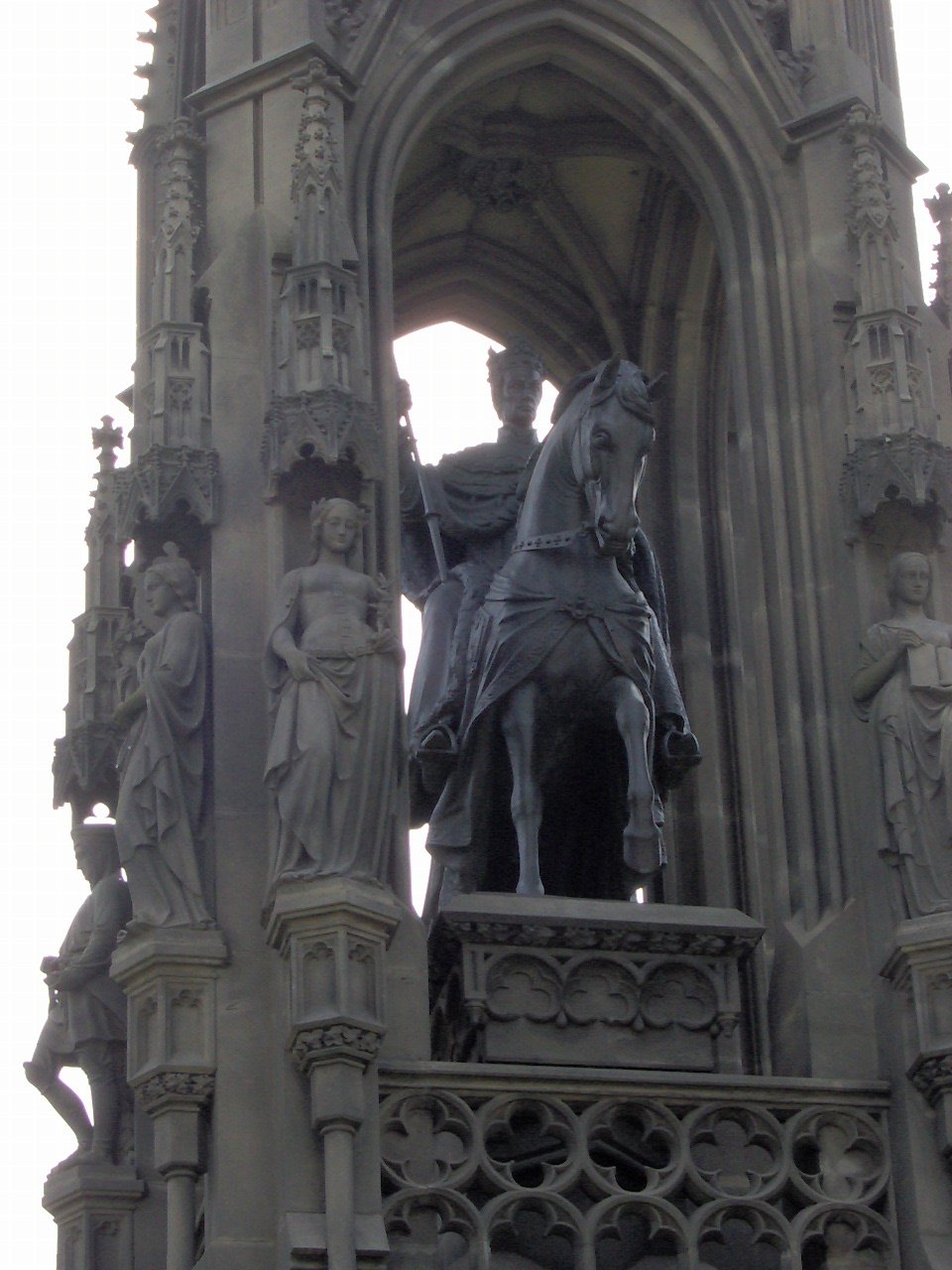
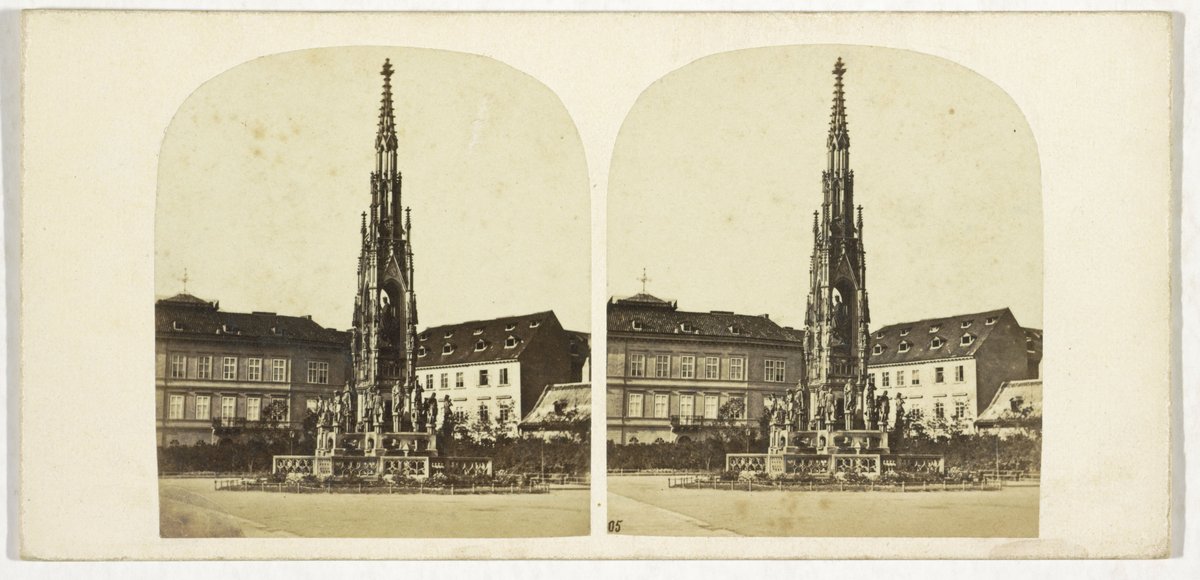
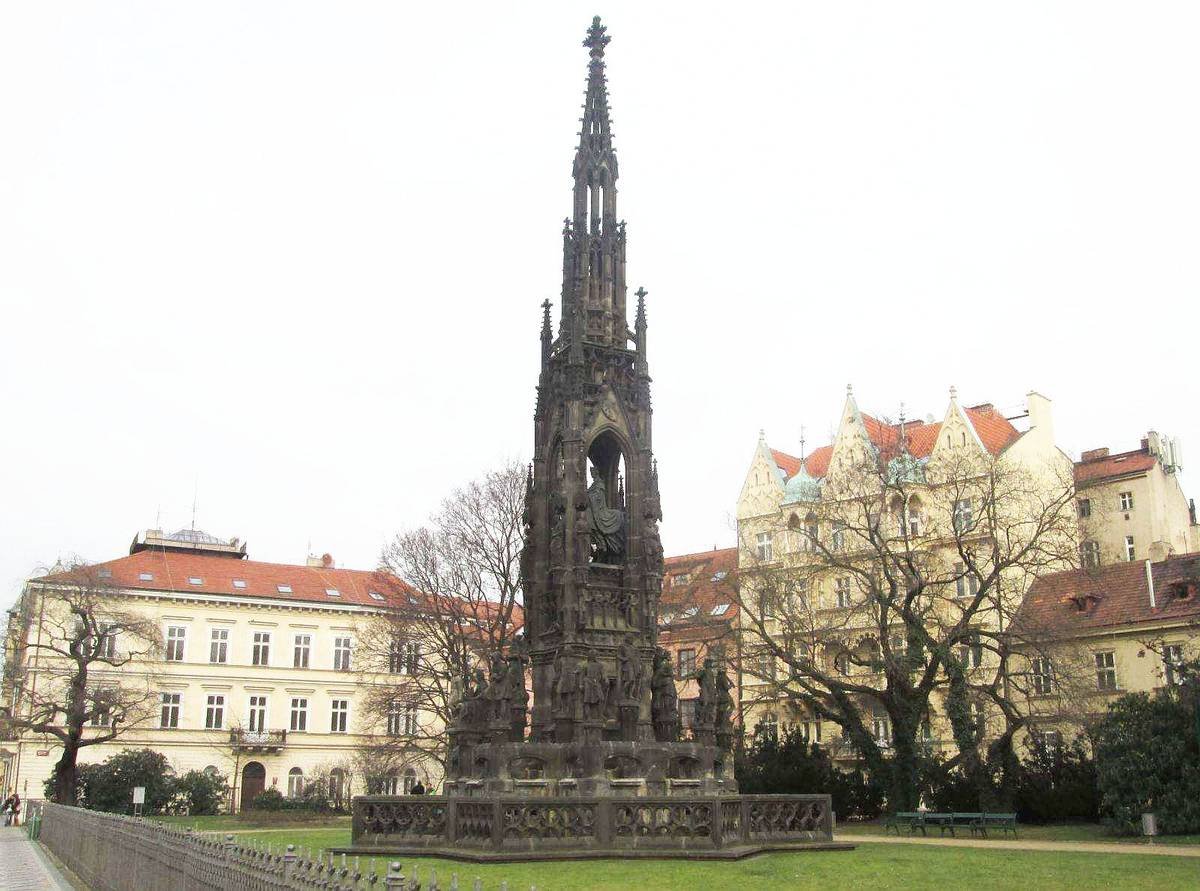
The design of Kranner's Fountain is a testament to the neo-Gothic architectural style. It features two balustraded tiers encircling a tall canopy that shelters an equestrian statue of Francis I. The bottom tier is an eight-pointed star-shaped plateau surrounded by a balustrade, which acts as a shallow pool. Water cascades from the central base of the canopy into a basin on the second tier and then into the pool (A View On Cities).
Allegorical Sculptures
One of the most striking features of Krannerova kašna is its collection of allegorical sculptures. The monument includes 16 statues representing various Czech regions, with an additional statue symbolizing Prague. These statues are positioned on pedestals around the second tier. In the center, against the four pillars supporting the main canopy, stand another eight allegorical statues, each under a small canopy of their own. These statues symbolize Science, the Arts, Trade, Agriculture, Mining, Industry, Peace, and Abundance (A View On Cities).
Political Symbolism and Controversy
Krannerova kašna was not just an architectural marvel but also a political symbol. It represented the power of the Habsburg monarchy, which was not well-received by Czech nationalists. After the foundation of Czechoslovakia in 1918, the statue of Emperor Francis I was removed and stored in the Lapidarium. This act was a significant political statement, reflecting the changing sentiments of the time (A View On Cities).
Restoration and Modern Era
The monument underwent significant changes after 1989. In 2003, a modern plaster copy of the equestrian statue of Francis I was reinstalled in the fountain, thanks to the initiative of Vladimír Vihan, the then-mayor of Prague 1. This reinstallation aimed to move past ideological views on historical monuments. The original statue remains in the Lapidarium (Wikipedia).
Visitor Information
Visiting Hours
Krannerova kašna is accessible to the public 24/7, allowing visitors to admire this historical monument at any time of the day.
Ticket Prices
There is no entrance fee to visit Krannerova kašna, making it an ideal spot for budget-conscious travelers.
How to Get There
The monument is located near the Smetana embankment along the Vltava River in Prague's historic center. It is easily accessible by public transportation, including trams and buses.
Accessibility
Krannerova kašna and the surrounding Park of the National Awakening are accessible to visitors with disabilities. The pathways are well-maintained, ensuring a comfortable visit for everyone.
Nearby Attractions
While visiting Krannerova kašna, you can also explore nearby attractions such as the Charles Bridge, the National Theatre, and the Old Town Square, all of which are within walking distance.
Special Events and Tours
Although there are no regular guided tours specifically for Krannerova kašna, the monument is often included in broader walking tours of Prague. Keep an eye out for special events hosted in the Park of the National Awakening, particularly during the summer months.
Best Photographic Spots
For photography enthusiasts, the best spots to capture the monument are from the Smetana embankment and the surrounding park. The intricate details of the neo-Gothic architecture and the allegorical statues offer excellent opportunities for stunning photographs.
FAQ Section
What are the opening hours of Krannerova kašna?
Krannerova kašna is open to visitors 24/7.
Is there an entrance fee?
No, there is no entrance fee to visit Krannerova kašna.
Are there guided tours available?
While there are no specific guided tours for Krannerova kašna, it is often included in broader walking tours of Prague.
How do I get to Krannerova kašna?
The monument is located near the Smetana embankment along the Vltava River and is easily accessible by public transportation.