Origins and Construction of the Palace Mosque
Commissioned by Shirvanshah Khalilullah I after the dynasty’s capital moved from Shemakha to Baku due to a devastating earthquake, the Palace Mosque was constructed between 1441 and 1442. Inscriptions found on the mosque’s minaret and tomb confirm its dating. The mosque was designed to serve the religious needs of the royal family and court, while underscoring the Shirvanshahs’ role as spiritual patrons, particularly of the Helwati Sufi order. Its proximity to the mausoleum of Seyyid Yahya Bakuvi, a revered Sufi saint and court astrologer, highlights its dual function as a place of worship and a dynastic memorial (Wikipedia, History Hit).
Architectural Features and Layout
Exterior and Structural Layout
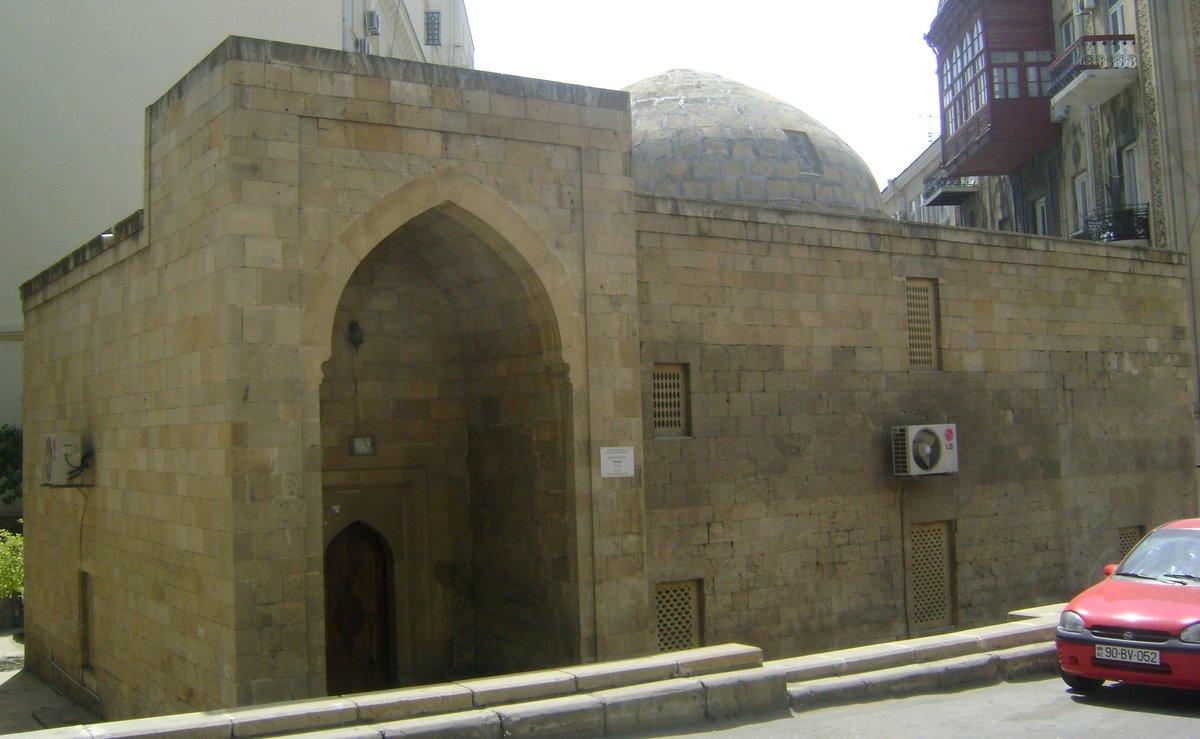
The mosque is constructed from locally quarried limestone, giving it a warm, honey-colored appearance. Its silhouette is defined by two domes—a larger central dome and a smaller secondary dome—resting on octagonal drums, and a single, slender minaret rising 22 meters high. The domes’ modest, unadorned surfaces and harmonious proportions reflect the Sufi-influenced austerity of the Shirvanshah dynasty (myguide.az, eurasia.travel).
The entrance portal is marked by a pointed archway, adorned with intricate stone carvings and Arabic calligraphy. The façade’s ornamentation is focused around the entrance and windows, allowing the building’s proportions and craftsmanship to take center stage.
Minaret and Decorative Elements
The northeast corner minaret, capped with a muqarnas (stalactite) cornice, features an inscription commemorating its construction under Khalilullah I. The shaft is slender and cylindrical, with decorative bands and a small balcony for the muezzin’s call to prayer. Throughout the mosque, stone carving is the primary mode of decoration, with arabesques, calligraphy, and geometric patterns accentuating key areas (eurasia.travel).
Interior Layout
Inside, the mosque is divided into two prayer halls—a larger space for men and a smaller, more intimate area for women—separated by a partition wall and accessed through separate entrances. The mihrab (prayer niche) is modestly decorated, emphasizing spiritual contemplation over opulence. The interior is enhanced by shebeke—intricately carved stone latticework on the windows—that casts geometric patterns of light and shadow across the prayer halls (eurasia.travel).
Historical Role and Religious Significance
The Palace Mosque was central to the religious life of the Shirvanshah court, hosting daily prayers, royal ceremonies, and significant religious observances. Its adjacency to the mausoleum of Seyyid Yahya Bakuvi and royal burial vaults further cemented its spiritual and dynastic significance. The mosque’s foundation on a site of earlier sacred importance reflects the continuity of religious traditions within Icherisheher (Google Arts & Culture).
Restoration and Preservation
After the fall of the Shirvanshah dynasty in 1501, the mosque experienced periods of neglect and partial ruin, with intermittent restoration during Ottoman rule and damage during the Russian invasion of 1723. The 20th and 21st centuries have seen significant conservation efforts, including major archaeological excavations and dedicated restoration projects—most notably completed in 2006—aimed at preserving the mosque’s architectural integrity (Wikipedia). These efforts are overseen by the State Historical-Architectural Reserve Administration “Icherisheher” (SHAHAR), ensuring ongoing maintenance and community engagement (Google Arts & Culture).
Visiting Hours, Ticket Information, and Accessibility
- Opening Hours Daily, 9:00 AM – 6:00 PM. Last admission is at 5:30 PM. Hours may vary during public holidays or special events (Holidify).
- Tickets Entry to the Palace Mosque is included in the Shirvanshahs’ Palace complex ticket. Prices are approximately 15 AZN for adults, with discounts for students and seniors. Children’s tickets are available at a reduced rate.
- Purchase Tickets can be bought on-site (cash in AZN preferred; some counters accept credit cards) or online through official tourism platforms.
- Guided Tours Available in multiple languages for an additional fee. Booking in advance is recommended during peak seasons.
- Accessibility Ramps and assistance are available at main entrances, though cobblestone streets and some steps may pose challenges. Contact site administration in advance for special support.
Travel Tips and Nearby Attractions
- Dress Code Modest attire is recommended—shoulders and knees covered for all, headscarves for women. Shoes may need to be removed before entering the mosque interior.
- Photography Generally allowed, but flash and tripods may be restricted. A nominal fee may apply; confirm at the ticket counter (Holidify).
- Best Time to Visit Early morning to avoid crowds or late afternoon for atmospheric lighting. Spring and autumn offer the most comfortable weather.
- Facilities Restrooms, information center, souvenir shops, and nearby cafes are readily available in the Old City (Lonely Planet).
- Nearby Sights The Maiden Tower, Divankhana ceremonial hall, and Shirvanshah’s Mausoleum are all within walking distance.
UNESCO World Heritage Status
The Palace Mosque, as part of the Shirvanshahs’ Palace complex, was inscribed on the UNESCO World Heritage List in 2000, together with the Maiden Tower and the surrounding Old City of Baku. This designation recognizes the complex’s outstanding universal value and its vital role in Azerbaijan’s cultural and architectural history.
Frequently Asked Questions (FAQ)
What are the Palace Mosque’s opening hours?
Daily from 9:00 AM to 6:00 PM. Check ahead for seasonal or holiday changes.
How much do tickets cost?
15 AZN for adults; discounts for students, seniors, and children.
Are guided tours available?
Yes, in multiple languages. Booking in advance is advised during peak times.
Is the mosque accessible for visitors with disabilities?
Ramps and support are available, but some areas may be challenging due to historic surfaces.
Is photography allowed?
Yes, but avoid flash and tripods; confirm current policy on arrival.
Can I buy tickets online?
Yes, tickets are available through official platforms and at the entrance.