
History and Spiritual Legacy
The Bibi-Heybat Mosque’s origins date back to the early spread of Islam in the Caucasus. Built in the 13th century by Shirvanshah Farrukhzad II Ibn Ahsitan II and designed by architect Mahmud ibn Sad, the mosque stands over the venerated tomb of Ukeyma Khanum, a descendant of the Prophet Muhammad (ulduztourism.az). This sacred burial site has long been a pilgrimage destination, drawing Shiite worshippers seeking blessings and healing.
Over centuries, the mosque expanded and flourished as a spiritual and educational center, surviving turbulent periods that tested the faith and unity of Azerbaijan’s Muslim community (thrillophilia.com).
Architectural Evolution & Features
Exterior and Layout
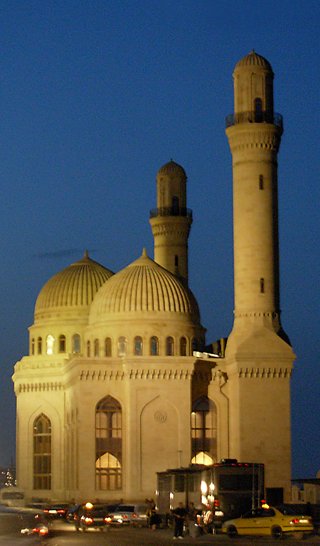
The mosque is a fine example of Shirvan-Absheron architectural style, characterized by its harmonious proportions, pale stone facades, and emerald-green domes. The octagonal layout supports a central dome, and slender minarets rise gracefully, adorned with Islamic calligraphy and blue tiles (This is Baku, Lets Go Baku).
Interior Ornamentation
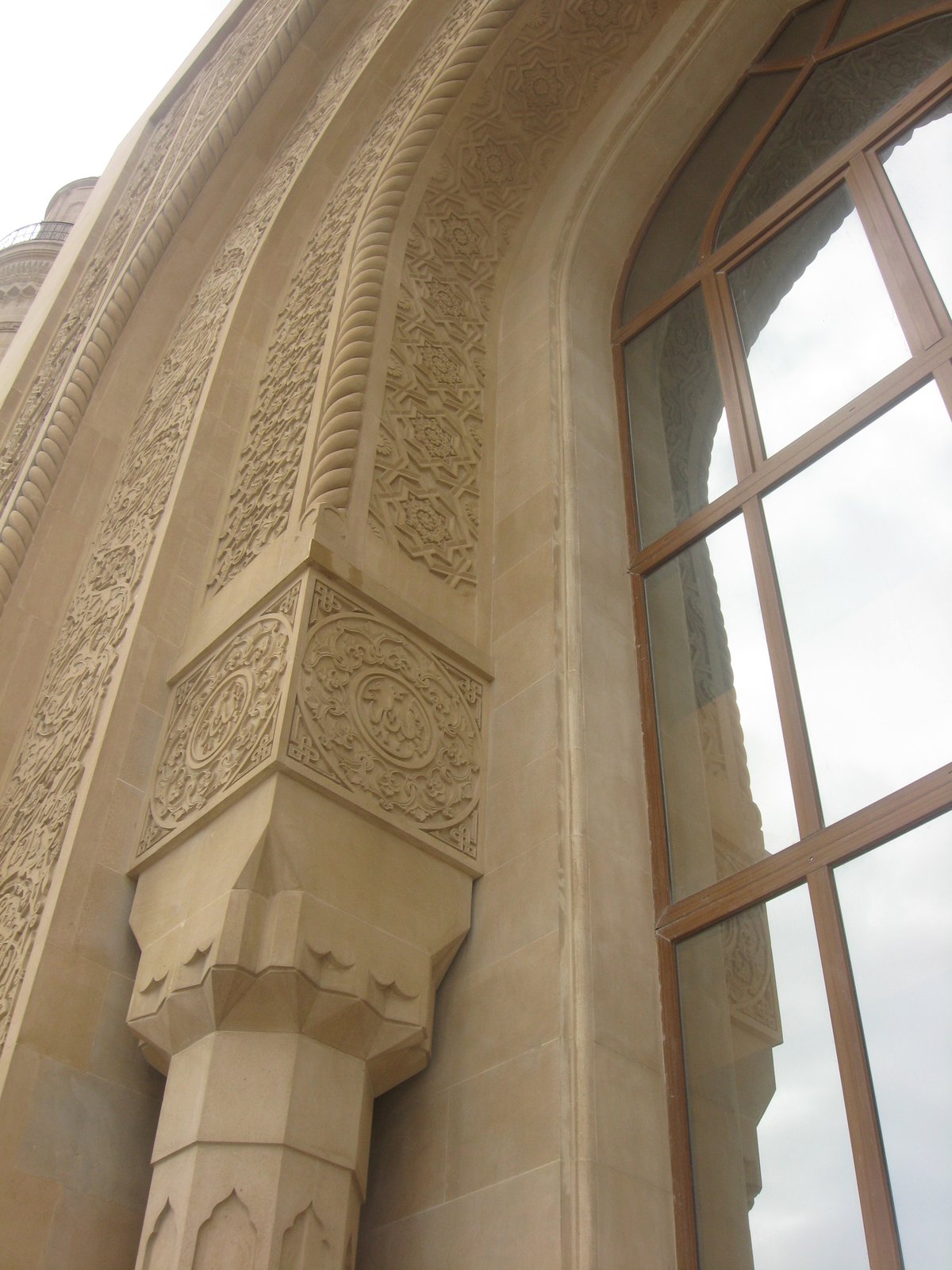
Inside, intricate tilework in green, blue, and gold, along with Quranic inscriptions, creates a serene ambiance. The prayer hall is spacious, with a soaring dome and richly inlaid wooden mihrab and minbar. Natural light streams through arched windows, illuminating the muqarnas and arabesques that decorate the ceiling (Live the World, Holidify).
Mausoleum
At the heart of the mosque lies the mausoleum of Ukeyma Khanum, the daughter of the seventh Shiite Imam, Musa al-Kadhim. The tomb is a focal point for pilgrims and is richly decorated with calligraphy and tilework, reinforcing the mosque’s status as a site of profound spiritual importance (Wikipedia).
Materials and Restoration
The mosque’s reconstruction in the 1990s employed traditional materials—local stone for the exterior and reinforced concrete for domes—while preserving the original artistry with the help of skilled Azerbaijani craftsmen (Azerbaijan Immigration).
Destruction and Restoration
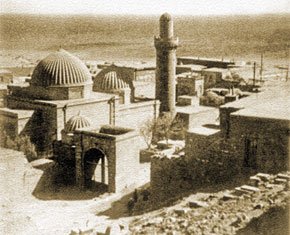
In 1936, during Soviet anti-religious campaigns, the original mosque was demolished—a profound cultural loss. After Azerbaijan’s independence, a government decree initiated its restoration. By 1999, the Bibi-Heybat Mosque was reopened, meticulously rebuilt using historical photographs, architectural plans, and oral histories. Its revival is celebrated as a symbol of national pride and religious resilience (ulduztourism.az).
Visitor Information
Opening Hours & Entry
- Hours Open daily, typically from 8:00 AM to 8:00 PM. During religious holidays, hours may vary (Holidify).
- Entry Free for all visitors; donations are appreciated but not required.
Accessibility
The mosque complex is wheelchair accessible, with ramps and paved paths. Some areas (such as the mausoleum or upper halls) may require assistance due to steps or uneven surfaces.
Dress Code & Etiquette
- Modest dress is mandatory: men should avoid shorts and sleeveless shirts; women should cover hair, arms, and legs. Scarves are available at the entrance.
- Shoes must be removed before entering prayer halls.
- Maintain respectful silence, especially during prayers.
- Photography is permitted outside and in the courtyard; inside, it is restricted during prayers or at the discretion of mosque staff.
Guided Tours
While there is no official guided tour program, local guides are often present at the entrance or can be arranged through tour operators. Tours offer insights into the mosque’s history, architecture, and significance.
Getting There
- By Taxi A 15–20 minute ride from central Baku, costing 8–15 AZN.
- By Public Transport Buses 20 and 125 serve the mosque area for under 1 AZN per ride.
- By Tour Many Baku city tours include Bibi-Heybat Mosque as a stop (Dook International).
Address: Bibiheybat Settlement, Sabail District, Baku, Azerbaijan.
Facilities & Amenities
- Restrooms and ablution areas are available for men and women.
- Separate prayer rooms for men (south side) and women (north side).
- A small shop at the entrance offers souvenirs and religious items.
- Free parking is available for cars and buses.
Special Events & Nearby Attractions
Special Events
The mosque hosts special prayers and ceremonies during major Islamic holidays, such as Ramadan and Muharram, attracting large gatherings.
Photographic Spots
Golden hour—just after sunrise or before sunset—offers beautiful lighting for photos of the mosque and panoramic views of the Caspian Sea and Baku skyline.
Nearby Attractions
- Caspian Sea Promenade Ideal for scenic walks.
- Baku Old City (Icherisheher) UNESCO World Heritage Site.
- Maiden Tower, Flame Towers, and Flag Square All within a short drive.
- Dining Local cafes and restaurants offer authentic Azerbaijani cuisine.
Practical Tips
- Azerbaijani is the official language, but Russian and English are commonly spoken in tourist areas.
- Local currency is the Azerbaijani Manat (AZN). Credit cards are widely accepted, but carry some cash for small purchases or donations.
- Summers are hot; bring sun protection and water.
- Plan visits for early morning or late afternoon to avoid crowds and midday heat.
Frequently Asked Questions (FAQ)
Q: What are the mosque’s visiting hours?
A: Typically 8:00 AM to 8:00 PM, with possible adjustments during religious holidays.
Q: Is there an entry fee?
A: No, entry is free for all.
Q: Are non-Muslims allowed?
A: Yes, non-Muslim visitors are welcome; please avoid the main prayer area during services.
Q: Is photography allowed?
A: Yes, outside and in the courtyard; inside, follow mosque guidelines and avoid photographing during prayers.
Q: Is the mosque wheelchair accessible?
A: The main entrance and courtyard are accessible; some areas may require assistance.
Q: Are guided tours available?
A: Local guides can often be found at the entrance or arranged via tour operators.