
History of Московские триумфальные ворота
Origins and Construction
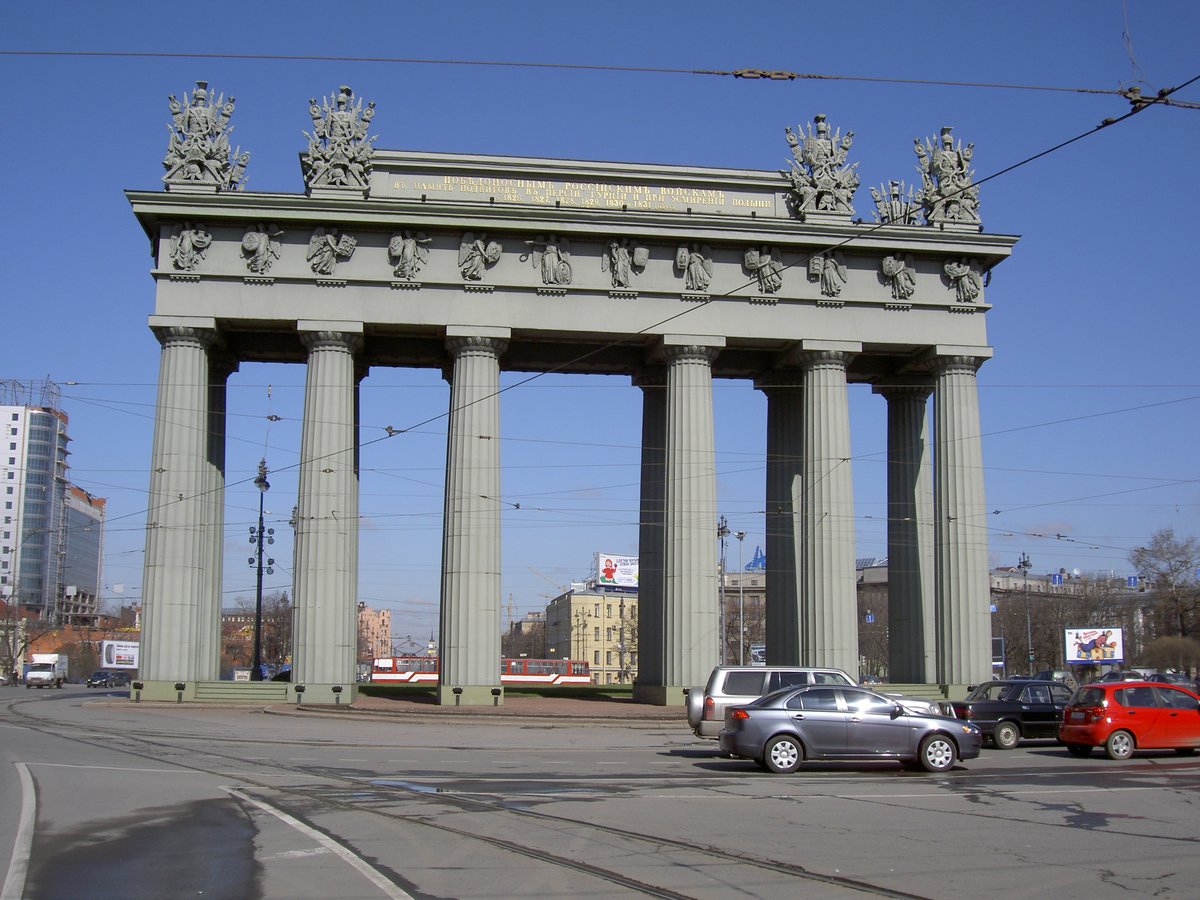
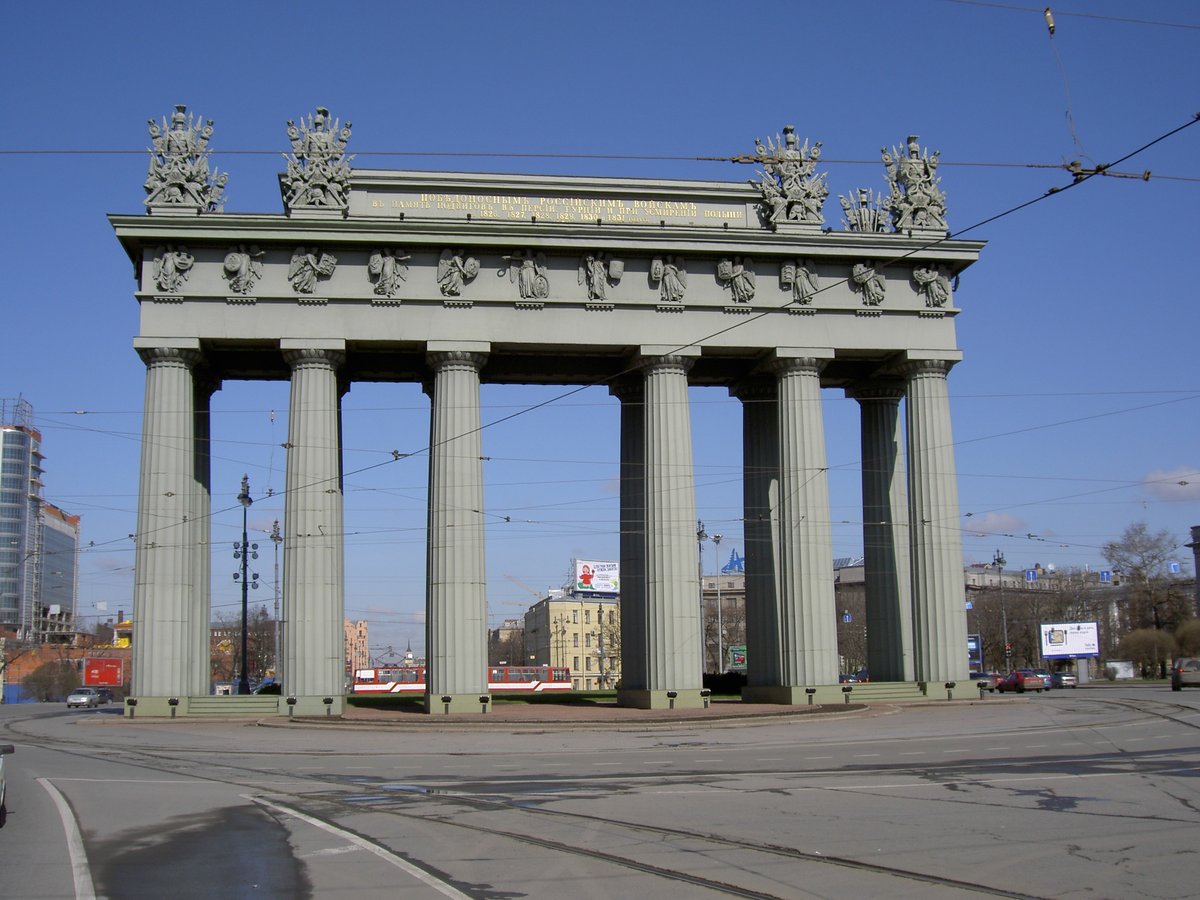
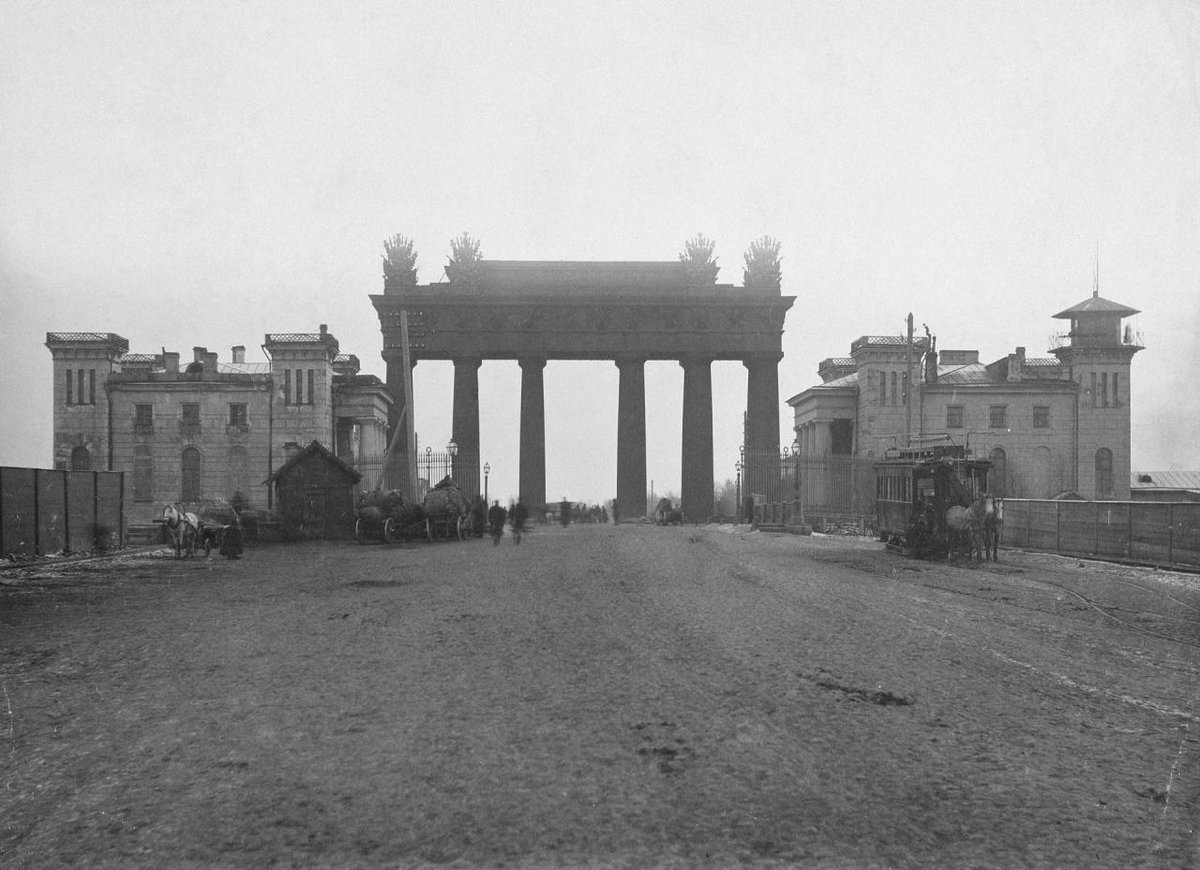
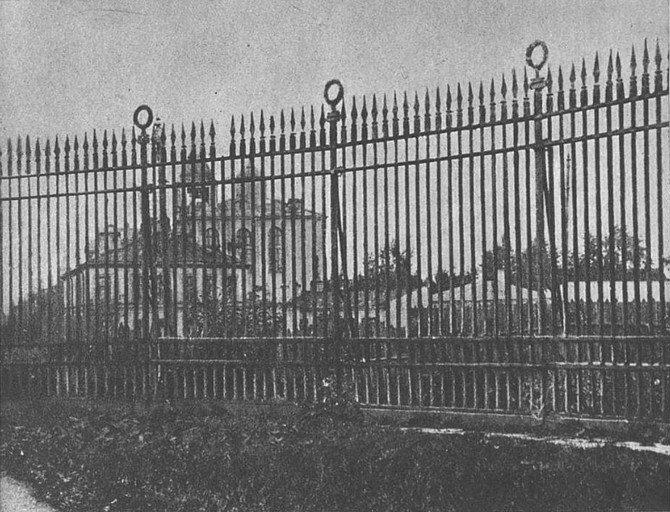
The gate was commissioned by Emperor Nicholas I to commemorate the Russian victory in the Russo-Turkish War of 1828-1829. The design was entrusted to the renowned architect Vasily Stasov, who was known for his neoclassical style. Construction began in 1834 and was completed in 1838. The gate was constructed using cast iron, a material that was innovative for monumental architecture at the time. The iron was sourced from the Alexandrovsky foundry, which was one of the leading foundries in Russia. The use of cast iron not only provided durability but also allowed for intricate decorative elements that were characteristic of Stasov's design.
Architectural Significance
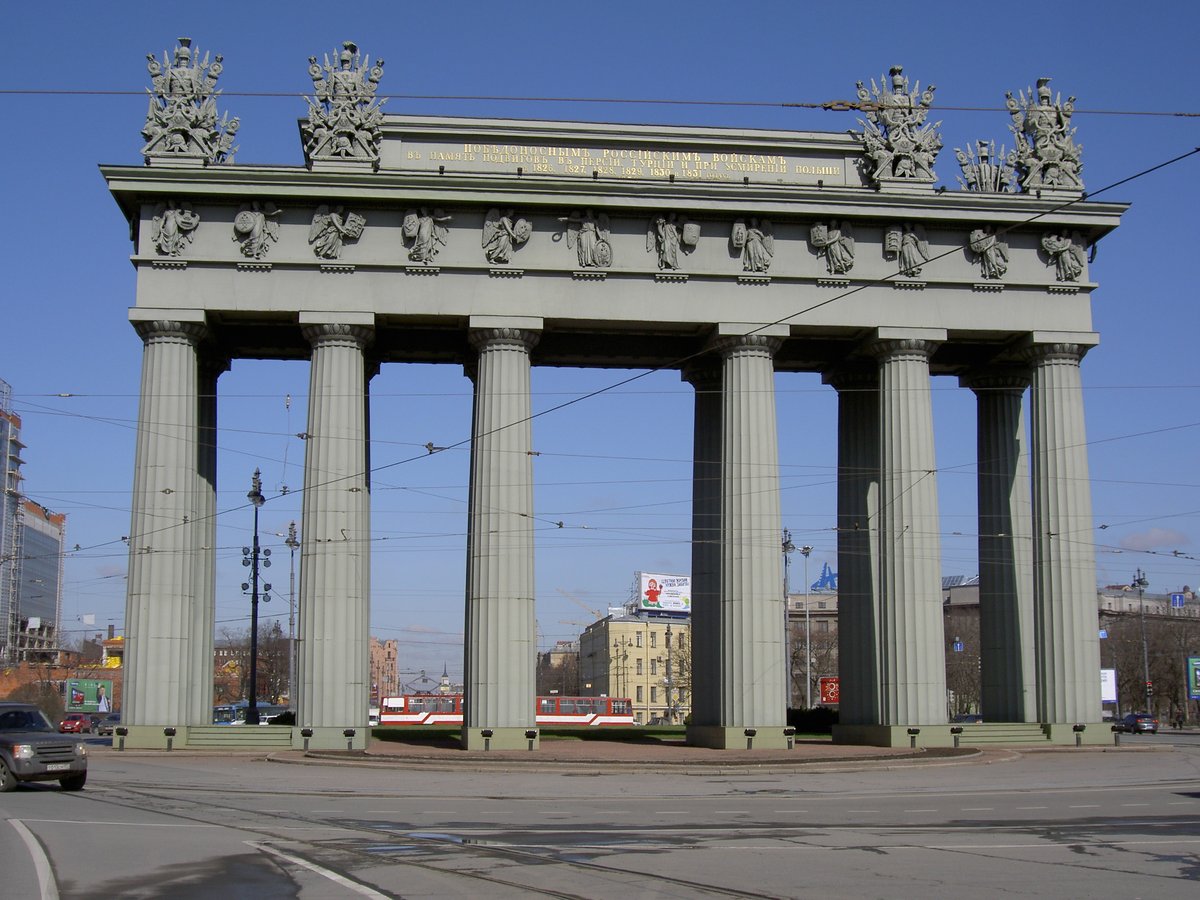
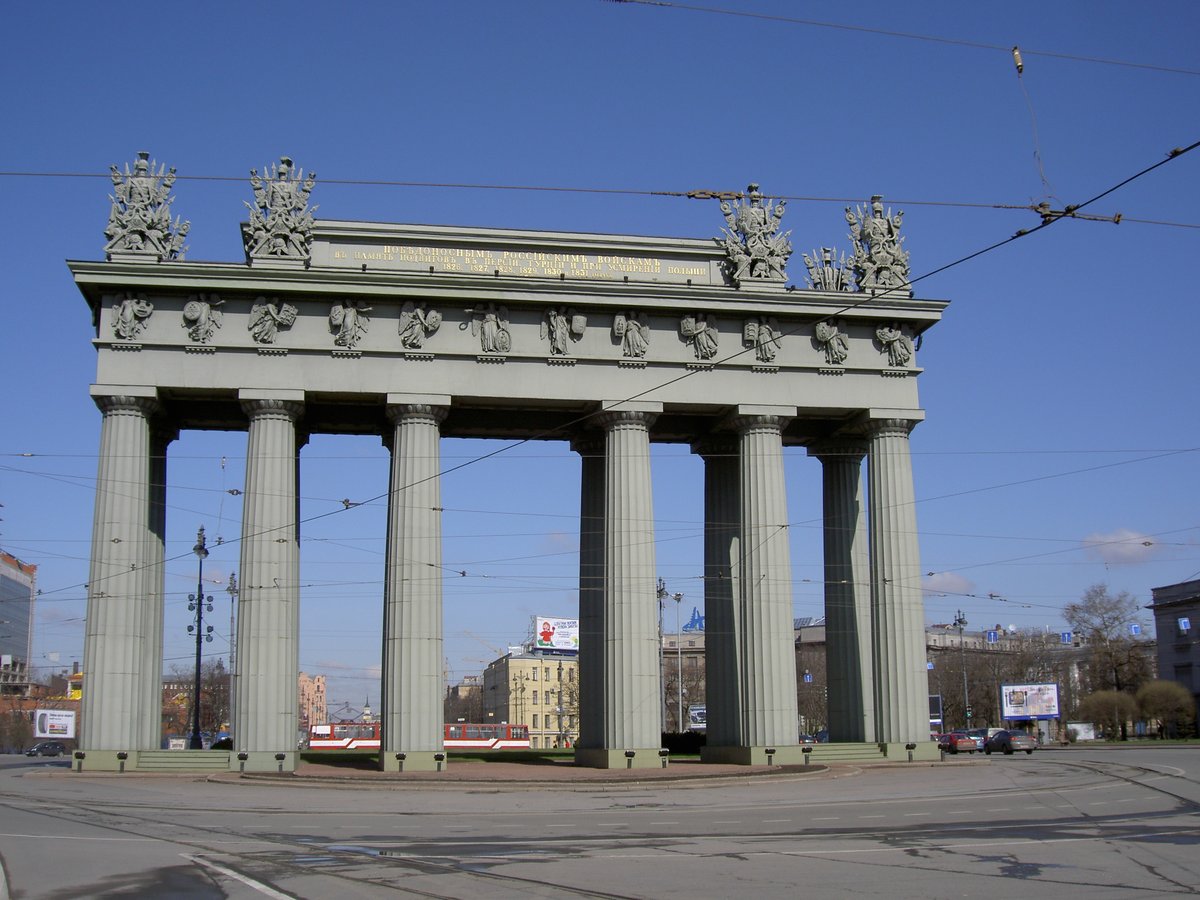
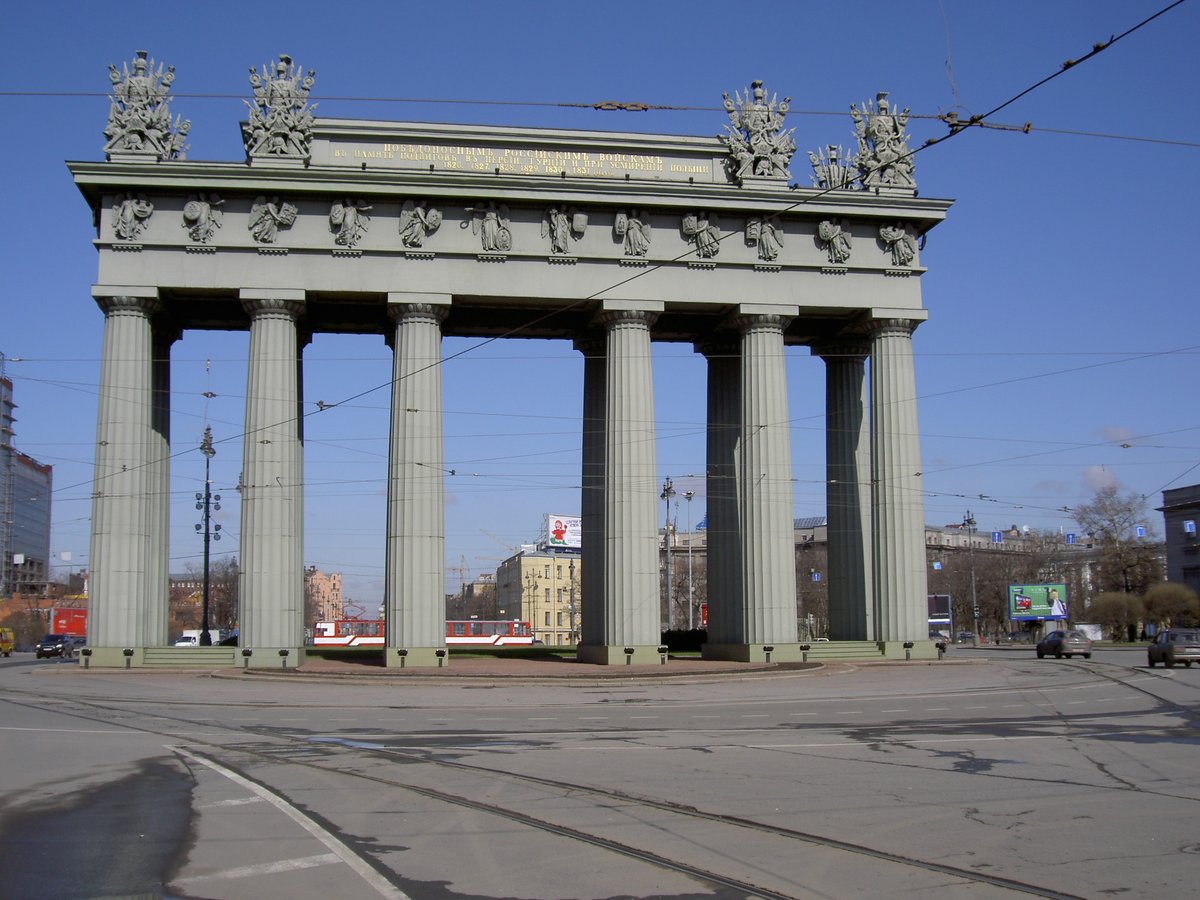
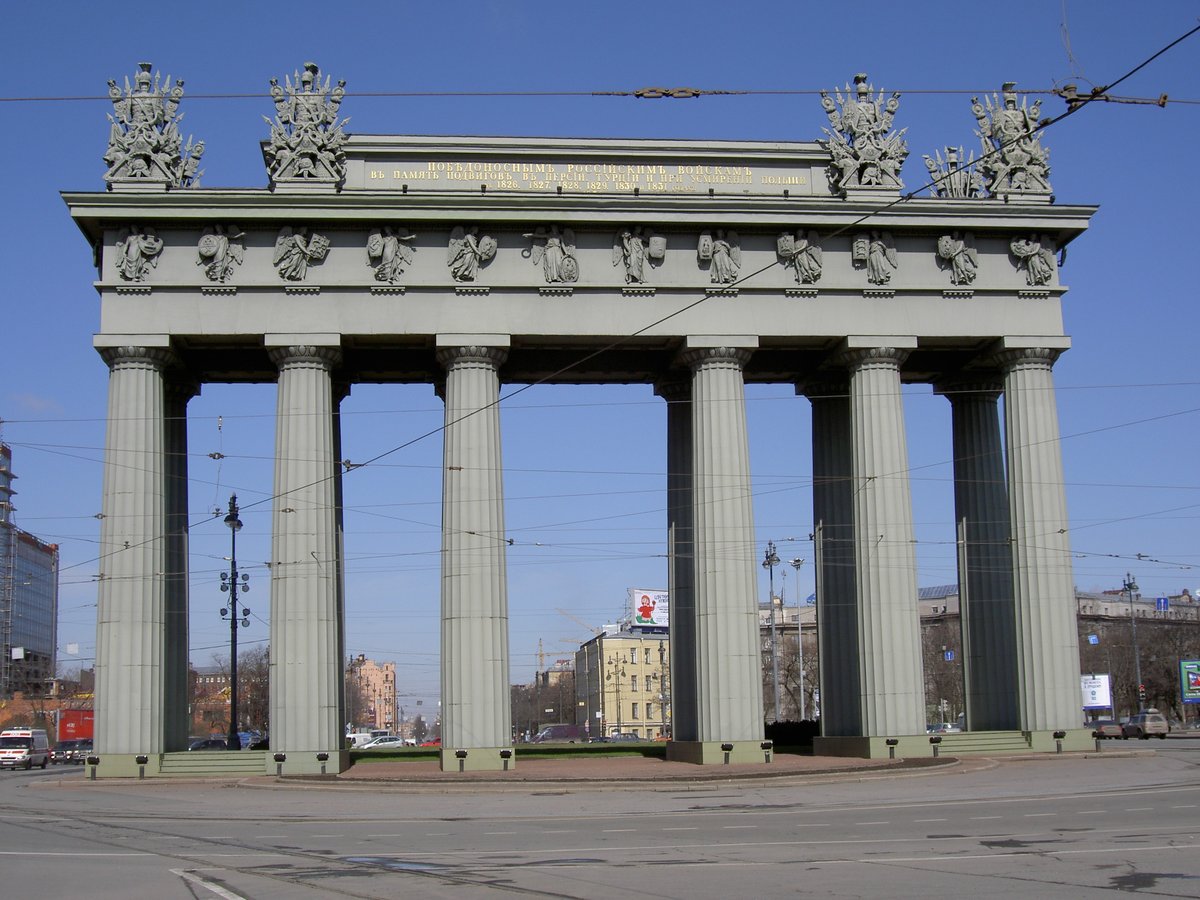
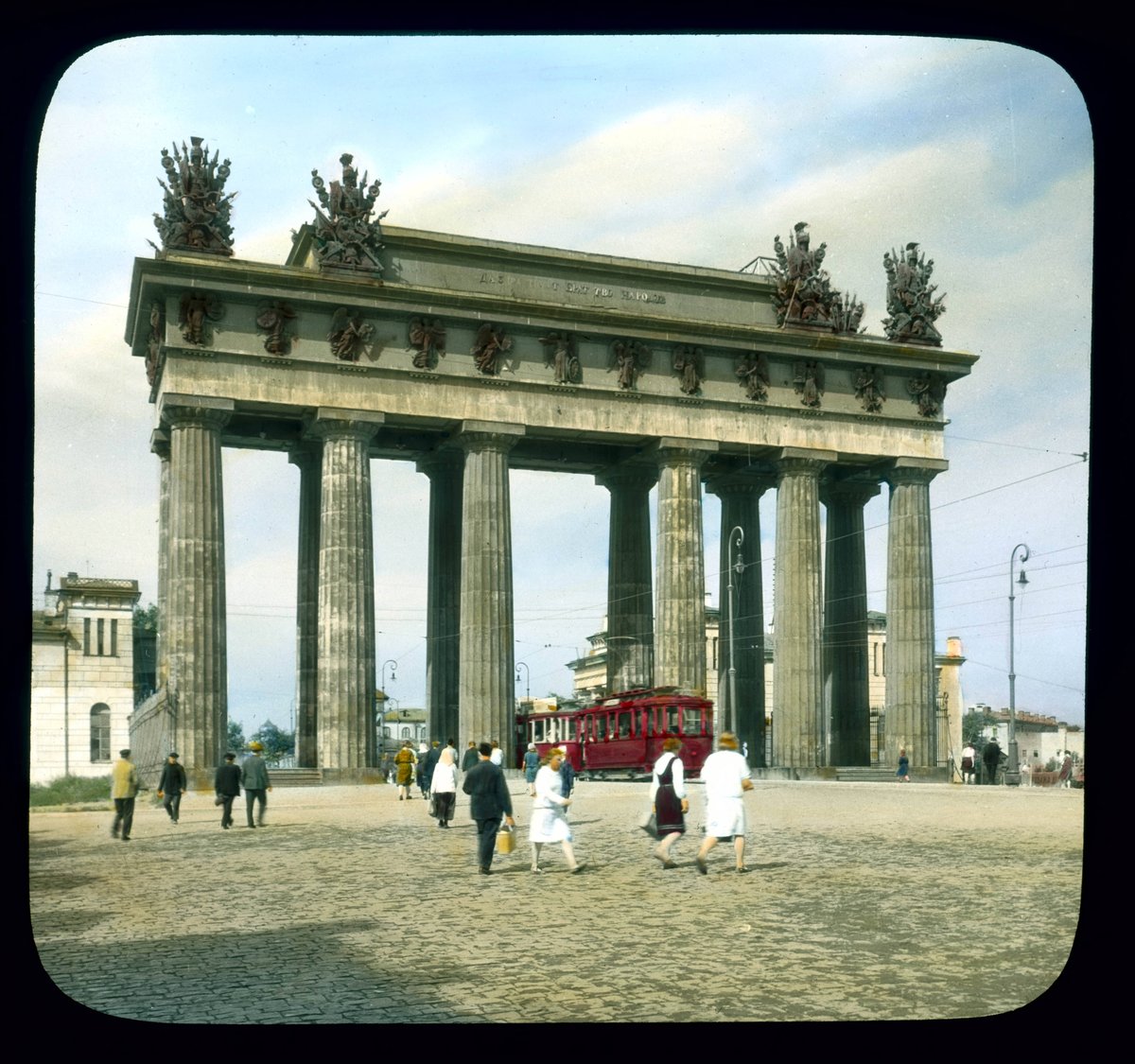
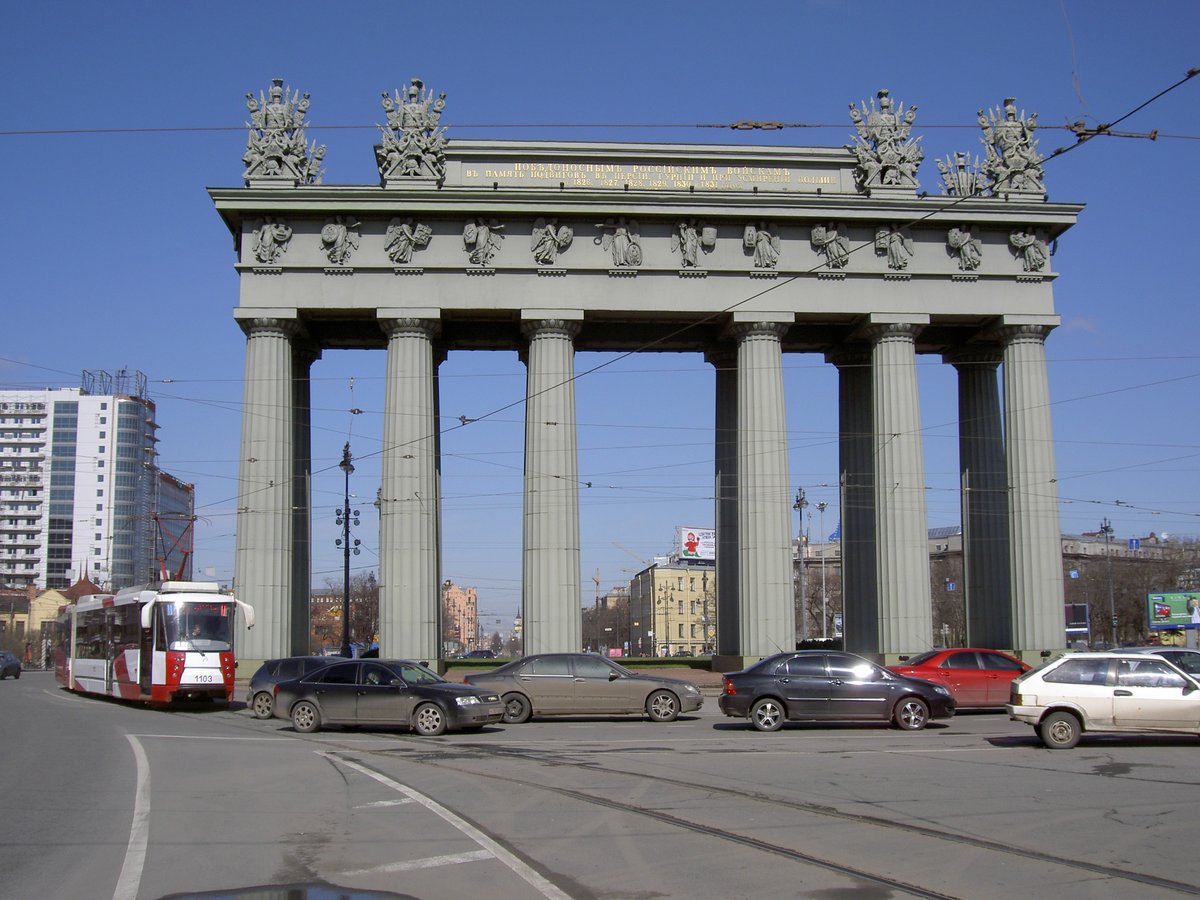
The Moscow Triumphal Gate is an exemplary piece of neoclassical architecture, reflecting the grandeur and imperial aspirations of 19th-century Russia. The gate stands at a height of 24 meters and features twelve Doric columns, each weighing approximately 30 tons. These columns support a massive entablature adorned with military trophies and laurel wreaths, symbolizing victory and honor. The central arch, which is 8 meters wide and 15 meters high, allows for the passage of large processions and military parades. The entire structure is crowned with a chariot driven by the goddess of victory, Nike, further emphasizing the triumphal theme.
Historical Events and Modifications
Over the years, the gate has witnessed numerous historical events and undergone several modifications. During the Siege of Leningrad in World War II, the gate suffered significant damage from artillery shelling. Restoration efforts began in the post-war period, and by the 1960s, the gate was restored to its former glory. In the 1990s, further restoration work was carried out to address structural issues and preserve the intricate details of the gate. Modern techniques were employed to ensure the longevity of the cast iron elements, and the gate was repainted in its original colors.
Cultural and Symbolic Importance
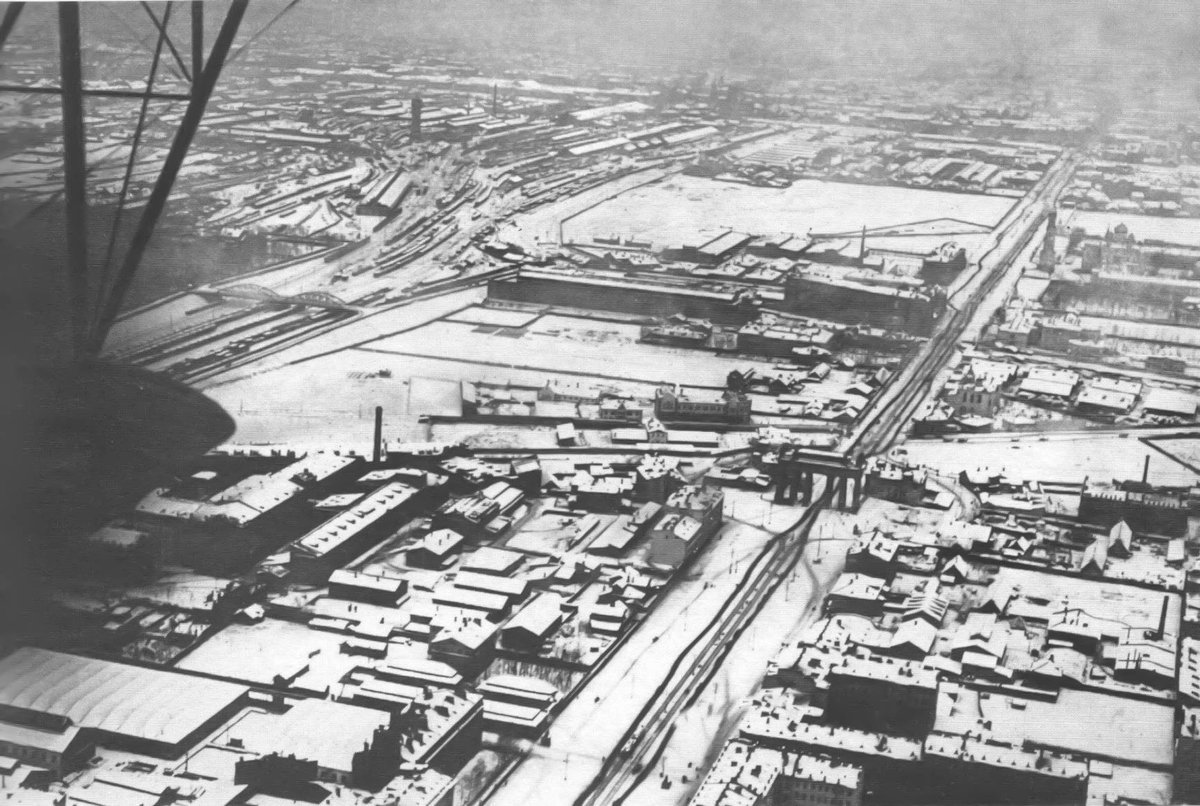
The Moscow Triumphal Gate holds a special place in the cultural and historical landscape of Saint Petersburg. It serves as a symbol of Russian military prowess and the nation's ability to overcome adversity. The gate is also a popular site for cultural events and public gatherings, reflecting its continued relevance in contemporary Russian society. Its location on Moskovsky Prospekt, one of the main thoroughfares in Saint Petersburg, further enhances its significance as a gateway to the city.
Visitor Information
Visiting Hours and Tickets
The Moscow Triumphal Gate is open to visitors daily from 10:00 AM to 6:00 PM. Admission is free, allowing everyone to appreciate this historical monument without any cost.
Travel Tips
- Best Time to Visit The best time to visit the gate is during the spring and summer months when the weather is pleasant.
- How to Get There The gate is easily accessible via public transport. The nearest metro station is Moskovskaya, from which it is a short walk.
- Photography Spots The gate offers numerous picturesque spots, especially during sunrise and sunset.
Nearby Attractions
- Victory Park A beautiful park located nearby, perfect for a leisurely stroll. (Victory Park)
- Chesme Church An exquisite piece of Gothic Revival architecture worth visiting. (Chesme Church)
- House of Soviets A notable example of Stalinist architecture, located close to the gate.
Accessibility
The Moscow Triumphal Gate is accessible to visitors with disabilities. Ramps and pathways are well-maintained to ensure ease of movement.
Preservation and Modern-Day Relevance
Preserving the Moscow Triumphal Gate is a priority for both local authorities and cultural heritage organizations. Regular maintenance and conservation efforts are undertaken to ensure that the gate remains in pristine condition. These efforts are supported by both public and private funding, reflecting the widespread appreciation for this historical monument. In recent years, the gate has also become a focal point for educational initiatives aimed at promoting awareness of Saint Petersburg's rich architectural heritage.
FAQ
- What are the Moscow Triumphal Gate visiting hours?
- The gate is open daily from 10:00 AM to 6:00 PM.
- Is there an admission fee?
- No, admission is free.
- How can I get to the Moscow Triumphal Gate?
- The nearest metro station is Moskovskaya, from which the gate is a short walk.
- Are there guided tours available?
- Yes, guided tours are available and provide in-depth information about the gate's history and significance.
- Is the Moscow Triumphal Gate accessible to people with disabilities?
- Yes, the gate is accessible with well-maintained ramps and pathways.