
What Edificio Kavanagh is
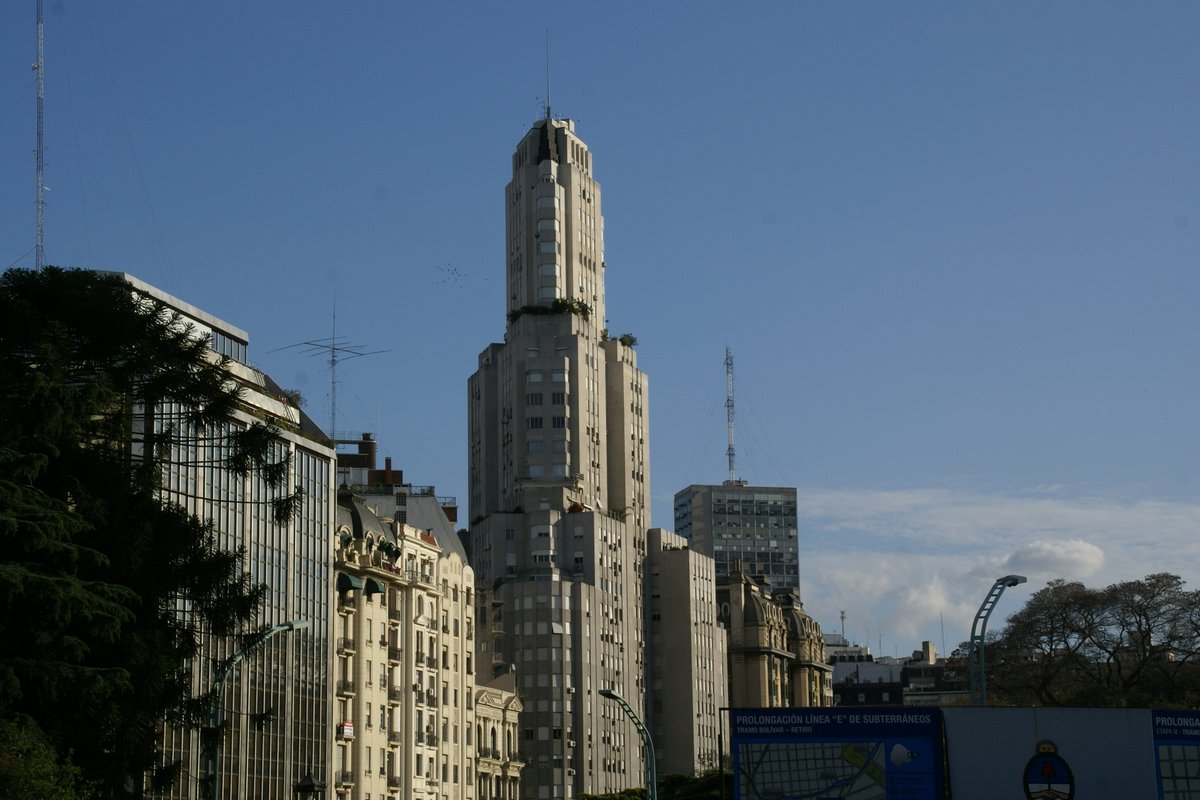
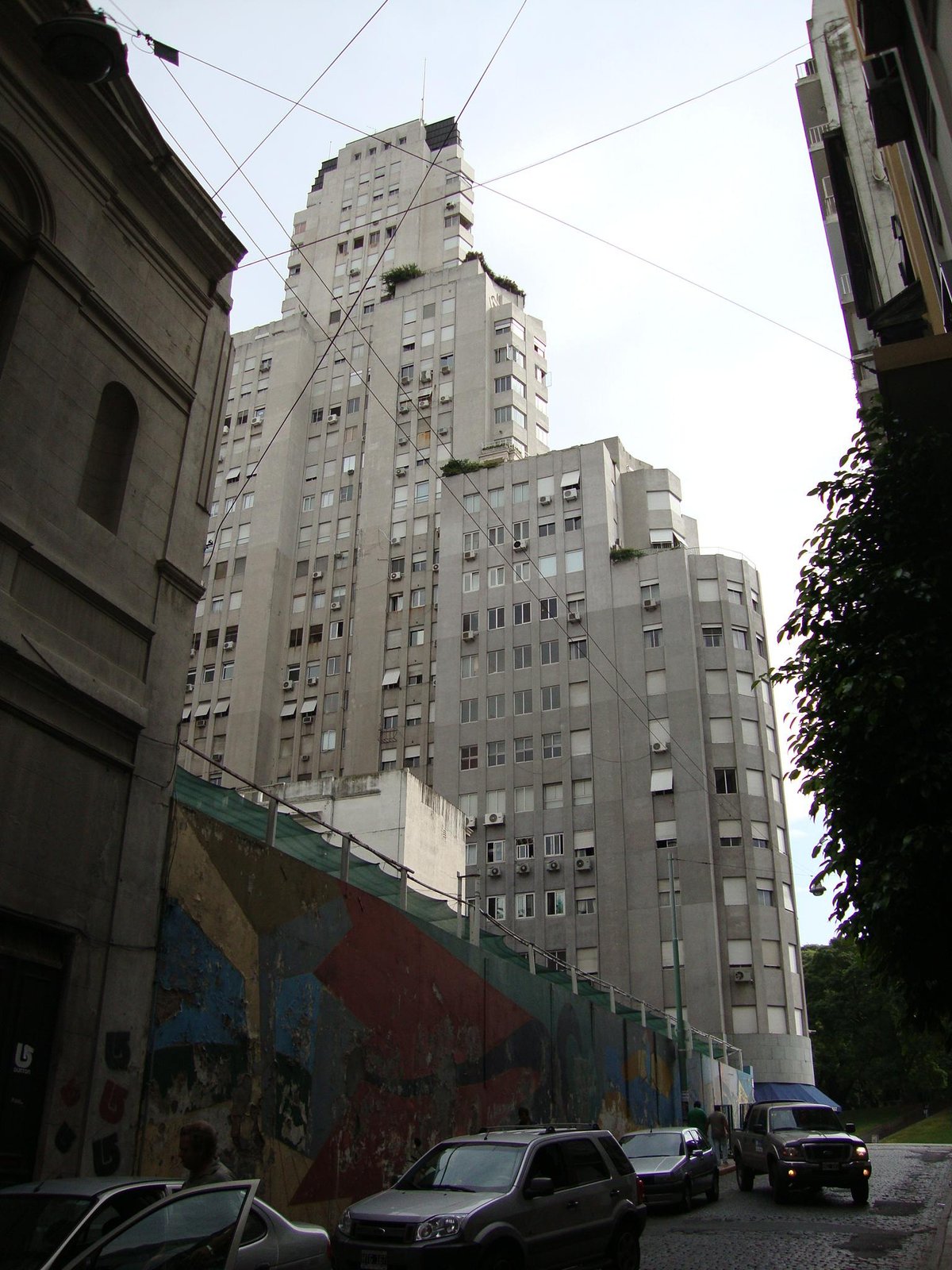
Edificio Kavanagh stands at 1065 Florida Street in Buenos Aires’ Retiro neighborhood, overlooking Plaza San Martín. Designed by Argentine architects Gregorio Sánchez, Ernesto Lagos, and Luis María de la Torre, it is a landmark of modernist architecture and an enduring part of the city’s cultural and architectural heritage (Wikipedia).
Its sleek, prismatic form, clean lines, and lack of external ornamentation are characteristic of Rationalist design, which emphasizes functionality and simplicity (Archeyes). The building is also described as a blend of modernism and Art Deco, with geometric shapes and an elegant silhouette (Vamos Spanish).
History
Commissioned by heiress Corina Kavanagh, the building was designed in 1934 and completed in 1936. Engineer Rodolfo Cervini led the construction, which took 14 months. Kavanagh sold two ranches to finance the project, which was intended as a luxurious residential skyscraper inspired by New York’s Rockefeller Center (Wikipedia; Archeyes).
The building is 120 metres tall and has 31 stories. It is described as one of the first buildings to use reinforced concrete and, in another account, as one of the first in the world to use a reinforced-concrete structure. At its 1936 inauguration, it was the tallest building in Latin America and the tallest reinforced-concrete structure globally (Vamos Spanish).
Its amenities and technology were considered advanced for the 1930s: these included central air conditioning, elevators, terrace gardens, a pool, laundry facilities, and a centralized telephone network (Vamos Spanish).
Corina Kavanagh and the Anchorena legend
A popular legend says that Corina Kavanagh built the skyscraper to take revenge on the powerful Anchorena family. According to the story, the family disapproved of her relationship with their son despite her wealth, so she had the building positioned to block the Anchorenas’ view of the Basilica del Santísimo Sacramento from their palace. The church was built by the Anchorena family (Turismo Buenos Aires).
Recognition and legacy
The American Society of Civil Engineers declared Edificio Kavanagh a Historic Civil Engineering Landmark in 1994, and Argentina designated it a National Historic Monument in 1999 (Wikipedia). It was also described as a UNESCO World Heritage Site in 1998 (Turismo Buenos Aires).
Its façade received the Municipal Award for Collective Houses and Facades and an award from the American Institute of Architects. When it was built, Argentina’s economy was the tenth strongest in the world; the Kavanagh became a symbol of the country’s prosperity, ambition, and modernity (Archeyes).
The building remains a popular Buenos Aires landmark. A 2013 survey by Clarín found it to be the building most liked by porteños, the residents of Buenos Aires (Wikipedia).
What to see
The building’s prismatic volumes, geometric forms, setbacks, and unornamented façade are its defining features. Its slender profile was achieved through meticulous planning and attention to detail (Vamos Spanish).
Edificio Kavanagh is primarily residential, so visitors often admire it from outside. Plaza San Martín provides a clear view of its façade. Guided tours, when offered, may include some common areas and, if available, an upper-floor apartment with terrace gardens and views of the city and river.
Practical visiting information
Hours and access
Edificio Kavanagh does not have regular visiting hours because it is a residential building. One account gives general visitor hours of 10 AM to 6 PM, but guided tours are occasional and are the best way to explore the building. Check with local tour operators or the building’s management for tour availability.
Tickets and tours
One account gives adult admission prices of $10 to $20, with possible discounts for students, seniors, and children. Ticket prices and availability may vary; check with local tour operators. Tours generally last about an hour and can be booked in advance.
Accessibility and transport
The building is described as equipped with elevators and ramps. The nearest subway station is San Martín on Line C, a short walk away, and numerous bus lines serve the area.
Tips
- Buenos Aires has a temperate climate and is a year-round destination. Spring (September to November) and fall (March to May) are described as mild and pleasant, with fewer tourists. Weekdays can also mean fewer crowds in the busy Retiro area.
- For photographs, early morning and late afternoon are the golden hours. Plaza San Martín offers a clear view of the façade.
- Retiro is generally safe, but take standard precautions in crowded areas: keep an eye on belongings, avoid displaying valuables, and be cautious when using ATMs. The area around Plaza San Martín is well-patrolled; remain alert, particularly at night.
- Florida Street has high-end boutiques, souvenir shops, and street vendors selling items such as leather goods, tango memorabilia, and local crafts.
- For a coffee or quick bite, there are cafés along Florida Street. Nearby dining options include Argentine restaurants and parrillas (steakhouses), such as El Federal, known for steaks and traditional dishes, and La Estancia, which serves Argentine barbecue.
- Spanish is the official language. Many people in tourist areas speak some English, but basic phrases such as “por favor” (please), “gracias” (thank you), and “disculpe” (excuse me) can be useful. “Hola” (hello) and “buen día” (good day) are common greetings; a kiss on the cheek is also customary, even among acquaintances.
- When dining out, tipping around 10% is customary. It is polite to wait for the host to say “buen provecho” (enjoy your meal) before eating.
Nearby places
- Basílica de Santísimo Sacramento / Basilica del Santísimo Sacramento About 0.04 miles away. This French-style church was built by the Anchorena family in 1916; its original tiled floor and intricate interior are noted features.
- Plaza San Martín About 0.08 miles away. Designed by French landscape architect Carlos Thays, this leafy plaza is surrounded by some of Buenos Aires’ most impressive public buildings and offers a peaceful retreat in the city centre.
- Palacio Haedo About 0.13 miles away. This neo-Gothic mansion was the residence of the Haedo family at the turn of the 19th century. Its location on a triangular block is a distinctive feature.
- Monumento a los Caídos de Malvinas About 0.14 miles away. This memorial honours the 649 soldiers who died in the Falklands War.
- Torre Monumental Another notable site close to Edificio Kavanagh.
- Galerías Pacífico A historic shopping mall with notable architecture and a wide range of stores.
FAQ
What are the visiting hours for Edificio Kavanagh?
The building does not have regular visiting hours because it is residential. One account lists general hours of 10 AM to 6 PM. Guided tours, when available, are the way to visit inside.
How much are tickets?
One account gives adult prices of $10 to $20, with possible discounts for students, seniors, and children. Check with local tour operators for prices and availability.
Are guided tours available?
Yes. Tours are occasionally available and can be booked in advance. They generally last about an hour.
Can you visit the inside of Edificio Kavanagh?
The building is primarily residential, but guided tours are occasionally available. Check with local tour operators for details.
What is the best way to reach Edificio Kavanagh?
The nearest subway station is San Martín on Line C, a short walk away. Numerous bus lines also serve the area.
Are there special events at Edificio Kavanagh?
Special events are rare because the building is residential, but guided tours offer an opportunity to explore its architectural significance.