Introduction
Step off the escalator at Dongmen Station in Taipei, Taiwan, and the warm glow of its ceilings pulls you forward like a lantern at the end of an alley — toward what is arguably the city's most concentrated stretch of street food. This interchange station, where the Red and Orange metro lines cross beneath the old East Gate district, exists less as a destination in itself and more as a portal: one exit deposits you into the scallion-pancake-scented chaos of Yongkang Street, another into quiet lanes where Japanese-era history hides behind café awnings.
Dongmen means "East Gate," and the name carries weight. During the Japanese colonial period, this neighborhood served as an administrative hub, and traces of that era still surface in the surrounding streets — a relocated mural here, a preserved park there. The station opened on September 30, 2012, after a construction effort that lasted over seven years and bored through roughly 2 kilometers of tunnel beneath one of Taipei's most historically layered districts.
What makes Dongmen worth your attention isn't the station architecture, though the 5,200 square meters of vitreous enamel paneling — enough to cover a full football pitch — keep the walls looking eerily clean years after installation. It's the fact that Exit 5 drops you within a two-minute walk of some of the best food in a city obsessed with eating well. And if you wander past the obvious queues, the neighborhood rewards you with something rarer: stillness.
Evolution of the Taipei Metro 1996-2030 (geographic map)
Metro LinerWhat to See
Yongkang Street and Its Side Alleys
Exit 5 spills you onto Yongkang Street, where the air smells like sesame oil and caramelized scallions before you've walked ten paces. The headline acts are Tian Jin Scallion Flaky Pancakes — open from 8 a.m. to 10 p.m., with a queue that rarely dips below fifteen people — and Smoothie House, whose mango shaved ice has become a kind of edible postcard of Taipei (open 10:30 a.m. to 10 p.m., best visited mid-afternoon on a weekday to avoid the worst crowds). But the real pleasure is drifting into the side lanes. Lishui Street, one block west, holds small craft shops and cafés that operate at a lower volume, and Hao Kung Tao Chin Chi Yuan serves Bib Gourmand-rated soup dumplings with a fraction of the tourist traffic. Check their schedule: they close on Wednesdays.


Rongjin Gorgeous Time Park and Qingtian 76
Two blocks south of the main Yongkang drag, Rongjin Gorgeous Time is a pocket park built around a preserved Japanese-era wooden house, its dark timber and low eaves a sharp contrast to the concrete apartment blocks surrounding it. The park is small — you can cross it in under a minute — but it carries the particular quiet of a place that used to be someone's home. Nearby, Qingtian 76 is another restored Japanese colonial residence turned cultural space, where the creaking floorboards and tatami-mat rooms feel like stepping into a photograph from the 1930s. Most visitors heading to Yongkang Street walk right past both without realizing they're there.
Yen Shui-Long's Relocated Relief
Near the Xinyi Road entrance to the station, look up at the facade of the Dongmen sports center. A weathered ceramic and stone relief — originally created in 1969 by the artist Yen Shui-Long for a swimming pool that no longer exists — sits mounted on the wall like a message from a vanished version of the neighborhood. It's not signposted well, and there's no audio guide or QR code. Just a piece of mid-century public art that survived demolition by the narrowest of margins, now watching over commuters who have no idea it almost didn't make it.
Photo Gallery
Explore Dongmen Station in Pictures

Entrance 8 of the Dongmen Station in Taipei, Taiwan, showcasing the modern subway architecture and public accessibility features.
李元顥 · cc by-sa 3.0

The vibrant night atmosphere at Dongmen Station in Taipei, Taiwan, showcases the city's lively street life, illuminated signage, and public transit.
Morgan Calliope · cc by 2.0

The modern, well-lit interior of Dongmen Station in Taipei, Taiwan, serves as a bustling transit hub for commuters.
Wpcpey · cc by 4.0

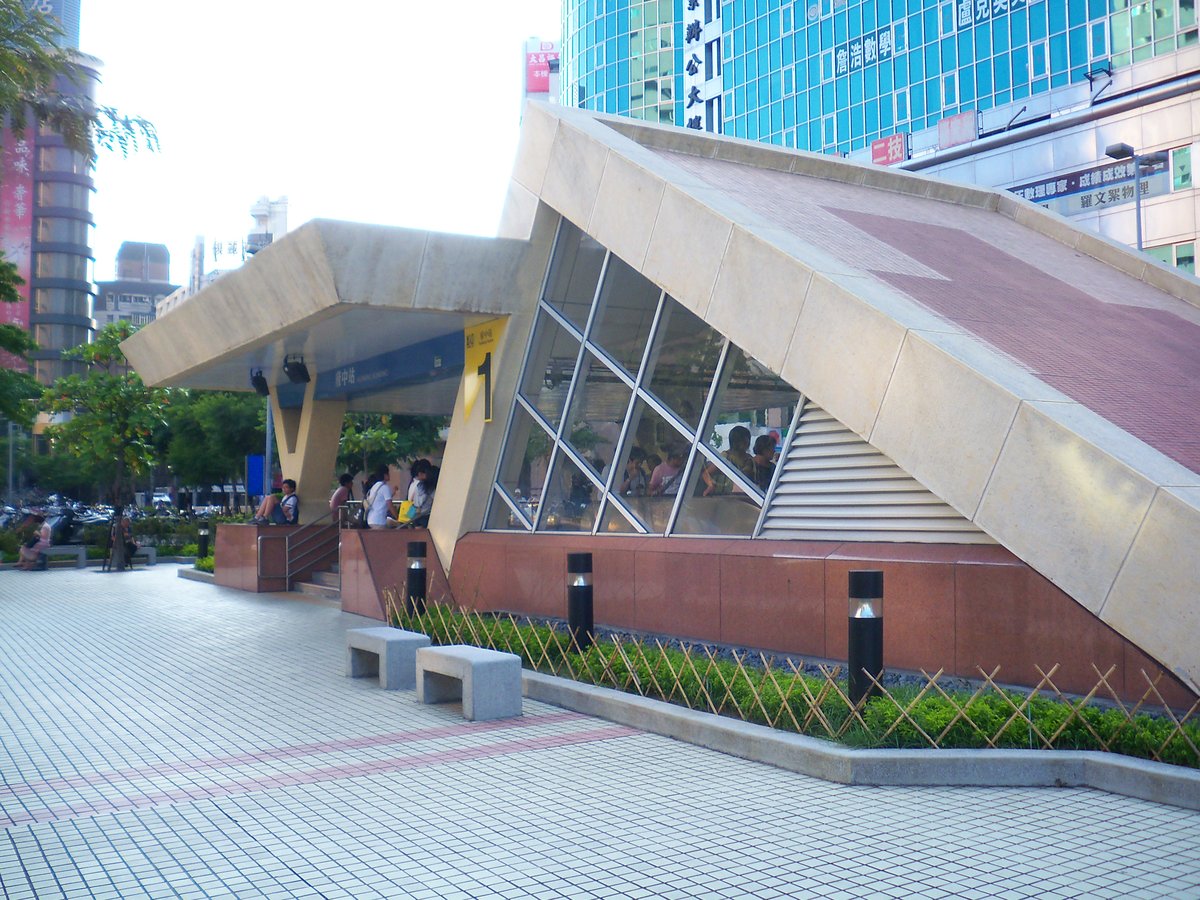
The modern glass-canopied entrance to Dongmen Station in Taipei, Taiwan, serves as a key transit point for commuters and tourists alike.
Solomon203 · cc by-sa 4.0

The vibrant street level entrance of Dongmen Station in Taipei, Taiwan, comes alive at night with glowing storefront signs and busy pedestrian activity.
eugene_o · cc by 2.0

The striking metallic sun sculpture serves as a prominent architectural feature within the modern interior of Dongmen Station in Taipei, Taiwan.
李元顥 · cc by-sa 3.0

Commuters exit the modern, metal-framed entrance of Dongmen Station in Taipei, Taiwan, amidst a bustling urban streetscape.
李元顥 · cc by-sa 3.0

Pedestrians and a cyclist navigate the bustling sidewalk outside the entrance to Dongmen Station in Taipei, Taiwan.
MAm ROFOW 022 · cc0

Entrance 7 of the Dongmen MRT station in Taipei, Taiwan, located next to a local Chinese medical clinic.
MAm ROFOW 022 · cc0

A view of the modern glass entrance to Exit 6 of Dongmen Station in Taipei, Taiwan, surrounded by busy city streets and urban life.
MAm ROFOW 022 · cc0

Commuters walk near the modern glass entrance of Dongmen Station in Taipei, Taiwan, on a bright, sunny day.
Sinsyuan · cc by-sa 4.0

The illuminated signage for Dongmen Station stands prominently on a Taipei street at night, guiding commuters in Taiwan.
Hauskyg YWICAORP · cc0
Videos
Watch & Explore Dongmen Station
Evolution of the Taipei Metro 1996-2030 (geographic map)
Taiwan Michelin Guide 2025 | Street Food | Restaurant
Visitor Logistics
Getting There
Dongmen Station sits at the intersection of the Red Line (Tamsui-Xinyi) and the Orange Line (Zhonghe-Xinlu), making it reachable from virtually anywhere in Taipei with one transfer or fewer. From Taipei Main Station, take the Red Line southbound — it's just two stops, under five minutes. For Yongkang Street, head straight for Exit 5.
Opening Hours
As of 2026, the station operates on standard Taipei Metro hours: first trains around 6:00 AM, last trains near midnight. Trains run every 3–7 minutes depending on peak or off-peak times. The surrounding Yongkang Street food stalls and shops generally open between 8:00 AM and 10:00 PM, though individual hours vary.
Time Needed
If you're just passing through on a transfer, allow 5–10 minutes to walk between the Red and Orange Line platforms — the interchange corridors are long. To properly eat your way through Yongkang Street via Exit 5, budget 2–3 hours. Add another hour if you want to explore the quieter lanes of Lishui Street and the Rongjin Gorgeous Time park nearby.
Accessibility
The station has elevators connecting street level to both line platforms, and barrier-free gates at every entrance. Wheelchair users should note the dragon-themed art installation is visible from the elevator area itself — no stairs required. Platform screen doors and tactile floor guides are standard throughout.
Tips for Visitors
Eat Smart on Yongkang
Tian Jin Scallion Flaky Pancakes (open 8 AM–10 PM) draws the longest queues — arrive before 9 AM or after 8 PM to skip the worst of it. For mango shaved ice, Smoothie House opens at 10:30 AM; weekday mornings beat weekend afternoons by a wide margin.
Get an EasyCard First
Buy an EasyCard at any metro station service counter before exploring. It covers all transit fares and works at convenience stores and many Yongkang Street food stalls, saving you the hassle of carrying small change.
Wander Lishui Street Instead
Most visitors never leave the main Yongkang drag. Turn onto Lishui Street for quieter craft shops, independent cafes, and the kind of neighborhood atmosphere that the famous block lost to its own popularity years ago.
Timing Beats Everything
Weekday mid-mornings (10–11:30 AM) are the sweet spot — food stalls are open but the lunch crush hasn't arrived, and school groups are still in class. Weekend afternoons around Yongkang Street can feel like a slow-moving crowd funnel.
Find the Yen Shui-Long Relief
Near the Xinyi Road entrance, look for the 1969 ceramic relief by master artist Yen Shui-Long, relocated from the demolished Dongmen Swimming Pool in 2006. It's one of Taipei's overlooked public artworks, and almost nobody stops to photograph it.
Check Closure Days
Several Bib Gourmand–rated spots near Dongmen close midweek — Hao Kung Tao Chin Chi Yuan, for instance, shuts on Wednesdays. Confirm before you plan a special trip around a specific restaurant.
Where to Eat
Don't Leave Without Trying
聖比德 東門店
quick biteOrder: The coffee nougat crackers are addictive—crispy, buttery, with real coffee flavor that doesn't feel overly sweet. Grab a box as a gift; locals do.
Right at Dongmen Station with nearly 2,800 reviews, this is where Taipei's sweet tooth goes. The nougat is made fresh daily and strikes the rare balance between indulgent and not cloying.
更!kńg 可麗捲永康概念店 | 法國食材 x 發現茶 | 永康街必買伴手禮
cafeOrder: The signature crepes—they blend French technique with Taiwanese tea culture, so you get delicate rolls filled with tea-infused cream and local flavors. Perfect for the Yongkang Street vibe.
This is the kind of place that defines modern Taipei: respecting French pastry craft while celebrating what makes Taiwan unique. The tea-infused fillings are a genuine innovation, not a gimmick.
台灣紅茶股份有限公司(台灣紅茶永康街門市)
cafeOrder: Pair their house-blend black tea with a fresh pastry—this is where Taiwanese tea culture meets modern bakery. The tea is what matters here; it's been perfected since 1937.
A heritage brand that's been stewarding Taiwan's tea tradition for nearly a century. Unlike tourist-trap tea shops, this one actually knows what it's doing, and the pastries are honest complements, not distractions.
聖比德金南店Jinnan|咖啡牛軋餅|台北必買捷運美食|台灣特色伴手禮|세인트피터 커피누가크래커
quick biteOrder: The coffee nougat crackers here are the same quality as the main Dongmen location—crispy, buttery, genuinely good coffee flavor. Grab them as a souvenir before your train.
A smaller, quieter outpost of the beloved Taipei nougat brand. Perfect if you want to avoid the Dongmen crowds but still want the real deal.
Dining Tips
- check East Gate Market (東門市場) is a living piece of old Taipei—go in the morning for the best selection and authentic market energy. Most stalls close by early afternoon.
- check Yongkang Street is where the food tourism happens, but it's genuinely good; locals eat there too. Expect lines at peak times (lunch 12–1 PM, dinner 6–7 PM).
- check Many traditional market stalls are cash-only; bring small bills.
- check Bakeries and tea shops near Dongmen Station are convenient for grab-and-go, but the real experience is sitting down and taking time with the tea or pastry.
Restaurant data powered by Google
Historical Context
Seven Years Under the East Gate
Taipei's metro system has a habit of burying ambitious engineering beneath cheerful tile and fluorescent light. Dongmen Station is no exception. Construction began on September 15, 2005, and the station didn't open its gates until September 30, 2012 — a span of seven years and fifteen days spent tunneling beneath a neighborhood where colonial-era structures and postwar apartment blocks compete for every square meter of ground.
The challenge wasn't just geological. Dongmen sits at the intersection of two metro lines, the Tamsui-Xinyi (Red) and Zhonghe-Xinlu (Orange), which meant building a transfer station deep enough to stack platforms while keeping the streets above intact. The result is a station that functions as a subterranean crossroads for hundreds of thousands of daily commuters, most of whom never pause to consider what it took to put it there.
Yen Shui-Long's Mural and the Swimming Pool That Vanished
In 1969, the Taiwanese master artist Yen Shui-Long created a ceramic and stone relief for the facade of the old Dongmen Swimming Pool, a public facility that stood near what is now the station's Xinyi Road entrance. Yen was one of Taiwan's most respected painters and muralists, trained in Tokyo during the 1920s, and his work blended Japanese modernist technique with Taiwanese folk imagery. The swimming pool relief depicted local life with a directness unusual for public commissions of that era.
When the swimming pool was demolished to make way for a new sports center, the relief faced destruction. On January 25, 2006, it was carefully removed and reinstalled on the facade of the replacement building — a quiet act of preservation that most passersby never notice. The mural now sits above street level near the station entrance, weathered but intact, a fragment of mid-century Taipei clinging to a 21st-century wall.
Enamel Armor for an Underground City
The station's interior is clad in 5,200 square meters of vitreous enamel panels — a material more commonly associated with industrial kilns than metro design. These panels are dirt-repellent, graffiti-proof, and engineered to survive decades of humid Taipei summers without discoloring. The choice was practical rather than aesthetic, but the effect is striking: the walls have a faintly luminous quality, as if the station were lined with oversized porcelain tiles. Combined with high ceilings and warm-toned lighting, the design makes Dongmen feel less claustrophobic than most underground stations its size.
The District Behind the Name
"Dongmen" refers to the East Gate of old Taipei, one of the original city gates built during the Qing dynasty in the 1880s. While the physical gate still stands above ground — heavily reconstructed in a Northern Chinese palace style during the 1960s — the surrounding district evolved into an administrative center under Japanese rule from 1895 to 1945. That colonial layer explains the neighborhood's unusual street grid and the scattering of low-rise buildings that survived postwar development. The station inherited a name with more than a century of accumulated meaning, even if most riders just think of it as the stop for soup dumplings.
Listen to the full story in the app
Your Personal Curator, in Your Pocket.
Audio guides for 1,100+ cities across 96 countries. History, stories, and local insight — offline ready.
Audiala App
Available on iOS & Android
Join 50k+ Curators
Frequently Asked
Is Dongmen Station worth visiting? add
Yes, though the station itself is a means to an end — the real draw is Yongkang Street, which begins at Exit 5 and is arguably Taipei's most rewarding food district. The station also serves as an interchange between the Red and Orange metro lines, making it a practical stop even if you're just passing through.
How long do you need at Dongmen Station? add
Budget 10 minutes for the station itself if you want to look at the architecture and the dragon installation above the elevators. Add two to three hours if you're heading to Yongkang Street — longer if you queue for Tian Jin Scallion Pancakes (open 8am–10pm) or Smoothie House's mango shaved ice (open 10:30am–10pm).
What is Dongmen Station known for? add
It's the gateway to Yongkang Street, Taipei's most concentrated stretch of street food, tea houses, and Michelin Bib Gourmand-rated restaurants. The station itself is also recognized for its 5,200 square meters of vitreous enamel wall panels — an area roughly the size of a football pitch — which keep the walls dirt-repellent and unusually bright.
Which exit to use at Dongmen Station for Yongkang Street? add
Exit 5 is the direct access point for Yongkang Street. From there, the main food strip is immediately walkable — most of the well-known stalls and restaurants are within a five-minute walk of the exit.
When did Dongmen Station open? add
The station opened on September 30, 2012, confirmed by both the Taipei City Government and the Taipei Times. Construction had started on September 15, 2005, making it a seven-year build covering approximately 2 kilometers of tunneling — roughly the distance from one end of Central Park to the other.
What metro lines stop at Dongmen Station? add
Dongmen is an interchange station for the Red Line (Tamsui-Xinyi) and the Orange Line (Zhonghe-Xinlu). This makes it one of the more useful transfer points in central Taipei, connecting the north-south and east-west corridors of the metro network.
Are there any art or historical features at Dongmen Station? add
The station has a dragon-themed installation above the elevator banks, and nearby at the Xinyi Road entrance stands a ceramic and stone relief by master artist Yen Shui-Long, originally created in 1969 for the old Dongmen Swimming Pool. It was relocated to the new sports center facade on January 25, 2006, so what looks like a modern building detail is actually a 50-plus-year-old artwork with a previous life.
What food is near Dongmen Station? add
Tian Jin Scallion Flaky Pancakes and Smoothie House's mango shaved ice are the most visited spots, both on or just off Yongkang Street via Exit 5. For something quieter, Hao Kung Tao Chin Chi Yuan holds a Michelin Bib Gourmand rating for its soup dumplings — check ahead, as it's closed on Wednesdays.
Sources
-
verified
Taipei City Government
Official source for construction timeline and opening date of Dongmen Station.
-
verified
Taipei Times
Contemporary news report confirming the September 30, 2012 opening date.
-
verified
Wikipedia — Dongmen Metro Station
Construction start and completion dates, general station overview.
-
verified
Taiwan Enamel
Details on the 5,200m² vitreous enamel wall cladding, design philosophy, and metro line information.
-
verified
Taipei Public Art
Information on Yen Shui-Long's 1969 relief, its original location, and its relocation date of January 25, 2006.
-
verified
Taiwanderers — Yongkang Street Guide
Practical food and visitor guide covering Yongkang Street restaurants, opening hours, queue tips, and EasyCard advice.
-
verified
TripAdvisor — Dongmen Station Reviews
User perspectives including the dragon installation above the elevators and general visitor impressions.
Last reviewed: