Early Urban and Transport Evolution in Bilbao
Bilbao’s development is closely tied to its evolving transport infrastructure. Founded in 1300 and strategically positioned along the Nervión River, the city grew into a commercial and industrial hub, particularly after the Consulado (trade office) was established in 1511. By the late 19th century, railways, ports, and factories dominated the landscape (mascontext.com).
The industrial decline of the late 20th century triggered a visionary shift towards environmental regeneration, accessibility, and the repurposing of industrial land. This laid the foundation for modern transport initiatives, including an intermodal station designed to unify fragmented networks and reconnect urban areas (mascontext.com).
The Long Road to Intermodality
Since 1933, city planners aspired to create a central intermodal station in Bilbao. Initial efforts led to a train station in 1948, but its isolated design limited its effectiveness (mascontext.com). Renewed momentum in the 1980s and 2000s, coupled with the city’s broader urban regeneration projects, finally materialized in the creation of a consolidated bus, train, and metro interchange.
The opening of the first San Mamés intermodal station in 2004 marked a significant step, but the larger vision was only fully realized with the underground Bilbao Intermodal facility, officially opened in 2019 (pitchbook.com; urban-mobility-observatory.transport.ec.europa.eu).
Modern Bilbao Intermodal Station: Features and Milestones
Key Milestones:
- 2016 Official founding of Bilbao Intermodal, setting the stage for a state-of-the-art underground hub (pitchbook.com).
- 2019 Public opening, linking long-distance bus lines to metro and train networks (urban-mobility-observatory.transport.ec.europa.eu).
- Ongoing Upgrades to Abando station to integrate high-speed rail (railmarket.com).
Today, Bilbao Intermodal is the main gateway connecting Bilbao to Spain and Europe, integrating multiple modes of transportation under one roof. Direct links to San Mamés metro, tram, and commuter rail stations enable effortless transfers (Wikipedia; Bilbao Intermodal Official).
Visiting Bilbao Intermodal: Hours, Tickets, and Accessibility
Opening Hours
- General Daily, 05:30–00:30
- Commercial areas 07:00–23:00
- Cafés 05:45–23:15
- Ticket offices 6:00–22:00 (subject to change; check official site for updates)
Tickets
- Purchase at ticket counters, vending machines, or online via operator websites.
- The Barik card offers discounted, seamless transfers across public transport.
- International, national, and regional routes available; prices depend on operator and destination.
Accessibility
- Fully accessible with elevators, ramps, tactile paving, and accessible restrooms.
- Staff assistance is available for travelers with special needs.
Facilities
- Lockers and luggage storage
- Car rental services
- Cafeteria and shopping
- Free Wi-Fi
- Clear, multilingual signage
Architectural Highlights and User Experience
Bilbao Intermodal’s underground design spans four levels, with 30 bus bays and over 500 parking spaces (Wikipedia). A geothermal climate control system maintains a comfortable temperature while reducing energy use by up to 40%.
The spacious, modern waiting areas feature digital departure boards, clear signage, and regular cleaning. The central square serves as a meeting and leisure space, complemented by a commercial center, gym, and 526-space car park (Bilbao Intermodal Official).
Practical Information for Travelers
- Connectivity Seamless transfers to metro, tram, Renfe trains, and Bilbobus/Bizkaibus lines.
- Airport Link BizkaiBus A3247 departs every 15 minutes to Bilbao Airport.
- Luggage Storage Both manual and automatic lockers are available (Rick Steves Forum; Nannybag).
- Security 24/7 monitoring with 178 cameras and facial recognition (Wikipedia).
- Accommodation The Ilunion San Mamés Hotel and Resa San Mamés student residence are located above the station (Wikipedia).
Sustainable Mobility and Urban Impact
Bilbao Intermodal is central to the city’s sustainable mobility strategy, reducing car usage and encouraging public transport. The integration of high-speed rail at Abando will further boost regional and national connectivity, supporting both economic growth and environmental goals (urban-mobility-observatory.transport.ec.europa.eu; railmarket.com).
Nearby Attractions: San Mamés Stadium & Historical Sites
San Mamés Stadium
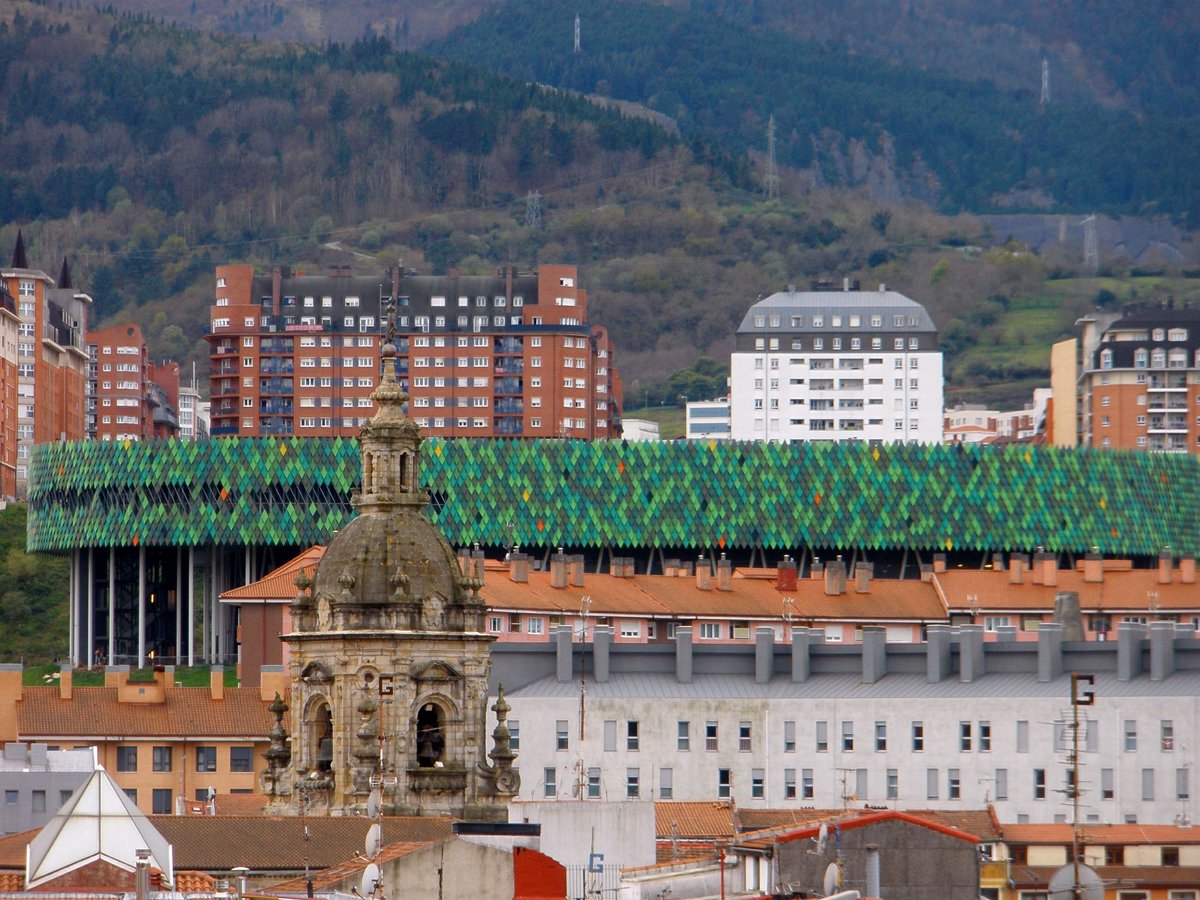
Adjacent to Bilbao Intermodal, San Mamés Stadium is a modern icon known as the "Cathedral of Football," home to Athletic Club Bilbao. Guided tours are available daily, and visitors can explore behind-the-scenes areas, including locker rooms and the pitch (Athletic Club Bilbao Official).
Other Attractions
- Guggenheim Museum 20 minutes by tram or on foot
- Casco Viejo (Old Town) Easily accessible for exploring historic streets and the Santiago Cathedral
- Plaza Nueva A vibrant square filled with bars and Basque cuisine
Tips for Visitors
- Travel Cards Consider the Bilbao Bizkaia Card for unlimited public transport and attraction discounts (Bilbao Turismo).
- Language Spanish and Basque are spoken; basic greetings in Euskera are appreciated.
- Accessibility All transport and station facilities are adapted for limited mobility.
- Peak Hours Plan travel outside busy periods for a smoother experience.
Frequently Asked Questions (FAQ)
Q: What are Bilbao Intermodal opening hours?
A: 05:30–00:30 daily. Commercial areas: 07:00–23:00.
Q: Where can I buy tickets?
A: At ticket counters, vending machines, or online via bus operator websites.
Q: Is it accessible for people with disabilities?
A: Yes, with elevators, ramps, adapted restrooms, and staff support.
Q: Are luggage storage and car rental available?
A: Yes, lockers and rental services are on site.
Q: How do I get to Bilbao Airport?
A: Take the BizkaiBus A3247, departing every 15 minutes.
Visuals, Media, and Useful Links
For maps, images, and virtual tours, visit the official Bilbao Intermodal website and Bilbao Turismo.
Related Links:
- Athletic Club Bilbao Official Website
- San Mamés Stadium Tours and Tickets
- Bilbao Public Transport Guide
Discover More
Bilbao Intermodal is a cornerstone of the city’s transport network and urban regeneration, offering modern amenities, seamless connectivity, and access to cultural landmarks. Whether commuting, exploring Bilbao, or traveling onward, the station ensures comfort and convenience.
Plan your journey with the official Bilbao Intermodal website, download the Audiala app for real-time updates, and follow Bilbao’s tourism channels for the latest tips and news.