Spain

Spain is less a single country than a set of climates, languages, and old kingdoms stitched together by food, rail lines, and a talent for turning public life into an art form.

Spain Photo: Diego F. Parra / Pexels
Capital
Madrid
Cities
58
Best season
Spring and fall (April-June, September-October)
Trip length
7-14 days

Cities in Spain

A Spain travel guide should start with one fact: this is Europe’s second-highest country, which is why Madrid can bite with winter cold while Málaga eats lunch in the sun.

All 58 cities

Regions

  • Madrid

    Central Castile

    Central Spain is dry, high and more severe than many travelers expect. Madrid gives the region its pulse, but Toledo shows the older layers more clearly, where Jewish, Christian and Muslim histories sit within a one-hour train ride and refuse to flatten into a schoolbook version of Spain.
  • Barcelona

    Catalonia

    Catalonia runs on its own civic confidence, its own language and a long habit of doing things differently from the capital. Barcelona is the obvious base, but the point is not only Gaudi; it is the mix of port city energy, late dinners, market culture and a coastline that turns practical beach time into an easy city add-on.
  • Valencia

    Valencian Coast

    Spain's eastern coast can slip into resort monotony if you pick badly, but Valencia itself has balance: rice country, serious modern architecture, a workable old center and beaches close enough to matter. This is the place to eat paella where it belongs, preferably at lunch and never in a rush.
  • Seville

    Andalusia

    Andalusia is the Spain many visitors think they already know, until the details start correcting them. Seville, Córdoba, Granada, Málaga and Cádiz all pull from the same deep Moorish and Christian past, but each city lands differently: palace city, mosque city, fortress city, port city, Atlantic city.
  • Bilbao

    Basque Country

    The Basque north is greener, richer and more self-contained, with a food culture that can make the rest of your trip look careless. Bilbao carries the museum headline, but San Sebastián is where bar-hopping becomes an evening plan with structure, discipline and very little tolerance for mediocre pintxos.
  • Santiago de Compostela

    Galicia and the Atlantic Northwest

    Galicia trades Spain's dry postcard image for rain, granite, octopus and a coastline that feels closer to the Atlantic world than to the Mediterranean one. Santiago de Compostela is the obvious anchor, not because of the cathedral alone, but because the city still lives with the daily arrival of tired pilgrims who have earned their dinner.

Suggested Itineraries

  1. 3 days

    3 Days: Madrid and Toledo

    This is the cleanest short break in central Spain: one big capital, one compact former capital, and very little time wasted in transit. Start in Madrid for museums and late dinners, then move to Toledo for stone streets, synagogues, churches and the kind of skyline that still looks staged by imperial ambition.

  2. 7 days

    7 Days: Andalusia by Train

    Andalusia rewards anyone who likes history with heat, scale and sharp regional contrasts. Move from Seville to Córdoba, Granada and Málaga, then finish in Cádiz if you want Atlantic light instead of another museum corridor; each leg is manageable, and the route makes sense without a car.

  3. 10 days

    10 Days: Green Spain and the Basque Coast

    Northern Spain feels like a different country: cooler air, heavier food, Atlantic weather and cities that never perform for the camera in the same way as the south. Bilbao, San Sebastián and Santiago de Compostela give you design, pintxos, surf beaches, pilgrimage history and some of the best seafood in the country.

  4. 14 days

    14 Days: Mediterranean Cities to the Capital

    This route joins Spain's eastern seaboard to the interior in a logical line rather than a frantic zigzag. Begin in Barcelona, continue south to Valencia, then head west to Mérida for Roman Spain at full scale before ending in Madrid, where the transport links make the flight home easy.

Top Monuments in Spain

Plan your trip

Before you go

Visa
EU travelers can enter Spain freely. Travelers from the US, Canada, the UK and Australia can usually stay up to 90 days within any 180-day Schengen period without a visa; ETIAS has been delayed repeatedly, so check the official EU rollout page before you fly rather than trusting old airline emails.
Currency
Spain uses the euro. Cards work almost everywhere in Madrid, Barcelona, Valencia and Seville, but small bars, market stalls and rural guesthouses still reward anyone carrying €20 and €50 notes; bank ATMs such as BBVA, CaixaBank and Santander usually beat Euronet on fees and exchange rates.
Getting There
Most long-haul visitors arrive through Madrid-Barajas or Barcelona El Prat, with Málaga, Valencia and Seville handling plenty of European traffic. If you are coming from France, high-speed rail to Barcelona and Madrid is practical enough to skip the airport altogether.
Getting Around
Spain is one of Europe's easiest countries to cross by train: Madrid to Barcelona takes about 2 hours 30 minutes, Madrid to Seville about 2 hours 30 minutes, and Madrid to Valencia about 1 hour 45 minutes. Book Renfe, Ouigo or iryo early for the best fares; use buses for smaller towns and rent a car only when you are heading into Galicia, the Pyrenees or inland Andalusia.
Climate
Spain does not have one climate. Madrid swings from cold winter mornings to brutal summer afternoons, Seville can hit 40C in July, Barcelona and Valencia stay more tempered by the sea, and Bilbao and Santiago de Compostela are greener and wetter for much of the year.
Connectivity
Coverage is strong in cities and on main rail corridors, with reliable 4G and widespread 5G from Movistar, Orange, Vodafone and MasOrange brands. Cafes, hotels and stations usually offer Wi-Fi, but if you need steady data for maps and tickets, an eSIM or prepaid SIM is worth buying on day one.
Safety
Spain is broadly safe for travelers, including solo travelers, but pickpocketing remains a real problem in crowded parts of Barcelona, Madrid and on busy train routes. Keep your phone off the cafe table, use an inside pocket in the Metro, and treat unofficial taxi offers outside airports as a bad idea.

Tips for visitors

  • Use Menu Del Dia

    Lunch is where Spain still offers real value. A weekday menu del dia at €12 to €16 often covers two courses, bread, a drink and dessert for less than a sandwich-and-coffee combo in a tourist square.
  • Book Fast Trains Early

    AVE, Ouigo and iryo fares rise sharply as seats fill. Buy intercity tickets two to four weeks ahead if you are traveling between Madrid, Barcelona, Seville, Valencia or Málaga.
  • Eat On Spanish Time

    Many kitchens do not start dinner service before 8:00 or 8:30 pm, and in smaller cities 9:00 pm is normal. If you try to eat a full dinner at 6:30 pm, you will end up with pastries or regret.
  • Reserve Semana Santa

    If your trip touches Seville or Málaga during Semana Santa, book rooms months ahead and expect crowded trains. The processions are extraordinary, but they also reshape the entire city day by day.
  • Keep Tickets Offline

    Station Wi-Fi and mobile data usually work, until they do not, and ticket gates are not patient. Save rail tickets, hotel addresses and one offline map before moving between cities.
  • Carry Small Cash

    You can tap your card in most urban places, but a few euros in coins and small notes still help with taxis, market snacks and low-key bars. It also saves the awkward moment when a tiny tab meets a card minimum.
  • Guard Your Phone

    Pickpockets target distraction more than luggage. On the Metro in Madrid or in busy parts of Barcelona, keep your phone zipped away when doors open and crowds bunch around you.

The story of Spain

Spain works best when you stop treating it as one mood. Madrid moves on late dinners, gallery afternoons, and a dry plateau light that makes stone look almost theatrical. Barcelona faces the sea and stacks Roman walls, Modernisme facades, and market lunches into the same walk. Valencia gives you the rice fields behind paella, not the postcard version, while Seville and Córdoba carry heat, orange trees, tiled courtyards, and the long afterlife of Al-Andalus. Granada tightens that story into the hilltop drama of the Alhambra. Toledo, meanwhile, feels like a city built to prove that history can still corner you on a staircase.

Distance changes the country as much as history does. Head north to Bilbao, San Sebastián, and Santiago de Compostela and the palette shifts: more rain, more green, more Atlantic muscle, more bars where lunch stretches into evening. Go south to Cádiz or inland toward the Sierra Nevada and the air dries out, the light hardens, and lunch drifts into sobremesa because the day is simply too hot to rush. That range is the point. In one trip you can eat pintxos in San Sebastián, stand inside mosque-cathedral stone in Córdoba, then wake up in Valencia or Barcelona ready for a beach swim before noon.

c. 800000 BCE-409 CE

From Atapuerca's bone pit to Rome's hard bargain

A red quartzite hand-axe lies in the darkness of Atapuerca, near Burgos, as if someone had placed it there yesterday. Around it, the bones of at least 28 human beings were dropped or carried into a 13-meter shaft roughly 430,000 years ago. Ce que l'on ignore souvent, c'est que Spain begins not with a king, nor even with a city, but with a funeral mystery.

Then came the peoples the Romans would flatten into a single convenient name: Iberians on the Mediterranean coast, Celts inland, Tartessians in the southwest where silver glittered and Phoenician merchants counted profits. Carthage understood the peninsula first as treasure. Hannibal's family drew men and money from Cartagena, and those mines helped pay for the campaign that would terrify Rome from the Alps to Cannae.

Rome answered with roads, aqueducts and pitiless patience. Numantia, near present-day Soria, held out so stubbornly that when Scipio Aemilianus finally sealed it off in 133 BCE, starvation did what legions could not. The legend that followed mattered almost more than the defeat: better ashes than chains, better a dead city than a humiliated one. Spain would return to that idea often.

Under Rome, Hispania became both provincial and indispensable. Olive oil from Baetica fed the empire, Trajan and Hadrian rose from Hispano-Roman families, and cities such as Tarragona, Mérida and Córdoba acquired theaters, temples and the habits of imperial life. But Rome's order was already fraying by the 4th century, and when imperial authority weakened, the peninsula did what rich territories always do: it invited ambitious men with swords.

409-1031

Councils in Toledo, lamps in Córdoba

When the Visigoths took control of the peninsula, they did not arrive as clean conquerors in shining armor. Rome had used them, paid them, and then lost control of the arrangement. In Toledo they built a kingdom from fragments, and in 589 King Reccared staged one of history's great political conversions, abandoning Arian Christianity for Catholicism before the assembled bishops. Tears were reported. One suspects calculation played its part.

That Visigothic Spain mattered because it taught a habit the peninsula would never quite abandon: rule had to be sanctified in public. Councils in Toledo were not dry clerical affairs. They were theater, legitimacy, a way of binding nobles, bishops and crown into one performance. Isidore of Seville, tireless compiler of knowledge, tried to gather the world into books just as the kingdom struggled to gather it into law.

Then, in 711, everything moved with astonishing speed. Tariq ibn Ziyad crossed at the rock that still carries his name, Gibraltar, and the Visigothic state collapsed in a matter of years. Legend says Tariq burned his boats and told his men, "The sea is behind you, the enemy before you." Whether the ships truly burned almost matters less than the fact that Spain remembered the line.

What followed in Al-Andalus was not a fairy tale of perfect tolerance, and it is wiser to say so plainly. Yet Córdoba under Abd al-Rahman III and his heirs was one of the marvels of Europe: paved streets, baths, libraries, scholars, physicians, translators, the Great Mosque turning light into geometry. While much of Christian Europe was still provincial and muddy, Córdoba glittered. And when a city becomes that brilliant, it also becomes fragile.

1031-1492

A peninsula of bargains, betrayals and one last sigh

After the caliphate fractured, the peninsula became a chessboard of taifa courts, Christian kingdoms, mercenaries and uneasy alliances. This is the Spain of shifting loyalties, where Rodrigo Díaz de Vivar, better known as El Cid, could fight for Muslim rulers as readily as against them. Ce que l'on ignore souvent, c'est que the tidy schoolbook frontier between Christian and Muslim Spain was, in life, much messier and far more interesting.

Cities changed hands, but they also borrowed from one another. Toledo became a place of translation where Arabic scholarship passed into Latin Christendom. In Córdoba and Seville, rulers commissioned poetry and palaces while also sharpening blades. In 1085 Toledo fell to Alfonso VI, a turning point not because it ended the contest, but because it proved the old balance had broken.

The new powers from North Africa, the Almoravids and then the Almohads, arrived promising rigor and rescue. They brought both, and also fear. Think of Averroes in Córdoba, philosopher and court physician, whose books were later condemned by the very world that had once admired him. Spain's history is full of men praised in one decade and exiled in the next.

By the time the Nasrids held only Granada, magnificence had narrowed into survival. The Alhambra above Granada was not built in serenity but in tension, its courtyards and water channels refined under the pressure of encirclement. On 2 January 1492, Boabdil surrendered the keys to Ferdinand and Isabella. At the mountain pass now called El Suspiro del Moro, the Moor's Sigh, he is said to have looked back and wept. His mother, according to later chroniclers, gave him the line Spain never forgot: you weep like a woman for what you could not defend as a man.

Read 2 more chapters

1492-1700

Gold, prayer and the machinery of empire

In 1492 Spain did not merely finish one war; it opened several worlds at once. Granada fell, Columbus wrote home about islands and souls, and the Catholic Monarchs tightened their grip with a confidence that felt almost liturgical. Ferdinand and Isabella understood spectacle. Thrones, processions, heraldry, marriages, decrees: monarchy became a machine for turning faith and power into the same public image.

Then came the Habsburgs, and with them scale. Charles V inherited so much territory that even his enemies sounded impressed when listing it: Castile, Aragon, Naples, the Low Countries, the Empire, and the American dominions swelling with silver. Madrid, still modest beside older cities, grew because Philip II wanted a capital near the center of things and close to El Escorial, that granite statement of piety and control in the hills northwest of the city.

The Siglo de Oro was born inside this contradiction. Spain produced Velázquez at court in Madrid, Cervantes on the page, Lope de Vega for the theater, Zurbarán and Murillo in Seville, while fleets sailed, bankers fretted and imperial wars multiplied. Gold arrived from the Americas, but it never solved the deeper problem. Empires rarely die of poverty alone; they die of habits they cannot unlearn.

By the 17th century, grandeur had become exhausting. Court ritual remained elaborate, yet the state staggered under bankruptcy, military overreach and depopulated landscapes. Even so, look at Las Meninas in Madrid and you can feel the old spell working: the infant princess, the painter, the mirrors, the king and queen appearing as reflections, everyone watching and being watched. Spain had turned power itself into theater, but theater could no longer pay the bills.

1700-present

From Bourbon reforms to the pact of forgetting

The last Habsburg died childless in 1700, and Spain found itself in one of those dynastic dramas Stéphane Bern would recognize at once: wills disputed, Europe alarmed, armies marching because one sickly king had failed to produce an heir. The Bourbons won, but only after war stripped the old composite monarchy to its bones. A more centralized Spain emerged, more French in administrative instinct, though never quite in temperament.

The 19th century brought invasions, constitutions, pronunciamientos, queens, regencies and enough ideological reversals to make any family dinner dangerous. Napoleon placed his brother Joseph on the throne; Madrid rose on 2 May 1808; Goya painted what polite society preferred not to see. Ce que l'on ignore souvent, c'est que modern Spain was forged as much by argument as by victory, by newspapers and firing squads, by the question of who counted as the nation.

The 20th century turned those arguments lethal. The Second Republic promised reform, secular education and a new social contract, yet it also exposed every old fracture at once: land, class, Church, army, region. When civil war broke out in 1936, it became a tragedy of neighbors before it became an international symbol. Lorca was shot near Granada. Guernica burned in the Basque Country. Silence, afterward, settled unevenly over the country.

Francisco Franco ruled until 1975, and here one must resist both nostalgia and simplification. Spain industrialized, millions migrated to cities, tourism remade coastlines from Málaga to Cádiz, and fear taught people what not to say. Then, after Franco's death, King Juan Carlos I and a generation of political adversaries managed something rare: a transition that did not erase the past, but refused to refight it in the streets. Democratic Spain joined Europe, reinvented Barcelona for the 1992 Olympics, renewed Bilbao with steel and audacity, and kept asking, as all living countries do, which history to honor and which to challenge.

A kingdom made and remade

From prehistoric burial rites to constitutional monarchy, Spain's history rarely moves in a straight line.

  1. c. 430,000 BCE

    Burials at Atapuerca

    Atapuerca, near Burgos, preserves one of Europe's oldest known accumulations of human remains in the Sima de los Huesos. A single red quartzite hand-axe found with the bones suggests ritual, grief or intention long before written history.

  2. 218 BCE

    Rome enters Hispania

    Roman forces land during the Second Punic War and begin a long conquest of the peninsula. What starts as a war against Carthage becomes centuries of roads, taxation, cities and Roman law.

  3. 133 BCE

    Numantia falls

    After a long siege, the Celtiberian stronghold of Numantia is destroyed by Scipio Aemilianus. Its resistance becomes a lasting Spanish symbol of defiance in the face of impossible odds.

  4. 98

    Trajan becomes emperor

    Trajan, born in Italica near Seville, becomes the first Roman emperor from Hispania. His rise shows how deeply the peninsula had been integrated into imperial power.

  5. 589

    Reccared converts at Toledo

    At the Third Council of Toledo, King Reccared renounces Arianism and embraces Catholic Christianity. The act is theological, political and theatrical all at once, binding crown and Church more tightly together.

  6. 711

    Muslim armies cross at Gibraltar

    Tariq ibn Ziyad defeats the Visigothic forces and opens the way for the rapid conquest of most of the peninsula. The rock of Gibraltar keeps the memory in its very name: Jabal al-Tariq.

Show the full timeline (26 moments)
  1. 929

    The Caliphate of Córdoba is proclaimed

    Abd al-Rahman III declares himself caliph, elevating Córdoba from powerful emirate to rival center of the Islamic world. The city becomes one of Europe's great capitals of learning, diplomacy and display.

  2. 1031

    The Caliphate collapses

    Civil conflict ends the Umayyad caliphate and fractures Al-Andalus into taifa kingdoms. Refinement survives, but so does political weakness, inviting new interventions and shifting alliances.

  3. 1085

    Toledo is captured by Castile

    Alfonso VI takes Toledo, one of the great symbolic victories of the Christian kingdoms. The city later becomes a center where Arabic, Hebrew and Latin scholarship meet and circulate.

  4. 1099

    El Cid dies in Valencia

    Rodrigo Díaz de Vivar dies after carving out power in Valencia through war, diplomacy and opportunism. Legend soon transforms the mercenary into a spotless Christian hero, though the real man was more complicated.

  5. 1212

    Las Navas de Tolosa

    A coalition of Christian rulers defeats the Almohads in one of the peninsula's decisive medieval battles. The victory accelerates the southward advance of Castile and its allies.

  6. 1469

    Ferdinand and Isabella marry

    Their marriage links the crowns of Aragon and Castile without fully erasing their separate institutions. Spain is not born in a single stroke, but this union changes the balance of the peninsula permanently.

  7. 1492

    Granada falls and Columbus sails

    Boabdil surrenders Granada, ending Nasrid rule, and Columbus launches west under Castilian patronage. One year closes medieval Iberia and opens an imperial age across the Atlantic.

  8. 1516

    Charles I inherits the Spanish crowns

    The future Charles V takes possession of Spain and soon adds the Holy Roman Empire to his titles. The monarchy's horizons expand so quickly that administration struggles to keep pace.

  9. 1561

    Madrid becomes the permanent court

    Philip II fixes the royal court in Madrid, raising an inland town into the political center of Spain. Court life, bureaucracy and ceremony begin to reshape the city around royal presence.

  10. 1588

    The Armada fails

    The defeat of the Spanish Armada against England becomes one of Europe's most famous strategic disasters. Spain remains powerful, but the aura of invincibility has cracked.

  11. 1700

    Death of Charles II

    The childless last Habsburg king dies, triggering the War of the Spanish Succession. Europe fights over who will inherit Spain, and the answer will change the kingdom's political structure.

  12. 1714

    Bourbon order is imposed

    After the Bourbon victory, the Nueva Planta decrees dismantle many institutions of the Crown of Aragon and push Spain toward greater centralization. The state becomes more uniform, and resentment does not disappear.

  13. 1808

    Madrid rises against Napoleon

    The Dos de Mayo uprising marks the start of a brutal war against French occupation. Goya will later give the revolt and its reprisals some of the most unforgettable images in European art.

  14. 1812

    The Constitution of Cádiz

    In besieged Cádiz, liberals draft a constitution that promises national sovereignty and limits on royal power. La Pepa becomes a beacon of constitutional hope, even if reaction soon follows.

  15. 1898

    Empire collapses overseas

    Spain loses Cuba, Puerto Rico and the Philippines after war with the United States. The disaster shocks the political class and triggers a generation of writers and thinkers asking what Spain has become.

  16. 1931

    The Second Republic is proclaimed

    The monarchy falls and the Republic promises secular reform, educational expansion and a different political future. Hope arrives quickly, but so do polarization and fury.

  17. 1936

    Civil War begins

    A military uprising against the Republic plunges Spain into civil war. The conflict becomes both a national catastrophe and an international rehearsal for the ideological battles of 20th-century Europe.

  18. 1975

    Franco dies

    After nearly four decades of dictatorship, Francisco Franco's death opens the question of what Spain will become next. The answer is negotiated, tense and far from guaranteed.

  19. 1978

    Democratic constitution approved

    Spain adopts a constitution establishing parliamentary monarchy, regional autonomy and civil liberties. It becomes the framework that still holds together a country with powerful local identities.

  20. 1992

    Barcelona announces a new Spain

    The Barcelona Olympics present a democratic, outward-looking Spain to the world. The same year also marks Expo '92 in Seville and the Madrid Capital of Culture program, a remarkable burst of national self-staging.

Culture & food

  • language

    A Country Spoken Through the Teeth

    Spanish in Spain is not one voice but a cabinet of mouths. Madrid clips syllables with metropolitan impatience; Seville turns consonants into smoke; Barcelona keeps two grammars on the table at once; Bilbao can make Basque sound like carved wood. A train ride changes the weather of speech before it changes the landscape.

    What fascinates me is the intimacy of volume. Spaniards often speak as if silence were a minor illness, curable by laughter, interruption, and one more story told across the table. In Madrid, you hear the sentence arrive before the speaker. In San Sebastián, the sentence is precise, almost nautical. In Santiago de Compostela, words seem to carry rain inside them.

    Then comes the great Spanish invention: words for social time. Sobremesa is not dessert. It is the refusal to abandon conversation just because the plates are empty. Madrugada is not night. It is the hour when a city like Madrid or Málaga stops pretending sleep matters.

    A country is a table set for strangers. Spain adds competing vowels, regional pride, and the cheerful certainty that your accent will betray you within three syllables. This is good news. People answer a foreigner who tries.

  • cuisine

    Olive Oil as a Form of Thought

    Spanish cuisine begins with a product so ordinary it becomes metaphysical: olive oil. It glosses tomatoes in Barcelona, binds gazpacho in Córdoba, turns a pan of potatoes and eggs into tortilla, and gives even grief a shine. Bread arrives. Oil follows. Civilization resumes.

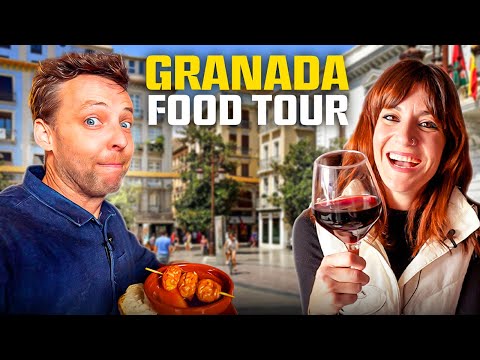
    Meals obey an hourglass that northern Europe has never understood. Lunch is serious, slow, and public. Dinner begins when other countries are brushing their teeth. In Valencia, paella belongs to noon and to Sunday, not to candlelight and violins. In Granada, a drink may arrive with a tapa large enough to complicate your plans for the evening.

    Then the rituals sharpen. Jamón ibérico is cut in translucent slices and eaten almost ceremonially, standing up, often with sherry, as if one were attending the brief canonization of a pig. Pintxos in San Sebastián are counted by toothpicks, which is a beautiful way to measure desire. Churros in Madrid belong either to children or to adults returning home at an hour when children are waking.

    Spain treats appetite as evidence of intelligence. You are expected to notice the bean in a true paella valenciana, the correct thickness of salmorejo in Córdoba, the exact resistance of an anchovy in Bilbao. Food here is never garnish. It is grammar.

  • etiquette

    The Courtesy of Staying Longer

    Spanish etiquette is less about distance than about participation. Formality exists, of course, but warmth arrives fast and sits close. People touch your arm to underline a point. They interrupt not to dominate but to join. A conversation in Seville can feel like chamber music played by cousins who do not fear collision.

    The great courtesy is time. Nobody rushes you out of the table because the profitable part of the meal has ended. Sobremesa is where character appears: coffee cups cooling, chairs drifting, someone ordering one more round without consulting anyone because the answer is obvious. In Barcelona, this can feel sleek. In Cádiz, it feels tidal.

    You will notice another rule, less discussed and more revealing. Spain forgives noise more readily than stiffness. A loud room is alive; a frozen room is suspicious. Even in polished dining rooms in Madrid, seriousness does not require solemnity.

    The traveler's error is to confuse lateness with disorder. It is often choreography by another clock. Show up starving at 6:30 p.m. and you will learn humility. Show up at 10:00 p.m. and the country finally begins to speak to you.

  • architecture

    Stone That Learned Excess

    Spanish architecture has a taste for conversion. Mosques become cathedrals. Synagogues become churches. Roman walls receive medieval repairs, then baroque facades, then electric cables, then souvenir shops selling fans printed with saints. Toledo is not layered like an archive. It is layered like a fever dream with municipal records.

    In Granada, the Alhambra proves that geometry can flirt. In Córdoba, the Mezquita teaches the eye to lose count among red and white arches, which may be the point: abundance becomes devotion. Seville prefers another method. It rises, glitters, and remembers empire with theatrical confidence.

    Then Spain changes temperament. Barcelona gives you modernisme, that delicious moment when architecture decided iron could bloom. Bilbao answers with industry turned into cultural muscle, stern and strangely elegant. Santiago de Compostela gathers stone like a final sentence, worn by centuries of pilgrims who arrived with blisters and theology.

    What moves me is the national refusal to choose one century and behave. Spain keeps them all in the same room. The result should be chaos. Instead it feels composed, like a noble family arguing through its silverware.

  • music

    Rhythm for the Hours After Midnight

    Spanish music does not merely accompany life. It exposes its temperature. Flamenco in Andalusia, especially around Seville and Cádiz, is not decorative sorrow for visitors with cameras. It is heel, breath, hand, wound, command. The singer seems to pull the note from somewhere below biography.

    You hear other systems elsewhere. In Galicia, the gaita gives the air a Celtic edge, as if the Atlantic had crossed the border and brought old ghosts with it. In Basque country, rhythm can feel more percussive, more communal, less confession than force. Castilian festivals prefer brass, drums, and public repetition: music not for introspection but for occupation of the street.

    And then there is the pop life of modern Spain, impossible to ignore and not worth pretending to resist. Cars in Málaga leak reggaeton at traffic lights. Teenagers in Madrid sing the chorus before the first verse has finished. Weddings everywhere seem built on the principle that one song is never enough if three can overlap.

    Music reveals the national pact with intensity. Spaniards do not fear emotion when it is disciplined by form. A compás in flamenco, a procession drum in Holy Week, a football chant in Barcelona: each says the same thing in a different register. Feel more. But keep the beat.

  • religion

    Incense, Gold, and the Art of Public Feeling

    Catholicism in Spain is at once spectacle, inheritance, habit, and argument. You can enter a church in Madrid at noon and find a woman lighting a candle with the practical concentration of someone sending an urgent memo to heaven. Faith here often looks less like abstraction than procedure.

    Semana Santa makes this plain. In Seville and Málaga, penitents in capirotes move through the streets with such gravity that even the skeptics fall quiet for a minute. The pasos advance under velvet, gold, and candle wax, borne on human shoulders that turn theology into muscle. Religion becomes weight, sound, smoke.

    Yet Spain also knows how to keep irony alive beside devotion. A grandmother can complain bitterly about the bishop and still polish the silver for a procession. A bar may fill with people discussing football one street away from a chapel storing a 17th-century Christ. No contradiction. Countries survive by holding incompatible truths without fainting.

    Santiago de Compostela remains the clearest emblem of this double life. Pilgrims arrive for faith, for sport, for grief, for divorce, for blisters, for reasons too private to survive daylight. The cathedral receives them all. Stone is discreet.

Taste the Country

  • paella valenciana

    Eat at lunch, Sunday, family table. Spoon, pan, rabbit, chicken, garrofó, rice, argument over socarrat.

  • tortilla española

    Order on a bar counter, late morning or aperitivo hour. Share with friends, bread, olives, beer, long talk.

  • jamón ibérico de bellota

    Stand, eat slowly, small plate, fino or manzanilla. Company helps; haste ruins everything.

  • pintxos

    Take from the counter, keep toothpicks, drink txakoli, repeat. Best with a group in San Sebastián, before dinner becomes another dinner.

  • gazpacho and salmorejo

    Drink gazpacho at noon in heat; eat salmorejo with a spoon, bread, jamón. Córdoba understands the difference and expects you to.

  • churros con chocolate

    Eat at dawn after a long night or at breakfast with family. Dip, burn tongue, continue.

  • pulpo a la gallega

    Share on a wooden board, lunch, white wine, many forks. Galicia serves octopus with paprika, salt, and no unnecessary speech.

Notable Figures

  • Isabella I of Castile

    Queen of Castile · 1451-1504

    Isabella liked to present policy as providence, but she was also a formidable political operator with a ledger in her head. Granada fell under her banners in 1492, Columbus sailed with her backing, and the Spain that emerged bore both her discipline and her intolerance.

  • Abd al-Rahman III

    Caliph of Córdoba · 891-961

    He inherited unrest and turned it into ceremony. By proclaiming himself caliph in 929, he told Baghdad, his rivals and his own nobles that Córdoba would no longer play second rank; the palaces, embassies and pageantry were part of that message.

  • El Cid

    Military leader and lord of Valencia · c. 1043-1099

    Rodrigo Díaz was less a plaster saint than a gifted survivor in an age of hired swords and unstable loyalties. Spain later polished him into a national hero, but the real man is better: shrewd, dangerous and perfectly willing to change masters if honor and advantage aligned.

  • Miguel de Cervantes

    Novelist · 1547-1616

    Cervantes knew prisons, debt and disappointment before he gave Spain Don Quixote, that knight who confuses books for life and yet somehow sees life more clearly than everyone around him. He wrote the country into its own mirror: noble, ridiculous, wounded and endlessly talkative.

  • Diego Velázquez

    Court painter · 1599-1660

    Velázquez did not flatter in the cheap way. He gave dwarfs, servants, princesses and even kings the same unnerving dignity, as if rank mattered less than presence. In Madrid, he turned court painting into a game of truth played under silk and protocol.

  • Francisco de Goya

    Painter and printmaker · 1746-1828

    Goya began with tapestries and court portraits, then stared so hard at Spain's brutalities that his art changed temperature. The executions of 1808, the monsters of superstition, the Black Paintings on his house walls: he saw what polite patriotism tried to hide.

  • Federico García Lorca

    Poet and playwright · 1898-1936

    Lorca carried Andalusia into modern literature without reducing it to folklore. His poems and plays are full of moonlight, desire, honor and suffocation, and his murder in 1936 turned him into something Spain still cannot speak about without lowering its voice.

  • Clara Campoamor

    Lawyer and suffrage campaigner · 1888-1972

    Campoamor won the vote for Spanish women in 1931 not by charming the chamber, but by out-arguing it. She is one of those figures Spain periodically rediscovers with embarrassment, because the reform she made look inevitable was bitterly resisted at the time.

  • Juan Carlos I

    King of Spain · born 1938

    History gave him a paradoxical entrance: trained under a dictatorship, then expected by many to preserve it. His intervention against the 1981 coup attempt helped anchor the new constitutional order, even if later scandals complicated the legend.

Frequently asked

Do I need a visa for Spain as a US citizen?

Usually no, if your stay is 90 days or less within the Schengen 180-day window. You still need to watch the ETIAS launch timeline because the system has been postponed more than once, and the official EU page is the only date that matters.

Is Spain expensive to travel right now?

Spain can be moderate by western European standards if you plan around lunch deals, trains booked early and smaller hotels outside the top tourist core. Madrid and Barcelona are the priciest big-city bases, while Seville, Granada, Valencia and much of Galicia usually stretch the same budget further.

What is the best month to visit Spain?

May, June, September and October are the safest bets for most travelers. You avoid the worst heat in Seville and Córdoba, keep long daylight, and still get beach weather in Barcelona, Valencia and Málaga.

Is it better to travel around Spain by train or car?

Train is better for the classic city circuit. Use rail for Madrid, Barcelona, Valencia, Seville, Córdoba, Málaga and Toledo, then switch to a car only if you are heading into rural Galicia, white villages, mountain roads or smaller coastal towns with weak rail links.

How many days do you need in Spain?

Seven days is enough for one region, but not for the whole country. Spain works better as a set of strong regional trips than as a box-ticking sprint from Barcelona to Seville to Santiago de Compostela with half your holiday spent in transit.

Is Barcelona or Madrid better for a first trip to Spain?

Madrid is easier as a transport hub and better for museum-heavy trips; Barcelona has the stronger sea-city setting and more instantly legible architecture. If you have time for both, use the fast train and stop comparing abstractions to actual places.

Can you drink tap water in Spain?

Yes, in almost all of Spain. Taste varies by city, with Madrid generally fine and parts of the Mediterranean coast tasting harder or more mineral, but safety is not usually the issue.

Do I need cash in Spain or can I pay by card everywhere?

You can pay by card in most urban situations, but not everywhere. Carry some cash for small bars, market stalls, older taxis and rural stops, especially outside Madrid, Barcelona, Valencia and Seville.

Is Spain safe for solo female travelers?

Generally yes, and Spain is one of the easier countries in Europe for solo travel. The bigger risk is petty theft rather than violent crime, so standard city awareness matters more than changing your whole route.

Sources & attribution5
  • European Union ETIAS — Official EU information on ETIAS rollout, eligibility, fees and application rules.
  • Renfe — Official rail operator for high-speed and long-distance train times, routes and fares.
  • Aena — Official airport operator covering Madrid, Barcelona, Málaga, Valencia, Seville and other Spanish airports.
  • Instituto Nacional de Estadistica (INE) — Official Spanish statistics source for tourism arrivals and seasonality data.
  • Spain.info — Official tourism portal with practical visitor information, transport basics and regional planning material.
Photo credits (19)
  1. Diego F. Parra — Pexels License (https://www.pexels.com/license/) — Source: https://www.pexels.com/photo/24531683/
  2. Jérémy Glineur — Pexels License (https://www.pexels.com/license/) — Source: https://www.pexels.com/photo/16643962/
  3. AXP Photography — Pexels License (https://www.pexels.com/license/) — Source: https://www.pexels.com/photo/16549990/
  4. Ramon Perucho — Pexels License (https://www.pexels.com/license/) — Source: https://www.pexels.com/photo/10157043/
  5. Kathy B — Pexels License (https://www.pexels.com/license/) — Source: https://www.pexels.com/photo/29280676/
  6. Emilio Garcia — Pexels License (https://www.pexels.com/license/) — Source: https://www.pexels.com/photo/22922043/
  7. Taras Chuiko — Pexels License (https://www.pexels.com/license/) — Source: https://www.pexels.com/photo/26754831/
  8. Leeloo The First — Pexels License (https://www.pexels.com/license/) — Source: https://www.pexels.com/photo/4622304/
  9. Liisbet Luup — Pexels License (https://www.pexels.com/license/) — Source: https://www.pexels.com/photo/33005621/
  10. Miguel Rivera — Pexels License (https://www.pexels.com/license/) — Source: https://www.pexels.com/photo/35113372/
  11. Ana Hidalgo Burgos — Pexels License (https://www.pexels.com/license/) — Source: https://www.pexels.com/photo/21550321/
  12. Zekai Zhu — Pexels License (https://www.pexels.com/license/) — Source: https://www.pexels.com/photo/11829057/
  13. Sebastián Valencia Pineda — Pexels License (https://www.pexels.com/license/) — Source: https://www.pexels.com/photo/20895380/
  14. TBD Traveller — Pexels License (https://www.pexels.com/license/) — Source: https://www.pexels.com/photo/30795238/
  15. Joaquin Carfagna — Pexels License (https://www.pexels.com/license/) — Source: https://www.pexels.com/photo/17626644/
  16. Tiago Alvar — Pexels License (https://www.pexels.com/license/) — Source: https://www.pexels.com/photo/21287057/
  17. Joaquin Carfagna — Pexels License (https://www.pexels.com/license/) — Source: https://www.pexels.com/photo/16715735/
  18. Quentin Martinez — Pexels License (https://www.pexels.com/license/) — Source: https://www.pexels.com/photo/32647482/
  19. Joaquin Carfagna — Pexels License (https://www.pexels.com/license/) — Source: https://www.pexels.com/photo/16698240/

Photos may have been resized or cropped.