History and Development
Founding and Early Years (1919–1945)
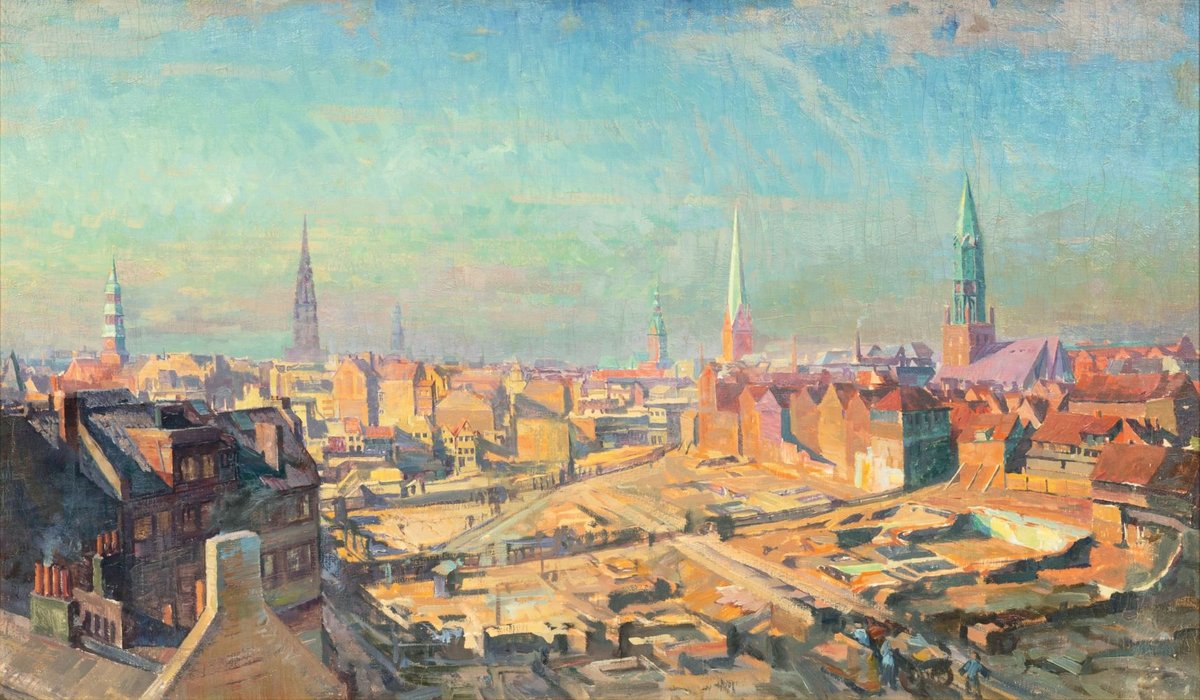
Established in 1919 as part of the Kiel Institute for the World Economy, the ZBW was envisioned as a central repository for economic literature. Despite significant interruptions during World War II, the institution managed to preserve and expand its collection, laying the groundwork for future leadership in economic research (Library Planet).
Postwar Expansion and Independence (1945–1970s)
After the war, the ZBW played a crucial role in supporting Germany’s economic recovery and academic research. The 1960s and 1970s saw rapid growth, modernization of cataloguing, and the forging of international partnerships, leading towards its institutional independence (Library Planet).
Digital Transformation & Hamburg Branch (1980s–2000s)
With the advent of digital technology, the ZBW evolved from a traditional library into a modern information center. Major investments in digital infrastructure democratized access to economic literature. The opening of the Hamburg branch intensified regional collaboration, particularly with local universities and research centers (EconBiz, Hamburg.de).
Integration into the Leibniz Association
In the 2000s, the ZBW joined the prestigious Leibniz Association, securing its status as a publicly funded, nationally significant research institution. This move accelerated the expansion of its physical and digital holdings, and by 2019, ZBW’s collection surpassed four million media units (Hamburg.de).
Research, Innovation, and International Collaboration
The ZBW is more than a library—it is a prominent research institution with professorships and doctoral programs focusing on digitalization, open science, and information retrieval. It partners with leading universities in Germany and abroad, and actively participates in major EU and German research initiatives aimed at driving innovation in academic publishing (Hamburg.de).
Visiting the ZBW
Hours, Location, and Accessibility
- Hamburg Branch Located in the historic Schlüterstraße building (since 2023), open Monday–Friday 9:00 AM–6:00 PM.
- Kiel Branch On the Kiel Institute campus, open Monday–Friday 8:30 AM–5:00 PM.
Both sites are easily reached by public transit, fully accessible for visitors with disabilities, and equipped with free Wi-Fi and modern research spaces.
Admission and Visitor Experience
- Admission Free for all visitors. No ticket required for general entry.
- Group Visits For guided tours or group workshops, booking in advance is recommended.
- Experience Access extensive collections, attend workshops/lectures, and explore collaborative spaces shared with institutions like the Humanities Research Center and GIGA.
Collection Growth and Digital Services
The ZBW houses more than four million physical media units and a robust suite of digital resources:
- EconBiz Specialized search portal with access to over ten million records (EconBiz).
- EconStor Open-access repository featuring more than 190,000 articles and working papers.
- Journals Publishes Wirtschaftsdienst and Intereconomics as gold open access journals (Hamburg.de).
Commitment to Open Science and Education
The ZBW champions open science by providing free digital discovery tools, open educational resources (OER), and AI-assisted courses under Creative Commons licenses. It regularly hosts conferences, workshops, and skills trainings to foster knowledge exchange (ZBW MediaTalk).
Frequently Asked Questions (FAQ)
Is the ZBW open to the public?
Yes, both branches welcome the public, researchers, and students. Admission is free.
Do I need a ticket?
No ticket is required. Bookings are needed only for group tours or workshops.
Are digital resources available remotely?
Yes, platforms like EconBiz and EconStor are accessible online.
Where is the Hamburg branch?
Schlüterstraße, sharing facilities with the Humanities Research Center and GIGA.
Does ZBW offer research support?
Yes, expert staff are available to assist with research and resource discovery.
Location & Accessibility
Address: Neuer Jungfernstieg 21, 20354 Hamburg, Germany, directly on the Binnenalster lake for central access to city attractions (ZBW Imprint).
Transport:
- Stephansplatz U1, bus lines 4, 5, 19, 112
- Dammtor S11, S21, S31, bus lines 4, 5, 19, 114
- Jungfernstieg S1, S2, S3, U2, U4, bus lines 4, 5, 19, X3
- Hauptbahnhof Central train and U-Bahn hub (Directions Hamburg)
Accessibility:
Fully accessible for wheelchair users, with accessible restrooms and support services (Learning Space Hamburg).
Visiting Hours and Entry
- Monday & Thursday 10:00 AM–6:00 PM
- Tuesday, Wednesday & Friday 10:00 AM–4:00 PM
- Admission Free. Register for a ZBW Card online or on-site to borrow materials (ZBW Library).
Facilities and Services
- Study Spaces Individual workstations, group rooms with E-Screens, lockers, book carts (Facilities Hamburg)
- Collections 4.43+ million items, 26,671+ journal subscriptions, on-site access to economic databases
- Digital Access EconBiz (9+ million datasets), EconStor (60,000+ open-access articles) (LinkedIn ZBW)
- Technology Free high-speed Wi-Fi, document scanners, printing/copying, charging stations
- Visitor Support Multilingual staff, guided tours, literature assistance
Practical Tips
- Register for your ZBW Card in advance.
- Electronic resources may be limited to on-site access; ask staff for help.
- Food and drinks are not permitted in study areas; cafés are nearby.
- Explore Jungfernstieg shopping and Planten un Blomen park after your visit (Hamburg Attractions).
- For international visitors, English and German support is available. Further help: Hamburg Tourist Info.
St. Michaelis Church, or "Michel," is a cultural and architectural icon in Hamburg. Renowned for its Baroque design and towering copper spire (132 meters), the church is a symbol of Hamburg’s resilience and offers sweeping views of the city.
Visiting Details
- Hours Mon–Sat 10:00 AM–6:00 PM, Sun/Public Holidays 12:00 PM–6:00 PM
- Tower Access 10:00 AM–5:30 PM
- Tickets Adults €5, Reduced €3, Children under 12 free, Family €12
(Michel official website) - Location Englische Planke 1, 20459 Hamburg
- Transport U3 line (St. Pauli or Feldstraße), short walk to the church
Highlights and Tips
- Guided tours (English/German), organ concerts, special events (event calendar)
- Panoramic city and harbor views from the tower—ideal for photography
- Nearby: Speicherstadt, Elbphilharmonie, Hamburg Harbor
- Accessibility: Main areas are accessible; tower requires climbing stairs
Summary and Final Tips
The ZBW – Leibniz Information Centre for Economics is a world-class institution blending historical legacy, extensive collections, and digital innovation. Both Hamburg and Kiel branches offer accessible, dynamic spaces for learning and research, with a strong commitment to open science. Visitors can access resources in person or online, attend engaging events, and explore Hamburg’s rich academic and cultural landscape. To maximize your experience, plan ahead using official ZBW resources, and consider pairing your library visit with nearby attractions like St. Michaelis Church for a deeper dive into Hamburg’s heritage (ZBW Visiting Information, EconBiz, Hamburg.de).