
Architectural Highlights
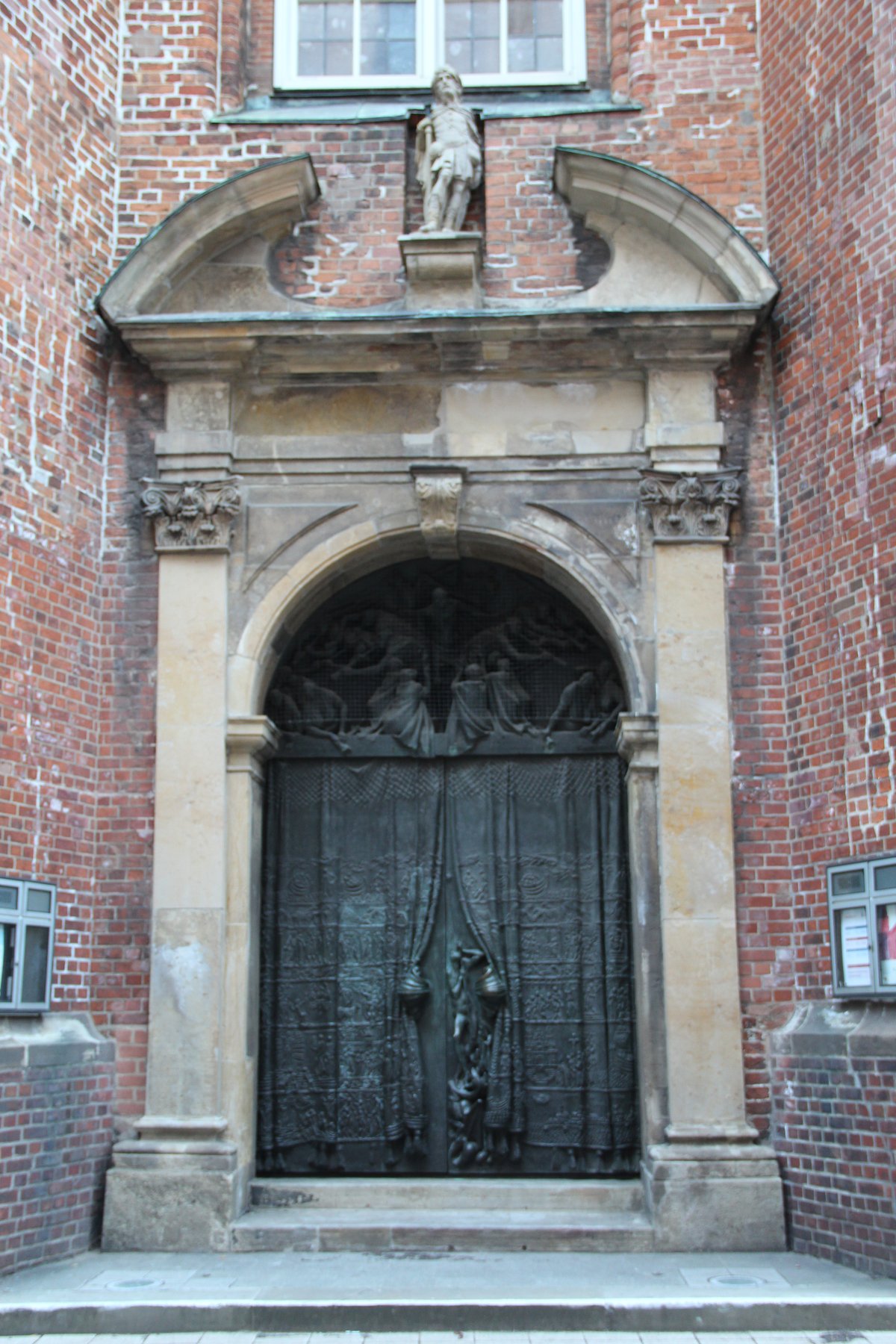
St. Jacobi exemplifies North German Brick Gothic architecture, featuring a soaring nave, pointed arches, ribbed vaults, and a renowned 125-meter spire. The west façade, modified over centuries, reflects both medieval and later adaptations, including Germany’s first lightning rod in 1769 (MyCityHunt). The church’s sacristy is the city’s only surviving example of secular Gothic architecture (Wikipedia).
Inside, natural light streams through tall Gothic windows, illuminating treasures such as the 15th-century Master Bertram altarpiece, medieval stained glass, and Hamburg’s oldest artwork—a lion doorknob from the 14th century (Nomad Epicureans).
The church’s layout—a three-naved hall expanded to four naves in the 15th century—was designed to accommodate large congregations and reflects the influence of Hamburg’s merchant class (Spotting History).
Religious and Cultural Significance
For over seven centuries, St. Jacobi has been a hub of Lutheran worship, hosting regular services, baptisms, weddings, and funerals. Its connection to the Camino de Santiago endures, with pilgrims receiving blessings and passport stamps before continuing their journey (Hamburg Travel). The church also serves as a venue for ecumenical and interfaith events, reflecting Hamburg’s diverse community.
Visitor Information
Opening Hours
- Monday–Saturday 10:00 AM – 6:00 PM
- Sunday 12:00 PM – 6:00 PM
- Closed or limited hours on public holidays and during special events.
Check the official website for current schedules.
Tickets and Admission
- General admission Free
- Donations Encouraged to support preservation and programming
- Special events or concerts Tickets may be required
Accessibility
- Wheelchair accessible Ramps at main entrances and accessible restrooms
- Guide dogs permitted
- Assistance available upon request
(Hamburg Travel)
Guided Tours and Events
- Guided tours Available regularly, typically Saturdays at 11:00 AM (German and English). Advance booking recommended, especially during peak seasons.
- Audio guides May be available for self-guided visits.
- Organ concerts & cultural events Regularly scheduled; see the events calendar.
Travel and Transport
- Location Jakobikirchhof 22, 20095 Hamburg, in the city’s Altstadt (Old Town)
- Nearest U-Bahn stations Mönckebergstraße (U3), Hauptbahnhof (U1, U2, U3, S1, S3)
- Bus lines Multiple options nearby
- Parking Public garages in the vicinity; limited spaces during peak hours
- Bike access Stadtrad bike-sharing stations nearby
(destinationabroad.co.uk)
Noteworthy Features
The Arp Schnitger Organ
Installed in 1693, the Arp Schnitger organ is Northern Europe’s largest baroque organ, with about 4,000 pipes and 60 registers. Regular recitals attract music lovers from around the world (Germany Travel Blog).
Medieval Altarpieces and Art
Don’t miss the Master Bertram altarpiece and other historical artworks that survived the city’s great fire and wartime bombings.
Unique Gothic Elements
The ribbed vaults, slender columns, and the only surviving secular Gothic sacristy in Hamburg make the church an architectural treasure (Wikipedia).
Pilgrimage and Camino Connection
St. Jacobi remains a vital stop for pilgrims on the northern route of the Camino de Santiago, offering blessings and official stamps (Hamburg Travel).
Visiting Recommendations and Tips
- Best times to visit May, June, and September offer pleasant weather and fewer crowds. December is also popular for Christmas markets (abackpackersworld.com).
- Dress code Modest attire is recommended; shoulders and knees covered, hats removed inside.
- Photography Allowed for personal use; no flash or tripods. Commercial filming requires permission.
- Facilities Restrooms, seating, and a small gift shop are available on-site.
- Nearby attractions Hamburg Rathaus, Speicherstadt, Mönckebergstraße, and other historic churches are within walking distance (wanderlog.com).
Frequently Asked Questions (FAQ)
Q: What are the church’s visiting hours?
A: Monday–Saturday 10:00–18:00; Sunday 12:00–18:00. Confirm on the official website for holiday hours.
Q: Is admission free?
A: Yes, with donations encouraged.
Q: Are guided tours available?
A: Yes, in German and English; book in advance.
Q: Is the church accessible for people with disabilities?
A: Yes, with ramps and accessible restrooms.
Q: Can pilgrims get a Camino de Santiago stamp?
A: Yes, at the church’s visitor center during opening hours.
Q: Are concerts and events held regularly?
A: Yes, especially organ recitals. Check the events calendar.
Q: Is there parking nearby?
A: Yes, public garages are available, but spaces may be limited during peak times.