Germany

Germany

Germany

Germany travel guide: plan rail-friendly trips through Berlin, Munich, Cologne and beyond, with the best seasons, routes, food, and historic stops.

location_city

Capital

Berlin

translate

Language

German

payments

Currency

Euro (EUR)

calendar_month

Best season

May-September; late November-December for Christmas markets

schedule

Trip length

7-14 days

badge

EntrySchengen area; 90/180 days for many non-EU visitors

Introduction

A Germany travel guide starts with a correction: this country is less a single mood than a chain of sharply different worlds linked by fast trains.

Germany rewards travelers who like contrast without logistical pain. You can start in Berlin, where Prussian grandeur, Cold War scars, and late-night clubs share the same map, then be in Hamburg for brick warehouses, harbor light, and fish markets that still feel tied to weather and tide. Head south to Cologne for Gothic scale on the Rhine, or to Dresden for courtly facades rebuilt after firebombing with almost defiant precision. Distances look large on paper, but the rail network keeps the country legible. That matters when you want one trip to hold museums, river cities, industrial edges, and mountain air.

The best trips lean into Germany's regional personality instead of chasing a single national stereotype. Munich gives you beer halls, art collections, and day-trip access to Alpine lakes. Nuremberg carries the weight of empire and the 20th century in the same streets. Heidelberg still knows how to stage a river-and-castle view, while Leipzig feels younger, sharper, and less polished in a good way. Then places like Lübeck, Erfurt, and Freiburg im Breisgau show how much of Germany's appeal lives outside the usual headline cities. One week works for a fast route. Ten days to two weeks lets the country breathe.

What makes Germany memorable is not just the postcard material. It is the way daily life has texture: bakery windows at 7 a.m., church bells over tram lines, lake water cold enough to jolt you awake, and restaurant menus that shift from Baltic fish to Swabian noodles to Saxon cake within a few train hours. The country is orderly, yes, but never flat. History keeps interrupting the surface. A Roman gate, a Bauhaus line, a bombed-out church tower, a Christmas market on a medieval square: each changes the mood. That density is why Germany works so well for first-timers and return visits alike.

A History Told Through Its Eras

Forest Ambushes, Palace Baths, and the First Idea of Germany

From Roman Frontier to Frankish Crown, 9-843

Rain falls through pine branches, shields slip in the mud, and somewhere in the Teutoburg Forest a Roman eagle disappears into the fog. In 9 CE, three legions under Varus were cut apart over three days by a coalition led by Arminius, a Cheruscan nobleman trained by Rome itself. Augustus is said to have cried, "Varus, give me back my legions," and one understands why: the Rhine, from that moment, hardened into more than a river. It became a line in Europe's imagination.

Ce que l'on ignore souvent, c'est que Arminius was no simple barbarian hero with leaves in his hair. He held Roman citizenship, spoke Latin, and knew exactly how the empire marched, camped, and trusted the wrong intelligence. His wife Thusnelda, handed to the Romans by her own father, ended in captivity; he himself was murdered by relatives who feared he was becoming too powerful. Germany begins, in part, with a family tragedy.

Then the scene shifts west to Cologne, Roman Colonia Claudia Ara Agrippinensium, named in 50 CE for Agrippina the Younger, who persuaded Emperor Claudius to raise her birthplace to colonial rank. Later still, power moved through Aachen, where Charlemagne liked heat, ceremony, manuscripts, and very long baths. On Christmas Day 800 in Rome, Pope Leo III placed the imperial crown on his head, and whether Charlemagne was truly surprised or merely performed surprise for the chroniclers, the effect was immense: the German lands were now tied to an imperial Christian project that would shape the next millennium.

That empire, however, was born with violence stitched into its hem. Charlemagne's Saxon campaigns lasted 32 years, and the massacre at Verden in 782 left 4,500 dead in a single day. The realm created schools, script, and the cathedral at Aachen, but it also created wounds. When the Carolingian order fractured after 843, the eastern kingdom that emerged carried both inheritances forward: learning and force, piety and ambition.

Charlemagne looms like a marble sovereign, but behind the throne was a man who practiced writing on wax tablets at night and refused to marry off his daughters because he could not bear to lose their company.

Einhard records that Charlemagne kept writing tablets under his pillow so he could train his hand in secret, an emperor doing homework after dark.

Bare Feet in the Snow, Bells of Reform, and a Realm That Would Not Obey

Empire, Cathedrals, and Conscience, 843-1648

Picture January 1077: Henry IV, Holy Roman Emperor, standing barefoot in the snow outside Canossa, wrapped in penitential wool and waiting three days for Pope Gregory VII to receive him. The image never left Europe. Here was the ruler of the German lands humiliated in public, then restored, then soon enough fighting back. Speyer Cathedral, Mainz, Worms, Cologne, all those immense stone bodies along the Rhine, belong to this age when emperors and bishops wrestled for who had the right to crown, condemn, and command.

Ce que l'on ignore souvent, c'est that the Holy Roman Empire was less a solid state than a magnificent argument. Free cities bargained, princes schemed, bishops taxed, and dynasties married with one eye on eternity and the other on revenue. In Nuremberg, imperial diets and regalia gave the city a ceremonial prestige that far exceeded its size; in Cologne, relics and trade made sanctity profitable; in Lübeck, the Hanseatic merchants proved that ledgers could matter as much as lances.

Then came the monk with the hammer, or rather the professor with a talent for turning academic dispute into continental upheaval. In 1517 Martin Luther sent his challenge into the world from Wittenberg, and within a few years Germany's churches, schools, printing houses, and dinner tables had changed. Princes discovered conviction, yes, but also opportunity; peasants heard the language of liberty and paid for that hope in blood during the Peasants' War of 1524-1525.

By the time the Thirty Years' War ended in 1648, much of the German world had been ravaged by hunger, soldiers, plague, and taxation. Towns were emptied, fields went wild, and dynastic claims had trampled ordinary lives for a generation. The Peace of Westphalia closed one chapter of religious civil war, but it also opened another age in which courts, uniforms, and disciplined states would rise from the ashes.

Martin Luther was not a bronze reformer from the first day; he was an anxious Augustinian friar tormented by sin, appetite, and the terrifying question of whether grace could ever be earned.

Frederick Barbarossa, the emperor of crusading legend, did not die gloriously in battle but drowned in 1190 in the Saleph River, thrown from his horse and dragged down by cold water.

Powdered Wigs, Iron Chancellors, and a Nation Forged Late

Courts, Kingdoms, and the German Question, 1648-1918

Open a lacquered snuffbox in Potsdam, hear a flute in a candlelit room, and you are in the world of Frederick the Great. After 1648, the German lands did not become peaceful; they became organized. Prussia drilled, Austria dazzled, smaller courts cultivated opera houses and hunting lodges, and every ruler wished to look both enlightened and obeyed. In Dresden, Augustus the Strong spent on porcelain and spectacle with the appetite of a man who believed magnificence was a form of policy.

Ce que l'on ignore souvent, c'est that German culture reached political unity by a very indirect road. Long before one empire existed, a republic of music, philosophy, and literature already did: Bach in Leipzig, Goethe and Schiller in Weimar, Beethoven in Bonn and Vienna, Caspar David Friedrich in Dresden, Heidelberg filling with romantics who turned ruins into national emotion. Germany first imagined itself in poems, scores, and university lecture halls.

Napoleon shattered the old order and, by humiliating it, helped remake it. The Holy Roman Empire vanished in 1806 after nearly a thousand years, less with a trumpet blast than with legal exhaustion. Out of the wreckage came reforms, railways, customs unions, and the hardening rivalry between Austria and Prussia over who would speak for the German world.

The answer arrived in blood and paperwork. Otto von Bismarck defeated Denmark in 1864, Austria in 1866, and France in 1870-1871, then had the German Empire proclaimed in the Hall of Mirrors at Versailles on 18 January 1871. A nation had been made, but on terms chosen by generals, monarchs, and ministers. That mattered later, when industrial strength, social tension, and imperial ambition drove the Kaiserreich toward the catastrophe of 1914.

Otto von Bismarck liked to pose as iron itself, yet he was prickly, theatrical, often ill, and perfectly capable of using insult, charm, or silence depending on which would humiliate an opponent more efficiently.

King Ludwig II of Bavaria, patron of Wagner and builder of fantasy castles near Munich, was declared insane in 1886 and found dead in Lake Starnberg the next day beside the psychiatrist who had certified him.

From Ruins to the Wall, and from the Wall to a New Republic

Dictatorship, Division, and the Long Return, 1918-1990

A railway carriage in November 1918, a signature under pressure, and the empire is over. Kaiser Wilhelm II fled, the First World War ended in defeat, and the Weimar Republic inherited inflation, humiliation, street violence, and a political class asked to build a democracy while half the country despised the very idea. Yet this fragile republic also gave Germany cinemas, cabarets, Bauhaus, Einstein's fame in Berlin, and a dazzling if precarious modernity.

Then came the collapse. Hitler was appointed chancellor on 30 January 1933, and within months law, fear, and propaganda had done their work. Ce que l'on ignore souvent, c'est how administrative the terror could look at first: decrees, forms, dismissals, seizures, polite notices on official paper. The regime ended in genocide and war, with Cologne, Hamburg, Dresden, Berlin, and dozens of other cities shattered by bombing while Europe paid the far greater price of German conquest and extermination policy.

Not everyone bowed. Sophie Scholl and the White Rose wrote and distributed leaflets in Munich in 1942 and 1943, asking why Germans remained silent while crimes were committed in their name. She was 21 when she was executed. One sheet of paper can weigh more than a monument.

After 1945 the country split into two states: the Federal Republic in the west, the German Democratic Republic in the east. The border became concrete in 1961 when the Berlin Wall rose almost overnight, dividing streets, families, cemeteries, and daily habits. In Berlin the Cold War was not an abstraction but a sound of boots, guard towers, and trains that no longer stopped.

And then, suddenly, the wall opened on 9 November 1989 because an official misspoke, a press conference drifted, and thousands of East Berliners decided history would not wait for tidier instructions. Reunification followed in 1990. The new Germany would have to learn how to carry memory without being trapped by it, and how to make Berlin once again the stage on which the next act of the republic would be played.

Sophie Scholl looks saintly in photographs, but the force that mattered was not innocence; it was discipline, nerve, and the decision to act when most people preferred not to know.

The fall of the Berlin Wall accelerated after Günter Schabowski, reading from incomplete notes on live television, said new travel rules applied "immediately, without delay" and border guards were left to improvise history.

Memory as a Civic Duty

The Berlin Republic, 1990-present

Walk through Berlin on a grey morning and the ground itself starts speaking: brass Stolpersteine in the pavement, the concrete slabs of the Memorial to the Murdered Jews of Europe, the Reichstag dome rebuilt in glass so that citizens may literally look down on parliament. Modern Germany chose, with effort and argument, not to hide its past behind triumphal arches. That choice defines the republic as much as any constitution.

Ce que l'on ignore souvent, c'est how regional the country still feels beneath the federal flag. Munich moves with Bavarian self-confidence; Hamburg keeps its merchant spine; Cologne wears Catholic laughter lightly; Leipzig and Dresden carry the afterlife of East Germany in architecture, wages, and memory. The nation is united, but it has never been uniform.

Reunification was expensive, slow, and emotionally uneven. Factories closed in the east, loyalties fractured, and the promise of one people did not erase different biographies. Yet Germany also became the economic center of the European Union, a country whose trains, export industries, constitutional court, museums, and memorial culture all turned administration into a national art form.

This last chapter is not tidy. Debates over migration, energy, Europe, war memory, and Russia keep reopening older questions about what Germany owes to its neighbors and to itself. Perhaps that is the most German ending possible: not certainty, but a republic that distrusts grand poses and keeps returning to the file, the archive, the witness, and the lesson.

Helmut Kohl sold reunification as destiny, but he was also a patient provincial tactician from Ludwigshafen who understood that treaties and currency conversions would decide whether emotion became statecraft.

When the Reichstag was wrapped in silver fabric by Christo and Jeanne-Claude in 1995, five million people came to look at a parliament hidden from view, which says something precise about Germany's taste for symbolism.

The Cultural Soul

A Tongue With Brass Buttons

German does not enter a room. It arrives, hangs up its coat, and labels the hook. A traveler hears this first in Berlin on a tram, then again in Munich at a bakery counter, then in Hamburg on a platform board where every noun stands upright with a capital letter, as if even grammar has polished its shoes. The language loves compound words the way certain dynasties loved annexation: by joining one precise thing to another until the result becomes both comic and exact.

Then you notice the tenderness hidden inside the machinery. Feierabend is not only the end of work; it is the unlocking of the jaw. Gemutlichkeit is not décor but temperature between people. Heimat can undo a person at a train station. A country is a table set for strangers, and German, for all its steel and hinges, keeps a place card ready.

Pronouns conduct the whole opera. Sie is distance, respect, upholstery. Du is permission. To move from one to the other is not small talk but a ceremony so light you could miss it, and so decisive that once it happens the room changes shape.

The Courtesy of Exactness

Germany's politeness does not wear perfume. It keeps time. If someone in Cologne says eight, the sentence means eight, not eight-ish, not after one more message, not whenever destiny permits. Visitors from cultures that wrap refusal in ribbons may find the first no almost shocking. Then relief sets in. One clear answer saves a great deal of theater.

Formality here is not a wall. It is a handrail. Start with Herr or Frau, use Sie, wait to be invited closer, and the social air becomes breathable. In Nuremberg or Dresden, the pleasure lies in seeing how quickly reserve can turn to warmth once the ritual has been observed. Ritual is underrated. Without it, affection goes feral.

Volume matters more than many guidebooks admit. On trains, in stairwells, at breakfast buffets, people do not perform themselves for the room. Quiet is not shyness. Quiet is civic architecture. Even queueing has a moral undertone, as if order were not obedience but a modest gift you offer the next person.

Salt, Smoke, Bread, Mercy

German food has suffered from lazy description for too long. People speak as if the national table were only sausage and punishment. This is slander. The real grammar is regional, seasonal, and oddly emotional: white asparagus in April treated like a state occasion, dark bread so serious it could preside over a trial, butter cakes and plum cakes that turn a Sunday afternoon into a liturgy.

In Munich, Weisswurst before noon still carries the force of old etiquette; the sausage was once meant to be eaten before church bells marked midday and freshness became theology. In Hamburg, fish sandwiches belong to the harbor wind and to fingers that accept dripping sauce as the price of truth. In Cologne, a glass of Kolsch arrives one after another in narrow cylinders, and the speed of replacement tells you everything about Rhineland sociability.

Food here often prefers nouns to adjectives. Bread, mustard, horseradish, dill, caraway, poppy seed, juniper, vinegar. That is why it works. German cooking understands that appetite is not seduced by speeches. It is won by broth, crust, and the exact moment when a potato stops being humble and becomes destiny.

Books That Walk In Winter

German literature knows that thought has a body. You feel it in Goethe, who gave longing such elegant footwear, and in Kleist, who could make a sentence behave like a trapdoor. Then Kafka appears from Prague, writing in German with the politeness of a clerk and the panic of a man who has discovered that offices may be the final form of metaphysics. A file can ruin a soul. Germany understands this better than most countries.

The 20th century hardened the shelf. Thomas Mann turned bourgeois interiors into cathedrals of decay. Bertolt Brecht taught a stage to interrupt itself. W. G. Sebald walked through memory as though every railway embankment in Germany might suddenly confess. In Berlin, the bookshops still carry that double inheritance: philosophy on one table, witness on the next, poetry a few steps away like contraband for the tender.

What moves me most is the distrust of easy consolation. German writing does not rush to forgive history, language, or family. Good. Mercy without attention is only laziness. Yet in Heidelberg or Leipzig, in those university streets where printers, students, and exiles once fed the same argument, you can feel another impulse too: the faith that a sentence, properly built, may keep disaster from becoming amnesia.

Stone That Remembers Its Orders

German architecture does not flatter you. It instructs, shelters, intimidates, consoles, and occasionally confesses. In Cologne Cathedral, the vertical ambition is almost rude; the building does not invite your gaze upward so much as seize it by the chin. In Berlin, glass and void stand beside Prussian symmetry and postwar repair, and the city reads like an argument conducted in masonry across two centuries and one wound that refused anesthesia.

Then the register changes. Freiburg im Breisgau offers lanes where water still runs beside the pavement in shallow Bächle, a civic detail so practical and so charming in the old sense of the word that children and pigeons both submit to it. Lübeck gives you Brick Gothic, those red façades and stepped gables that prove northern trade once had a theology of its own. Brick can dream, apparently.

Germany's most revealing habit may be reconstruction. Not imitation, not denial, but the stubborn decision to rebuild what violence broke and to leave traces where forgetting would have been easier. Dresden carries that paradox in every conversation about its skyline. Architecture here is never only about style. It is about what a country chooses to restore, and what it leaves visible so the lesson keeps breathing.

Where Discipline Begins To Sing

Music in Germany is treated less as entertainment than as civil engineering for the soul. Bach in Leipzig still feels like municipal infrastructure: fugue as public utility, counterpoint as a way of proving that complexity need not collapse into noise. You hear this inheritance everywhere, from church organs that smell faintly of dust and candle wax to concert halls where audiences cough with almost ceremonial timing between movements.

And then there is the other Germany, the one that learned electricity. Berlin gave Europe cabaret venom, then techno cathedrals where repetition becomes trance and anonymity becomes a form of tenderness. Wagner in Bayreuth wanted total artwork; Berghain, in its own less upholstered manner, also understands total environments. Different incense. Same hunger.

Even domestic music rituals reveal something exact. Christmas means chorales, not background murmur. Beer tents in Bavaria run on brass and collective memory. Choirs remain stubbornly alive in towns that tourists pass through too quickly. A people who sing in parts admit an important truth: harmony is work, and work, on a good evening, can become joy.

What Makes Germany Unmissable

train

Fast city contrasts

Few countries let you move this easily between such different places. Berlin, Hamburg, Munich, and Cologne each feel self-contained, yet the train network makes multi-city routes simple.

castle

History with edges

Germany's landmarks are not polished into blandness. Roman ruins, Gothic cathedrals, royal residences, and memorial sites sit close enough to show how power, faith, and war shaped the same ground.

restaurant

Regional food cultures

German food changes more than outsiders expect. Think Fischbrötchen in the north, Franconian sausages in Nuremberg, Bavarian beer halls in Munich, and dense cake traditions in Dresden and beyond.

hiking

Forests, rivers, Alps

The landscape shifts from Baltic coast and river valleys to Black Forest trails and Alpine ridgelines. You can build one trip around city museums and still end it beside a lake or on a mountain path.

storefront

Christmas market season

From late November to December 24, Germany turns public squares into ritual. Nuremberg, Dresden, Cologne, and smaller towns do this especially well, with markets that still feel local rather than staged.

photo_camera

Architectural variety

Germany gives photographers a broad field: warehouse districts in Hamburg, baroque silhouettes in Dresden, castle views in Heidelberg, and half-timbered streets in towns that escaped modern smoothing.

Cities

Cities in Germany

Munich

"Bavaria's capital runs on beer-hall democracy and Baroque excess, with the Alps visible on clear days from the English Garden."

232 guides

Nuremberg

"Medieval walls, a Christmas market that has run since 1628, and a courthouse where the 20th century was put on trial."

148 guides

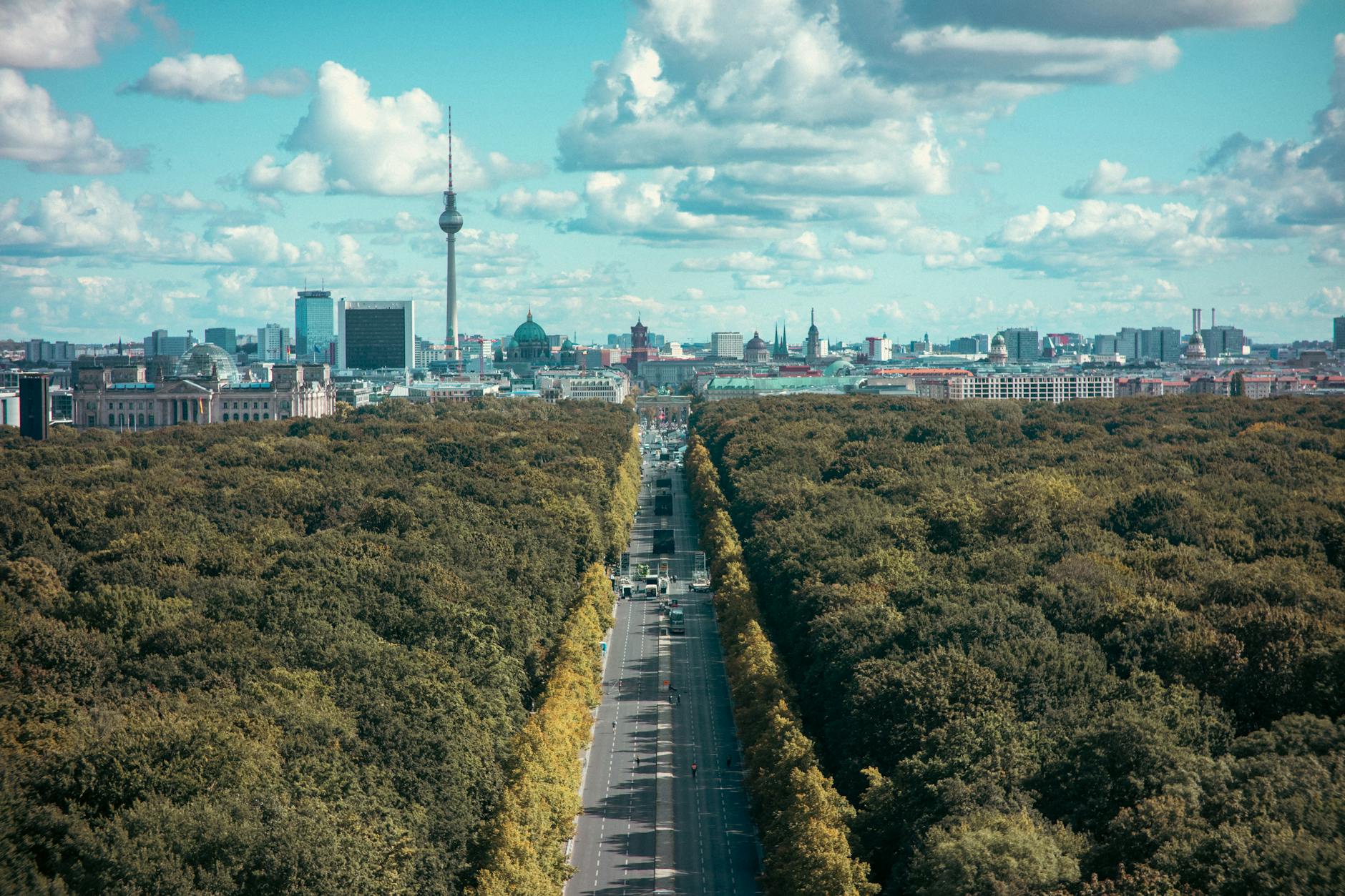
Berlin

"Stand at Bernauer Straße at dusk and you can still feel the concrete dust of 1961 in your teeth. That tension never quite left the city."

5 guides

Duisburg

"Duisburg doesn’t polish its past—it rewires it, then invites you to climb the circuitry at sunset."

Hamburg

"A port city that burned to the ground in 1842, rebuilt in red brick, and has been reinventing its waterfront ever since."

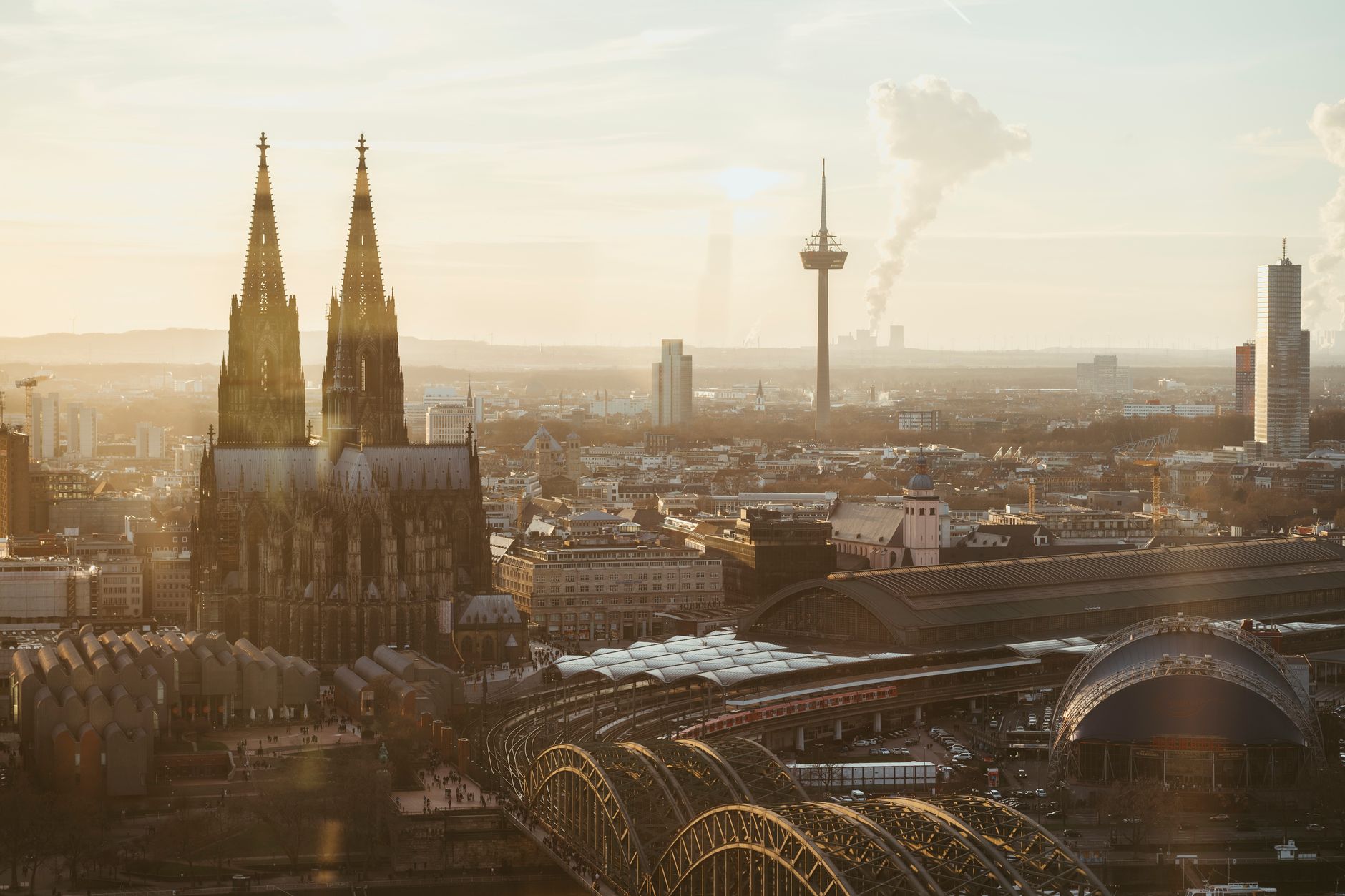
Cologne

"The Romans founded it in 50 CE, named it for Agrippina the Younger, and the Gothic cathedral they never built took 632 years to finish."

Dresden

"Firebombed in February 1945 and then frozen under socialism, its Baroque skyline has been painstakingly reassembled stone by stone since 1990."

Heidelberg

"The castle has been a ruin since 1693 and the ruin is more romantic than most intact palaces in Europe."

Leipzig

"Bach composed here, Wagner was born here, and in October 1989 seventy thousand people walked peacefully through its streets and ended a dictatorship."

Freiburg Im Breisgau

"A university city on the Black Forest's edge where medieval water channels still run down the gutters of every shopping street."

Lübeck

"Thomas Mann's birthplace, a UNESCO-listed brick-Gothic island city, and the place that gave marzipan its German mythology."

Erfurt

"Luther studied law here before lightning changed his mind, and the medieval Jewish mikveh discovered under a parking lot in 1988 is one of the best-preserved in Europe."

Regensburg

"A Roman garrison town on the Danube that the Second World War somehow missed, leaving 1,500 medieval buildings intact on a bend in the river."

Regions

Berlin

Berlin and the Northeast

Berlin sets the tone for the northeast: broad avenues, hard 20th-century history, and a cultural life that rarely bothers to flatter you. Push beyond the capital and the region gets quieter, flatter, and more maritime, with brick towns, lakes, and a Baltic horizon that feels far from the Reichstag.

placeBerlin placeLübeck placeMuseum Island placeSanssouci Palace placeRügen

Dresden

The Elbe and Saxon Cities

Dresden, Leipzig, and Erfurt make a strong central-eastern circuit because each city solved history differently. Dresden rebuilt a courtly face after catastrophe, Leipzig kept its trade-fair and music-city confidence, and Erfurt still feels like a place where medieval street lines never received the memo about modernity.

placeDresden placeLeipzig placeErfurt placeSaxon Switzerland National Park placeMeissen

Cologne

The Rhine and Ruhr

Western Germany is less picturesque at first glance and more rewarding on the second. Cologne gives you the cathedral and the Roman bones, while Duisburg and the wider Ruhr show what happens when an industrial region learns to turn blast furnaces, canals, and workers' districts into culture without scrubbing off the soot.

placeCologne placeDuisburg placeCologne Cathedral placeRhine promenade placeLandschaftspark Duisburg-Nord

Hamburg

The North Sea and Hanseatic Coast

Hamburg anchors the north with port wealth, stern brick architecture, and weather that changes its mind by the hour. This is Germany in a maritime register: fish markets, warehouse districts, ferry commutes, and old Hanseatic cities that still carry merchant pride in the width of their gables.

placeHamburg placeLübeck placeSpeicherstadt placeElbphilharmonie placeTravemünde

Heidelberg

Southwest Germany

The southwest runs on river valleys, university towns, vineyards, and a quieter sort of prosperity. Heidelberg supplies the famous silhouette, but Freiburg im Breisgau is the better measure of the region's daily pleasures: tram lines, market squares, and quick escapes into the Black Forest without theatrical fuss.

placeHeidelberg placeFreiburg im Breisgau placeHeidelberg Castle placeBlack Forest placeBaden-Baden

Munich

Bavaria and Franconia

Munich may be the flagship, but Bavaria makes more sense once you add Franconia's tighter grain and older mercantile cities. Nuremberg and Regensburg bring imperial memory and stone bridges; Munich brings big museums, excellent transport, and a beer culture that can be convivial or faintly militarized, depending on the tent.

placeMunich placeNuremberg placeRegensburg placeMarienplatz placeEnglish Garden

Suggested Itineraries

3 days

3 Days: Berlin, Leipzig, Dresden

This is the compact east-Germany route for first-timers who want weighty history without spending half the trip in transit. Start in Berlin for scale, move to Leipzig for music and trade-city intelligence, then finish in Dresden where baroque facades and war memory sit on the same riverbank.

Berlin→Leipzig→Dresden

Best for: first-timers, museum lovers, short rail breaks

7 days

7 Days: Cologne to the Northern Ports

Begin on the Rhine in Cologne, cut through post-industrial Duisburg, then head north to Hamburg and Lübeck for brick Gothic streets and Hanseatic air. It is a smart route for travelers who prefer rivers, ports, warehouses, and old merchant wealth to fairy-tale castles.

Cologne→Duisburg→Hamburg→Lübeck

Best for: urban explorers, architecture fans, second-time visitors

10 days

10 Days: Black Forest Edge to Bavaria

This route links southwest Germany to Franconia and old Bavaria without forcing absurd backtracking. Freiburg im Breisgau gives you vineyards and easy mountain access, Heidelberg brings the river-and-university mood, Nuremberg and Regensburg add medieval street plans with a hard historical edge, and Munich closes with museums, beer halls, and disciplined transport.

Freiburg im Breisgau→Heidelberg→Nuremberg→Regensburg→Munich

Best for: food travelers, rail pass users, history-heavy trips

14 days

14 Days: Alpine Bavaria in Depth

Stay in the south and do it properly instead of pretending Germany can be 'done' in two train rides. Munich works as the base city, but the real pleasure comes from moving through lake country, mountain railways, and small-town Bavaria where church towers, hiking paths, and serious cake counters still shape the day.

Munich→Augsburg→Garmisch-Partenkirchen→Füssen→Berchtesgaden

Best for: slow travelers, hikers, repeat visitors

Notable Figures

Arminius

c. 17 BCE-21 CE · Tribal leader and Roman-trained strategist
Led the anti-Roman ambush in the Teutoburg Forest in what is now northwestern Germany

He is the man later centuries turned into Hermann the national liberator, though the truth is more interesting. Arminius learned war from Rome, used Roman discipline against Roman legions, and never lived to enjoy the legend; his own relatives killed him when they feared he wanted a kingship.

Charlemagne

742-814 · King and emperor
Made Aachen one of the great political and sacred centers of the early medieval German world

He gave the German lands an imperial horizon before they were a nation. In Aachen he built, bathed, prayed, studied, and staged power with extraordinary confidence, while waging wars brutal enough to remind us that European unity was not born in innocence.

Hildegard of Bingen

1098-1179 · Abbess, visionary, composer
Wrote and ruled from the Rhine region near Bingen

Hildegard heard voices, advised popes and emperors, wrote on medicine and theology, and composed music that still seems to rise like incense from stone. Medieval Germany was not only armored men and imperial diets; it was also a woman on the Rhine whose authority even powerful men found difficult to ignore.

Martin Luther

1483-1546 · Theologian and reformer
Launched the Reformation from Wittenberg and reshaped religious life across the German lands

Luther did more than challenge indulgences. He changed the sound of German religion, the texture of education, and the language itself by making scripture read like something people could hear at their own table.

Johann Wolfgang von Goethe

1749-1832 · Writer and statesman
Worked in Weimar and became the literary conscience of the German-speaking world

Goethe made Germany legible to itself before politics managed the feat. He wrote of desire, ambition, science, color, and self-invention with such range that later generations treated him like a secular classic, half poet and half institution.

Otto von Bismarck

1815-1898 · Chancellor and unifier
United Germany under Prussian leadership in 1871

Bismarck understood that speeches matter, but armies, alliances, and timing matter more. He made the empire in Versailles, mistrusted sentiment in politics, and then spent years trying to keep the state he had forged from flying apart under the pressure of its own success.

Ludwig II

1845-1886 · King of Bavaria
Ruled from Munich and transformed the Bavarian landscape with theatrical castles

Germany's most operatic king preferred moonlit fantasy to ministerial routine. His castles near Munich look like fairy tales, but behind them stood debts, isolation, Wagner, and a death in Lake Starnberg that still attracts suspicion.

Sophie Scholl

1921-1943 · Resistance activist
Studied in Munich and co-led the White Rose resistance circle

She carried leaflets into the University of Munich and chose clarity over survival. In a history crowded with rulers and generals, Sophie Scholl reminds Germany that moral authority sometimes arrives in the hands of a student with paper in her coat.

Konrad Adenauer

1876-1967 · First Chancellor of West Germany
Former mayor of Cologne who anchored the Federal Republic after 1949

Adenauer was already an old man when he helped build West Germany, which may be why he distrusted improvisation and adored structure. From Cologne to Bonn, he gave the new republic Catholic sobriety, western alignment, and a stubborn belief that democracy could be taught by habit.

Helmut Kohl

1930-2017 · Chancellor of reunification
Steered West Germany and then united Germany through 1989-1990

Kohl rarely looked elegant, which helped people underestimate him. He seized the opening of 1989 faster than many expected, tied unity to Europe, and made reunification happen not only in speeches before crowds in Berlin, but in clauses, budgets, and treaties.

Top Monuments in Germany

Practical Information

passport

Visa

Germany is in the Schengen Area. EU citizens can enter freely, while US, Canadian, Australian, and UK passport holders can usually visit visa-free for up to 90 days in any 180-day period; from 10 April 2026, the Entry/Exit System records first entry with a photo and fingerprints, so Frankfurt and Munich airport lines can move slowly.

payments

Currency

Germany uses the euro. Cards work in most hotels, chain stores, and stations, but cash still matters in smaller restaurants, market stalls, older pubs, and some taxis, so keep a few €20 notes and coins on hand.

flight

Getting There

Frankfurt, Munich, and Berlin are the main long-haul gateways, with Hamburg, Cologne/Bonn, and Düsseldorf handling strong European traffic. Frankfurt Airport is the easiest rail hub of the lot: you can land, clear passport control, and be on an ICE train without changing terminals.

train

Getting Around

Deutsche Bahn ties the country together fast, at least on paper: Berlin to Hamburg takes about 1 hour 50 minutes, and Frankfurt to Munich about 3 hours 15 minutes. Book early on bahn.de or DB Navigator for Sparpreis fares, and consider the €58 Deutschlandticket if your trip leans on regional trains, S-Bahn, U-Bahn, trams, and buses.

wb_sunny

Climate

Germany has warm summers, cold winters, and rain in every month, but the feel changes sharply by region. Berlin and Dresden can turn hot and dry in July, Hamburg stays cooler and windier, and Munich plus the Alpine fringe run colder in winter with real snow risk.

wifi

Connectivity

Mobile coverage is solid in cities and along main rail corridors, though dead spots still appear in forested or rural stretches. Buy a local or EU-wide eSIM before arrival if you need data from the platform, because public station Wi-Fi is useful for ten minutes and then starts testing your patience.

health_and_safety

Safety

Germany is a very safe country for most travelers, with the usual city cautions around pickpockets in major stations, Christmas markets, and crowded transit. The bigger practical risk is administrative rather than criminal: ticket inspections, platform changes, Sunday closures, and pharmacy opening hours all punish people who assume things will sort themselves out.

Taste the Country

restaurantWeisswurst mit susem Senf

Morning in Munich. Peel, dip, eat before noon, drink wheat beer, share table talk.

restaurantSpargel mit Sauce Hollandaise

April and May ritual. Knife, fork, potatoes, ham, silence, then praise.

restaurantFischbrotchen

Harbor lunch in Hamburg. Stand, bite, drip, wipe hands, watch ferries.

restaurantMaultaschen in Bruehe

Swabian supper. Spoon, broth, dumplings, family table, long talk, second helping.

restaurantKaffee und Kuchen

Afternoon ceremony. Coffee, cake, porcelain, grandparents, neighbors, patience.

restaurantKoelsch with a Halver Hahn

Cologne evening. Rye roll, cheese, mustard, beer, friends, arguments, laughter.

restaurantCurrywurst mit Pommes

Late lunch or later night in Berlin. Fork, paper tray, ketchup, curry powder, standing crowd.

Tips for Visitors

euro
Carry Small Cash

Budget for cash even if you tap everywhere at home. A bakery in Leipzig, a wine tavern near Heidelberg, or a market stall in Munich may still prefer notes over cards, especially for purchases under €10.

train
Book ICE Early

Long-distance rail gets expensive fast. If you know your dates, buying Sparpreis tickets two to six weeks ahead can cut fares by half compared with buying on the day.

schedule
Respect Sundays

Shops close hard on Sundays outside stations, airports, and a few corner cases. Museums, parks, and long lunches make sense that day; grocery shopping at 6 p.m. does not.

restaurant
Reserve Dinner

Book ahead in Munich, Berlin, and Hamburg on Friday and Saturday nights, and do the same anywhere during Christmas market season or major fairs. Germans do not treat restaurant reservations as decorative suggestions.

volume_off
Keep The Volume Down

On regional trains, in apartment buildings, and after 10 p.m., noise reads differently here than it does in Spain, Italy, or the US. The easiest etiquette win in Germany is simply to speak one notch lower than you think you need to.

receipt_long
Validate Tickets

If your local ticket is not time-stamped at purchase, validate it before boarding when required. Inspectors in Berlin, Dresden, and Cologne are not interested in explaining the system after the fact, and the fine usually starts around €60.

health_and_safety
Know Pharmacy Hours

Pharmacies rotate after-hours duty, and not every green cross means open right now. Check the nearest Notdienst listing before you need cold medicine at 11 p.m., especially in smaller towns.

Explore Germany with a personal guide in your pocket

Your Personal Curator, in Your Pocket.

Audio guides for 1,100+ cities across 96 countries. History, stories, and local insight — offline ready.

smartphone

Audiala App

Available on iOS & Android

download Download Now

Join 50k+ Curators

Frequently Asked

Do I need a visa for Germany as a US citizen in 2026? add

Usually no, for trips up to 90 days in any 180-day Schengen window. You still need a valid passport, onward or return plans are sensible, and first entry can take longer now that the EES biometric system is live at external Schengen borders.

Is Germany expensive for tourists right now? add

Moderately, and the gap between cities is real. A careful traveler can manage on €50 to €70 a day, while Munich and Hamburg push mid-range budgets up much faster than Leipzig, Dresden, or Erfurt.

Can you travel around Germany without a car? add

Yes, very easily for cities and most classic routes. Deutsche Bahn, regional trains, and urban transit cover Berlin, Hamburg, Cologne, Dresden, Heidelberg, Munich, Nuremberg, Leipzig, Lübeck, and Freiburg im Breisgau well enough that a rental car often becomes a parking problem with upholstery.

Is the Deutschlandticket worth it for tourists? add

Yes, if you are taking several regional trains or using urban transit daily. It does not cover ICE, IC, or EC trains, so it is brilliant for slower multi-city travel and poor value for a sprint across the country on high-speed rail.

How many days do you need in Germany? add

Seven to ten days is the useful minimum if you want more than one region. Three days works for a single corridor such as Berlin, Leipzig, and Dresden, while two weeks lets you combine a city route with Bavaria, the Rhine, or the northern coast without turning the trip into luggage aerobics.

Is Germany cash only or can I pay by card? add

You can pay by card in most hotels, supermarkets, chain cafes, and transport systems, but Germany is not fully cashless. Smaller restaurants, older pubs, weekly markets, and some taxis still prefer cash, so arriving with only a phone wallet is optimism posing as planning.

What is the best month to visit Germany? add

September is the safest all-round answer. The weather is usually mild, summer crowds ease off, wine regions are lively, and cities from Berlin to Munich still have long enough days to feel generous rather than damp and hurried.

Are trains in Germany reliable enough for a trip? add

Reliable enough, yes; flawlessly punctual, no. Build slack into tight connections, avoid same-minute platform changes when catching flights, and treat DB app notifications as part of the journey rather than an optional extra.

Sources

Last reviewed: