
Hovhannes Tumanyan: Life and Impact
Hovhannes Tumanyan (1869–1923) stands as an iconic figure in Armenian literature and public life. Born in the village of Dsegh to a priestly family with deep historical roots, Tumanyan was raised amidst rich oral traditions—an upbringing that shaped his future works (Wikipedia; Armenian House). Despite not completing formal education at the Nersesian Academy in Tiflis (now Tbilisi), Tumanyan’s voracious self-education and engagement in the intellectual circles of the time allowed him to develop a literary style rooted in realism and lyricism (Armenian History).
Tumanyan’s influence extended well beyond poetry. As an activist, he played crucial roles during the Armenian–Tatar massacres and was a humanitarian during the Armenian Genocide, founding the House of Armenian Art in Tiflis and tirelessly advocating for Armenian unity and cultural preservation (Wikipedia). His works—such as "Krounk" (“The Crane”), "Hayots Lerneroum" (“In the Armenian Mountains”), and "Sasuntsi Davit" (“David of Sasun”)—anchor the Armenian literary canon and are celebrated for their enduring social and national resonance (Armenian House).
The Monument: Symbolism, Design, and Setting
Historical and Cultural Significance
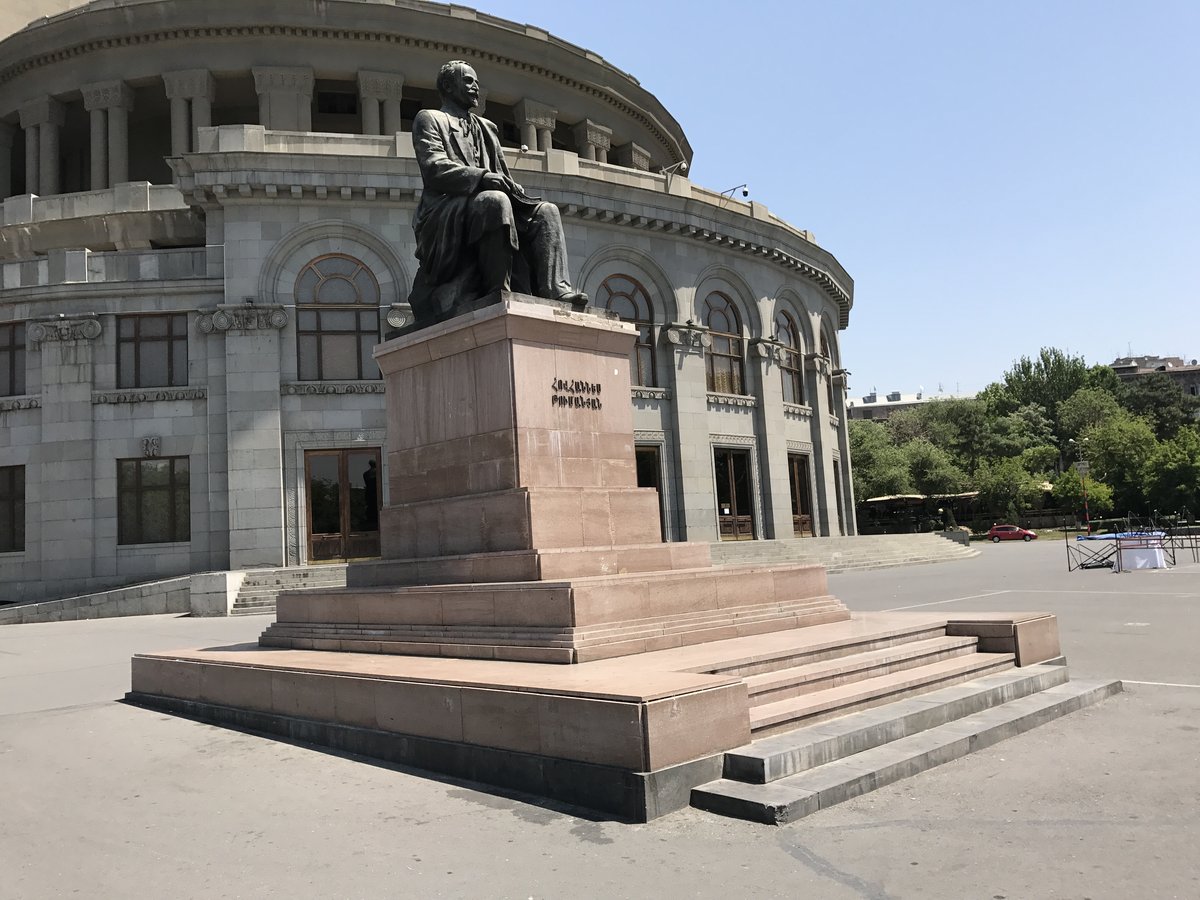
Unveiled in 1957 during a period of heightened cultural renaissance, the Hovhannes Tumanyan Monument was created to commemorate his literary genius and civic contributions (visityerevan.am). Located in Freedom Square, adjacent to the Alexander Spendiaryan National Academic Theatre of Opera and Ballet, the monument forms a central point in Yerevan’s cultural landscape (aypoupen.com).
Artistic Features
- Design Crafted by architect Grigor Aghababyan and sculptor Ara Sargsyan, the statue embodies mid-20th-century Armenian realism. Tumanyan is depicted seated, draped in a coat, with a book on his knee, inviting contemplation and intellectual engagement.
- Materials The monument combines bronze for the figure with pink marble from Bjni for the pedestal, symbolizing national pride and durability.
- Scale The statue stands 8.55 meters tall (including pedestal), asserting its presence in Freedom Square.
Integration with Yerevan
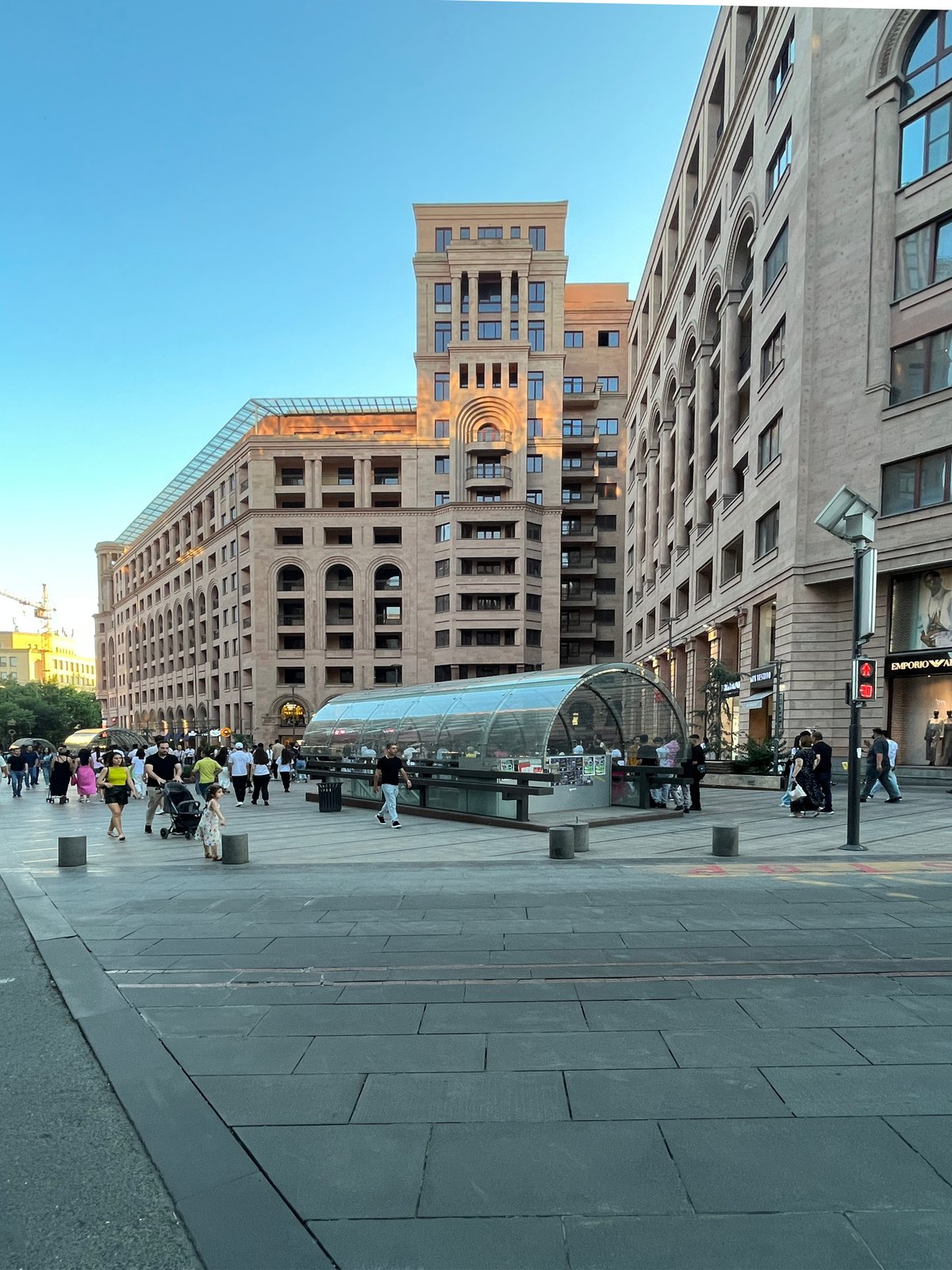
Strategically placed near the Opera House, Swan Lake, and Northern Avenue, the monument is harmoniously integrated into the city’s fabric, surrounded by landscaped areas and benches, making it a popular gathering and reflection spot (evendo.com).
The Tumanyan Museum: A Cultural Treasure
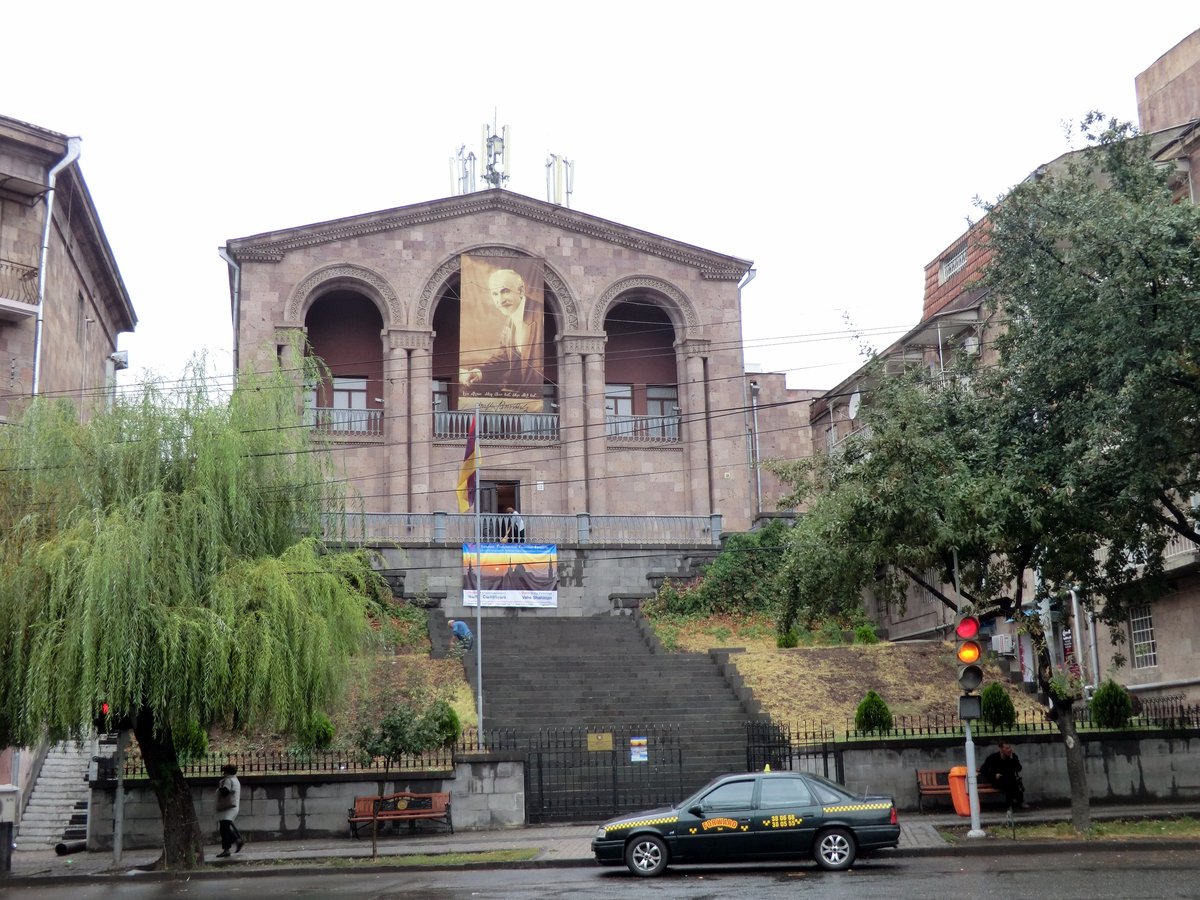
The Tumanyan Museum, established in 1953 and expanded over the years, is a vital institution preserving over 19,000 artifacts related to Tumanyan’s life and works (Tumanyan Museum). Its 54 steps symbolize each year of Tumanyan’s life. The museum features manuscripts, personal belongings, and a recreated Tbilisi apartment, offering visitors a tangible connection to the poet’s world. Although the main building is currently under renovation, exhibitions have been relocated to the Hrant Matevosyan Cultural Center-Museum (Tumanyan Museum).
Interactive exhibits, educational programs, and a winter garden filled with sculptures inspired by Tumanyan’s works make the museum an engaging space for all ages. Special events and research initiatives ensure that Tumanyan’s legacy remains vibrant and relevant.
Practical Visitor Information
Visiting Hours and Tickets
- Monument Open 24/7, year-round, as part of a public square. No ticket required (visityerevan.am).
- Museum (Exhibition at Hrant Matevosyan Center) Open Tuesday–Sunday, 10:00 AM–6:00 PM (last admission 5:30 PM). Closed Mondays and public holidays. Admission is generally free; special events or tours may require tickets (Tumanyan Museum).
Location and Accessibility
- Monument Address Freedom Square, to the left of the Opera Theatre’s main entrance, Yerevan, Kentron district.
- Museum Location Currently at the Hrant Matevosyan Cultural Center-Museum.
- Access Easily reached by foot from Republic Square, or via public transport (Yerevan Metro, Opera station; city buses; taxis).
- Accessibility Both monument and museum spaces are wheelchair accessible, with paved walkways, ramps, and facilities. Staff are available to assist visitors with special needs.
Best Time to Visit
- Spring (April–June) and Autumn (September–October) Pleasant temperatures (10–25°C), lively city atmosphere, and festivals.
- Morning and Late Afternoon Ideal for photography with soft lighting; evenings bring cultural activity in the square.
- Summer and Winter Prepare for extreme temperatures; summer can exceed 35°C, winter can drop below freezing.
Enhancing Your Visit: Tips and Recommendations
- Combine Attractions The monument is near the Opera Theatre, Cascade Complex, Cafesjian Center for the Arts, and Vernissage Market—perfect for a full-day cultural itinerary.
- Cafes and Dining Enjoy traditional Armenian dishes at nearby restaurants.
- Events Tumanyan’s birthday (February 19) and public holidays feature flower-laying ceremonies, poetry readings, and community gatherings.
- Photography The statue is most photogenic at golden hour, with Yerevan landmarks as dramatic backdrops.
- Hydration and Facilities Tap water is safe; “pulpulaks” (public fountains) are nearby. Restrooms available in adjacent cafes and cultural venues.
- Safety Central Yerevan is safe, but use standard precautions at night.
- Transportation Walking is ideal in the compact city center. Taxi apps like Yandex Taxi and GG offer affordable rides.
- Language Armenian is official; English and Russian are widely spoken in tourist areas.
Frequently Asked Questions (FAQ)
Q: What are the visiting hours for the Hovhannes Tumanyan Monument?
A: The monument is open to the public 24 hours a day, 7 days a week.
Q: Is there an entrance fee to visit the monument or museum?
A: The monument is free to visit. The museum’s relocated exhibition is also generally free, with tickets only for special events.
Q: Are guided tours available?
A: Many walking tours include the monument. Museum tours can be arranged by contacting staff in advance.
Q: Is the monument accessible for visitors with disabilities?
A: Yes, the area has paved walkways and ramps.
Q: What are nearby attractions?
A: The Opera Theatre, Cascade Complex, Cafesjian Center, and Vernissage Market are all within walking distance.
Summary and Visitor Recommendations
The Hovhannes Tumanyan Monument seamlessly blends artistic beauty, historical significance, and cultural vitality, serving as a beacon for Armenian heritage in Yerevan’s city center. Its accessible location, free year-round entry, and proximity to other cultural landmarks make it a must-see for travelers, literature lovers, and families alike. Enhance your visit by exploring nearby sites, attending local cultural events, and using the Audiala app for self-guided tours and audio commentary.
For current updates, ticket details, and event schedules, consult official resources and the museum’s website. Embrace the opportunity to experience the spirit of Tumanyan and Armenian culture in the heart of Yerevan.