Charbakh, Yerevan
Charbakh is a neighborhood in southern Yerevan, within the Shengavit District. Its Soviet-era legacy, industrial history, and active community life offer a view of the city beyond its central tourist sites. The area has changed from semi-rural outskirts into a residential and industrial district with local markets, businesses, and community events.
Charbakh is traditionally divided into Verin Charbakh (Upper Charbakh) and Nerkin Charbakh (Lower Charbakh). It is also a gateway between central Yerevan and the southern suburbs.
History
Origins and early development
The name Charbakh derives from the Persian for “four gardens,” reflecting the area’s agricultural past. The two parts, Verin Charbakh and Nerkin Charbakh, have distinct local characteristics and panoramic views (Wikipedia: Nerkin Charbakh; Mapcarta: Verin Charbakh). Yerevan’s expansion incorporated the area into the city in the mid-20th century.
Soviet industrialization and later development
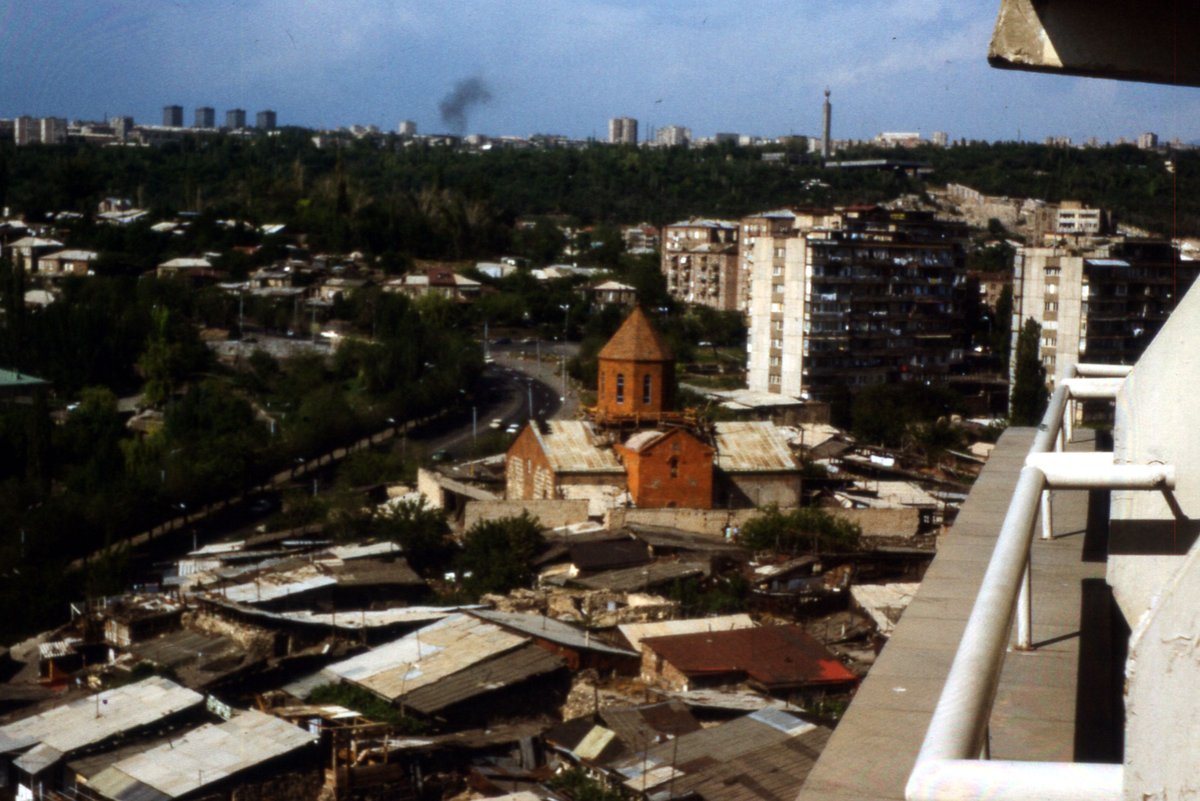
During the Soviet era, Charbakh developed from a rural outskirts area into an industrial and residential hub. Factories, warehouses, and standardized apartment blocks followed Soviet urban planning principles. The Charbakh Metro Station opened in 1997, improving connections for residents and workers (Yerevan Metro Official). After the Soviet Union’s collapse, the neighborhood retained its working-class identity and affordable character.
Following Armenia’s independence, housing demand contributed to informal construction and a patchwork urban landscape. The Yerevan 2025 Development Program focuses on upgrading infrastructure, housing, and green spaces (Armenpress: Yerevan 2025 Development Program).
The neighborhood includes Soviet-era apartments, newer developments, and informal housing. The arrival of many Russians in 2022 increased housing demand and affected affordability (The Friendly Urbanist: Yerevan Housing Crisis). Yerevan’s Green City Action Plan includes road upgrades, new parks, and initiatives to reduce pollution and encourage cycling and walking (The Friendly Urbanist: Green City Action Plan).
What to see and do
Local life, markets, and culture
Charbakh’s markets and businesses contribute to its community life, alongside neighborhood festivals and Armenian holiday celebrations. Its proximity to Yerevan cultural venues gives residents access to events including concerts and art exhibitions (Soul of Armenia: Cultural Holidays 2025).
Charbakh Market is a place to find fresh produce, traditional breads, and handwoven crafts (secretattractions.com). Multiple parks and playgrounds provide places to relax and gather, especially during evenings and weekends.
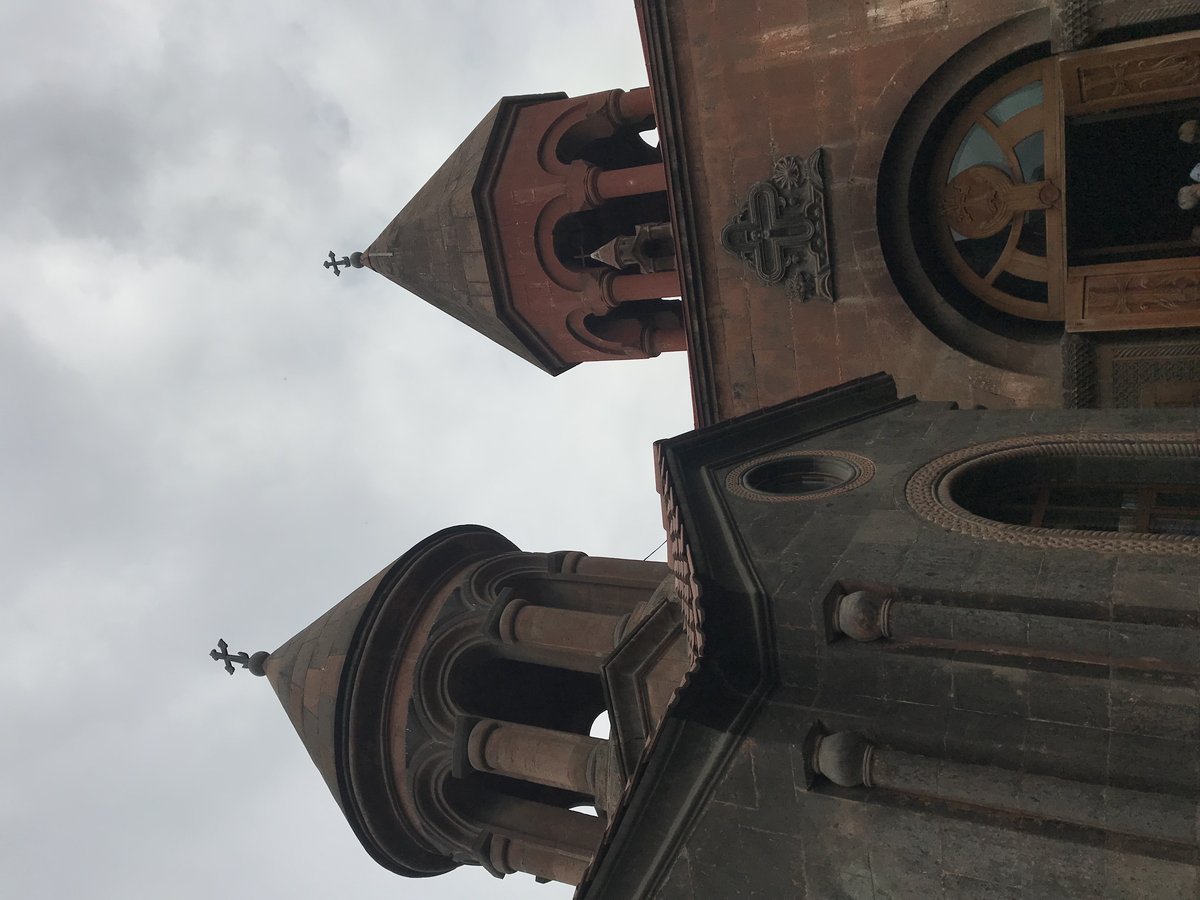
St. Sarkis Church serves as a religious and cultural center, with services and celebrations during major Armenian holidays (thecascadetravel.com).
Architecture, tours, and food
Self-guided visits and local tours can focus on Charbakh’s Soviet-era apartment blocks, industrial landmarks, and communal courtyards (explorecity.life). Several Yerevan walking tours include Charbakh and its Soviet and industrial heritage; local agencies and online platforms offer booking options. Verin Charbakh’s panoramic views and scenes of everyday life are photographic subjects.
Family-run restaurants serve Armenian specialties such as khorovats, dolma, and jingalov hats, sometimes accompanied by live folk music (myglobalviewpoint.com).
Charbakh Metro Station
Inaugurated in 1997, Charbakh is the youngest station in Yerevan’s metro system and an important commuter hub (Yerevan Metro Official; Wikipedia: Yerevan Metro). The above-ground station has a functional modernist design by architect Valter Mnatsakanyan. Its ground-level platform is sheltered by a canopy, and station signage is in Armenian, Russian, and English (Wikipedia: Yerevan Public Transportation).
The station is a single-platform, single-track terminus branching from Shengavit. Facilities include ticket machines, seating, lighting, and security, with minimal commercial services. Announcements and signage are bilingual; the station is monitored by security staff and cameras.
Charbakh’s branch line runs shuttle trains to Shengavit, where passengers can transfer to the main line (Wikipedia: Yerevan Metro). The metro system has ten stations over 13.4 km and carried over 26 million passengers in 2024 (YoMetro). The station connects southern districts with central Yerevan, including sites such as Republic Square and the Cascade Complex, which are a short metro ride away.
Planned metro expansions and modernization aim to improve connectivity and the passenger experience, with Charbakh’s role as an operational hub expected to grow (Yerevan City).
Practical visiting information
Hours, tickets, and costs
Charbakh is a residential district open to visitors at any time, with no entry fee. Public parks are generally accessible from sunrise to sunset. For events at venues such as Alashkert Stadium, check schedules for ticketing information.
The metro operates daily from 07:00 to 00:00, with extended hours during public holidays. A metro ride costs 150 AMD. Tickets are available from station machines and through the Telcell app. The unified payment system introduced in 2025 allows payment by transport cards, bank cards, and QR codes (Wikipedia: Yerevan Public Transportation).
Buses and marshrutkas cost 100 AMD. Taxis from the city center cost 800–1,500 AMD, and meals average 1,500–3,000 AMD.
Getting there and around
Charbakh Metro Station is the most convenient entry point. Buses, marshrutkas, taxis, and ride-hailing apps are also available (wander-lush.org). The district is also served by trolleybuses. The unified payment system supports transfers and digital ticketing; real-time schedules are available through mobile apps and electronic displays (Wikipedia: Yerevan Public Transportation).
The district’s flat terrain is suitable for walking and cycling, though older infrastructure can pose challenges for visitors with mobility needs. The metro station’s ground-level design can help with access, but adaptations such as elevators remain limited; contact customer service about specific needs (Wikipedia: Yerevan Public Transportation).
Parks, markets, and main public areas are generally accessible, while some older buildings may not be.
Amenities and safety
Guesthouses are available in Charbakh, with more accommodation options in Shengavit and central Yerevan. ATMs are limited, so cash is preferred. Wi-Fi is sporadic; a local SIM card can be used instead. Parks and playgrounds make the area family-friendly.
Charbakh is considered safe, with low crime rates, and is described as especially safe during the day. Use standard precautions, particularly at night. Emergency services are accessible.
Tips
Armenian is the predominant language. English and Russian are commonly spoken among younger residents and people working in service roles, and are widely understood among younger generations (myglobalviewpoint.com).
A customary greeting is “barev dzez.” Dress modestly in religious settings and ask before photographing people. Late spring through early autumn offers suitable weather and lively events (wanderlog.com). July temperatures range from 18°C to 36°C (Weather25).
Digital ticketing through the Telcell app is one option for metro travel. The above-ground station also offers photo opportunities.
Nearby places
Landmarks in the wider area include the Yerablur Military Pantheon and Alashkert Stadium. Local markets and eateries offer a look at daily life and the area’s industrial heritage. Central Yerevan’s Republic Square and Cascade Complex are accessible by metro.
Frequently Asked Questions (FAQs)
How do I get to Charbakh from central Yerevan?
Take the metro via Charbakh station, or travel by bus, marshrutka, or taxi.
Is Charbakh safe for tourists and solo travelers?
It is considered safe, especially during the day. Exercise caution at night.
Are guided tours available?
Yes. Local guides offer tours focused on architecture and culture.
What are the visiting hours and fees?
The residential district is open at any time and has no entry fees. Parks are generally accessible from sunrise to sunset. The metro operates daily from 07:00 to 00:00, with extended hours during public holidays; a ride costs 150 AMD.
Is Charbakh accessible for visitors with disabilities?
Accessibility varies. Parks and main streets are generally accessible, but some older buildings may not be. The metro station has a ground-level design, though adaptations such as elevators are limited.
What special events take place in Charbakh?
Neighborhood festivals and Armenian holiday celebrations are highlights.