
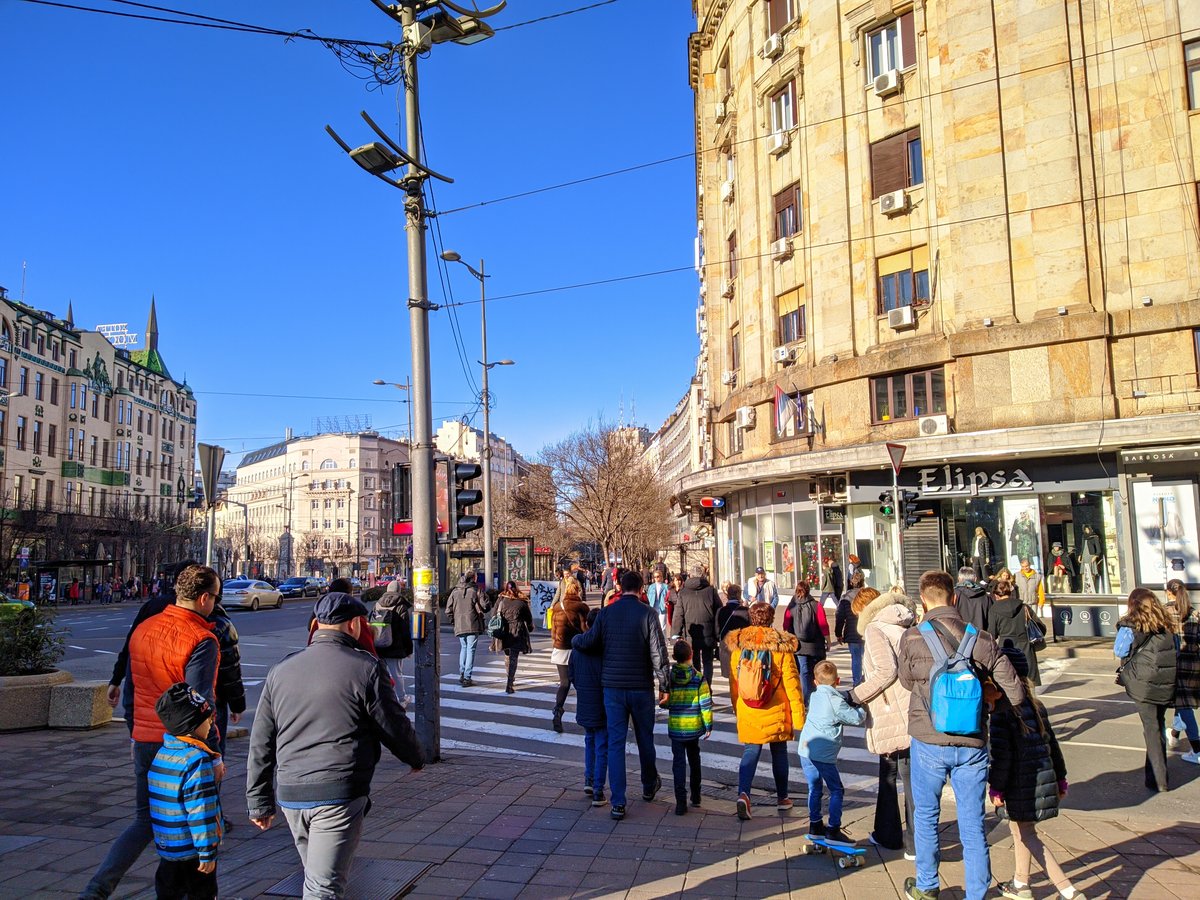
Ottoman Origins and Urban Transformation
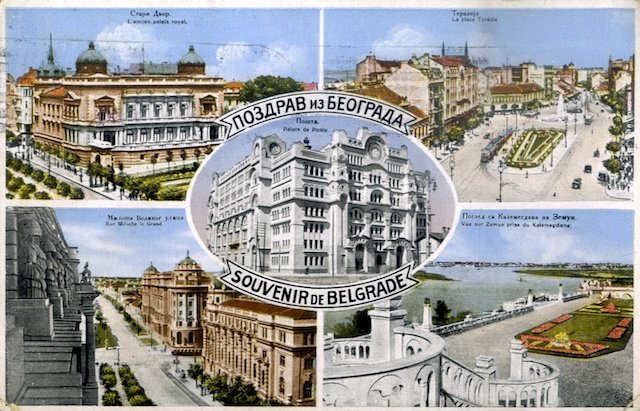
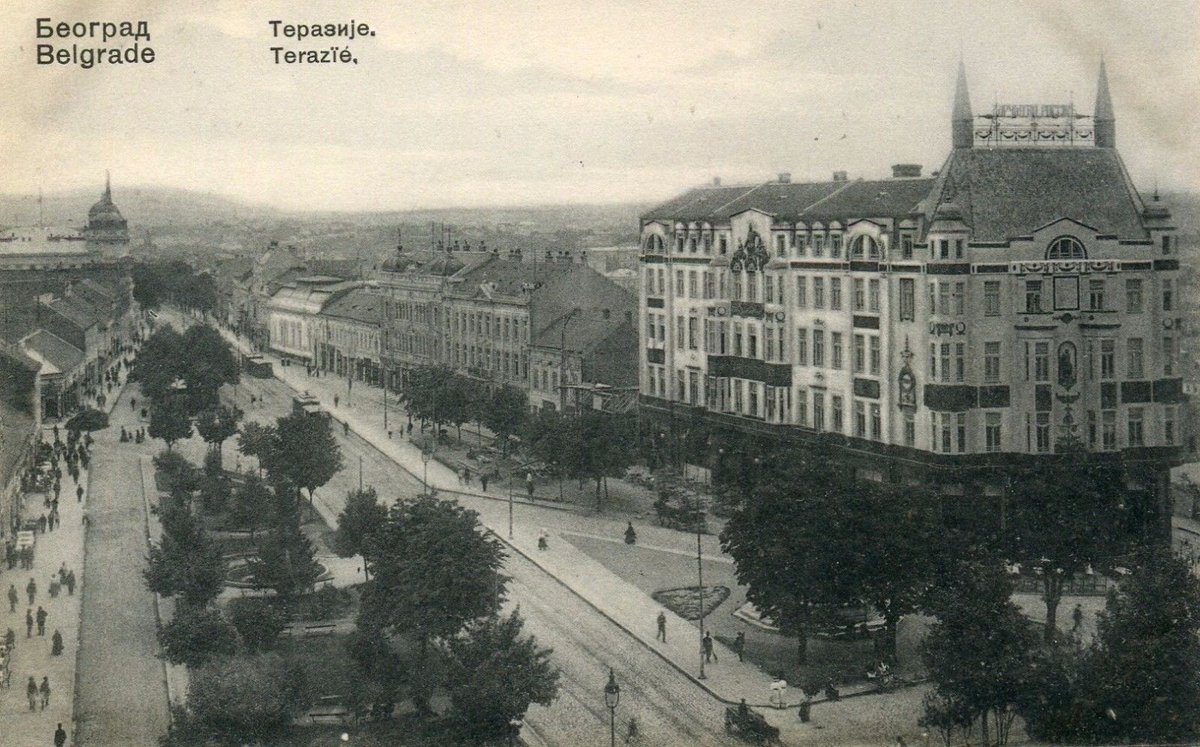
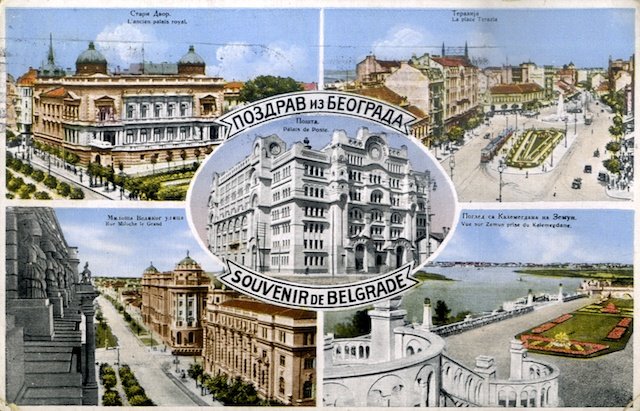
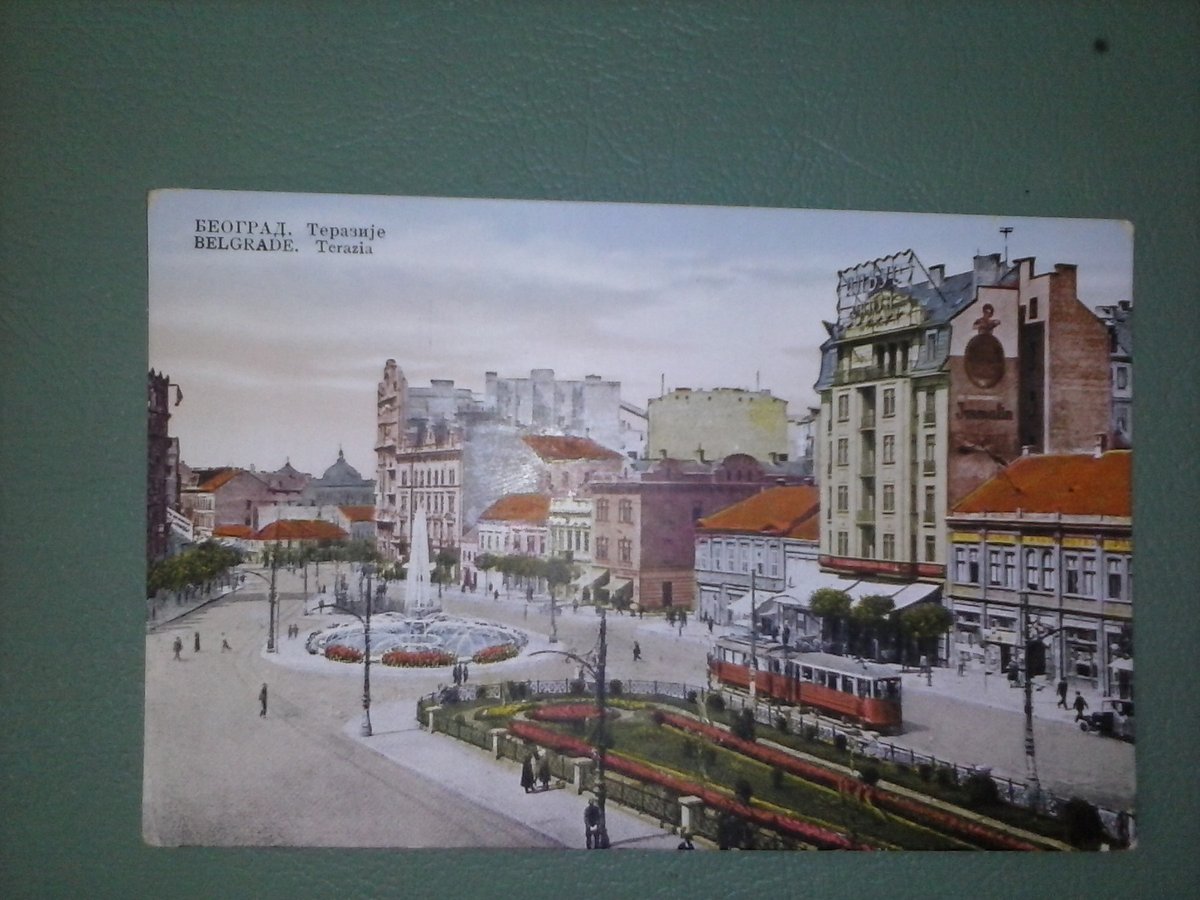
Terazije takes its name from the Turkish word for “scales” or “water towers,” a reference to the water distribution towers established during the Ottoman period (Segway Beograd; Wikipedia). In the 19th century, as Belgrade transitioned from Ottoman to Serbian rule, Terazije evolved from a practical infrastructure site into a central urban square.
The urbanization process accelerated after 1867, under the guidance of urban planner Emilijan Josimović. His master plan modernized Belgrade, introducing European urban elements, and positioned Terazije as a focal point for transportation, commerce, and public life (Springer Link).
Architectural Landmarks
Terazije’s eclectic architecture is a testament to its historical significance:
- Hotel Moskva This Art Nouveau (Secessionist) hotel, opened in 1908, quickly became a symbol of Belgrade’s cosmopolitanism. Its ornate façade and luxurious interior have hosted artists, intellectuals, and dignitaries for over a century (Belgrade My Way; Live the World).
- Hotel Balkan and Hotel Kasina Historic hotels renowned for their cultural and social impact.
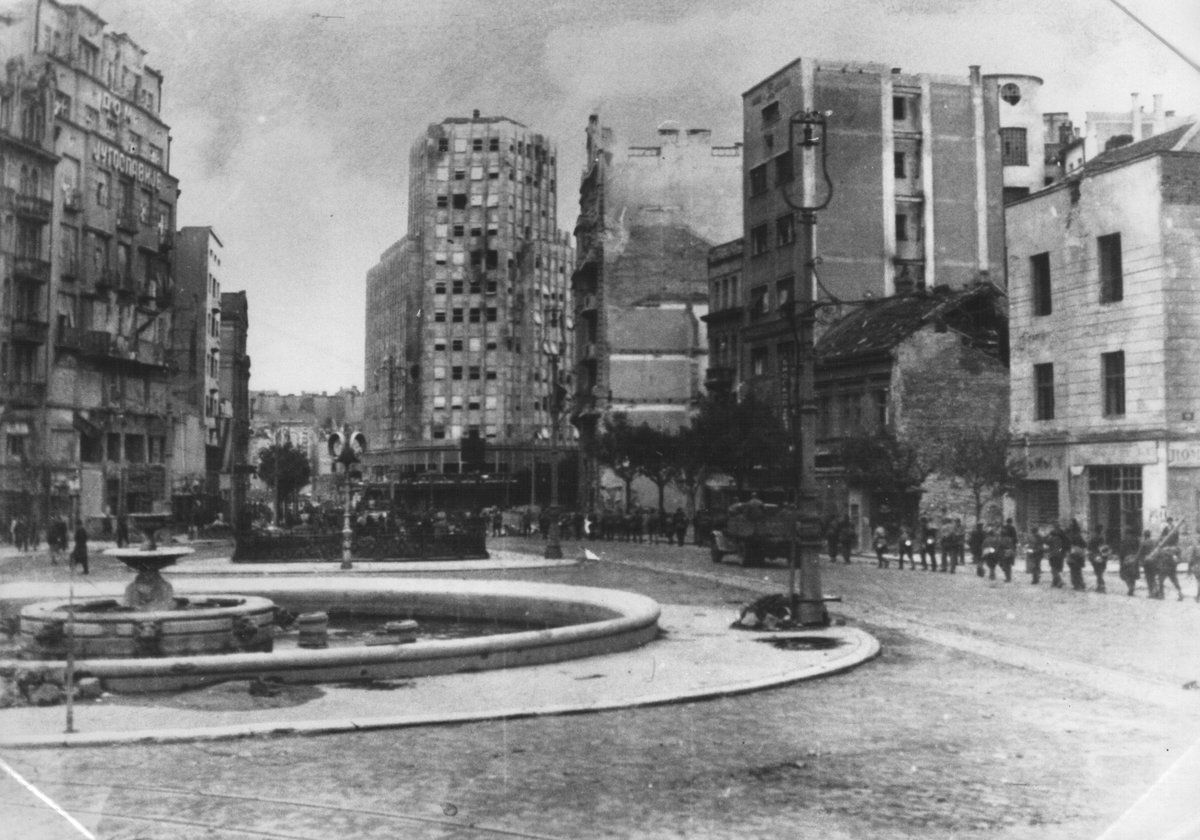
- Albanija Palace Built in the 1930s, once the tallest building in the Balkans, representing the city’s drive toward modernity.
- Terazije Theatre Established in 1949, this is the only dedicated musical theatre in the region, noted for its Art Deco interior and diverse performances (CBelgrade; Serbia.com).
- Bezistan A covered passage and cultural property linking Terazije with Nikola Pašić Square, built on the site of the 1870 Hotel Pariz (Wikipedia).
The Terazije Fountain
The Terazije Fountain (Terazijska česma), first built in 1860, is an enduring symbol of Belgrade’s modernization. Over time, the fountain has served as a social gathering spot and a historical focal point. Its current location and design reflect the city’s ongoing efforts to preserve its heritage (CBelgrade; Trip.com).
20th Century Developments
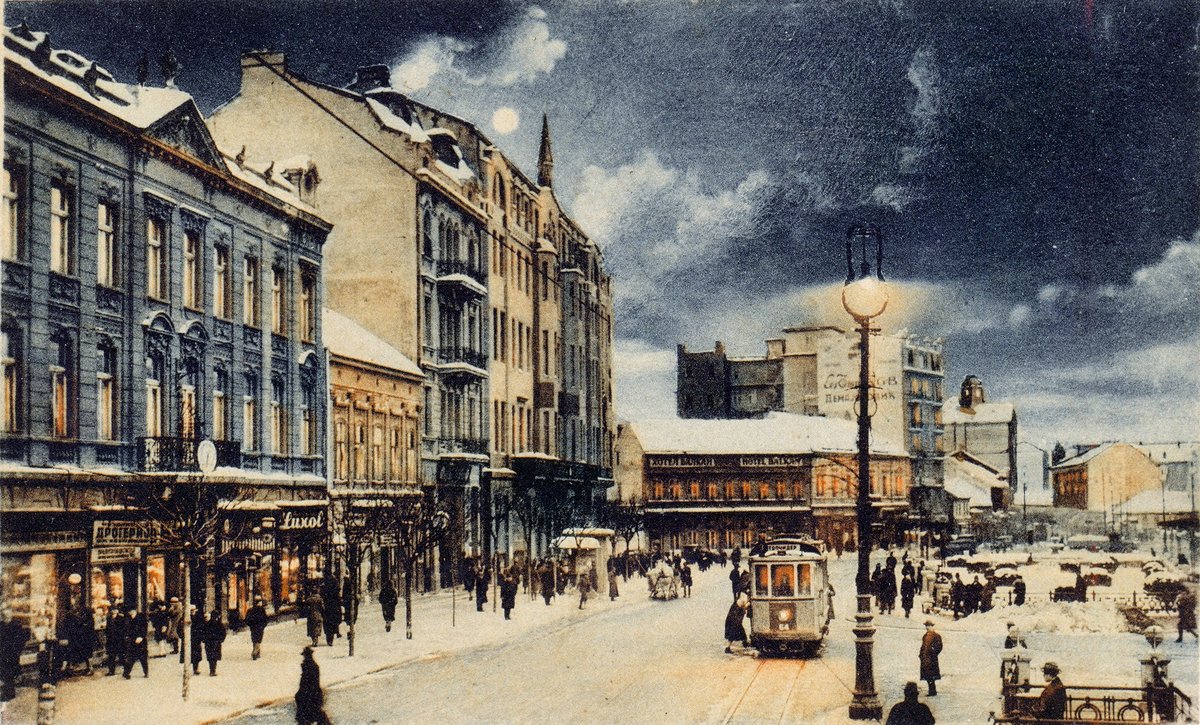
The interwar years saw Terazije become a center for commerce, administration, and culture. The socialist era brought additional changes, such as underground passageways and shopping centers. Urban planning debates focused on balancing modernization with the preservation of historic character (Springer Link).
Terazije in the Modern Era
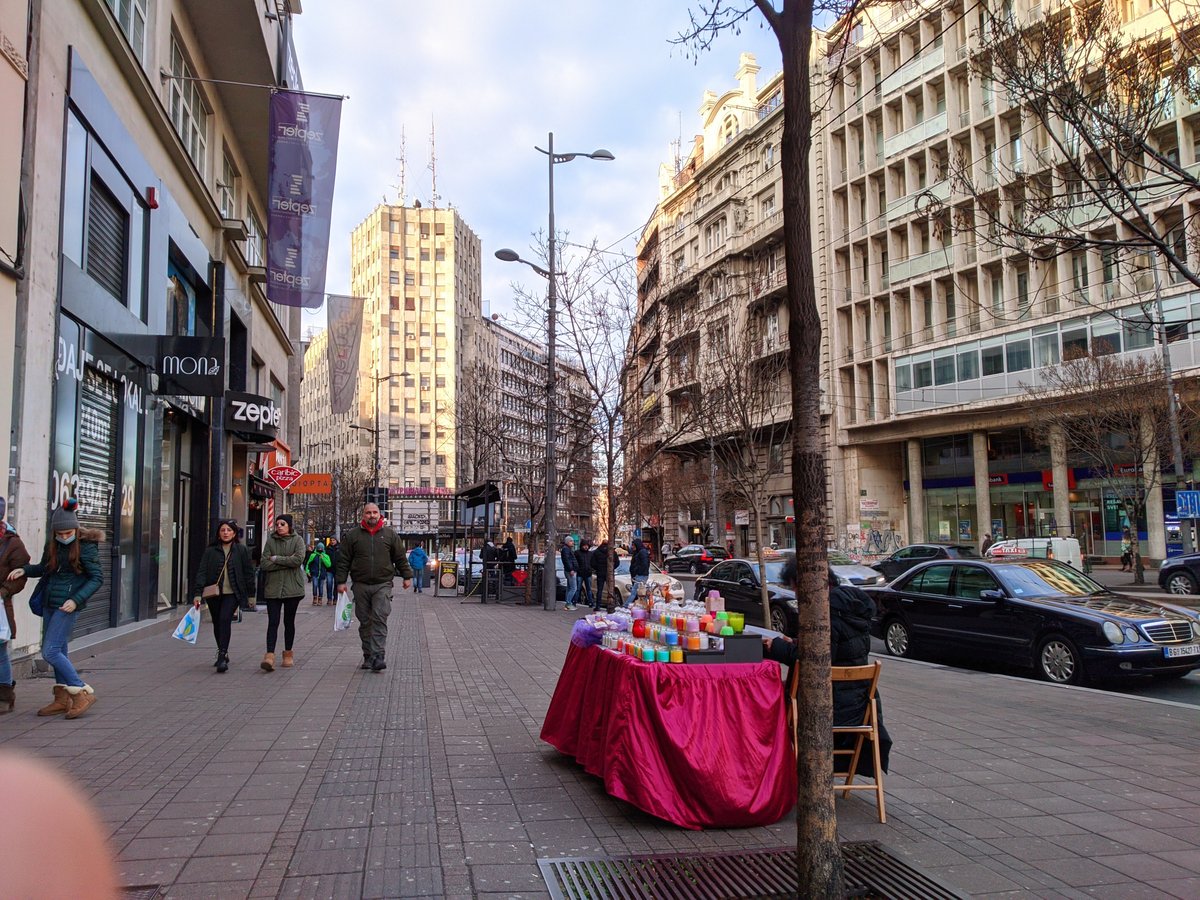
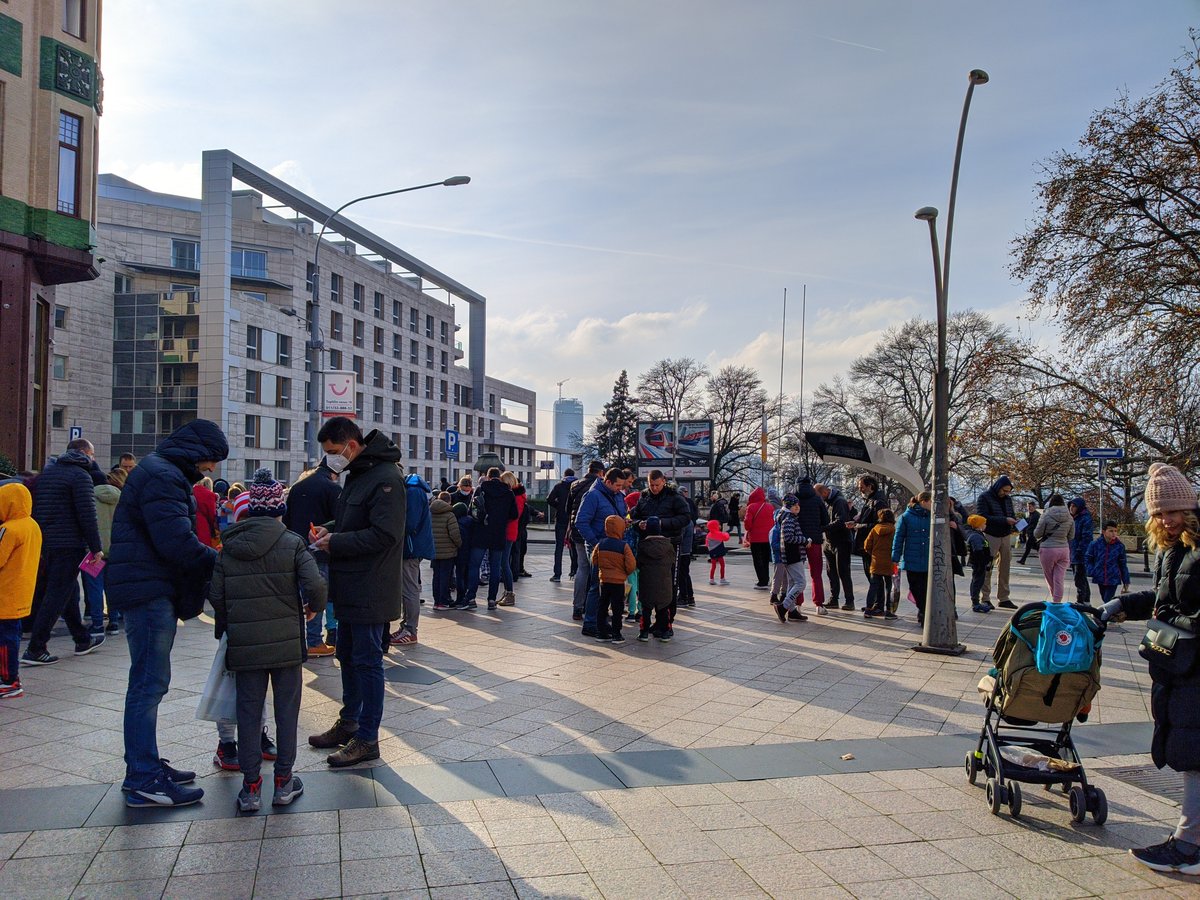
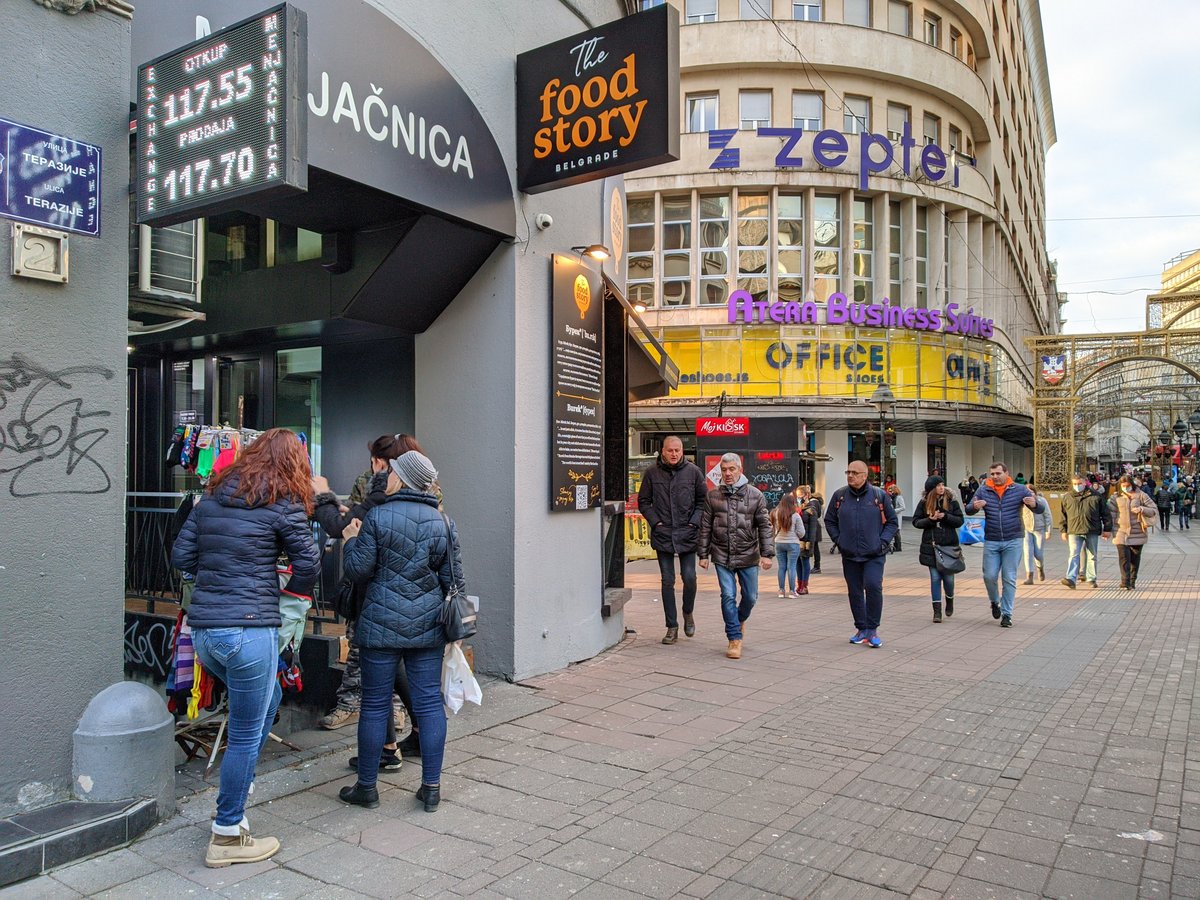
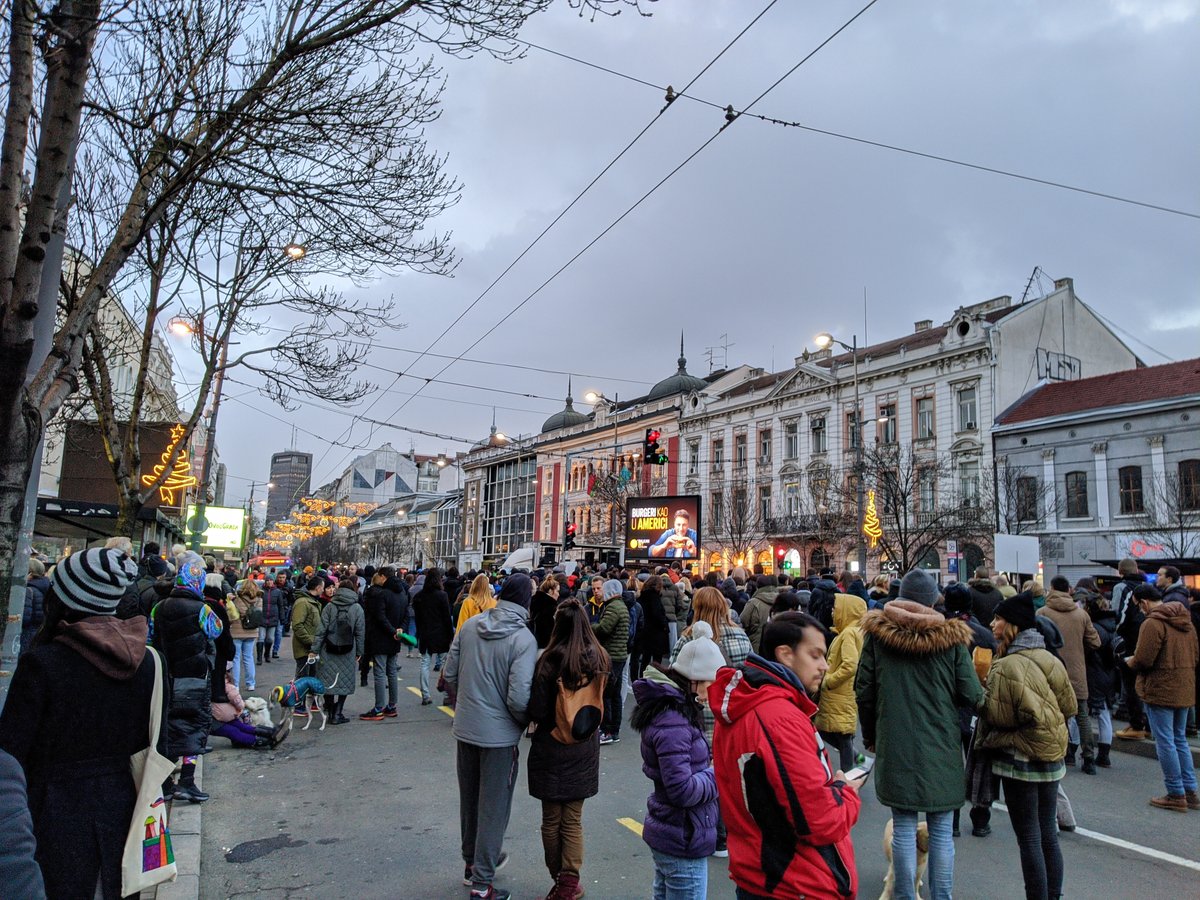
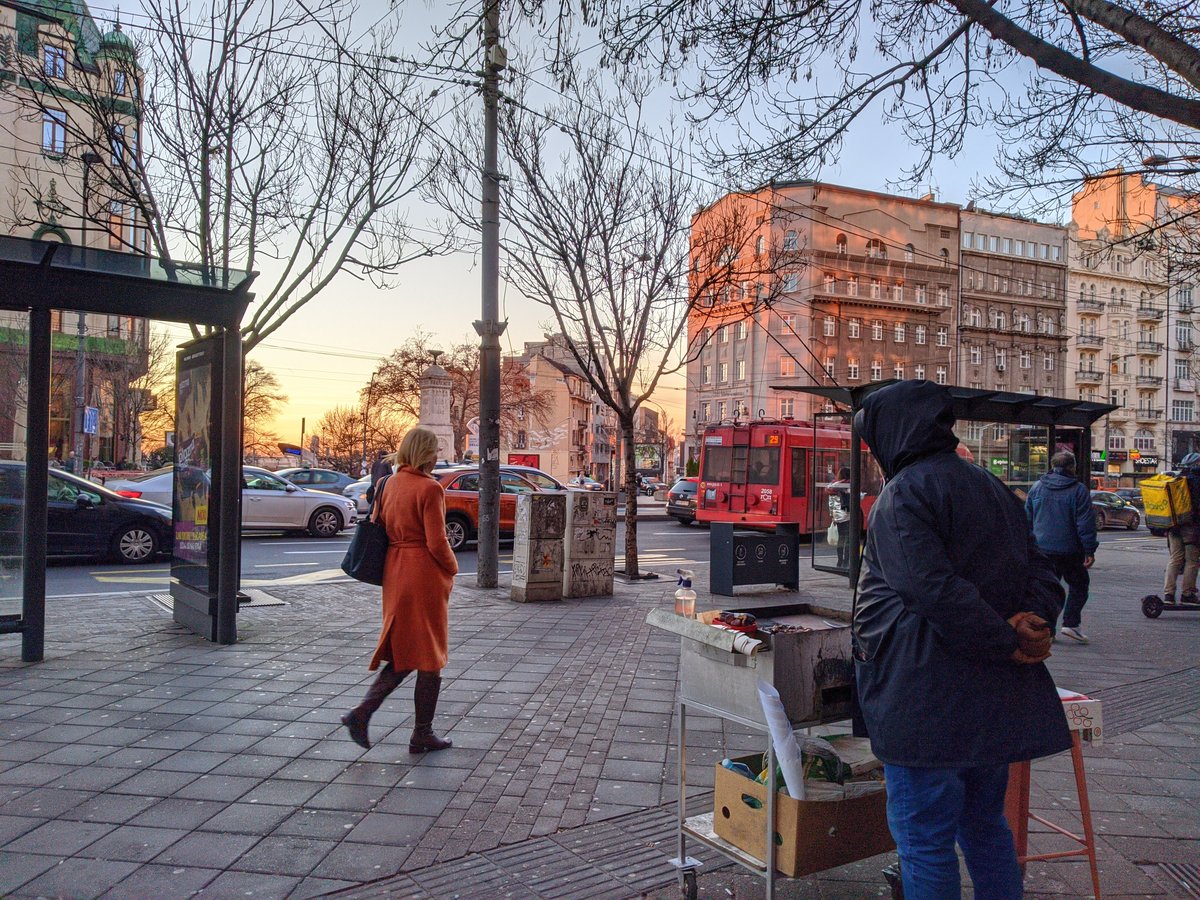
Today, Terazije is a lively public space, surrounded by shops, cafés, theaters, and hotels. It serves as a transportation and cultural hub, with panoramic city tours often starting here. The square’s designation as a protected cultural-historical unit in 2020 underscores its importance (Wikipedia).
Visitor Information
Visiting Hours
- Terazije Square and Fountain Open 24/7; accessible at all times with no entrance fee.
- Hotel Moskva Café Open daily, typically 8:00–23:00.
- Terazije Theatre Open according to performance schedules; box office hours generally 10:00–18:00.
- Bezistan Accessible during standard business hours, usually 10:00–20:00.
Tickets and Accessibility
- No entrance fee is required for Terazije Square or the fountain.
- Tickets may be necessary for theater performances or guided tours—check in advance (Serbia.com).
- The area is wheelchair accessible, with paved walkways and ramps. Public transit stops nearby are also accessible.
Getting There
- Public Transport Numerous bus and tram lines stop at or near Terazije.
- Walking A short stroll from key districts such as Stari Grad and Republic Square.
- Taxi Widely available; use reputable services.
Best Times to Visit
- Late afternoon and early evening are most vibrant, with bustling cafés and street performers.
- Spring (April–June) and autumn (September–October) offer pleasant weather and fewer crowds.
Nearby Attractions
- Republic Square Main city square with the National Museum and National Theatre (MissTourist).
- Knez Mihailova Street Pedestrian shopping and cultural avenue (Europebookings).
- Kalemegdan Fortress Historic fortress and park with panoramic city views (AlexandraCristian).
- Skadarlija Bohemian quarter known for its traditional restaurants and live music.
- Bajrakli Mosque The city’s only remaining Ottoman-era mosque (MissTourist).
- Zeleni Venac Market Local market for produce and delicacies.
Travel Tips and Practical Information
- Safety Terazije is safe for tourists, with a visible police presence (TripJive).
- Services Banks, currency exchange, pharmacies, and tourist information centers are nearby.
- Dining Sample local specialties at bakeries and the famous Hotel Moskva café.
- Shopping High-street brands on Knez Mihailova; local stores and vintage shops in adjacent streets.
- Accessibility Most hotels, restaurants, and public transportation are equipped for visitors with disabilities.
- Photography Best light for photos is at sunrise or sunset.
Visuals and Interactive Elements
- Explore an interactive map of Terazije and nearby attractions here.
- Virtual tours and high-quality images are available on official tourism websites.
Frequently Asked Questions (FAQ)
Q: What are Terazije’s opening hours?
A: Terazije Square and the fountain are open 24/7. Shops and cafés typically operate from 8:00–22:00.
Q: Is there an entrance fee to visit Terazije?
A: No, access is free. Tickets may be required for theater shows, museums, or guided tours.
Q: Are guided tours available?
A: Yes. Book walking or architectural tours in advance, especially during busy periods.
Q: Is Terazije accessible for visitors with disabilities?
A: Yes, the square and most surrounding venues are accessible, with ramps and smooth sidewalks.
Q: How do I reach Terazije from the airport or train station?
A: By taxi, public buses, or airport shuttles; the area is also walkable from the city’s main transport hubs.
Discover More
Terazije Square is a must-visit destination at the heart of Belgrade, blending history, culture, and urban energy. Its open accessibility, architectural beauty, and proximity to top landmarks provide an unforgettable experience for every visitor. Plan your journey with the practical tips above, and immerse yourself in the authentic spirit of Belgrade.
For audio guides, interactive maps, and exclusive travel deals, download the Audiala mobile app. Stay connected through our website and social media for updates, event listings, and more inspiration on exploring Belgrade!