
Historical Origins and Foundation
San Marco Church was consecrated in 1254, founded to honor Saint Mark, the patron of Venice. This dedication symbolized Milan’s gratitude to Venice for support in the 12th-century struggle against Emperor Frederick Barbarossa, a pivotal moment in the Lombard League’s history (Brera Design District; milano24ore). The church’s site in the Brera district would later become synonymous with art, intellect, and Milanese civic life.
Architectural Evolution
Medieval Beginnings
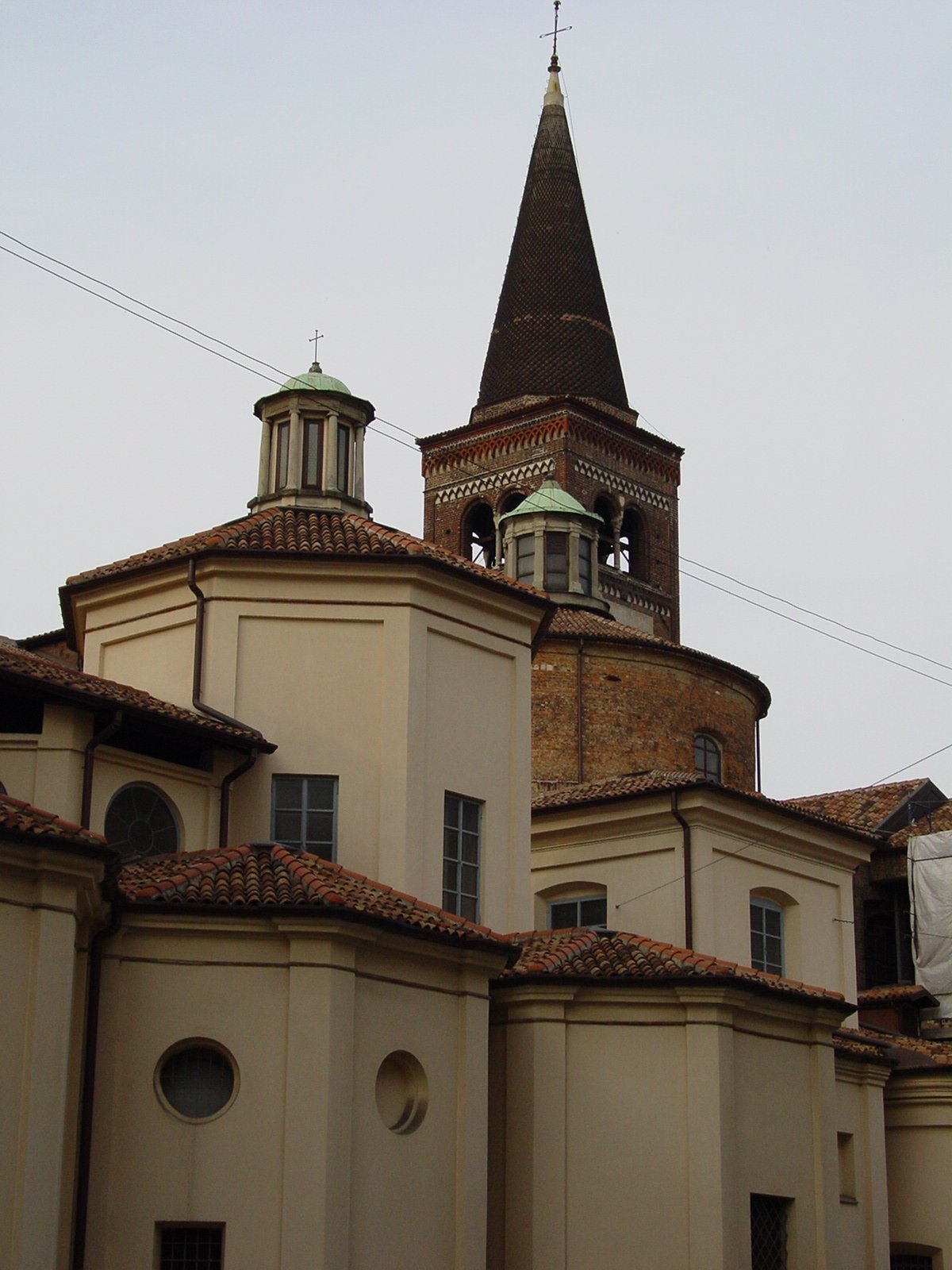
The original church, commissioned by the Augustinian order, showcased the Lombard Gothic style with pointed arches, ribbed vaults, and a soaring nave. The 13th-century bell tower remains a key medieval feature (milano24ore).
Renaissance and Baroque Transformations
San Marco saw substantial expansions in the 17th century, reflecting Baroque exuberance—enlarged interiors, ornate chapels, and elaborate frescoes. The Baroque renovation made it the second-largest church in Milan after the Duomo, underscoring its religious and social significance (Triphobo).
Neo-Gothic Revival and Modern Discoveries
The 19th-century façade, designed by Carlo Maciachini, harmonizes Gothic and Renaissance elements in a unified Neo-Gothic aesthetic (San Marco Milan Architecture). The façade features polychrome marble and terracotta, with a prominent rose window, sculptural reliefs, and a mosaic lunette.
Spectacularly, modern explorations have revealed a hidden trapdoor beneath the Madonna della Cintura statue, possibly connecting to the Castello Sforzesco, hinting at secret medieval passageways (Brera Design District).
Artistic and Musical Heritage
Major Artistic Treasures
Frescoes and Paintings:
San Marco houses masterpieces by leading Lombard artists:
- Giovan Paolo Lomazzo: Fresco cycles in the apse depicting scenes from the lives of St. Mark and the Virgin Mary (San Marco Art).
- The Fiammenghini: Renaissance frescoes in the right transept.
- Camillo Procaccini: “La disputa di Sant’Ambrogio” in the presbytery.
- Genovesino: “Arbor Ordinis” in the apse.
- Albertolli: The neoclassical altar.
The church also displays a “Madonna with Child in her arms,” attributed to the school of Leonardo da Vinci (milano24ore).
Sculptural and Decorative Elements:
The high altar and pulpit are masterpieces of Milanese craftsmanship, with marble inlay, gilded bronze, and walnut carvings.
Musical Legacy
San Marco Church is renowned for its acoustics and its grand pipe organ, built by Tamburini with over 5,000 pipes, regularly featured in concerts and sacred music events (San Marco Organ).
- Mozart: Lived in the adjacent monastery in 1770, composing and performing here.
- Verdi: Premiered his “Requiem” in San Marco in 1874, commemorating Alessandro Manzoni (thebestrent.it).
Visiting Information
Visiting Hours and Ticket Details
- General Hours
- Monday–Saturday: 8:00 AM–7:00 PM
- Sunday: 8:00 AM–12:00 PM, 4:00 PM–7:00 PM
- Hours may vary during religious services and special events (YesMilano).
- Admission Free; no ticket required. Donations are appreciated to support restoration.
- Guided Tours Available for a small fee and can be booked in advance. Self-guided visits and walking tours are also popular (GPSmyCity).
Accessibility
- Wheelchair accessible via ramps at the main entrance.
- Multisensory panels for visually and hearing-impaired visitors—part of Milan’s accessibility initiative (YesMilano).
- Assistance available upon request.
Visitor Guidelines and Etiquette
- Dress modestly: cover shoulders and knees.
- Remove hats, maintain quiet, and avoid flash photography.
- Professional photography is prohibited; luggage is not allowed.
- During services, remain discreet or plan your visit accordingly (Basilica San Marco).
Travel Tips and Nearby Attractions
- Best Time to Visit Early mornings or late afternoons for a peaceful experience.
- Public Transport Nearest metro: Lanza (Line M2). Bus lines 85, 43, and 94 serve Piazza San Marco.
- Brera District Explore Pinacoteca di Brera, the Botanical Garden, art galleries, shops, and local cafés (YesMilano).
- Market & Events The outdoor market and seasonal nativity display add local flair. The church also hosts classical concerts and occasional art exhibitions.
Frequently Asked Questions (FAQ)
Q: What are the San Marco Church visiting hours?
A: Monday to Saturday 8:00–19:00; Sunday 8:00–12:00, 16:00–19:00. Always check for updates during holidays or events.
Q: Are tickets required?
A: No, admission is free. Donations are appreciated; guided tours may require a fee.
Q: Is the church wheelchair accessible?
A: Yes. The church features ramps and multisensory panels for enhanced accessibility.
Q: Can I take photos inside the church?
A: Discreet, non-flash photography for personal use is usually allowed. Professional photography requires permission.
Q: Are guided tours available?
A: Yes, both guided and self-guided tours are available. Book in advance for guided experiences.
Visuals and Media Suggestions
- High-resolution images of the Neo-Gothic façade and intricate rose window.
- Interior photos highlighting frescoes, altars, and the restored organ.
- Visuals of the Brera district, outdoor market, and seasonal events.
- Interactive maps and virtual tours available on official sites.


