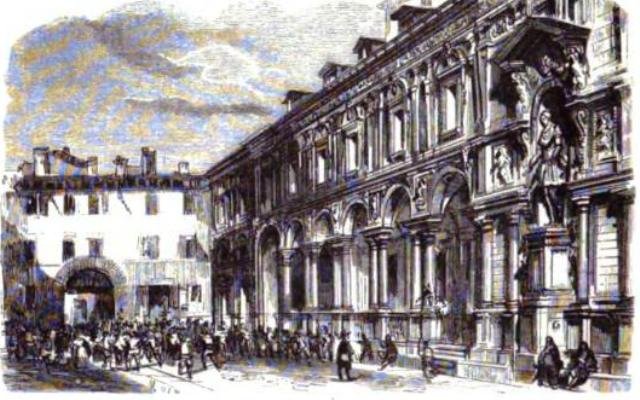
History and Architectural Evolution
Origins and Early History
Commissioned in the late 18th century, Palazzo Citterio exemplifies the refined barocchetto architectural style, recognized for its decorative stuccos, gilding, and harmonious proportions (YesMilano). Its central location on Via Brera placed it among Milan’s foremost intellectual and artistic landmarks, neighboring the Pinacoteca di Brera and the Braidense National Library. The residence later became home to prominent Milanese families, including the Jesi and Vitali, whose private art collections now form a significant part of the museum’s holdings (Monocle).
Transformation and the Grande Brera Project
In 1972, the Italian Ministry of Culture acquired Palazzo Citterio to create additional space for the Pinacoteca di Brera’s expanding 20th-century collection. This acquisition was part of the visionary “Grande Brera” project, designed to unite the Pinacoteca, the Academy of Fine Arts, the Botanical Garden, and the Braidense Library into a cohesive cultural district (Yatzer). After decades of restoration and modernization, the palazzo now serves as a state-of-the-art museum and cultural venue (TIME).
Restoration and Design Innovations
Key phases of the palazzo’s restoration reflect Milan’s commitment to blending heritage with modernity:
- 1980s Architect James Stirling introduced a bold, brutalist design to the basement, contrasting with the ornate upper floors (Monocle).
- 2010s–2023 Mario Cucinella Architects undertook a comprehensive restoration, prioritizing “architectural stratification”—respecting historic elements while incorporating advanced museum technology and universal accessibility (MCA Architects).
Architectural Highlights
- Ground Floor Features a sculptural, multifunctional table serving as ticket office, information desk, and bookshop.
- Courtyard and Tempietto The internal courtyard is home to the “Tempietto,” a circular wooden pavilion inspired by Raphael and designed for events and gatherings (Urdesignmag).
- Piano Nobile Houses the permanent collections, restored with original 18th-century decor and modern exhibition systems.
- Upper Floors and Sala Stirling Dedicated to temporary exhibitions, maintaining an industrial and contemporary ambiance.
Technical Upgrades
Museum infrastructure has been upgraded with reinforced floors, climate control, advanced lighting, and security systems—ensuring both visitor comfort and preservation of priceless artworks (Monocle).
Collections and Exhibition Highlights
Permanent Collections (“Brera Modern”)
Palazzo Citterio’s permanent exhibitions focus on Italian and European 20th-century art, including:
- Jesi and Vitali Collections Featuring works by Picasso, Modigliani, Boccioni, Morandi, Carrà, Sironi, Braque, and Pellizza da Volpedo. The monumental painting “Fiumana” by Pellizza da Volpedo is a particular highlight (Gigigram).
- International Dialogues Select international works foster cross-cultural artistic conversations.
- Sculpture and Installations Spacious galleries accommodate large-scale contemporary works and installations.
- Photography and Digital Media The collection embraces new media, including photography and video art (YesMilano).
Temporary Exhibitions and Events
Palazzo Citterio regularly hosts major temporary exhibitions, citywide festival events, and design showcases:
- Milano Design Week Features the LOEWE TEAPOTS project, with teapots by global artists celebrating tea traditions and craftsmanship (Fuorisalone).
- MuseoCity Participates in Milan’s citywide festival with special openings, guided tours, and workshops (Brera Design District).
- Contemporary Installations Recent exhibitions include Pietro Geranzani’s anti-war triptych and Refik Anadol’s AI-driven “Renaissance Dreams – Capitolo II” (Finestre sull’Arte, Urbanfile).
Visiting Hours and Tickets
Opening Hours
- Thursday to Sunday 14:00 – 19:00 (last admission 30 minutes before closing)
- Closed Monday to Wednesday and most public holidays
- Special Openings Extended hours may apply during major cultural events—check the official website for updates.
Ticket Prices
- Full Admission €12
- Reduced Admission €2–8 (students, seniors, selected categories)
- Free Entry Children, certain categories, and on the first Sunday of each month (advance booking required)
- Combined Ticket Available for Palazzo Citterio and Pinacoteca di Brera (Pinacoteca di Brera)
- Where to Buy Book tickets in advance via palazzocitterio.org or at the entrance (subject to availability)
Accessibility and Visitor Services
Palazzo Citterio is committed to providing a welcoming and accessible experience for all visitors (Abbonamento Musei).
Accessibility Features
- Step-Free Entrances Main entrance and exhibition spaces
- Elevators Connect all public floors, including underground galleries
- Accessible Restrooms Located on the main and exhibition levels
- Wide Corridors Accommodate wheelchairs and strollers
- Tactile and Braille Guides Available for visually impaired guests
- Hearing Assistance Induction loops and sign language guided tours (by request)
- Family-Friendly Stroller access and child-focused educational materials
Visitor Amenities
- Cloakroom For coats and bags
- Bookshop Exhibition catalogues, art books, and souvenirs
- Café Light refreshments and seating overlooking the courtyard
- Free Wi-Fi Throughout the building
- Guided Tours In multiple languages and for all visitor types
- Workshops and Activities For schools, families, and adults
Cultural Events and Community Initiatives
Palazzo Citterio has become a central venue for Milan’s most important cultural happenings:
- Design and Art Festivals Active participation in Milano Design Week and MuseoCity
- Educational Programs Workshops, family tours, and lectures for all ages
- Community Engagement Initiatives targeting schools, seniors, and marginalized groups, often with discounted or free access (Grande Brera)
- Collaborations Partnerships with international artists, brands, and cultural institutions
Integration with the Brera District and Nearby Attractions
Brera District Highlights
Palazzo Citterio’s prime location places it steps from Milan’s major cultural and historical sites:
- Pinacoteca di Brera Directly adjacent, housing masterpieces from the Renaissance to the 19th century
- Brera Botanical Garden A tranquil green space behind the palazzo
- Braidense National Library One of Italy’s most prestigious libraries
- Other Museums Museo Poldi Pezzoli, Museo del Novecento, Castello Sforzesco, Triennale Milano
The Brera district itself is famed for its cobblestone streets, art galleries, boutiques, and lively cafés, creating a perfect setting for a day of cultural exploration (Timeout Milan, BA High Life).
Visitor Tips and Frequently Asked Questions
Top Tips for a Great Visit
- Book in Advance Especially for free Sundays and major exhibitions
- Arrive Early To enjoy quieter galleries
- Combine Visits Plan a full day in Brera with the Pinacoteca, Botanical Garden, and local eateries
- Check Event Schedules For special openings, workshops, and guided tours
- Photography Permitted in most areas (no flash or tripods)
Frequently Asked Questions
Q: What are the visiting hours for Palazzo Citterio?
A: Thursday to Sunday, 14:00–19:00. Closed Monday to Wednesday.
Q: How much do tickets cost?
A: Full price €12, reduced €2–8, free entry for eligible categories and on the first Sunday of each month (advance booking required).
Q: Is the palazzo accessible for visitors with disabilities?
A: Yes, with step-free access, elevators, accessible restrooms, and support services.
Q: Can I book tickets online?
A: Yes, via palazzocitterio.org.
Q: Are guided tours available?
A: Yes, in multiple languages, including options for families and accessible tours.
Q: Is there a café or bookshop?
A: Both are available on site.