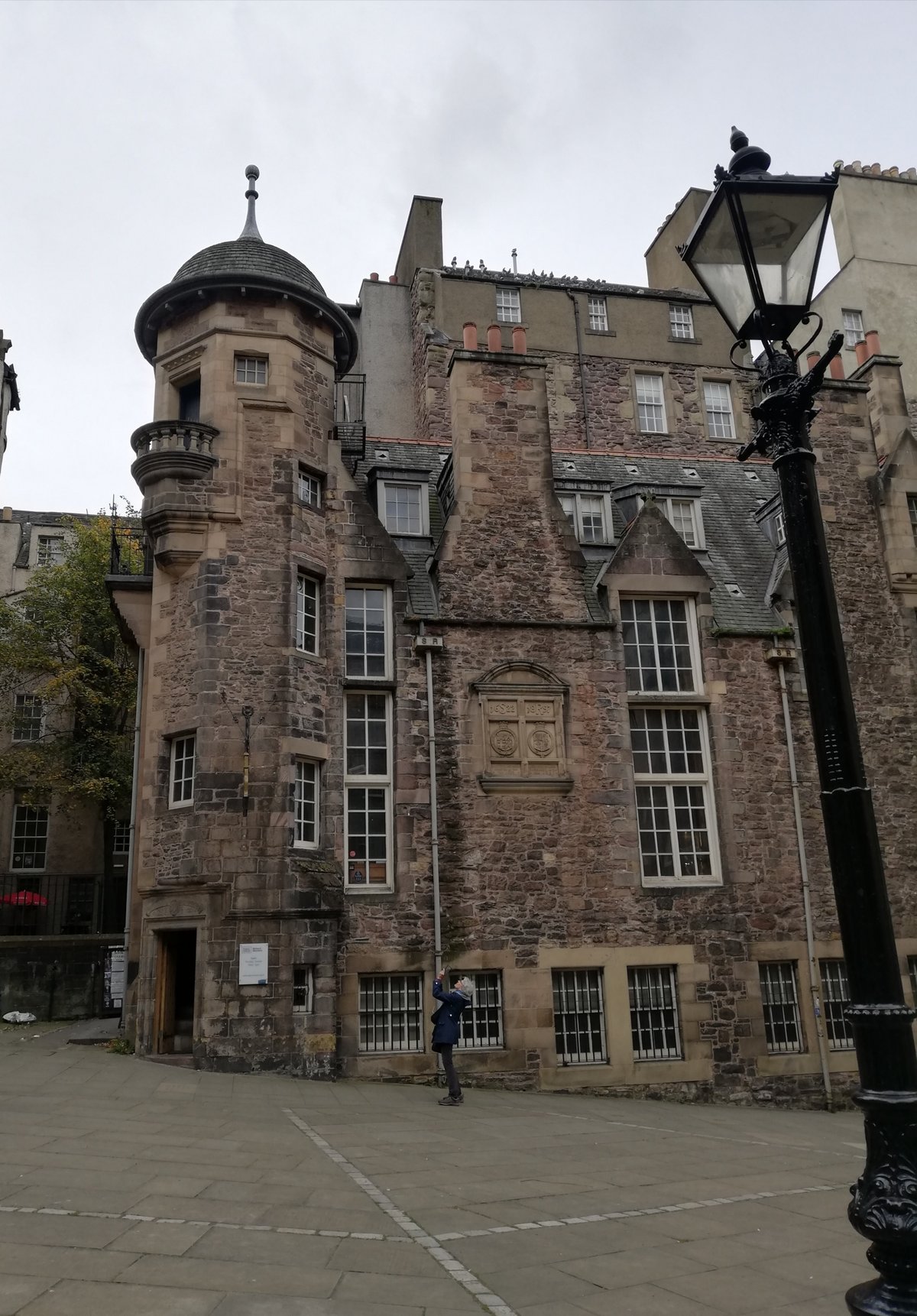

History & Architecture of Lady Stair’s House
Lady Stair’s House, built in 1622 for Sir William Gray of Pittendrum, is a striking example of Scottish Renaissance architecture, featuring crow-stepped gables, turrets, and a spiral staircase (All About Edinburgh). The building takes its name from Elizabeth Dalrymple, Dowager Countess of Stair, who resided here in the 1720s.
In 1892, the house underwent a significant restoration, led by architect Sir Robert Rowand Anderson, to restore its original character. In 1907, John Stewart gifted the property to the city with the intention of its use as a museum; it opened to the public in 1913, focusing on Edinburgh’s civic history before evolving into the Writers’ Museum in 1962 (Introducing Edinburgh).
The building is a Category A listed site, underscoring its architectural and historical importance (All About Edinburgh).
Museum Development and Literary Focus
The Writers’ Museum celebrates the lives and legacies of three of Scotland’s most influential authors:
- Robert Burns (1759–1796) The national poet of Scotland, renowned for his contributions to Scottish language and culture. Notable exhibits include rare manuscripts, a cast of his skull, and personal letters (All About Edinburgh).
- Sir Walter Scott (1771–1832) Novelist and historian whose works shaped global perceptions of Scotland. Exhibits feature his printing press, dining table, chess set, and childhood rocking horse (Introducing Edinburgh).
- Robert Louis Stevenson (1850–1894) Author of "Treasure Island" and "Dr Jekyll and Mr Hyde," celebrated for his adventurous life. The museum displays his wardrobe, writing desk, travel memorabilia, and a Samoan chief’s ring (Britain Express).
Each gallery is tailored to provide insight into the authors’ creative processes and enduring influence on Scottish and world literature.
Makars’ Court
Adjacent to the museum, Makars’ Court is an open-air monument to Scotland’s literary tradition, featuring paving stones inscribed with quotations from Scottish writers, both historical and contemporary. This evolving space invites visitors to reflect on the breadth of Scotland’s literary legacy (Explorial).
Visitor Information
Visiting Hours
- Standard Hours Tuesday–Sunday, 10:00 AM – 5:00 PM (last entry 4:30 PM)
- Closed Mondays and public holidays (Check official website for current details)
- Note Hours may vary for special events or during holidays (My Voyage Scotland).
Admission & Tickets
- Entry Free for all visitors; no tickets required.
- Donations Welcomed to support museum upkeep and programming.
Accessibility
- Wheelchair Access Limited due to the building’s historic nature. The ground floor is accessible, but upper floors are only reachable via a spiral staircase (AccessAble Guide).
- Assistance Staff are available to help; contact the museum in advance for support.
- Toilets No public toilets on-site; nearest accessible facilities are at the National Library of Scotland (George IV Bridge) and City Chambers.
Getting There
- Location Lady Stair’s Close, Lawnmarket, Edinburgh EH1 2PA (Edinburgh Museums).
- By Foot Easily accessible from Edinburgh Castle, the Royal Mile, and Waverley Station (10-minute walk).
- Public Transport Lothian buses stop at George IV Bridge and the Royal Mile; St Andrew Square tram stop is a 15-minute walk (My Voyage Scotland; Lothian Buses).
- Parking No on-site parking; public car parks available nearby (e.g., NCP Edinburgh Castle Terrace).
Facilities & Amenities
- Restrooms Not available on-site.
- Seating Limited inside the museum.
- Cloakroom Not available; travel light.
- Assistance Dogs Welcome.
- Gift Shop Not currently available; nearby Royal Mile offers many shopping options.
Photography
- Permitted Non-flash photography for personal use is allowed.
- Restrictions No tripods or commercial photography without prior permission; follow staff guidance, especially near delicate exhibits.
Highlights & Exhibits
- Robert Burns Original manuscripts, personal items, and rare editions, including a cast of his skull and his writing desk (All About Edinburgh).
- Sir Walter Scott Printing press, personal chess set, first editions, and portraits (Introducing Edinburgh).
- Robert Louis Stevenson Childhood toys, travel memorabilia, and the UK’s largest collection of Stevenson manuscripts (Britain Express).
Temporary exhibitions and events showcase additional Scottish literary figures and themes; check the museum’s events page for current programming.
The Museum’s Cultural Significance
The Writers’ Museum is integral to Edinburgh’s identity as the world’s first UNESCO City of Literature. Through its collections and educational initiatives, the museum nurtures appreciation for Scotland’s literary heritage and offers inspiration to visitors of all backgrounds (edinburgh.org).
Makars’ Court extends this mission, presenting a living literary monument that continues to grow as new Scottish writers are honored (edinburghmuseums.org.uk).
Travel Tips & Frequently Asked Questions (FAQs)
Tips for Visitors
- Best Time to Visit Weekday mornings are typically quieter.
- Footwear Wear comfortable shoes; expect stairs and uneven floors.
- Weather Edinburgh can be rainy; bring appropriate clothing for the cobbled approach.
- Combine Your Visit Pair with nearby attractions such as Edinburgh Castle, St Giles’ Cathedral, and the National Library of Scotland for a full day of history and culture.
FAQs
Q: What are the Writers’ Museum opening hours?
A: Tuesday–Sunday, 10:00 AM – 5:00 PM; closed Mondays and public holidays.
Q: Do I need to book tickets?
A: No, entry is free and tickets are not required.
Q: Is the museum wheelchair accessible?
A: The ground floor is accessible, but upper floors are only reachable by stairs.
Q: Are guided tours available?
A: Group visits and tailored talks can be arranged in advance; check the official website for details.
Q: Can I take photographs inside the museum?
A: Yes, non-flash photography for personal use is permitted.
Q: Are there on-site facilities such as a café or shop?
A: No, but the Royal Mile and Old Town offer many options nearby.
Plan Your Visit
To make the most of your visit:
- Check the official website for current opening hours, special exhibitions, and group booking information.
- Download the Audiala app for guided audio tours and updates on Edinburgh’s literary sites (Audiala app).
- Follow on social media for event updates and literary news.