Historical Background of the Albert Memorial in Edinburgh
Origins and Commissioning
After the death of Prince Albert in 1861, Queen Victoria commissioned numerous memorials across Britain. Edinburgh’s civic leaders and royal patrons worked together to memorialize Albert’s influence on Scotland, particularly in fields like education, the arts, and social progress. Public fundraising and national support underscored the unity between Scotland and the wider United Kingdom during the Victorian era.
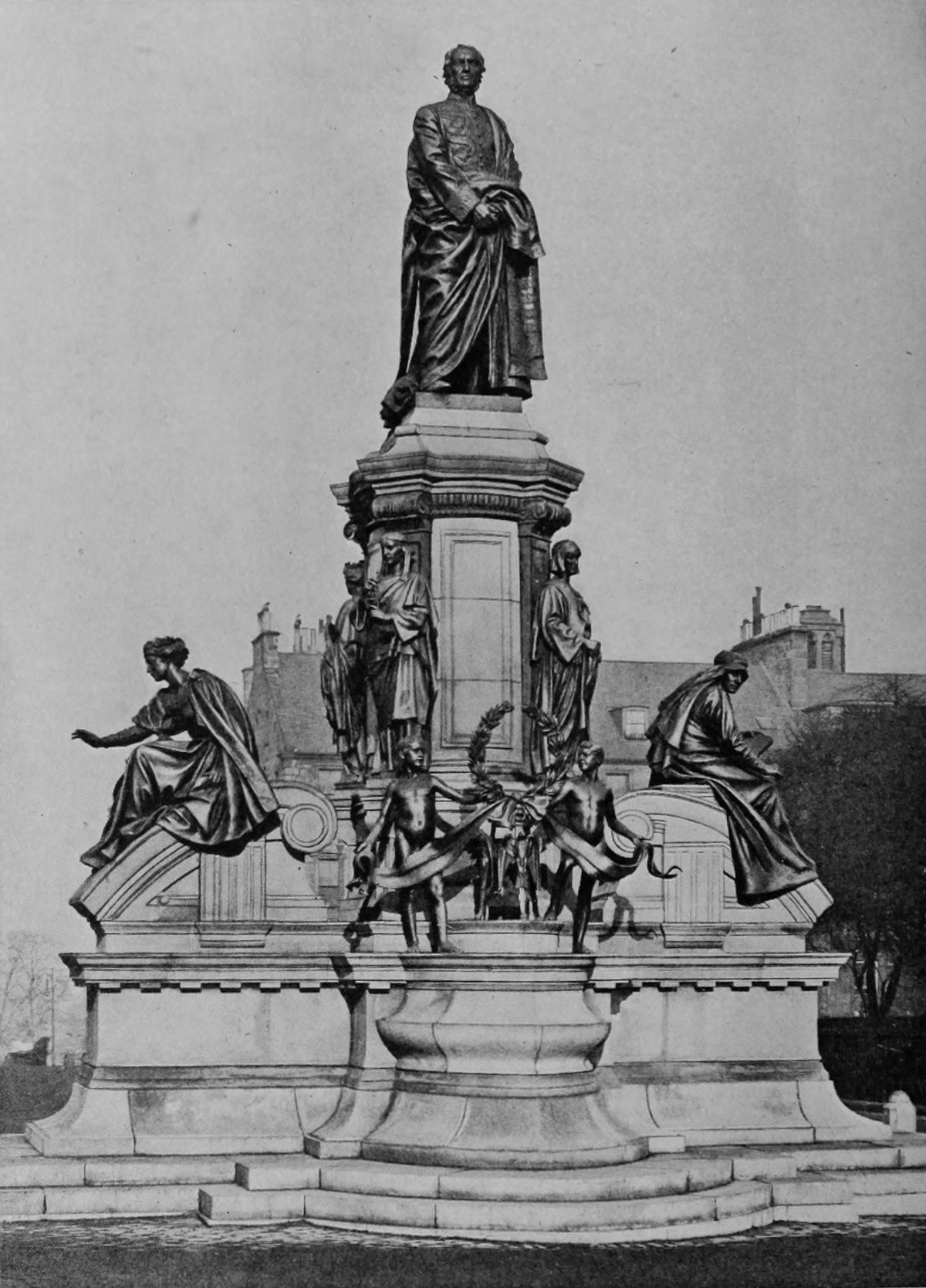
The commission for Edinburgh’s Albert Memorial was granted to Sir John Steell in 1865, a leading Scottish sculptor known for his public monuments (All About Edinburgh). The unveiling occurred in 1876, with Queen Victoria reportedly so moved by the statue’s likeness that she knighted Steell at the ceremony (Edinburgh Expert).
Design, Architecture, and Symbolism
The memorial exemplifies the Gothic Revival style, harmoniously integrating with Charlotte Square’s Georgian landscape. At its center is a 9.1-meter equestrian statue of Prince Albert in Field Marshal uniform, symbolizing leadership and nobility. The bronze statue, set on a substantial granite plinth designed by architect David Bryce, is surrounded by four allegorical groups representing Victorian ideals:
- Science and Learning/Labour Created by David Watson Stevenson, symbolizing knowledge and industry.
- Army and Navy Sculpted by George Clark Stanton, reflecting military strength and imperial reach.
- Nobility Crafted by William Brodie, highlighting social hierarchy and values.
Additional motifs—thistles, the Saltire, and references to the Great Exhibition of 1851—emphasize both Scottish pride and Albert’s patronage of progress and reform (Wikipedia, facts.net).
Construction Timeline and Restoration
The foundation stone was laid shortly after Prince Albert’s death, and the memorial’s construction spanned more than a decade. Despite logistical challenges, skilled stonemasons and artisans completed the monument by the mid-1870s. Restoration campaigns, particularly in the late 20th century, have ensured the memorial’s preservation against weathering and pollution, supported by local heritage organizations (facts.net).
Significance in Victorian Scotland
The monument not only captures the Victorian spirit of progress, science, and civic responsibility but also reflects Edinburgh’s aspirations as a center of enlightenment and culture. Prince Albert’s advocacy for education and innovation closely paralleled the city’s own ambitions in the 19th century (All About Edinburgh).
Public Reception and Legacy
From its unveiling, the memorial was celebrated for its artistic merit and symbolic resonance. It became a focal point for public ceremonies, royal visits, and community reflection. Today, it remains a testament to both Victorian ideals and Edinburgh’s enduring historical prominence.
Comparative Context: The Albert Memorial in London
While both the Edinburgh and London memorials share Gothic Revival influences and commemorate Prince Albert, Edinburgh’s version uniquely incorporates Scottish motifs and is deeply embedded in the city’s civic life. London’s Albert Memorial, situated in Kensington Gardens, is renowned for its grandeur and elaborate sculptural program, further discussed below.
Visiting the Albert Memorial in Edinburgh: Practical Information
Location and Viewing Hours
The Albert Memorial is located at the heart of Charlotte Square, a masterpiece of Georgian urban planning by Robert Adam. The memorial stands in the center of private gardens, not open to the general public. However, the statue is fully visible from the perimeter railings and surrounding pavements. Visitors can enjoy unobstructed views and photography at any time during daylight hours, as the square itself is public.
Tickets and Admission
No tickets or admission fees are required to view the memorial from outside the gardens. Entry to the gardens is reserved for residents, except during rare special events.
Guided walking tours of Edinburgh’s New Town and Charlotte Square frequently include the Albert Memorial. Booking in advance through official tourism sites or local visitor centers is recommended (Edinburgh Tourism).
Accessibility and Travel Tips
- The pavements around Charlotte Square are generally flat and wheelchair accessible, allowing all visitors to view the memorial easily.
- Public transport: Numerous bus routes and tram stops are nearby, especially along Princes Street and George Street.
- Parking in the New Town is limited; public transport or on-foot access is advised.
Nearby Attractions
- Bute House The official residence of the First Minister of Scotland.
- The Georgian House A National Trust for Scotland property offering guided tours (National Trust for Scotland).
- West Register House Formerly St George’s Church, now part of the National Records of Scotland.
- Princes Street Gardens and the Scott Monument are within a short walk.
Special Events and Tours
While regular access to the gardens is restricted, temporary events (such as the former Edinburgh International Book Festival) have occasionally opened the gardens to the public. Check event listings for up-to-date information on seasonal tours or cultural celebrations (Edinburgh Expert).
Visitor Etiquette and Photography
Respect the private residential setting of Charlotte Square. Photography from the railings is allowed and best undertaken during early morning or late afternoon for optimal lighting.
The Albert Memorial in London: Essential Visitor Guide
Location and Access
London’s Albert Memorial is located in Kensington Gardens, facing the Royal Albert Hall (wisevisitor.com). It is easily accessible by public transport, with several Underground stations nearby, including High Street Kensington, Gloucester Road, South Kensington, and Knightsbridge.
Visiting Hours and Admission
As an outdoor monument, the memorial is accessible during Kensington Gardens’ open hours: 6:00 am until dusk daily. There is no admission fee for general viewing (wisevisitor.com).
Guided tours inside the railings are occasionally available, especially in summer, and may require advance booking and a nominal fee (Royal Parks).
Navigating the Site and Practical Tips
- The memorial stands 54 metres tall and is surrounded by ornate railings.
- Wheelchair and stroller access is available via paved paths.
- Optimal photography is in the early morning or late afternoon.
- No on-site toilets or cafés, but nearby facilities in Kensington Gardens and local museums.
Accessibility and Family Visits
The site is family-friendly with accessible paths and nearby playgrounds in Kensington Gardens. School and group visits are common.
Nearby Attractions
- Royal Albert Hall
- Victoria and Albert Museum
- Kensington Palace
Frequently Asked Questions (FAQ)
Edinburgh
Q: Can visitors enter Charlotte Square gardens to see the Albert Memorial up close?
A: No, the gardens are private. The memorial is clearly visible from the surrounding pavements.
Q: Are guided tours available?
A: Yes, many walking tours of Edinburgh’s New Town include the Albert Memorial.
Q: What are the best times for photography?
A: Early morning and late afternoon provide the best natural light.
Q: Is the area around the memorial wheelchair accessible?
A: Yes, the pavements are generally flat and accessible.
London
Q: What are the Albert Memorial visiting hours in London?
A: Accessible from 6:00 am to dusk daily as part of Kensington Gardens.
Q: Is there an admission fee for the London memorial?
A: No, entry is free.
Q: Are guided tours offered?
A: Yes, mainly in summer, and may require prior booking.
Q: How do I reach the memorial by public transport?
A: The nearest Underground stations are High Street Kensington, Gloucester Road, South Kensington, and Knightsbridge.
Q: Is the memorial wheelchair accessible?
A: Yes, via paved paths.
Summary and Planning Tips
The Albert Memorial in Edinburgh is more than a Victorian monument—it represents the city’s evolving narrative, artistic achievement, and enduring connection to the British monarchy. While not directly accessible within Charlotte Square’s private gardens, the memorial’s grandeur can be fully appreciated from the public perimeter. Use this guide to plan your visit, capture the best photographs, and explore neighboring historical sites in Edinburgh’s New Town.
For those visiting London, the Albert Memorial in Kensington Gardens offers a monumental example of Victorian commemorative art, easily visited as part of a broader exploration of the city’s cultural landmarks.
Plan ahead by consulting official tourism sites, booking guided tours in advance, and using the Audiala app for real-time updates and audio guides.