
Origins and Vision
Kunstnernes Hus (“The Artists’ House”) was borne from the ambition of the Norwegian Visual Artists Association (Norske Billedkunstnere), who in 1927 secured a central site in Oslo to establish an independent, artist-run institution. The goal was to foster innovation and facilitate dialogue in contemporary art through an accessible, purpose-built venue (Planergo).
An architectural competition in 1928 drew over 60 submissions, emphasizing natural light, modest height, and harmonious integration into Oslo’s urban fabric. Blakstad and Munthe-Kaas’s winning design, “Felix,” marked a shift towards functionalist ideals in Norway (Planergo).
Architectural Significance
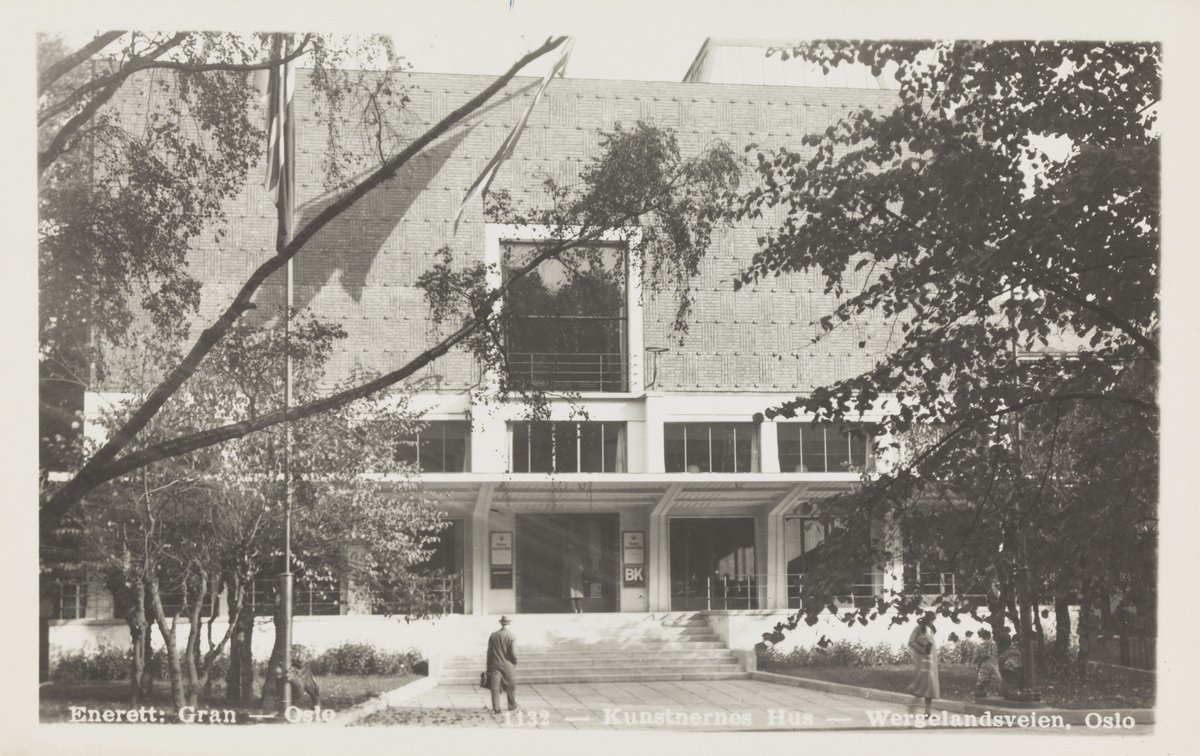
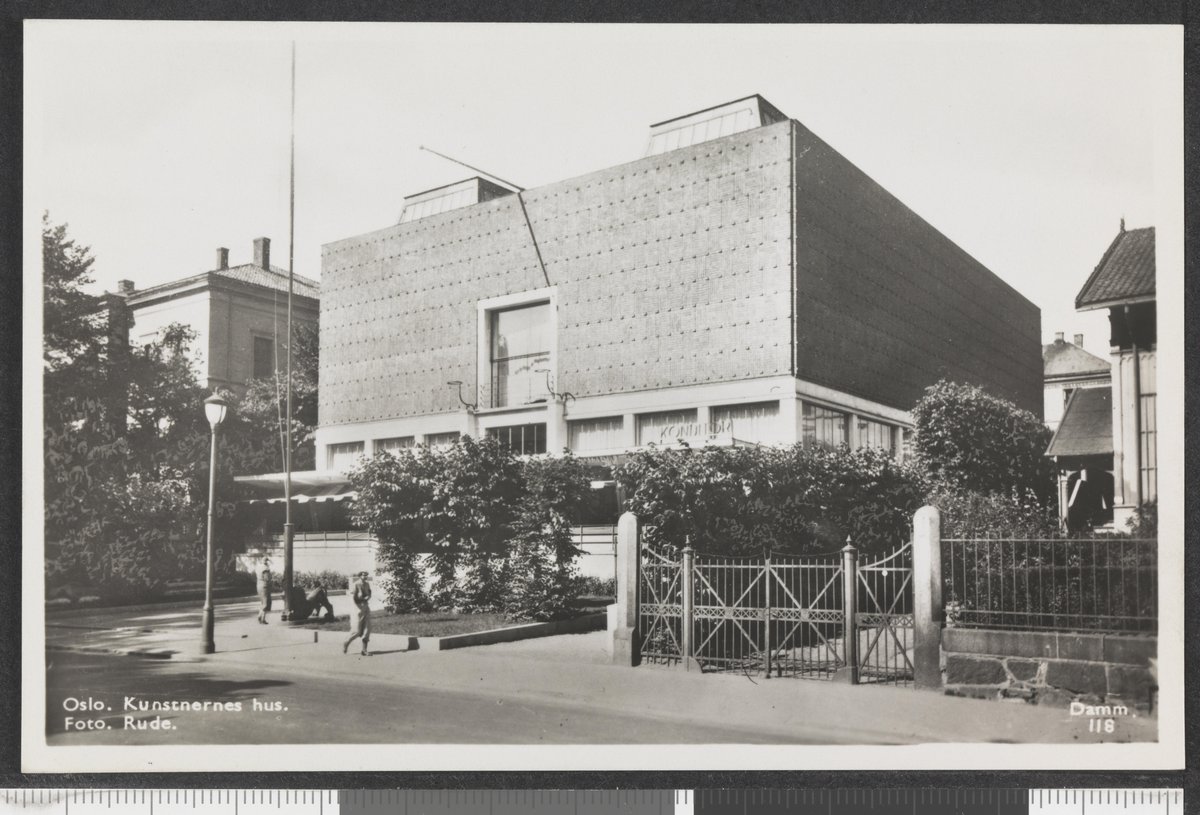
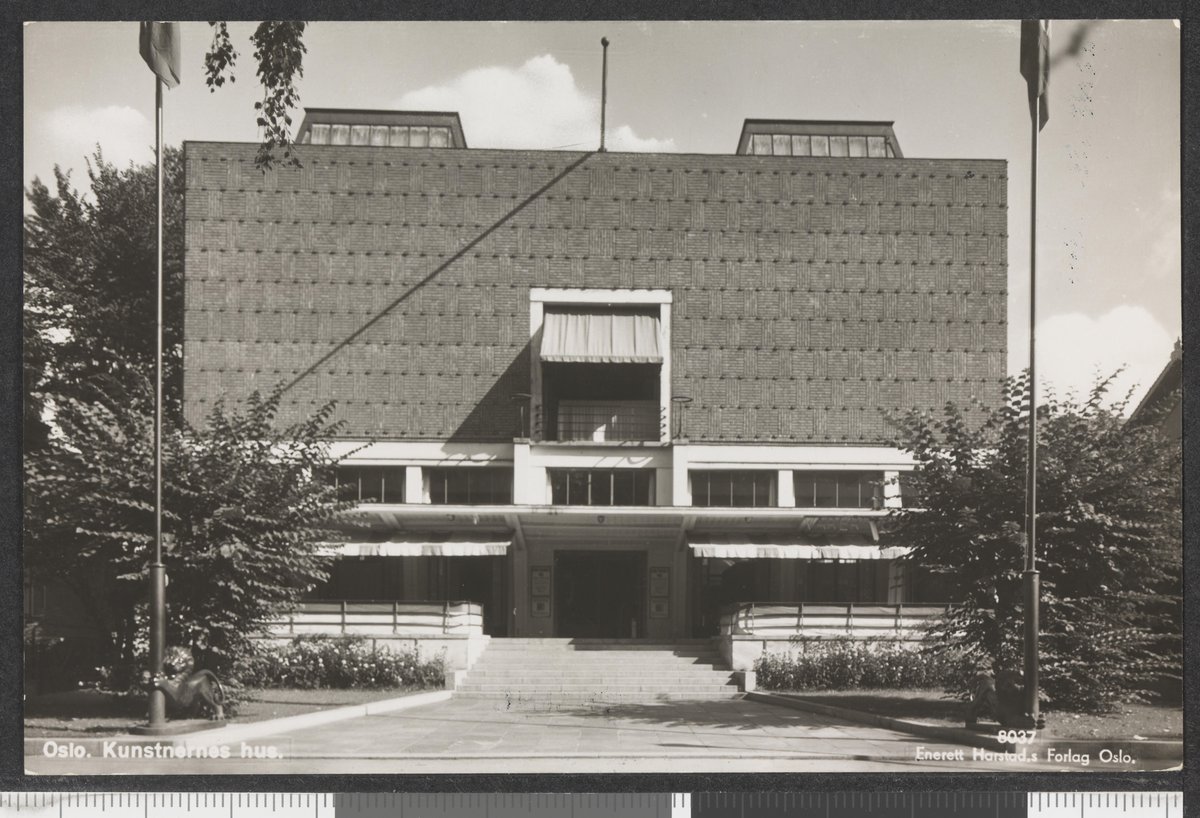
The completed building, opened in 1930, is celebrated for synthesizing neoclassical symmetry with functionalist clarity. Its hand-formed brick façade, monumental entrance, and abundant skylights create an elegant yet practical environment for art display. The structure’s concrete skeleton and open-plan design facilitate flexible exhibition spaces illuminated by natural light—a revolutionary approach at the time (AHO seminar).
Notable permanent artworks include Ørnulf Bast’s bronze lions, a relief by Niels Larsen Stevns, and contributions from Per Krogh and Lars Backer, reinforcing the building’s identity as a living monument to Norwegian art (Planergo).
Role in Norwegian Art
As Norway’s largest artist-directed gallery, Kunstnernes Hus has hosted pivotal exhibitions, including the annual Høstutstillingen (Autumn Exhibition), fostering both established and emerging artists. Its governance—majority-elected by artists—ensures ongoing relevance and autonomy (Planergo). The venue has also been a space for social and political engagement, such as its 2020 support for the Black Lives Matter movement (Kunstkritikk).
Renovation and Evolution
A significant renovation in 2000–2001 modernized the galleries, enhanced safety, and preserved architectural heritage, ensuring continued functionality and accessibility (Wikipedia). The institution has diversified its programming to include film, education, and collaborative projects, with a focus on representation, equity, and international dialogue (Kunstkritikk).
Contemporary Role
Today, Kunstnernes Hus is a dynamic cultural center, hosting exhibitions, public programs, and a cinema. Its café and bookshop add to its appeal as a gathering place for artists, students, and visitors. The building remains a benchmark for artist-led institutions, combining architectural excellence with artistic innovation (Planergo).
Visitor Information
Visiting Hours
- Tuesday to Sunday 11:00 AM – 5:00 PM
- Closed on Mondays and public holidays
- Extended hours Thursdays until 8:00 PM for special events (Kunstnernes Hus official site)
Tickets & Admission
- General admission NOK 100
- Reduced (students, seniors) NOK 50
- Children under 18 Free
- Members Free admission to all exhibitions (Kunstnernes Hus Membership)
- Special exhibitions/events May require separate tickets
Tickets can be purchased onsite or online.
Accessibility
- Wheelchair accessible Ramps, elevators, accessible restrooms
- Cinema Wheelchair spaces and free companion entry
- Guide/assistance dogs Welcome
- Exhibition texts Norwegian and English
- Staff assistance Available on request (Kunstnernes Hus visitor info)
Guided Tours
- Regular tours in Norwegian and English
- Private tours available by appointment (Kunstnernes Hus)
- Family-friendly workshops and lunch tours
Getting There
- Address Wergelandsveien 17, Oslo
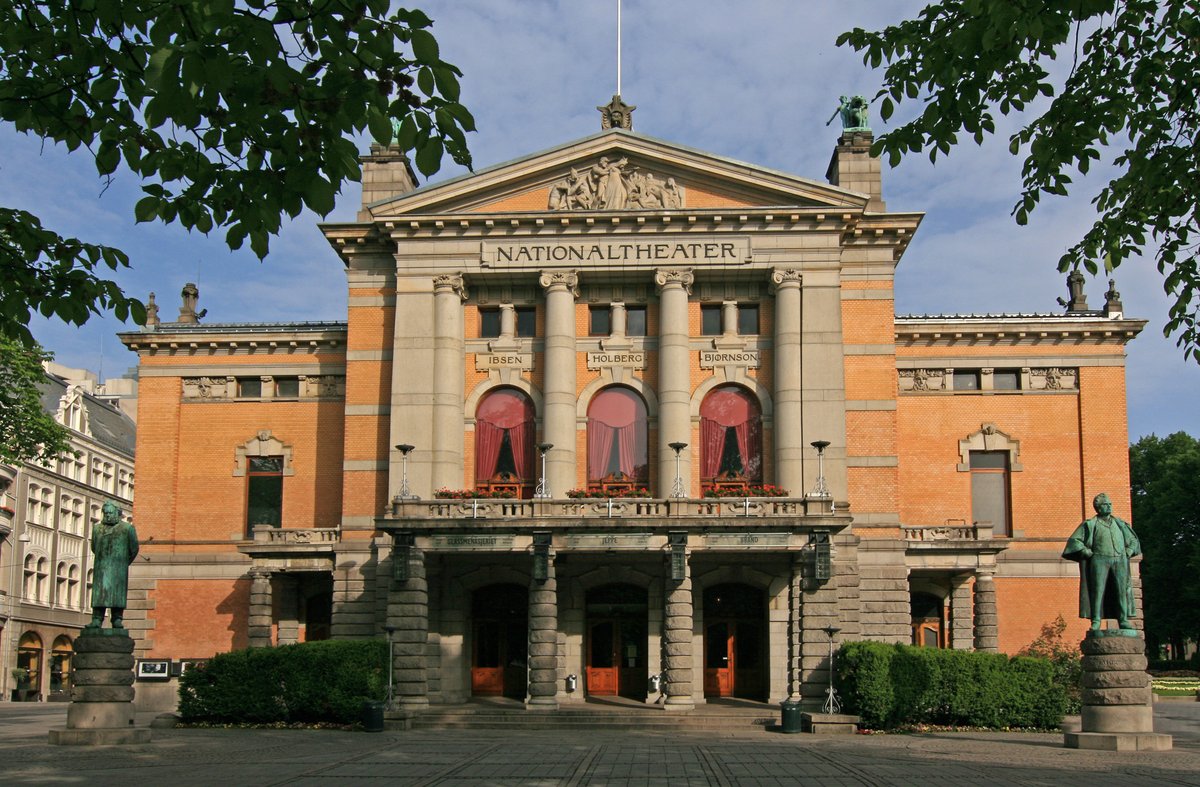
- Public transport Near Nationaltheatret (train, tram, bus)
- Parking Limited; public transport recommended (Visit Norway)
Nearby Attractions
- Royal Palace & Park (Slottsparken)
- National Gallery
- National Museum
- Oslo City Hall
- Vigeland Sculpture Park
Building and Exhibitions
Architectural Features
- Exterior Hand-formed brick, monumental symmetry, facing Palace Park
- Interior Concrete skeleton, open galleries, natural light via skylights
- Materials Marbleized rubber floors, linen-clad walls, custom furniture (AHO seminar)
- Permanent artworks Sculptures, reliefs, and integrated art elements
Gallery Layout
- Multi-floor, open-plan galleries
- Main foyer with information desk and clear signage
- Adaptable exhibition halls for various media
- Artist studios, cinema (added 2016), café, shop (Kunstnernes Hus official site)
Programming
- Rotating exhibitions of Norwegian and international contemporary art
- Annual events: Høstutstillingen, MFA Degree Show
- Film screenings, artist talks, workshops, and community events (Kunstnernes Hus Program)
2025 Highlights:
- Jannik Abel: Back to the Land (10 Jan – 9 Mar)
- Joen Vedel: NOW-TIME TV (24 Jan – 23 Feb)
- Andrea Geyer: Manifest (30 Jan – 9 May)
- 138th Autumn Exhibition (6 Sep – 12 Oct)
- MFA Degree Show (5 Jun – 22 Jun)
Visitor Services & Amenities
- Bookshop Art publications, catalogues, unique artist books
- Café/Restaurant Locally sourced menu, terrace overlooking Palace Park
- Cloakroom Available for coats and bags
- Wi-Fi Free for visitors
- Family facilities Baby changing table, family workshops
Events and Community Engagement
- Lectures, debates, film screenings, artist talks, and open studios
- Family Saturdays and inclusive workshops
- Collaborations with local and international art institutions
- Central venue for Oslo Open, with over 450 artists participating (Kunstnernes Hus)
Tips for Visiting
- Check current exhibitions and event schedules before visiting (Exhibition calendar).
- Combine your visit with a stroll in Slottsparken or nearby museums.
- Try the café for a relaxing break or meal.
- Photography Non-flash photography is generally permitted unless otherwise indicated.
- Family-friendly Workshops and events make it suitable for all ages.
- Accessibility Contact staff in advance for specific needs.
Frequently Asked Questions (FAQs)
What are Kunstnernes Hus opening hours?
Tuesday to Sunday, 11:00 AM – 5:00 PM (extended hours on Thursday). Closed Mondays.
How can I buy tickets?
Online via the official website or at the entrance.
Is Kunstnernes Hus wheelchair accessible?
Yes, with ramps, elevators, and accessible restrooms.
Are guided tours available?
Yes, both scheduled and private tours are available.
Is photography allowed?
Generally yes, without flash. Check exhibition signage for restrictions.
Are there family activities?
Yes, including workshops and Family Saturdays.
Summary
Kunstnernes Hus stands as a vital institution in Oslo, merging architectural beauty, artistic innovation, and a strong commitment to accessibility and community. Its central location, diverse programming, and welcoming atmosphere make it a must-visit destination for anyone interested in Norwegian culture, contemporary art, or architectural heritage. For current exhibitions, ticketing, and events, always refer to the official website.