
Early Origins and Foundation
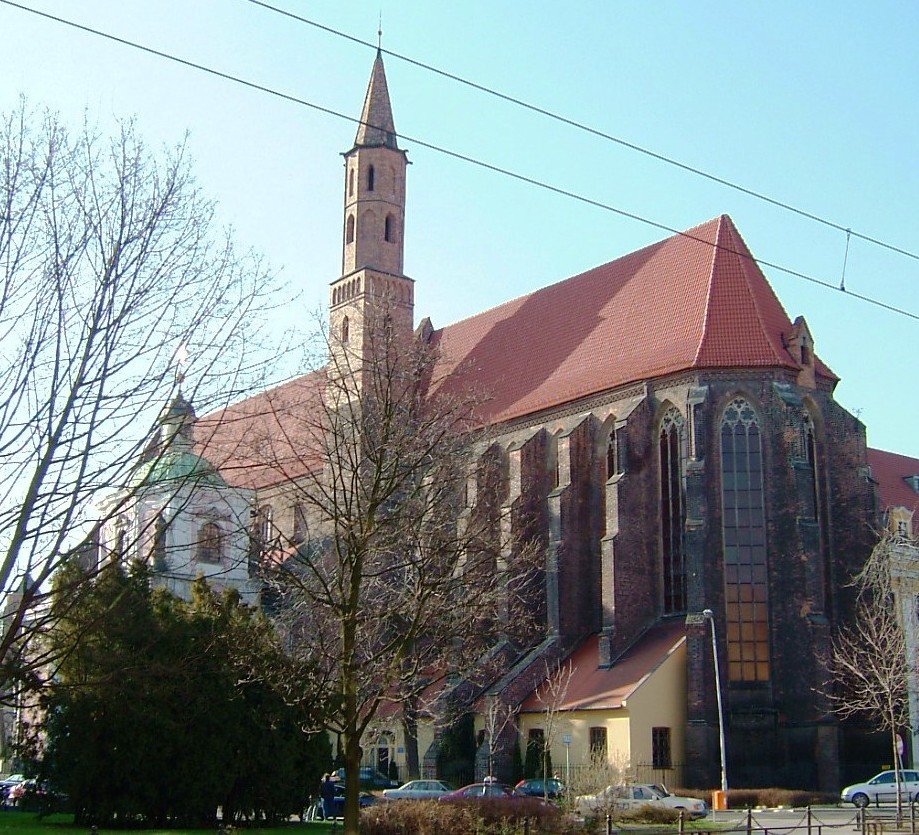
The origins of the Church of St. Vincent trace back to the early 13th century, when Duke Henry II the Pious invited Franciscan monks from Prague to Wrocław. Around 1232–1240, the church—originally dedicated to St. James—was constructed in Romanesque style alongside a Franciscan monastery, marking the spread of mendicant orders in Silesia (SpottingHistory; Medieval Heritage). The crypt became the burial site of Duke Henry II after his death at the Battle of Legnica in 1241, a seminal event in the city’s history (MyCityHunt). By 1254, the church was completed and soon played a central role in civic life, including the proclamation of Wrocław’s new foundation charter in 1261 (SpottingHistory).
Architectural Evolution
Gothic Transformation
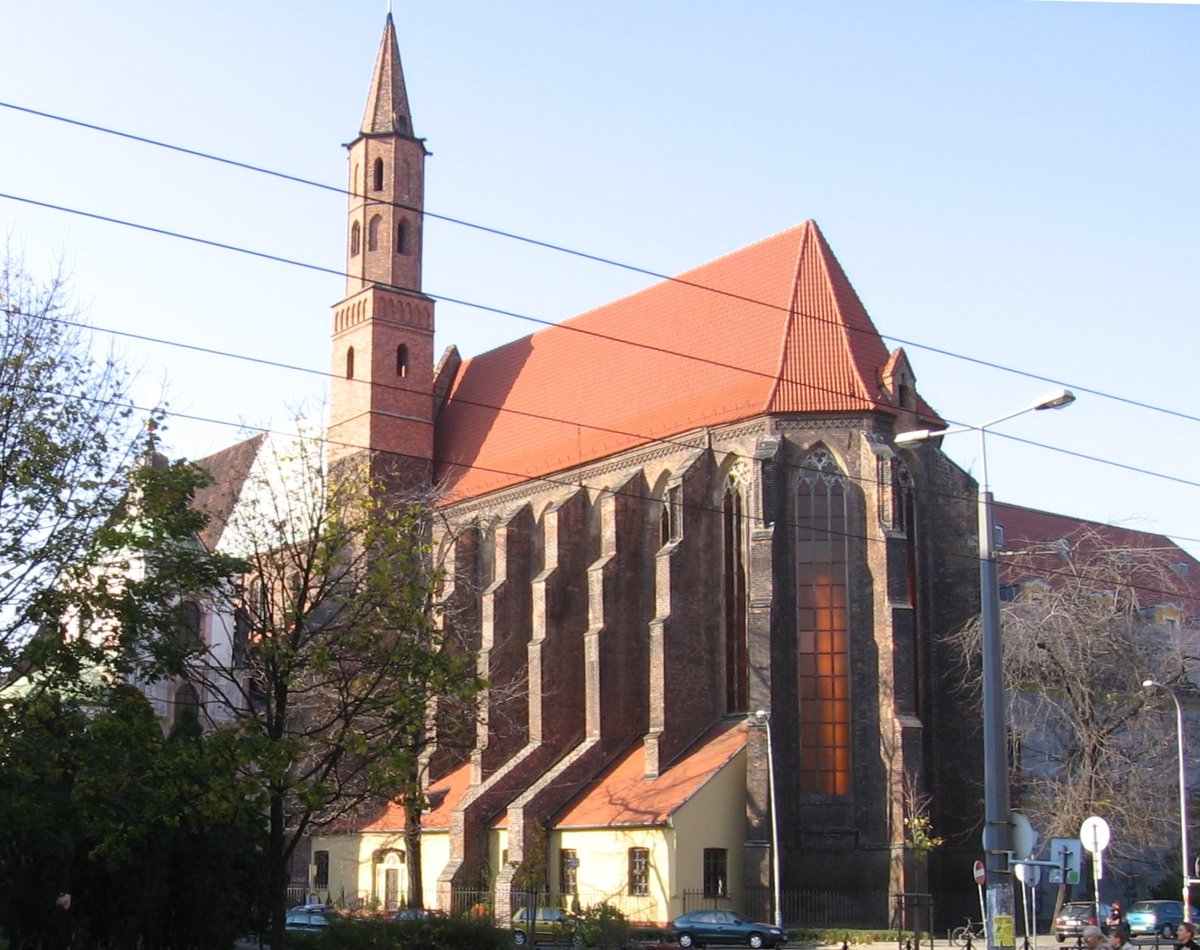
In the 14th and 15th centuries, the church underwent a significant Gothic transformation. The original Romanesque structure gave way to a basilica with soaring verticality, pointed arches, ribbed vaults, and an expansive nave measuring 77.5 meters in length and 23 meters in height. The quadrangle monastery built to the north is unique in the region (Wikipedia; MyCityHunt).
Baroque Enhancements
The 17th and 18th centuries saw Baroque enrichment of the interior, with new furnishings installed between 1662 and 1674 and the friary remodeled from 1682 to 1695 (Medieval Heritage). The Hochberg Chapel, completed in 1728 atop a former Gothic chapel, stands out for its elaborate frescoes and sculptures (MyCityHunt).
Shifts in Religious Stewardship
The Protestant Reformation in the 16th century led to significant changes: most Franciscans left or converted, and the church was taken over by the Premonstratensians in 1530, who reconsecrated it to St. Vincent (Wikipedia; Medieval Heritage). The order was dissolved in 1810, and the building became a parish church, with the monastery repurposed for secular use (SpottingHistory).
Wartime Damage and Restoration
World War II’s Siege of Breslau in 1945 inflicted severe damage: the tower collapsed, the vaults were destroyed, and the Hochberg Chapel suffered extensive losses (SpottingHistory; MyCityHunt). Restoration began in 1947, culminating in the painstaking reconstruction of the Hochberg Chapel between 2000 and 2013 (MyCityHunt).
The Ukrainian Greek Catholic Era
In 1997, the church was entrusted to the Ukrainian Greek Catholic Church, becoming the seat of the Wrocław-Gdańsk Eparchy (SpottingHistory). Following renovations for the Eastern Rite, daily Divine Liturgies in Ukrainian have been celebrated since 1999 (cerkiew.net.pl). Today, the cathedral is a vital spiritual home for Wrocław’s Ukrainian community, reflecting the city’s evolving religious landscape.
Visitor Information
Location and Getting There
The cathedral is centrally located at plac Nankiera 15, in Wrocław’s Old Town (Lonely Planet).
- On Foot From Market Square (Rynek), walk east toward Świdnicka Street, then turn left onto plac Nankiera.
- By Tram Take Tram Line 1 or 2 from the main station to ‘Plac Nankiera’ stop (Evendo).
- By Bus Bus 144 stops at ‘Nankiera’.
- By Bike Wrocław’s bike-share system provides convenient access along the riverfront (Evendo).
Visiting Hours and Tickets
- Opening Hours Generally open daily, 9:00 a.m. to 6:00 p.m. Opening times may vary on religious holidays and during services.
- Admission Free of charge; donations are welcomed for maintenance and restoration.
- Guided Tours Available in several languages; advance booking is recommended, especially during peak seasons (Evendo). Some guided tours may require a fee.
Accessibility and Amenities
- Mobility Access The main entrance is equipped with ramps; some historic areas may have limited accessibility.
- Restrooms No public restrooms inside, but nearby cafes and the Market Hall offer facilities (The World Was Here First).
- Photography Non-flash photography is permitted; please be respectful during services.
Architectural and Interior Highlights
Exterior Features
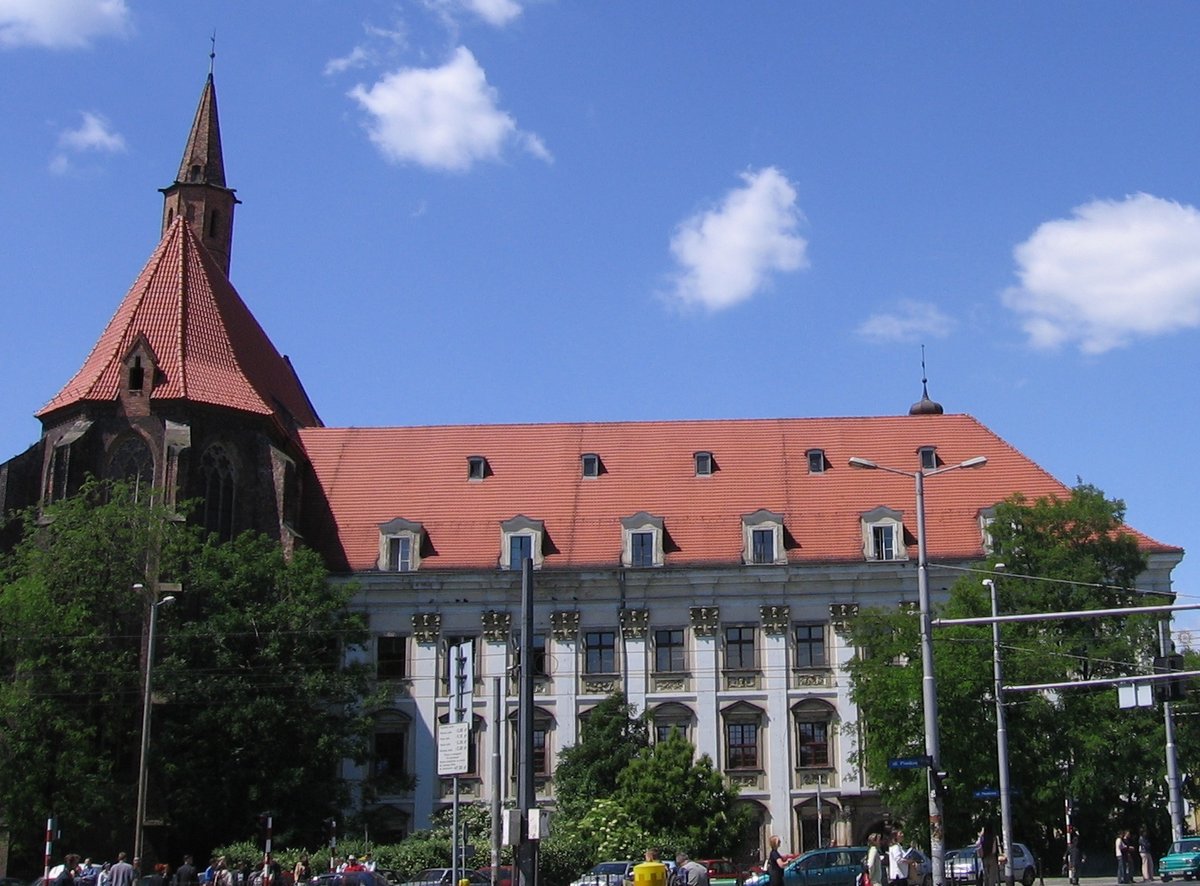
The church’s Silesian Gothic façade features tall, narrow windows, flying buttresses, and a brick tower with a pointed spire. Notable 14th-century stone carvings adorn the western entrance, and the interplay of brick and stone is characteristic of regional Gothic architecture (InterCathCon 2025 Abstracts).
Interior Experience
Inside, the soaring nave and ribbed vaulting create an uplifting vertical space bathed in colorful light from tall stained glass windows. The presbytery is distinguished by a Baroque high altar, while side chapels hold Renaissance tombs and Neo-Gothic stained glass. The Hochberg Chapel, with its exquisite frescoes and sculptural details, is a highlight of Baroque art (MyCityHunt).
Artistic Treasures
- Stained Glass Vivid glass windows illustrate biblical scenes and saints (InterCathCon 2025 Abstracts).
- Pulpit and Organ A richly carved oak pulpit and historic pipe organ with gilded angel motifs.
- Frescoes Restoration projects have uncovered late medieval wall paintings, revealing the church’s artistic past.
Religious and Cultural Significance
The Church of St. Vincent and St. James is the main cathedral for Wrocław’s Ukrainian Greek Catholic community, which constitutes a significant portion of the city’s population (The World Was Here First). Regular services, concerts, and community events are held throughout the year, emphasizing the church’s dual role as both a spiritual and cultural center (Evendo).
Tips for a Memorable Visit
- Best Times Mornings and late afternoons are quieter; attending a service offers insight into the church’s living traditions.
- Dress Code Modest attire is recommended, especially during services.
- Events Look for concerts and cultural events, often posted on the cathedral’s notice board.
- Quiet Reflection The cathedral’s serene atmosphere makes it ideal for contemplation, even outside of liturgies.
Nearby Attractions
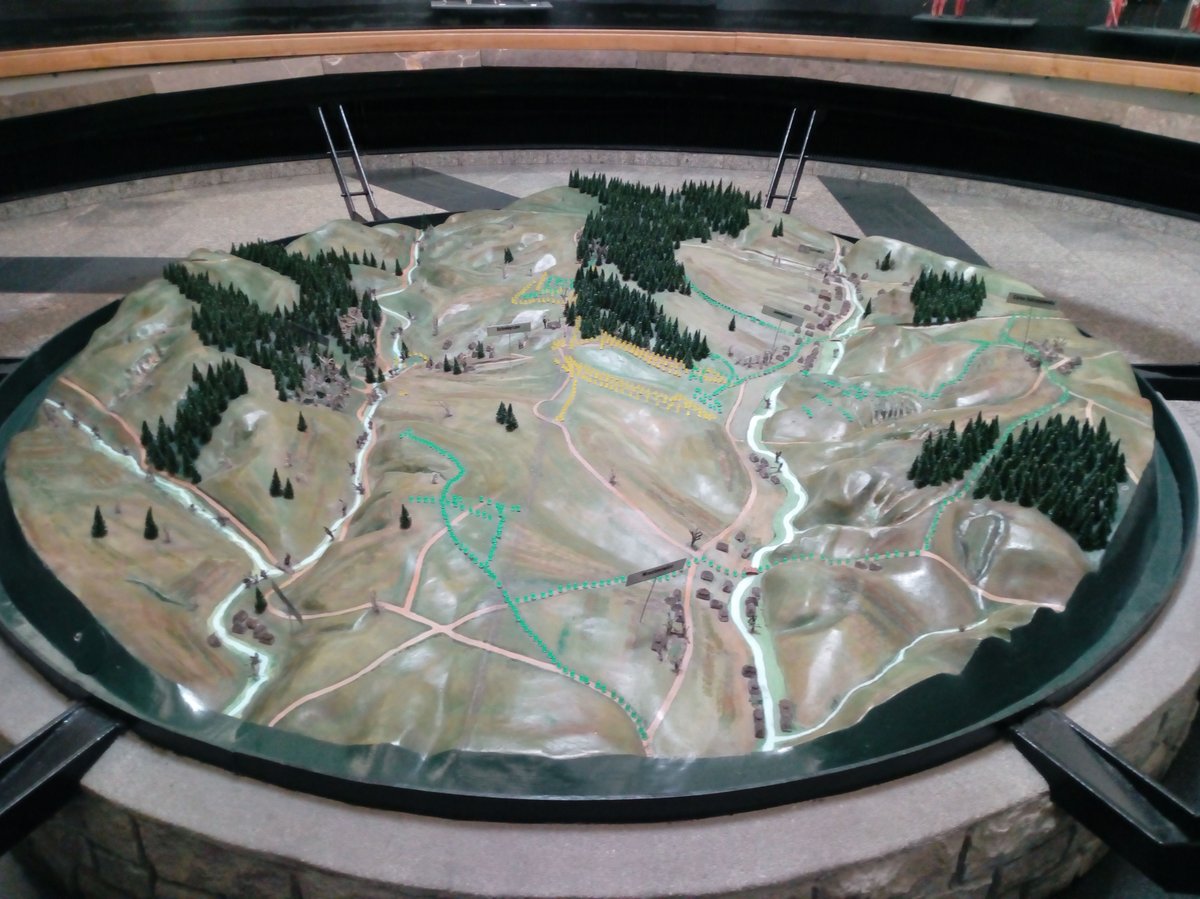
Within walking distance are Wrocław University, the Market Hall, Ostrów Tumski with the Cathedral of St. John the Baptist, the Old Town Hall, and the Panorama of Racławice (Lonely Planet; The World Was Here First).
Frequently Asked Questions (FAQ)
Q: What are the visiting hours?
A: Generally 9:00 a.m. to 6:00 p.m. daily; hours may vary on holidays and during services.
Q: Is there an entrance fee?
A: No; entry is free, though donations are appreciated.
Q: Are guided tours available?
A: Yes, in several languages; book in advance for guaranteed availability.
Q: Is the cathedral accessible for wheelchair users?
A: The main entrance has ramps; some historic areas may be less accessible.
Q: Can I take photographs inside?
A: Non-flash photography is permitted; please be considerate during services.
Visuals and Interactive Media
- High-resolution images of the façade, interior stained glass, and the Hochberg Chapel are available on official tourism sites.
- Interactive maps and virtual tours can be accessed via the Wrocław Tourist Board.
Discover More
For the latest updates, events, and guided tours, visit the Wrocław Tourist Board. Enhance your experience with audio guides from the Audiala app, and follow us on social media for news and travel tips. Make sure the Church of St. Vincent is on your Wrocław itinerary!