

What Wrocław University of Science and Technology is
Wrocław University of Science and Technology (WUST) is a technical university in Wrocław, Poland. Its riverside campus combines neoclassical, modernist, and contemporary architecture with green spaces, sculptures, research facilities, and public art, including the “Flood Girl” sculpture. The Polinka cable car connects the university’s campuses across the Oder River and offers panoramic city views.
WUST is known for engineering, computer science, physics, and chemistry, and is a member of the European alliance Unite! (Wrocław Tech Strategy). It works with industry, public institutions, and Wrocław’s innovation ecosystem, supporting regional development and entrepreneurship (Wrocław Tech Research Cooperation).
Its 2023–2030 strategy emphasizes interdisciplinary research connecting technical, basic, social, and health sciences. The plan also focuses on individualized and internationalized education, industry partnerships, sustainable and modern infrastructure, technology transfer, and start-up support. WUST’s stated ethical values and openness contribute to its role in Central Europe.
The university has more than 26,000 students and 2,000 staff, and awards over 4,000 degrees annually (Wikipedia). More than 80,000 alumni work in science, technology, and industry worldwide, and its faculty include internationally recognized scholars (Wikipedia).
Rankings and research
- In the “Perspektywy” 2021 ranking, WUST was 3rd among technical universities and 6th overall (Wikipedia).
- EduRank 2025 placed it 10th in Poland and 785th globally (EduRank).
- As of 2025, WUST had produced over 44,800 academic publications and 516,700 citations (EduRank).
- Engineering accounted for 31,234 publications and nearly 400,000 citations, placing WUST 3rd in Poland and 475th globally.
- In computer science, WUST was 5th in Poland and 576th globally; in physics, it was 5th in Poland and 490th globally.
- Chemistry, mathematics, business, environmental science, and social sciences were among its top 10 subjects in Poland, with strong international standings (EduRank).
- Research includes nanotechnology, optical engineering, and AI (Wrocław Tech Research Cooperation). WUST is also a leading Polish university for patents and technology commercialization (Wrocław Tech Strategy).
The campus’s Geocentrum, Technopolis, and Bibliotech provide research and teaching facilities (Wrocław Tech History). The campus has also been named among the world’s 15 most beautiful universities by The Huffington Post UK (Wikipedia).
History
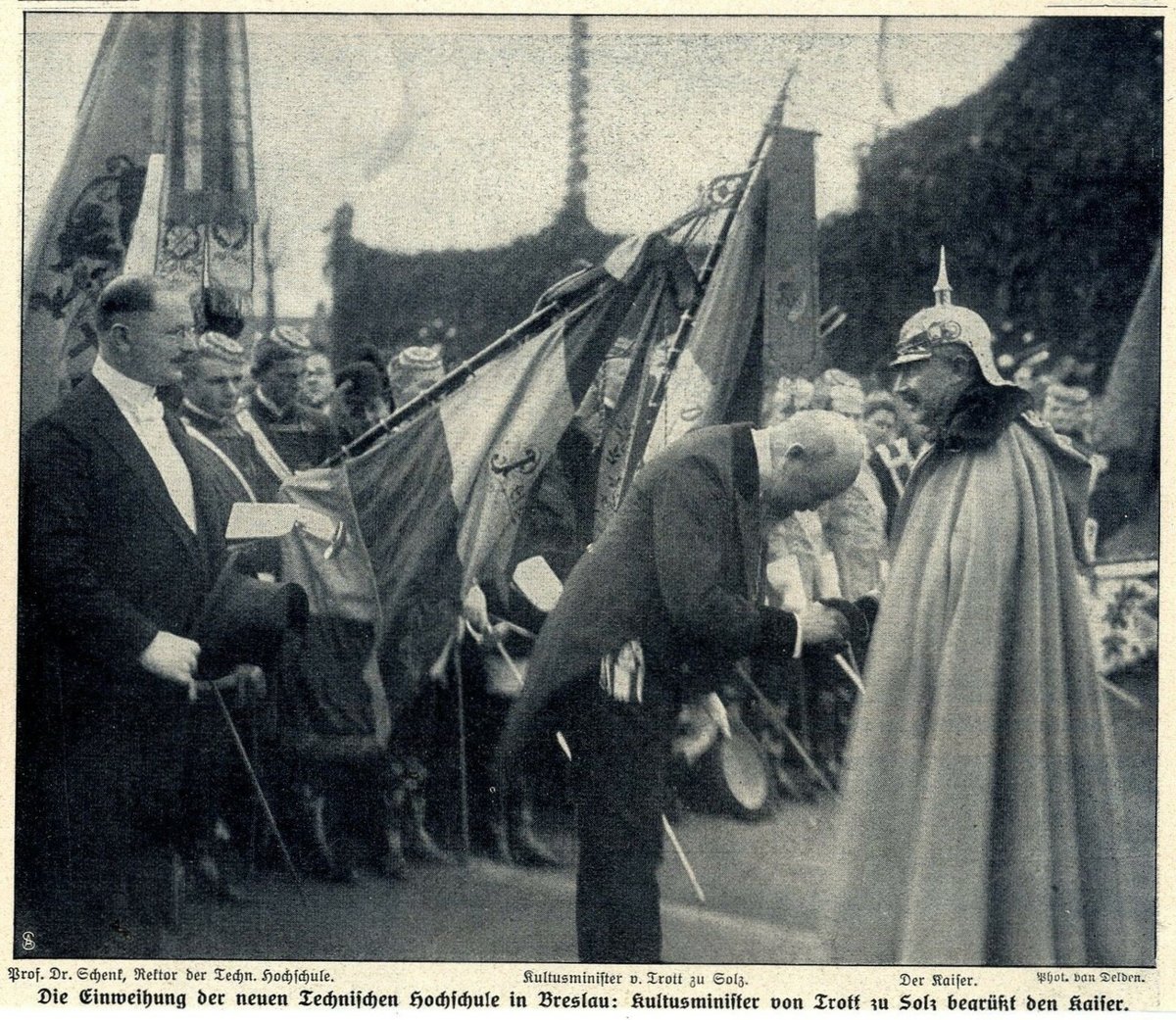
WUST was founded on the legacy of the German Technische Hochschule Breslau and was revitalized after World War II. Its campus includes the original Technische Hochschule Breslau buildings, postwar reconstructions, and newer research and teaching facilities.
The main building, A-1, reflects the university’s older architectural heritage. The campus has since expanded with modern facilities, while preserving its mix of historic and contemporary buildings. Further information is available on the Wrocław University of Science and Technology official website.
What to see
Campus architecture and layout
The main campus stretches along Wybrzeże Wyspiańskiego Street, near Plac Grunwaldzki and the Oder River (WUST official). Its A-1 main building has neoclassical features, while newer facilities, including the library, have contemporary designs and panoramic views. Green spaces and accessible pathways connect parts of the campus, and the Polinka cable car links the main campus with the Na Grobli campus (Polinka Cable Car).
Polinka cable car
Polinka connects the main campus and the Na Grobli campus across the Oder River. The ride takes under 3 minutes, and the cable car has a capacity of 370 people per hour. Special Polinka tickets are required and can be bought at dedicated machines (Polinka Ticket Info). The cable car is wheelchair-friendly and accommodates bicycles and animals.
Green spaces, public art, and exhibitions
Campus gardens, courtyards, sculptures, and public art create spaces for visitors as well as university life. The “Flood Girl” sculpture is among the campus landmarks.
The Faculty of Architecture hosts exhibitions, public lectures, and design competitions for visitors interested in architecture and urban planning (Faculty of Architecture).
Virtual and guided tours
Visitors can explore campus highlights remotely through the virtual campus tour. On-site guided tours can be arranged through the admissions office. Tours cover campus architecture, including original and postwar buildings, as well as main buildings, research facilities, and campus art.
Practical visiting information
Hours, admission, and access
- Campus hours Daily, 8:00 AM–6:00 PM. Individual building hours may differ.
- Admission Campus grounds are free to enter. Some buildings, exhibitions, or events may require advance arrangements, guided tours, or tickets.
- Check the official website or contact the Visitor Information Center for building, exhibition, and ticketing details.
Most modern facilities are accessible, and Polinka is wheelchair-friendly. Some historic buildings may have limited access, so visitors can inquire in advance about specific needs. Campus maps and bilingual signage are available (Campus Map).
Campus amenities include cafeterias, coffee shops, Wi-Fi, and bookstores with souvenirs. Public lectures, exhibitions, and academic events take place throughout the year (Faculty of Architecture news).
Directions and transportation
The main campus is near Plac Grunwaldzki, adjacent to the Oder River. Tram lines 2, 4, 10, and 33 stop at Plac Grunwaldzki. Parking is available nearby but is limited during peak hours. The campus is close to the city center and major attractions (The Crazy Tourist).
Tips
- Wear comfortable shoes for walking around the campus.
- Check the academic calendar, as access to some areas may be restricted during exams or events.
- Spring and autumn are suggested as good times to visit.
- Wrocław Science Day on November 15 features open lectures and events.
- Photography is permitted outdoors; check with the administration before taking photographs inside buildings.
- The Audiala app offers self-guided audio tours of the campus and nearby monuments.
Nearby places
Wrocław’s historic sites
- Ostrów Tumski The oldest part of Wrocław, known for its cathedrals and romantic atmosphere.
- Wrocław Market Square The historic heart of the city, with cafes and notable architecture.
- Centennial Hall A UNESCO-listed architectural landmark and UNESCO World Heritage site.
- Botanical Garden A green space near the university.
Wrocław Town Hall
The Wrocław Town Hall (Ratusz) stands in the Market Square (Rynek). Dating from the 13th century, it is a Gothic building that houses the Museum of Bourgeois Art and represents Wrocław’s civic heritage.
Opening hours:
- Tuesday–Friday: 10:00 AM–6:00 PM
- Saturday–Sunday: 10:00 AM–4:00 PM
- Closed Mondays
Tickets:
- Adults: 15 PLN
- Students and seniors: 10 PLN
- Children under 7: Free
Tickets are available on-site or through the official tourism website.
Highlights include medieval and Renaissance artifacts and historical paintings in the Museum of Bourgeois Art, a 16th-century astronomical clock, and the Great Hall with vaulted ceilings and frescoes. Guided tours offering historical insights are available in multiple languages. Seasonal events, festivals, and exhibitions take place throughout the year; group discounts and combo tickets for multiple attractions are also available.
The Town Hall is accessible by public transport, with ramps and elevators available. Photography is allowed without flash. Weekdays are less crowded. Comfortable shoes are useful for the cobblestone streets.
Nearby historical sites include St. Elizabeth’s Church, with panoramic tower views; Ostrów Tumski; and Centennial Hall. For up-to-date Town Hall information, visit wroclaw.pl.
Frequently asked questions
Is there an entrance fee to visit WUST?
Campus access is free. Some guided tours, exhibitions, or special events may have fees.
What are WUST’s visiting hours?
Campus hours are 8:00 AM–6:00 PM daily; individual building hours may differ.
Are guided tours available?
Yes. Arrange tours through the admissions office at [email protected].
Is the campus wheelchair accessible?
Most modern facilities and Polinka are accessible, though some historic buildings may have limited access.
Do I need a ticket for Polinka?
Yes. Special tickets are available from dedicated machines.
Can I take photographs on campus?
Photography is permitted in outdoor areas. Check with the administration about indoor spaces.
Are there cafes or restaurants nearby?
Plac Grunwaldzki and the surrounding area offer dining options.